The Echoes of Gibeah: A Call to Repentance
"O Israel, thou hast sinned from the days of Gibeah: there they stood: the battle in Gibeah against the children of iniquity did not overtake them." - Hosea 10:9
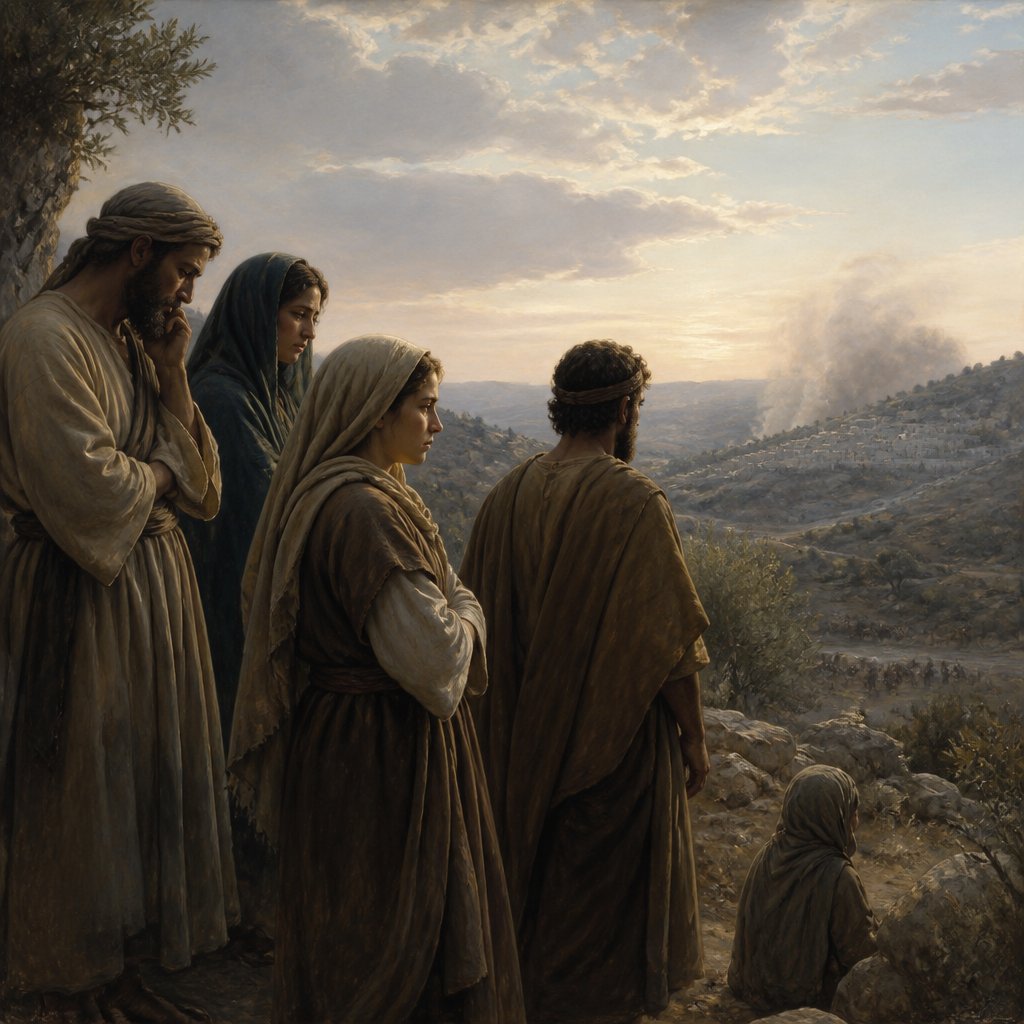
When we reflect on the verse from Hosea 10:9, "O Israel, thou hast sinned from the days of Gibeah: there they stood: the battle in Gibeah against the children of iniquity did not overtake them," we recognize a profound call to remember the past—to confront the shadows of sin that loom over our spiritual lives. In this verse, God speaks through the prophet Hosea, directing his attention to a critical moment in Israel's history that resonates with ongoing human struggles against sin and the consequent separation from God.
Gibeah serves as a stark reminder of moral decay. In the Book of Judges, specifically Judges 19-21, we encounter the heartbreaking events that transpired in Gibeah. The Levite's concubine was brutally abused and ultimately died, leading to a horrific civil war that decimated the tribes of Israel. This incident is not just an isolated moment in history; it lays bare the consistent pattern of sin, disobedience, and the dire consequences that unfold when God’s people forsake His ways. The remnants of these actions shadow the nation of Israel, and they should echo in our own hearts today.
What did the men of Gibeah exemplify? They embodied the very essence of sin that Hosea addresses—complete moral failure, cold indifference to the suffering of others, and a fervent rejection of God's law. We read how the inhabitants refused to repent for their heinous acts, revealing a deep-seated version of iniquity that had woven itself into the fabric of their community.
Hosea’s mention of sin from the days of Gibeah serves as a historical reflection; he reminds the Israelites that their sinful nature is not a recent phenomenon but rather a long-standing plague that predates their current generation. It calls into question our homeostasis in faith—is our walk with God defined by the fruits of the Spirit, or do we fail to notice the ingrowth of iniquity in our own lives?
As we meditate on the implications of this verse, it is important to take stock of our own lives. What battles are we facing in our daily walk? Are we consciously or unconsciously standing before iniquity in our own Gibeah-like moments?
The phrase "the battle in Gibeah against the children of iniquity did not overtake them" emphasizes that despite the chaos, Israel remained unchanged. Often, we find ourselves entrenched in sin, yet we convince ourselves that the weight of our transgressions will not lead to dire consequences. We think we can withstand the forces of darkness without engaging in the battle for our souls. However, just as Israel stood idle, we too can become desensitized to the spiritual warfare taking place around us and within us.
How can we break free from this cycle? Hosea's plea compels us to repentance, to take actionable steps towards restoration with God. Repentance starts with a humble heart; we acknowledge our wrongs and seek God’s forgiveness. It requires us to turn from our sinful ways and engage in the battle actively. We must reveal our iniquities in prayer, asking for strength and discernment to overcome them.
Let us not be like the men of Gibeah who stood complacently in their sin, but may we rise as a generation that confronts moral decay with the humility and strength lent to us through the Holy Spirit.
As we reflect on Hosea 10:9, let us remember that sin is not merely an act; it is a state of the heart. True transformation occurs when we realize the fullness of God’s grace that beckons us to return to Him, letting go of every sin and entanglement that so easily besets us (Hebrews 12:1). May we heed the warning of Gibeah and choose the path of righteousness today.
Want to reflect more on Hosea 10:9?
Continue your spiritual journey with Bible Chat — an AI-powered tool for exploring God's Word through conversation. Ask questions, discover connections, and deepen your understanding.
Get Our Apps


Hosea 10:9 Artwork

Hosea 10:9 - "O Israel, thou hast sinned from the days of Gibeah: there they stood: the battle in Gibeah against the children of iniquity did not overtake them."
"O Israel, thou hast sinned from the days of Gibeah: there they stood: the battle in Gibeah against the children of iniquity did not overtake them." - Hosea 10:9

Hosea 9:10 - "I found Israel like grapes in the wilderness; I saw your fathers as the firstripe in the fig tree at her first time: but they went to Baal-peor, and separated themselves unto that shame; and their abominations were according as they loved."

Hosea 9:9 - "They have deeply corrupted themselves, as in the days of Gibeah: therefore he will remember their iniquity, he will visit their sins."

Hosea 13:9 - "¶ O Israel, thou hast destroyed thyself; but in me is thine help."

Hosea 9:5 - "What will ye do in the solemn day, and in the day of the feast of the LORD?"

Hosea 10:7 - "As for Samaria, her king is cut off as the foam upon the water."

Hosea 10:10 - "It is in my desire that I should chastise them; and the people shall be gathered against them, when they shall bind themselves in their two furrows."

Hosea 9:2 - "The floor and the winepress shall not feed them, and the new wine shall fail in her."

Hosea 6:9 - "And as troops of robbers wait for a man, so the company of priests murder in the way by consent: for they commit lewdness."

Hosea 8:9 - "For they are gone up to Assyria, a wild ass alone by himself: Ephraim hath hired lovers."

Hosea 1:9 - "Then said God, Call his name Lo-ammi: for ye are not my people, and I will not be your God."

Hosea 9:3 - "They shall not dwell in the LORD'S land; but Ephraim shall return to Egypt, and they shall eat unclean things in Assyria."

Hosea 9:11 - "As for Ephraim, their glory shall fly away like a bird, from the birth, and from the womb, and from the conception."

Hosea 4:9 - "And there shall be, like people, like priest: and I will punish them for their ways, and reward them their doings."

Hosea 9:13 - "Ephraim, as I saw Tyrus, is planted in a pleasant place: but Ephraim shall bring forth his children to the murderer."

Hosea 9:17 - "My God will cast them away, because they did not hearken unto him: and they shall be wanderers among the nations."

Hosea 9:8 - "The watchman of Ephraim was with my God: but the prophet is a snare of a fowler in all his ways, and hatred in the house of his God."

Hosea 7:10 - "And the pride of Israel testifieth to his face: and they do not return to the LORD their God, nor seek him for all this."

Hosea 12:10 - "I have also spoken by the prophets, and I have multiplied visions, and used similitudes, by the ministry of the prophets."

Hosea 5:9 - "Ephraim shall be desolate in the day of rebuke: among the tribes of Israel have I made known that which shall surely be."
Hosea 9:14 - "Give them, O LORD: what wilt thou give? give them a miscarrying womb and dry breasts."

Hosea 2:10 - "And now will I discover her lewdness in the sight of her lovers, and none shall deliver her out of mine hand."

Hosea 10:4 - "They have spoken words, swearing falsely in making a covenant: thus judgment springeth up as hemlock in the furrows of the field."

Hosea 7:9 - "Strangers have devoured his strength, and he knoweth it not: yea, gray hairs are here and there upon him, yet he knoweth not."

Hosea 12:9 - "And I that am the LORD thy God from the land of Egypt will yet make thee to dwell in tabernacles, as in the days of the solemn feast."

Hosea 8:10 - "Yea, though they have hired among the nations, now will I gather them, and they shall sorrow a little for the burden of the king of princes."

Hosea 10:3 - "For now they shall say, We have no king, because we feared not the LORD; what then should a king do to us?"

Hosea 10:2 - "Their heart is divided; now shall they be found faulty: he shall break down their altars, he shall spoil their images."

Hosea 10:6 - "It shall be also carried unto Assyria for a present to king Jareb: Ephraim shall receive shame, and Israel shall be ashamed of his own counsel."