The Sacred Offering: A Journey into Grace
"But into the second went the high priest alone once every year, not without blood, which he offered for himself, and for the errors of the people:" - Hebrews 9:7
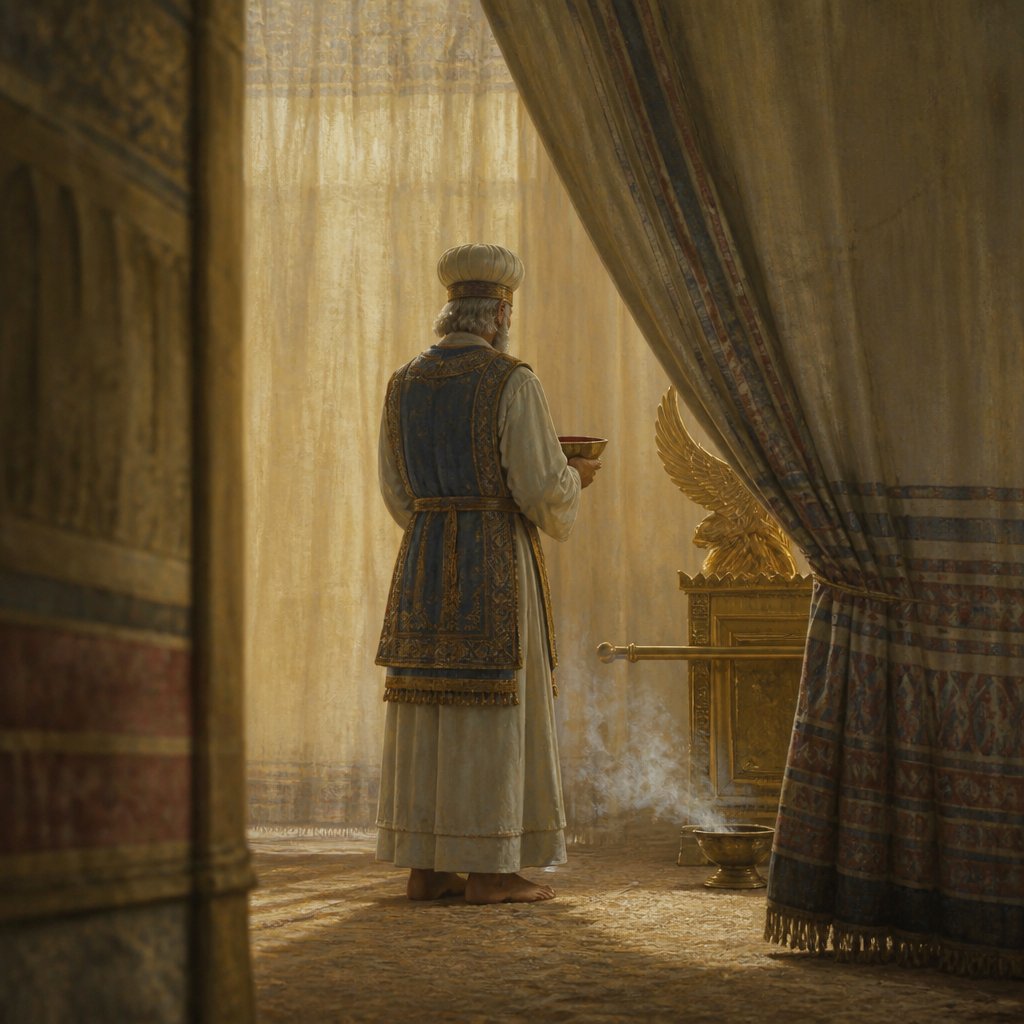
Hebrews 9:7 states, “But into the second went the high priest alone once every year, not without blood, which he offered for himself, and for the errors of the people.” This verse is a powerful reminder of the profound significance of sacrifice and the access that we have to God through Christ's ultimate offering. To comprehend the depth of this scripture, we must explore the rich context of the Old Testament sacrificial system and how it culminates in the New Testament revelation of Jesus Christ as our High Priest.
In the Old Testament, the Day of Atonement (Yom Kippur) was a pivotal occasion in the Jewish faith, wherein the high priest entered the Holy of Holies— the innermost sanctuary of the Tabernacle— to atone for the sins of the people. This act was not taken lightly; it required meticulous preparation and was done only once a year. The high priest would enter this sacred space bearing the blood of a sacrificed animal, which symbolized the life given in exchange for the transgressions of the people. As a vital intermediary, the high priest had to first offer sacrifice for his own sins, acknowledging his own need for atonement before he could seek forgiveness on behalf of others. This ritual demonstrates both the holiness of God and the gravity of sin.
The phrase "not without blood" emphasizes the seriousness with which sin must be dealt. The shedding of blood has always been central to the concept of atonement in biblical theology. The Old Testament clearly illustrates that life is in the blood (Leviticus 17:11), and it is through blood that one can approach God. The act of presenting blood before the Lord illustrated the sacrifice’s acceptance and the gravity of the sins being confessed.
However, in the fullness of time, God revealed His ultimate plan for redemption through Jesus Christ. The book of Hebrews not only revisits this ancient practice but also contrasts Jesus’ work with that of the Old Testament high priests. Unlike the high priests who had to offer sacrifices repeatedly, Jesus Christ entered the heavenly sanctuary once and for all, offering His own precious blood (Hebrews 9:12). His sacrifice was perfect and sufficient to cover the sins of all humankind, thus fulfilling the requirements of the law and making a way for us to enter into the presence of God with confidence.
As we reflect on Hebrews 9:7, we are reminded of our dire need for a savior and the incredible grace that God extends to us through Jesus. This verse serves both as a solemn reminder of the burden of sin and an exhilarating proclamation of hope. We no longer need a human high priest to intercede for us; Jesus is our eternal High Priest who empathizes with our weaknesses (Hebrews 4:15). He bore our sins in His body on the cross and was the ultimate sacrifice that puts an end to the cycle of blood offerings and sacrifices by ushering in a new covenant (Luke 22:20).
In practical terms, what does this mean for us? Firstly, we should live with a consciousness of our sin and the grace extended to us. Just as the high priest had to prepare himself before offering sacrifice, we too are called to come before God with hearts that are genuinely repentant and aware of our need for His forgiveness. Secondly, this verse encourages us to approach God boldly. Because of Christ's sacrifice, we can confidently enter the presence of God, knowing that our sins are forgiven and that we are accepted as His children. Therefore, let us cultivate a deep relationship with God through prayer and worship, celebrating the grace that has been graciously given to us.
Let us end with a prayer: "Heavenly Father, thank You for the gift of Your Son, Jesus Christ, our perfect High Priest. Help us to live in the light of Your grace and to approach You boldly in prayer. May we never forget the cost of our atonement and always carry a heart of gratitude for the sacrifice that brings us near to You. Amen."
As we meditate on Hebrews 9:7, let it be a reminder of both the gravity of sin and the grandeur of God’s grace that has been poured out on us through Jesus.
Want to reflect more on Hebrews 9:7?
Continue your spiritual journey with Bible Chat — an AI-powered tool for exploring God's Word through conversation. Ask questions, discover connections, and deepen your understanding.
Get Our Apps


Hebrews 9:7 Artwork

Hebrews 9:7 - "But into the second went the high priest alone once every year, not without blood, which he offered for himself, and for the errors of the people:"
"But into the second went the high priest alone once every year, not without blood, which he offered for himself, and for the errors of the people:" - Hebrews 9:7

Hebrews 7:9 - "And as I may so say, Levi also, who receiveth tithes, payed tithes in Abraham."
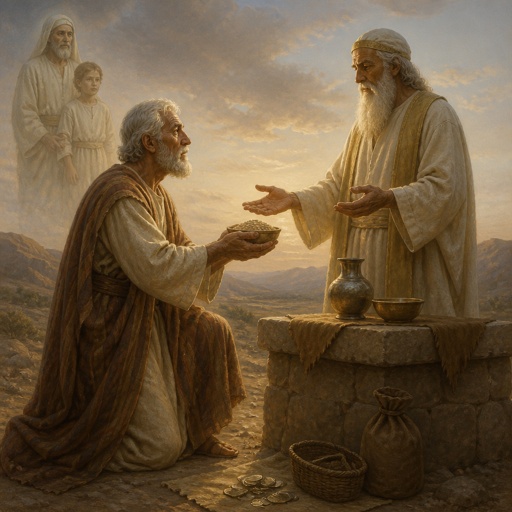
"And as I may so say, Levi also, who receiveth tithes, payed tithes in Abraham." - Hebrews 7:9

Hebrews 7:7 - "And without all contradiction the less is blessed of the better."

Hebrews 4:9 - "There remaineth therefore a rest to the people of God."

Hebrews 9:16 - "For where a testament is, there must also of necessity be the death of the testator."

Hebrews 7:20 - "And inasmuch as not without an oath he was made priest:"

Hebrews 9:18 - "Whereupon neither the first testament was dedicated without blood."

Hebrews 9:27 - "And as it is appointed unto men once to die, but after this the judgment:"

"And without all contradiction the less is blessed of the better." - Hebrews 7:7

Hebrews 7:22 - "By so much was Jesus made a surety of a better testament."

Hebrews 7:12 - "For the priesthood being changed, there is made of necessity a change also of the law."

Hebrews 7:24 - "But this man, because he continueth ever, hath an unchangeable priesthood."

Hebrews 9:3 - "And after the second veil, the tabernacle which is called the Holiest of all;"

Hebrews 9:9 - "Which was a figure for the time then present, in which were offered both gifts and sacrifices, that could not make him that did the service perfect, as pertaining to the conscience;"

Hebrews 9:13 - "For if the blood of bulls and of goats, and the ashes of an heifer sprinkling the unclean, sanctifieth to the purifying of the flesh:"

Hebrews 7:18 - "For there is verily a disannulling of the commandment going before for the weakness and unprofitableness thereof."

Hebrews 7:17 - "For he testifieth, Thou art a priest for ever after the order of Melchisedec."

Hebrews 7:10 - "For he was yet in the loins of his father, when Melchisedec met him."

Hebrews 9:20 - "Saying, This is the blood of the testament which God hath enjoined unto you."

Hebrews 9:21 - "Moreover he sprinkled with blood both the tabernacle, and all the vessels of the ministry."

Hebrews 7:16 - "Who is made, not after the law of a carnal commandment, but after the power of an endless life."

Hebrews 9:17 - "For a testament is of force after men are dead: otherwise it is of no strength at all while the testator liveth."
Hebrews 3:7 - "Wherefore (as the Holy Ghost saith, To day if ye will hear his voice,"

Hebrews 9:2 - "For there was a tabernacle made; the first, wherein was the candlestick, and the table, and the shewbread; which is called the sanctuary."

Hebrews 9:1 - "Then verily the first covenant had also ordinances of divine service, and a worldly sanctuary."

Hebrews 9:22 - "And almost all things are by the law purged with blood; and without shedding of blood is no remission."

Hebrews 3:9 - "When your fathers tempted me, proved me, and saw my works forty years."

Hebrews 8:7 - "For if that first covenant had been faultless, then should no place have been sought for the second."