Walking in Newness: Understanding the Covenant of Grace
"Not according to the covenant that I made with their fathers in the day when I took them by the hand to lead them out of the land of Egypt; because they continued not in my covenant, and I regarded them not, saith the Lord." - Hebrews 8:9
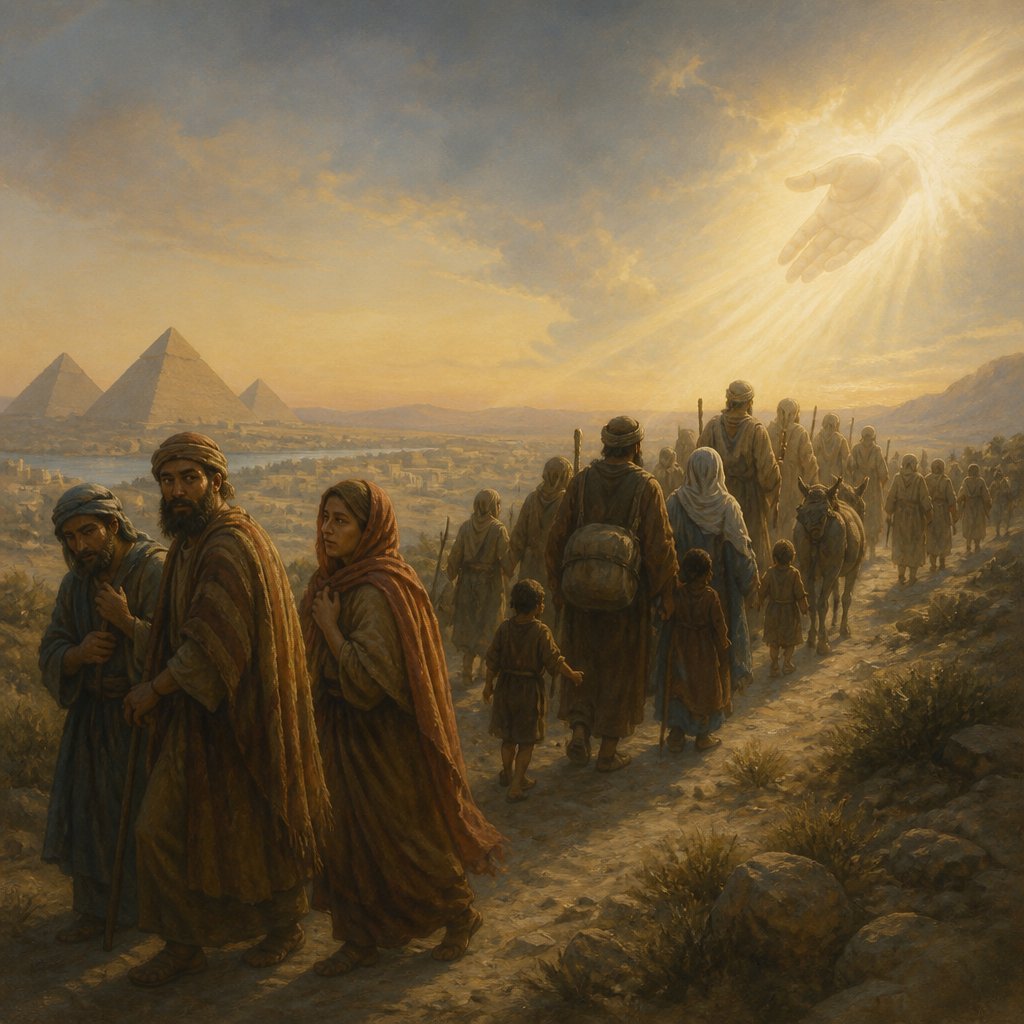
As we delve into Hebrews 8:9 which states, “Not according to the covenant that I made with their fathers in the day when I took them by the hand to lead them out of the land of Egypt; because they continued not in my covenant, and I regarded them not, saith the Lord,” we find ourselves standing at the crossroads of the Old and New Covenants, a pivotal moment in God’s relationship with humanity.
In this verse, the author of Hebrews references the covenant established during the time of Moses—a covenant marked by law, ceremony, and the constant reminder of human frailty. The journey from Egypt to the Promised Land was filled with divine intervention and miracles. God’s hand was visibly present, yet His people failed to uphold their end of the covenant agreement. The phrase “they continued not in my covenant” points to a heart posture that faltered under the weight of expectations and the allure of surrounding pagan cultures. Despite witnessing miracles and receiving the Law, the Israelites repeatedly turned away from God, choosing their own way instead of abiding in His commands.
It’s vital to realize that the Old Covenant was not merely a set of rules but a profound revelation of God’s holiness and mankind’s need for redemption. The sacrifices and rituals instructed in the Law served as a shadow pointing towards a greater fulfillment. Yet, humanity's struggle to remain faithful is evident throughout the Old Testament—an unbroken cycle of belief followed by rebellion and sin. The phrase “I regarded them not” underlines a somber truth: that the consequences of breaking the covenant were severe. God, in His righteousness, could not overlook unfaithfulness. However, it is here that we must pause and reflect on the heart of God—always yearning for reconciliation despite humanity’s waywardness.
In contrast, Hebrews ultimately points towards the New Covenant, fulfilled through Jesus Christ. This is where the beauty of grace emerges. The New Covenant established through the blood of Christ does not hinge on our ability to keep the law perfectly; rather, it rests upon His perfect obedience. As believers, we are enveloped in a relationship marked by grace rather than performance. We no longer stand condemned under the law, for Christ has made a way. This covenant echoes the promise found in Jeremiah 31:31-34, which speaks of a new heart and a new spirit.
What does this mean for us today? First and foremost, it illuminates the reality that we must not take the grace of God lightly. While we stand in the light of a new covenant, we are called to live as people who recognize the cost of that grace. Our spiritual journey, like that of the Israelites, still encounters moments of weakness and disobedience; however, we are empowered to pursue holiness by the Holy Spirit, who dwells within us. God’s regard for us is no longer based on our performance but rather on His unchanging love.
Additionally, this scripture invites us to consider our commitments within the covenant relationship. Are there areas in our lives where we are faltering? The encouragement here is to approach God with honest hearts, ready for His correction, but also open to His grace. Just as He longed for His people to be faithful, He desires that we truly walk with Him, understanding that our investment in the covenant relationship is both a privilege and a responsibility.
In closing, let us rejoice in the understanding that while the Old Covenant was marked by a continual struggle, the New Covenant offers us rest and renewal. “I regarded them not” serves as a solemn reminder of the gravity of unfaithfulness, but it also reflects God’s unyielding desire to lead us into a deeper relationship with Him. As we reflect on Hebrews 8:9 this week, let us commit ourselves anew to walking in the light of His grace, striving to uphold our end of the covenant, always remembering that it is His faithfulness that undergirds our journey.
Want to reflect more on Hebrews 8:9?
Continue your spiritual journey with Bible Chat — an AI-powered tool for exploring God's Word through conversation. Ask questions, discover connections, and deepen your understanding.
Get Our Apps


Hebrews 8:9 Artwork

Hebrews 8:9 - "Not according to the covenant that I made with their fathers in the day when I took them by the hand to lead them out of the land of Egypt; because they continued not in my covenant, and I regarded them not, saith the Lord."
"Not according to the covenant that I made with their fathers in the day when I took them by the hand to lead them out of the land of Egypt; because they continued not in my covenant, and I regarded them not, saith the Lord." - Hebrews 8:9

Hebrews 9:8 - "The Holy Ghost this signifying, that the way into the holiest of all was not yet made manifest, while as the first tabernacle was yet standing:"

Hebrews 5:8-9 - "Though he were a Son, yet learned he obedience by the things which he suffered; And being made perfect, he became the author of eternal salvation unto all them that obey him."

Hebrews 12:8

Hebrews 8:5

Hebrews 8:1-5

Hebrews 4:9 - "There remaineth therefore a rest to the people of God."
"The Holy Ghost this signifying, that the way into the holiest of all was not yet made manifest, while as the first tabernacle was yet standing:" - Hebrews 9:8

Hebrews 13:8 - "Jesus Christ the same yesterday, and to day, and for ever."

Hebrews 9:16 - "For where a testament is, there must also of necessity be the death of the testator."

Hebrews 3:8 - "Harden not your hearts, as in the provocation, in the day of temptation in the wilderness:"

Hebrews 9:18 - "Whereupon neither the first testament was dedicated without blood."

Hebrews 9:27 - "And as it is appointed unto men once to die, but after this the judgment:"

The Plague of Boils - Exodus 9:8-12.

Hebrews 9:3 - "And after the second veil, the tabernacle which is called the Holiest of all;"

Hebrews 8:12 - "For I will be merciful to their unrighteousness, and their sins and their iniquities will I remember no more."

Hebrews 8:2 - "A minister of the sanctuary, and of the true tabernacle, which the Lord pitched, and not man."

Hebrews 9:9 - "Which was a figure for the time then present, in which were offered both gifts and sacrifices, that could not make him that did the service perfect, as pertaining to the conscience;"

Hebrews 9:13 - "For if the blood of bulls and of goats, and the ashes of an heifer sprinkling the unclean, sanctifieth to the purifying of the flesh:"

Hebrews 9:20 - "Saying, This is the blood of the testament which God hath enjoined unto you."

Hebrews 9:21 - "Moreover he sprinkled with blood both the tabernacle, and all the vessels of the ministry."

Hebrews 9:17 - "For a testament is of force after men are dead: otherwise it is of no strength at all while the testator liveth."

Hebrews 8:7 - "For if that first covenant had been faultless, then should no place have been sought for the second."

Hebrews 6:8 - "But that which beareth thorns and briers is rejected, and is nigh unto cursing; whose end is to be burned."

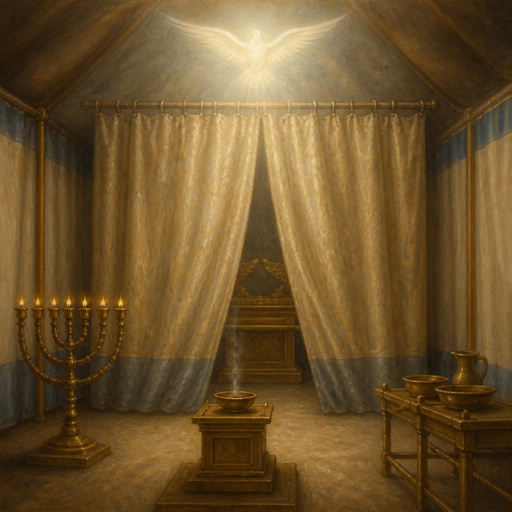
Hebrews 9:2 - "For there was a tabernacle made; the first, wherein was the candlestick, and the table, and the shewbread; which is called the sanctuary."

Hebrews 9:1 - "Then verily the first covenant had also ordinances of divine service, and a worldly sanctuary."

Hebrews 9:22 - "And almost all things are by the law purged with blood; and without shedding of blood is no remission."

Hebrews 7:8 - "And here men that die receive tithes; but there he receiveth them, of whom it is witnessed that he liveth."

Hebrews 8:8 - "For finding fault with them, he saith, Behold, the days come, saith the Lord, when I will make a new covenant with the house of Israel and with the house of Judah:"