The Gift of the High Priest: Understanding Our True Offering
"For every high priest is ordained to offer gifts and sacrifices: wherefore it is of necessity that this man have somewhat also to offer." - Hebrews 8:3
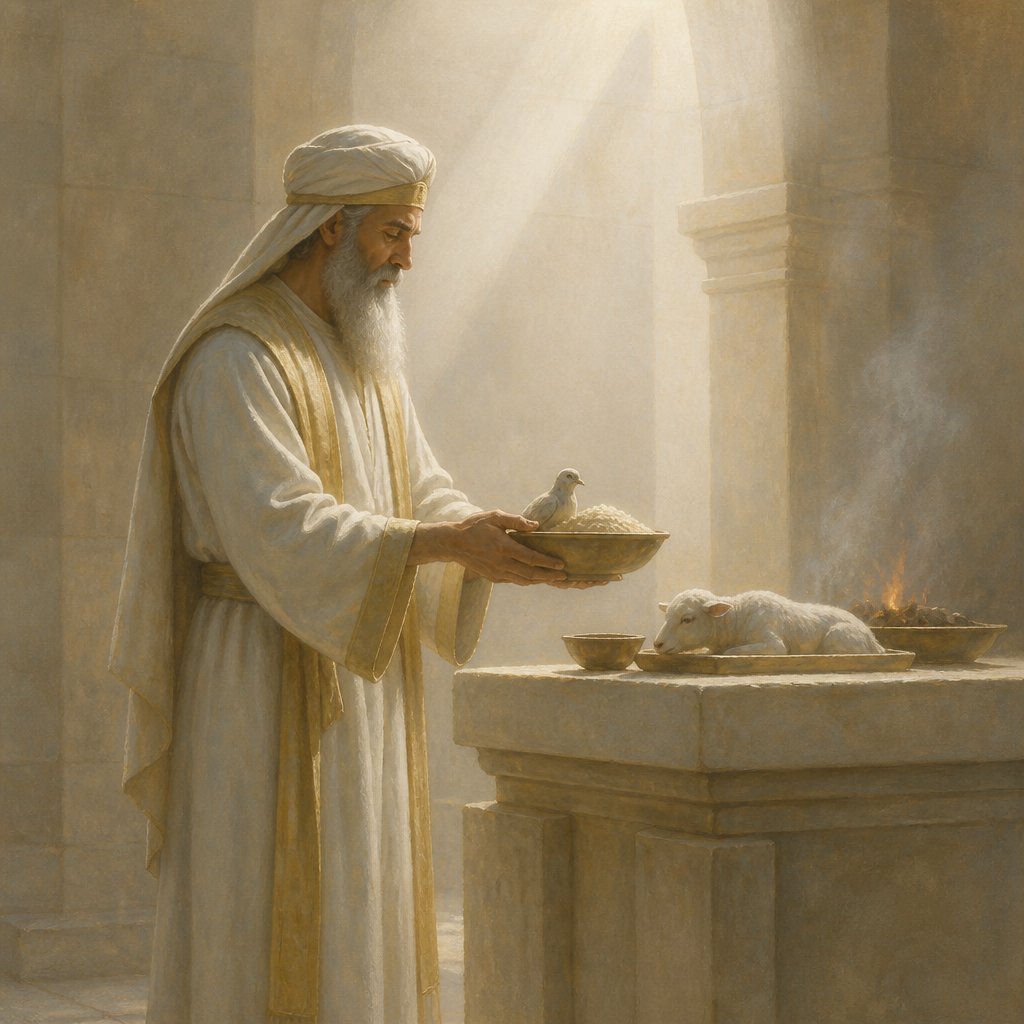
In the book of Hebrews, Chapter 8, verse 3, we find a profound insight into the ministry of Christ, beautifully encapsulated in the phrase: "For every high priest is ordained to offer gifts and sacrifices: wherefore it is of necessity that this man have somewhat also to offer." This statement reflects the timeless roles and expectations assigned to those who stand as intercessors between God and humanity, emphasizing the essential nature of offering unto God.
To properly appreciate this scripture, we must first understand the role of a high priest in the old covenant. The high priest of Israel was not merely a religious figure but also a vital mediator between God and the people. He entered the Most Holy Place once a year on Yom Kippur, the Day of Atonement, to make atonement for the sins of the nation. The high priest carried the weight of communal sin and sought God's grace on behalf of the people, offering sacrifices that would symbolize cleansing and devotion. It was imperative that the high priest have something to offer—a sacrifice that would be both a gift to God and a means of atonement for the people.
As we delve deeper into Hebrews 8:3, we recognize that the author is establishing a critical contrast between the Levitical priesthood and the priestly ministry of Jesus Christ. The necessity of the high priest having something to offer indicates that the role of the priest was not just a ceremonial duty but one steeped in the meaning of sacrifice. Each offering made was a reminder of humanity's need for redemption.
In the Old Testament, the sacrifices were often animals—innocent creatures whose blood symbolically averaged the life of the penitent, enabling them to step into a reconciled relationship with God. However, the sacrifices were ultimately a shadow of what was to come. The author of Hebrews points to Jesus, the great High Priest, who entered the heavens not with the blood of goats or calves, but with His own blood, offering a sacrifice that was perfect and eternal. In doing so, Christ fulfilled the requirements of sacrifice once and for all, bringing the old covenant to a consummate end and ushering in a new covenant established in His blood.
This transition invites us to reflect on the nature of our own offerings. If Christ, the ultimate High Priest, had something essential to offer—His own life for the remission of our sins—then what does this say about our response to Him? When considering our worship and our place within the body of Christ, we must ask ourselves: what is it that we have to offer back to God?
The offerings we bring are not limited to gifts of money or traditional sacrifices but encompass our very lives. Romans 12:1 encourages us to present our bodies as a living sacrifice, holy and acceptable unto God. This is our reasonable service. Our offerings should reflect the transformation that occurs when we fully engage with the grace provided by Christ's sacrifice. In moments of worship, prayer, and service, we practice offering ourselves—the very essence of who we are—as an act of gratitude and commitment.
In these moments of offering ourselves, we recognize the weight of what Christ has done. He didn't just pay the price; He also calls us into a relationship that requires our response. Offering ourselves means laying aside our desires for the sake of reflecting His love and grace. It means being living testimonies of His faithfulness in a world that desperately needs it.
In conclusion, as we meditate upon Hebrews 8:3, let us not only recognize the necessity for the high priest to have something to offer but also consider the privilege and joy we have in being able to offer ourselves—flawed yet redeemed—back to the One who lovingly gave Himself for us. Just as the high priest was ordained to bring gifts and sacrifices, so too are we called to live lives that are offerings, radiating His love and grace to those around us.
Want to reflect more on Hebrews 8:3?
Continue your spiritual journey with Bible Chat — an AI-powered tool for exploring God's Word through conversation. Ask questions, discover connections, and deepen your understanding.
Get Our Apps


Hebrews 8:3 Artwork

Hebrews 8:3 - "For every high priest is ordained to offer gifts and sacrifices: wherefore it is of necessity that this man have somewhat also to offer."
"For every high priest is ordained to offer gifts and sacrifices: wherefore it is of necessity that this man have somewhat also to offer." - Hebrews 8:3

Hebrews 3:8 - "Harden not your hearts, as in the provocation, in the day of temptation in the wilderness:"
"Harden not your hearts, as in the provocation, in the day of temptation in the wilderness:" - Hebrews 3:8

Hebrews 12:8

Hebrews 8:5

Hebrews 8:1-5

Hebrews 13:3

Hebrews 13:8 - "Jesus Christ the same yesterday, and to day, and for ever."

Hebrews 6:3 - "And this will we do, if God permit."

Hebrews 8:12 - "For I will be merciful to their unrighteousness, and their sins and their iniquities will I remember no more."

Hebrews 8:2 - "A minister of the sanctuary, and of the true tabernacle, which the Lord pitched, and not man."

Hebrews 3:19 - "So we see that they could not enter in because of unbelief."

Hebrews 8:7 - "For if that first covenant had been faultless, then should no place have been sought for the second."

Hebrews 6:8 - "But that which beareth thorns and briers is rejected, and is nigh unto cursing; whose end is to be burned."

Hebrews 7:8 - "And here men that die receive tithes; but there he receiveth them, of whom it is witnessed that he liveth."

Hebrews 3:18 - "And to whom sware he that they should not enter into his rest, but to them that believed not?"

Hebrews 3:11 - "So I sware in my wrath, They shall not enter into my rest.)"

Hebrews 10:3 - "But in those sacrifices there is a remembrance again made of sins every year."

Hebrews 9:3 - "And after the second veil, the tabernacle which is called the Holiest of all;"

"And this will we do, if God permit." - Hebrews 6:3

Hebrews 8:8 - "For finding fault with them, he saith, Behold, the days come, saith the Lord, when I will make a new covenant with the house of Israel and with the house of Judah:"

Hebrews 8:4 - "For if he were on earth, he should not be a priest, seeing that there are priests that offer gifts according to the law:"

"And Elishama, and Eliada, and Eliphelet, nine." - 1 Chronicles 3:8

Philippians 3:5 - "Circumcised the eighth day, of the stock of Israel, of the tribe of Benjamin, an Hebrew of the Hebrews; as touching the law, a Pharisee;"
Hebrews 3:7 - "Wherefore (as the Holy Ghost saith, To day if ye will hear his voice,"

jesus is the radiance of the father's glory hebrews 1:3

"Jesus Christ the same yesterday, and to day, and for ever." - Hebrews 13:8

Hebrews 5:8 - "Though he were a Son, yet learned he obedience by the things which he suffered;"

Hebrews 4:8 - "For if Jesus had given them rest, then would he not afterward have spoken of another day."