The Legacy of Faith: Understanding Tithes Through Levi and Abraham
"And as I may so say, Levi also, who receiveth tithes, payed tithes in Abraham." - Hebrews 7:9
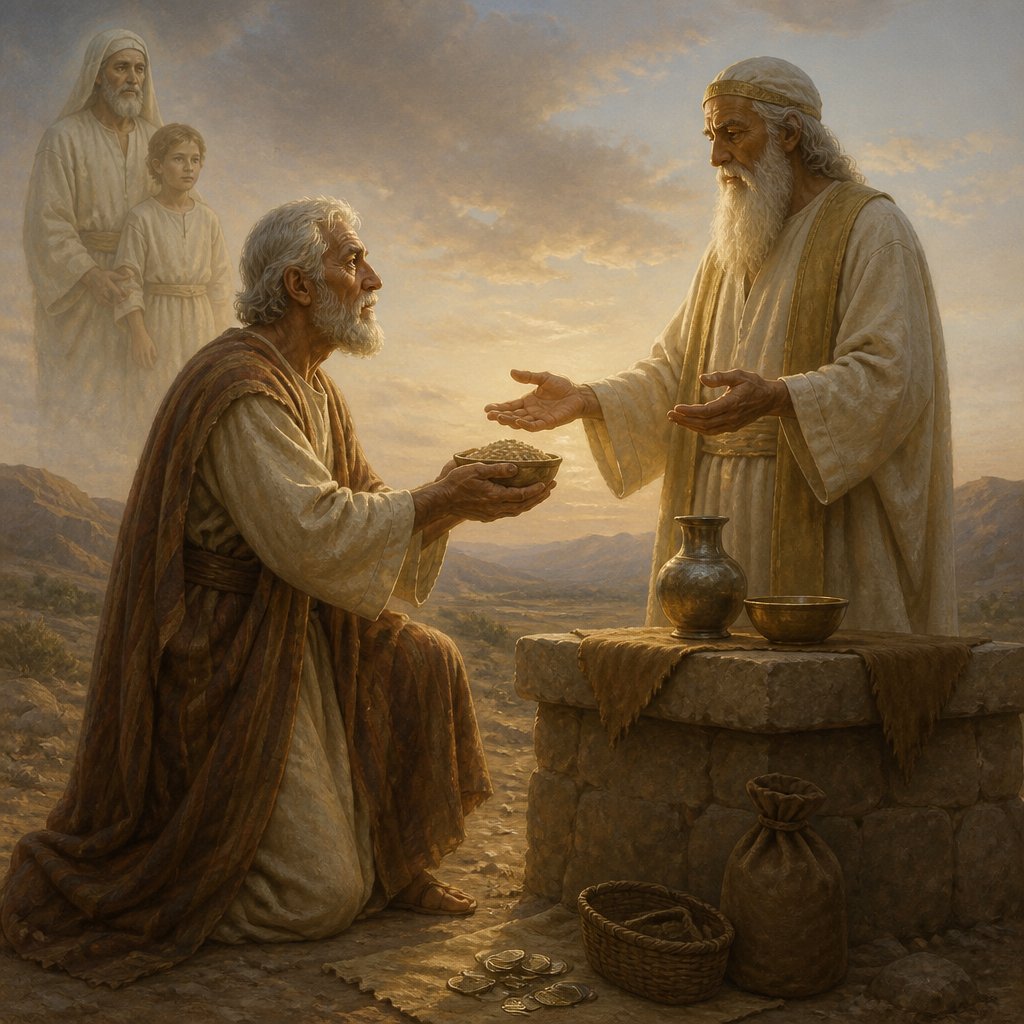
In the book of Hebrews, chapter 7, verse 9, we find the profound statement: "And as I may so say, Levi also, who receiveth tithes, payed tithes in Abraham" (KJV). At first glance, this verse may seem like an obscure reference buried within an argument about the priesthood and the supremacy of Christ. Yet, it unveils a rich tapestry of faith, obedience, and legacy that should speak to our hearts and challenge our understanding of spiritual inheritance and generosity.
This verse points us back to Abraham, the father of faith, whom God called out of Ur of the Chaldees. Abraham’s extraordinary faith and obedience are well-documented throughout the scriptures, but it’s in Genesis 14 that we find a pivotal moment: after a victorious battle rescuing Lot, Abraham encounters Melchizedek, the king of Salem and priest of the Most High God. In response to this divine encounter, Abraham gives Melchizedek a tithe of all. This act was not merely a financial transaction; it was a recognition of God’s sovereignty and a demonstration of gratitude.
Now, as the author of Hebrews elucidates, Levi, a descendant of Abraham, also paid tithes in a symbolic sense. Levi had not even been born yet when Abraham made the offering. The verse suggests a spiritual principle: there are times when the actions of one generation impact the next in profound ways. As believers, we enter into a legacy of faith established by those who have gone before us. This not only pertains to material blessings but also to spiritual realities, values, and acts of worship that echo through the hallways of history.
This ties into our understanding of tithing today. To many, including Christians, tithing can be viewed as an outdated or burdensome obligation. However, when viewed through the lens of worship and gratitude, as exhibited by Abraham, it takes on a new dimension. Tithing is not merely about the act of giving ten percent of our income; it's about acknowledging God’s provision in our lives and aligning our hearts with His purposes. Abraham’s willingness to tithe was a declaration of his faith in God’s ability to provide and bless abundantly.
Moreover, the mention of Levi highlights the importance of community in our faith journey. Although Levi received the tithes, he was embodying the spirit of giving that originated with Abraham. This implies that our financial stewardship and acts of generosity are not solely for our benefit, but ripple out to impact the broader community of believers and indeed, the world. Each time we give, we participate in a lineage of faith that dates back generations.
While reflecting on the implications of Hebrews 7:9, we should also examine the motivations behind our giving. Are we giving from a place of obligation, or is our giving a natural response to the overwhelming grace we have received from Christ? The New Testament challenges us to give cheerfully, not grudgingly or of necessity (2 Corinthians 9:7). This principle resonates deeply with the legacy that Abraham has left us; giving freely, as he did, opens our hearts to receive more of God’s presence and provision.
As we consider Levi’s involvement in Abraham’s act of tithing, let us recognize that we are part of an ongoing story of faith. In our daily lives, we, too, can leave a legacy that inspires others to trust and obey God. Let us consider our actions, our finances, our time, and our talents as offerings unto the Lord. Each tithe, each act of service, and each prayer matters in the great tapestry of God's kingdom. May we commit ourselves to the legacy of faith laid before us and reflect that legacy through our actions, providing a shining example for generations to come.
Want to reflect more on Hebrews 7:9?
Continue your spiritual journey with Bible Chat — an AI-powered tool for exploring God's Word through conversation. Ask questions, discover connections, and deepen your understanding.
Get Our Apps


Hebrews 7:9 Artwork

Hebrews 7:9 - "And as I may so say, Levi also, who receiveth tithes, payed tithes in Abraham."
"And as I may so say, Levi also, who receiveth tithes, payed tithes in Abraham." - Hebrews 7:9

Hebrews 9:7 - "But into the second went the high priest alone once every year, not without blood, which he offered for himself, and for the errors of the people:"

Hebrews 7:7 - "And without all contradiction the less is blessed of the better."

Hebrews 4:9 - "There remaineth therefore a rest to the people of God."

Hebrews 9:16 - "For where a testament is, there must also of necessity be the death of the testator."
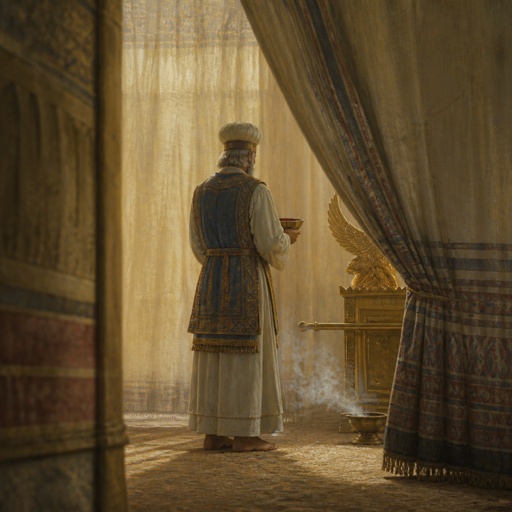
"But into the second went the high priest alone once every year, not without blood, which he offered for himself, and for the errors of the people:" - Hebrews 9:7

Hebrews 7:20 - "And inasmuch as not without an oath he was made priest:"

Hebrews 9:18 - "Whereupon neither the first testament was dedicated without blood."

Hebrews 9:27 - "And as it is appointed unto men once to die, but after this the judgment:"

"And without all contradiction the less is blessed of the better." - Hebrews 7:7

Hebrews 7:22 - "By so much was Jesus made a surety of a better testament."

Hebrews 7:12 - "For the priesthood being changed, there is made of necessity a change also of the law."

Hebrews 7:24 - "But this man, because he continueth ever, hath an unchangeable priesthood."

Hebrews 9:3 - "And after the second veil, the tabernacle which is called the Holiest of all;"

Hebrews 9:9 - "Which was a figure for the time then present, in which were offered both gifts and sacrifices, that could not make him that did the service perfect, as pertaining to the conscience;"

Hebrews 9:13 - "For if the blood of bulls and of goats, and the ashes of an heifer sprinkling the unclean, sanctifieth to the purifying of the flesh:"

Hebrews 7:18 - "For there is verily a disannulling of the commandment going before for the weakness and unprofitableness thereof."

Hebrews 7:17 - "For he testifieth, Thou art a priest for ever after the order of Melchisedec."

Hebrews 7:10 - "For he was yet in the loins of his father, when Melchisedec met him."

Hebrews 9:20 - "Saying, This is the blood of the testament which God hath enjoined unto you."

Hebrews 9:21 - "Moreover he sprinkled with blood both the tabernacle, and all the vessels of the ministry."

Hebrews 7:16 - "Who is made, not after the law of a carnal commandment, but after the power of an endless life."

Hebrews 9:17 - "For a testament is of force after men are dead: otherwise it is of no strength at all while the testator liveth."
Hebrews 3:7 - "Wherefore (as the Holy Ghost saith, To day if ye will hear his voice,"

Hebrews 9:2 - "For there was a tabernacle made; the first, wherein was the candlestick, and the table, and the shewbread; which is called the sanctuary."

Hebrews 9:1 - "Then verily the first covenant had also ordinances of divine service, and a worldly sanctuary."

Hebrews 9:22 - "And almost all things are by the law purged with blood; and without shedding of blood is no remission."

Hebrews 3:9 - "When your fathers tempted me, proved me, and saw my works forty years."

Hebrews 8:7 - "For if that first covenant had been faultless, then should no place have been sought for the second."