The High Calling of Tithing: A Reflection on Hebrews 7:5
"And verily they that are of the sons of Levi, who receive the office of the priesthood, have a commandment to take tithes of the people according to the law, that is, of their brethren, though they come out of the loins of Abraham:" - Hebrews 7:5
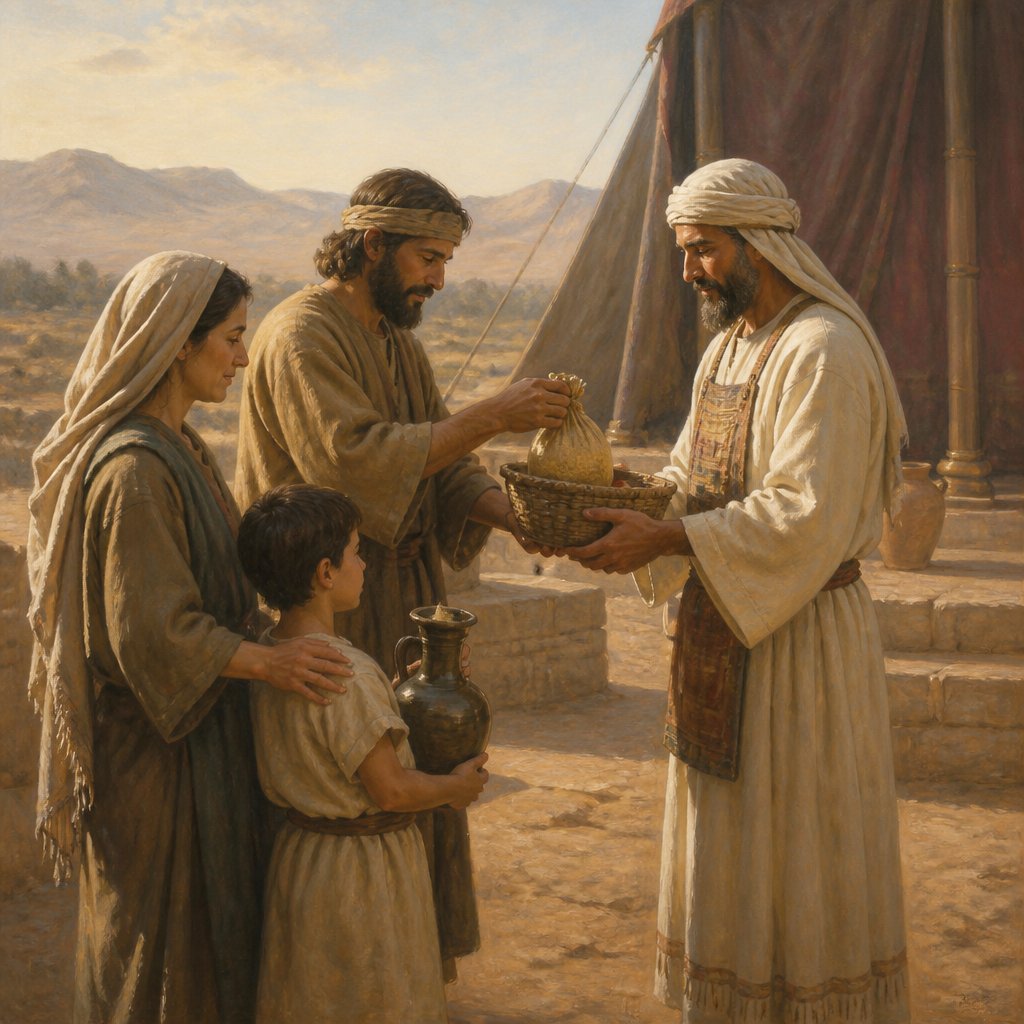
In the heart of Hebrews 7:5, we are confronted with profound truths about priesthood, obedience, and the position of those chosen to serve in God’s sacred order. The verse states: "And verily they that are of the sons of Levi, who receive the office of the priesthood, have a commandment to take tithes of the people according to the law, that is, of their brethren, though they come out of the loins of Abraham." (KJV).
To fully appreciate the implications of this scripture, we must first understand the context in which it was written. The author of Hebrews was addressing Christians, particularly those who were struggling with their Jewish heritage and the transition from the old covenant to the new. The priestly role established in the Levitical order was no longer sufficient; instead, it was being fulfilled wholly in Christ, our eternal High Priest.
The Levitical priests were tasked with the solemn responsibilities of serving in the temple, offering sacrifices, and interceding on behalf of the people. The commandment to take tithes from the Israelites was rooted in a covenantal relationship; it was a divine order that ensured the sustenance of the temple and its ministers. However, this act of tithing was more than just a financial obligation; it was a demonstration of faith, recognizing God’s provision and acknowledging His sovereignty.
In the structure of the Levites receiving tithes from their brethren, there lies a spiritual hierarchy that points us towards amazing truths. The Levites, though they were among the physical descendants of Abraham, were set apart for a specific purpose. They represented the community before God, and through their offerings, the people acknowledged not only their needs but also their collective identity as God’s chosen. In this way, the act of tithing was communal—a bond of trust, transparency, and shared purpose.
Today, as followers of Christ, the practice of tithing still holds immense significance. While the Levitical priesthood has been fulfilled in Christ, the principle of giving—as an act of worship—remains unchanged. Our tithes can be seen as a reflection of our gratitude and acknowledgment of God's sovereignty over our lives. It is part of our response to His unending grace and generosity.
Why then do some people view tithing as burdensome rather than as a privilege? Perhaps it is because we fail to see it through the lenses of purpose and faith. Tithing is not merely a transaction, nor is it a taxing requirement; rather, it serves as a pathway into deeper fellowship with God and with the community of believers. Through tithes, we invest in our spiritual family, support the work of the church, and participate in God’s mission to the world.
Moreover, God calls us beyond the physical act of giving. In 2 Corinthians 9:7, we are reminded that "God loveth a cheerful giver." The heart of tithing isn’t about the percentage we allocate but the attitude we adopt. It is an opportunity to reflect the generosity of our Savior, for every good gift comes from Him. We can also consider the spirit of our giving—do we give out of obligation, or do we give willingly, joyfully, and sacrificially?
In conclusion, Hebrews 7:5 serves as a potent reminder of our identity both in community and in Christ. As we tithe, let us not merely measure our faith by the amount we give, but by the heart with which we give it. We are called to trust that our contributions, however small or large, form the fabric of God’s kingdom work on earth. Let us embrace the high calling of tithing not just as a commandment but as a joyous response to the incredible love of our eternal High Priest, Jesus Christ.
Want to reflect more on Hebrews 7:5?
Continue your spiritual journey with Bible Chat — an AI-powered tool for exploring God's Word through conversation. Ask questions, discover connections, and deepen your understanding.
Get Our Apps


Hebrews 7:5 Artwork

Hebrews 7:5 - "And verily they that are of the sons of Levi, who receive the office of the priesthood, have a commandment to take tithes of the people according to the law, that is, of their brethren, though they come out of the loins of Abraham:"
"And verily they that are of the sons of Levi, who receive the office of the priesthood, have a commandment to take tithes of the people according to the law, that is, of their brethren, though they come out of the loins of Abraham:" - Hebrews 7:5

Hebrews 5:7 - "Who in the days of his flesh, when he had offered up prayers and supplications with strong crying and tears unto him that was able to save him from death, and was heard in that he feared;"

Hebrews 8:5

Hebrews 7:7 - "And without all contradiction the less is blessed of the better."

Zechariah 5:7 - "And, behold, there was lifted up a talent of lead: and this is a woman that sitteth in the midst of the ephah."

Hebrews 8:1-5

Hebrews 10:5-10

Hebrews 10:5-10

Hebrews 4:5 - "And in this place again, If they shall enter into my rest."

Hebrews 7:20 - "And inasmuch as not without an oath he was made priest:"

Hebrews 5:10 - "Called of God an high priest after the order of Melchisedec."

"And without all contradiction the less is blessed of the better." - Hebrews 7:7

Hebrews 7:22 - "By so much was Jesus made a surety of a better testament."

Hebrews 6:5 - "And have tasted the good word of God, and the powers of the world to come,"

Hebrews 7:12 - "For the priesthood being changed, there is made of necessity a change also of the law."

Hebrews 7:24 - "But this man, because he continueth ever, hath an unchangeable priesthood."

Hebrews 7:18 - "For there is verily a disannulling of the commandment going before for the weakness and unprofitableness thereof."

Hebrews 7:17 - "For he testifieth, Thou art a priest for ever after the order of Melchisedec."

Hebrews 7:10 - "For he was yet in the loins of his father, when Melchisedec met him."

Philippians 3:5 - "Circumcised the eighth day, of the stock of Israel, of the tribe of Benjamin, an Hebrew of the Hebrews; as touching the law, a Pharisee;"

Hebrews 5:13 - "For every one that useth milk is unskilful in the word of righteousness: for he is a babe."

Hebrews 5:4 - "And no man taketh this honour unto himself, but he that is called of God, as was Aaron."

Hebrews 7:16 - "Who is made, not after the law of a carnal commandment, but after the power of an endless life."

Hebrews 3:7 - "Wherefore (as the Holy Ghost saith, To day if ye will hear his voice,"

Hebrews 5:3 - "And by reason hereof he ought, as for the people, so also for himself, to offer for sins."

Hebrews 2:5 - "For unto the angels hath he not put in subjection the world to come, whereof we speak."

Hebrews 8:7 - "For if that first covenant had been faultless, then should no place have been sought for the second."

Hebrews 7:15 - "And it is yet far more evident: for that after the similitude of Melchisedec there ariseth another priest,"
Hebrews 7:23 - "And they truly were many priests, because they were not suffered to continue by reason of death:"