The Disannulling of Weakness: Understanding Hebrews 7:18
"For there is verily a disannulling of the commandment going before for the weakness and unprofitableness thereof." - Hebrews 7:18

Hebrews 7:18 (KJV) states: “For there is verily a disannulling of the commandment going before for the weakness and unprofitableness thereof.” This passage is profound in its implications for both the history of God’s covenant with His people and the continuous work of grace provided through Christ.
To understand this verse, we must first delve into its context. The Book of Hebrews was written to Jewish believers struggling to reconcile their past under the Mosaic law with the new covenant established by Jesus Christ. The author of Hebrews emphasizes the superiority of Christ's priesthood over the Levitical priesthood, indicating that while the law served a purpose, it was never meant to be the final answer. The commandments and ordinances given under the law were a guide and pointed toward the need for a more excellent solution—a solution found only in Christ.
The phrase “disannulling of the commandment” signifies a dramatic shift. A disannulling means to remove, invalidate, or nullify the earlier agreement between God and His people under the law. This concept of disannulling can be daunting, particularly because it feels as if we are losing the foundations that our faith was built upon. However, the essence of the message is not about loss but about fulfillment and transformation.
The “weakness and unprofitableness” of the law refers not to the law's inherent value but to the failure of the law to provide salvation. The law highlighted sin, it revealed God’s holiness, and it demonstrated humanity's desperate need for a savior. Yet, it could not transform the heart; it could not perfect us nor grant us the righteousness required to stand before a holy God. The sacrificial system under the law served as a shadow of the greater sacrifice yet to come—Jesus Christ Himself.
Paul, in writing to the Galatians, depicts the law as a schoolmaster, guiding us to Christ (Galatians 3:24). This law was necessary; it pointed out our flaws and inadequacies, but it also served to lead us to the one who could redeem us from the chasm created by sin. The law could identify wrongdoing but not rectify it. The disannulling of this commandment illustrates God’s grace and mercy—how the law gave way for life and peace in Christ Jesus (Romans 8:1-2).
Perhaps one of the greatest truths captured in Hebrews 7:18 is that our past, characterized by our struggle and weaknesses, is not our ultimate reality. In Christ, we find hope, redemption, and empowerment. We learn that the disannulling of the law opens the way for a new way of living, a spiritual life that is led by the Holy Spirit. We are no longer bound by the constraints of the law but are free to live out our faith in genuine love and obedience that springs from an inner transformation.
As we reflect on this powerful scripture, let us find comfort in understanding that our inadequacies are acknowledged, yet they are met with the grace that Jesus extends to us. With His lifestyle as our model—the embodiment of love, obedience, and grace—we are called not merely to follow rules but to live in relationship with Him, who fulfilled the law on our behalf.
In closing, let us approach the Lord with gratitude for the freedom we receive through the disannulling of the commandments that once served us imperfectly. May we embrace this new covenant with joy, knowing that our past does not define us but rather leads us to a future filled with hope and promise in Christ.
Let us pray: Dear Lord, thank you for the grace that disannuls the burdens of the law and sets us free. Help us to understand and appreciate the fullness of the covenant we have through Your Son, Jesus. Let us not dwell on our weaknesses but rather embrace the strength that comes from knowing You. Amen.
Want to reflect more on Hebrews 7:18?
Continue your spiritual journey with Bible Chat — an AI-powered tool for exploring God's Word through conversation. Ask questions, discover connections, and deepen your understanding.
Get Our Apps


Hebrews 7:18 Artwork

Hebrews 7:18 - "For there is verily a disannulling of the commandment going before for the weakness and unprofitableness thereof."

"For there is verily a disannulling of the commandment going before for the weakness and unprofitableness thereof." - Hebrews 7:18

Hebrews 7:7 - "And without all contradiction the less is blessed of the better."

Hebrews 10:18 - "Now where remission of these is, there is no more offering for sin."

Hebrews 11:18 - "Of whom it was said, That in Isaac shall thy seed be called:"

Hebrews 9:18 - "Whereupon neither the first testament was dedicated without blood."

Hebrews 3:18 - "And to whom sware he that they should not enter into his rest, but to them that believed not?"

Hebrews 7:20 - "And inasmuch as not without an oath he was made priest:"

Hebrews 2:18 - "For in that he himself hath suffered being tempted, he is able to succour them that are tempted."

"And without all contradiction the less is blessed of the better." - Hebrews 7:7

Hebrews 7:22 - "By so much was Jesus made a surety of a better testament."

Hebrews 7:12 - "For the priesthood being changed, there is made of necessity a change also of the law."

Hebrews 7:24 - "But this man, because he continueth ever, hath an unchangeable priesthood."
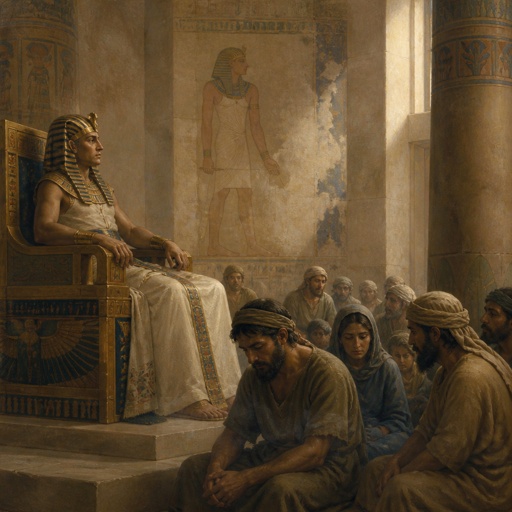
"Till another king arose, which knew not Joseph." - Acts 7:18

Hebrews 13:18 - "Pray for us: for we trust we have a good conscience, in all things willing to live honestly."

Hebrews 12:18 - "For ye are not come unto the mount that might be touched, and that burned with fire, nor unto blackness, and darkness, and tempest,"

Hebrews 7:17 - "For he testifieth, Thou art a priest for ever after the order of Melchisedec."

Hebrews 7:10 - "For he was yet in the loins of his father, when Melchisedec met him."

"Now where remission of these is, there is no more offering for sin." - Hebrews 10:18

Hebrews 7:16 - "Who is made, not after the law of a carnal commandment, but after the power of an endless life."

Hebrews 3:7 - "Wherefore (as the Holy Ghost saith, To day if ye will hear his voice,"

Exodus 18:7 - "¶ And Moses went out to meet his father in law, and did obeisance, and kissed him; and they asked each other of their welfare; and they came into the tent."

Hebrews 8:7 - "For if that first covenant had been faultless, then should no place have been sought for the second."

Hebrews 7:15 - "And it is yet far more evident: for that after the similitude of Melchisedec there ariseth another priest,"
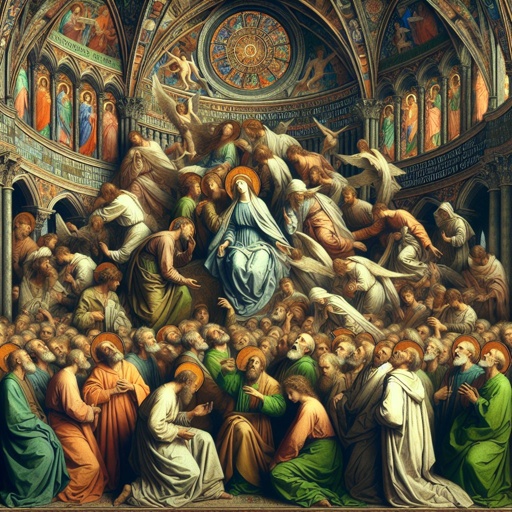
Hebrews 7:23 - "And they truly were many priests, because they were not suffered to continue by reason of death:"

Hebrews 7:8 - "And here men that die receive tithes; but there he receiveth them, of whom it is witnessed that he liveth."

Hebrews 1:7 - "And of the angels he saith, Who maketh his angels spirits, and his ministers a flame of fire."

"Of whom it was said, That in Isaac shall thy seed be called:" - Hebrews 11:18
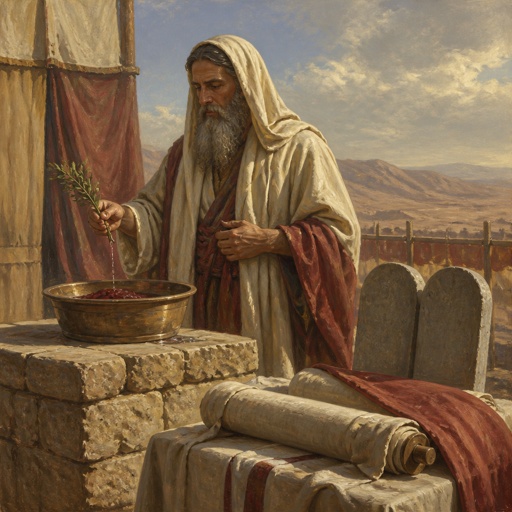
"Whereupon neither the first testament was dedicated without blood." - Hebrews 9:18

Hebrews 10:7 - "Then said I, Lo, I come (in the volume of the book it is written of me,) to do thy will, O God."