The Sovereignty of God in Difficult Times
"For, lo, I raise up the Chaldeans, that bitter and hasty nation, which shall march through the breadth of the land, to possess the dwellingplaces that are not their's." - Habakkuk 1:6
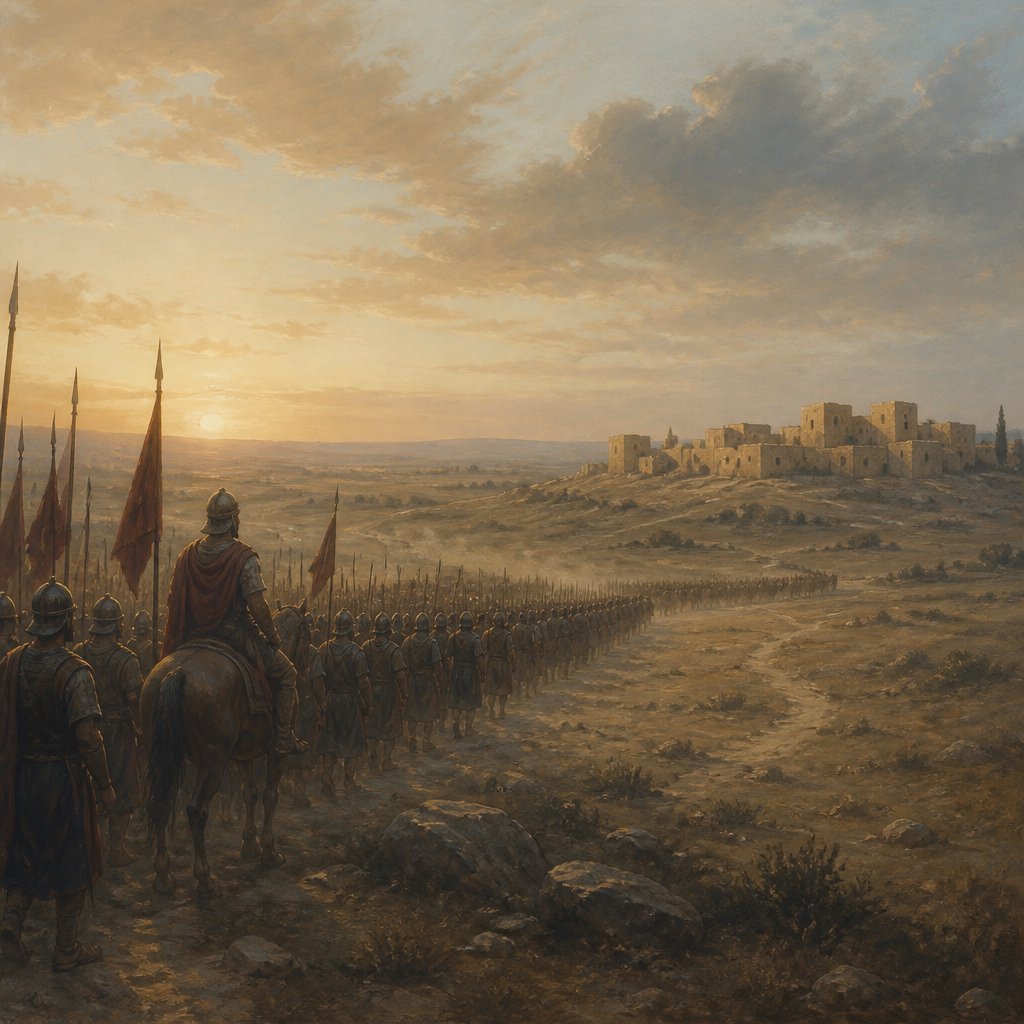
The book of Habakkuk offers profound insights into the human experience of suffering, injustice, and the seeming silence of God in the face of calamity. Habakkuk 1:6, “For, lo, I raise up the Chaldeans, that bitter and hasty nation, which shall march through the breadth of the land, to possess the dwellingplaces that are not theirs,” serves as a stark reminder of God's sovereignty over nations and events, even when those events do not align with our expectations of justice and mercy.
As we delve into this verse, we find ourselves in the midst of a dialogue between the prophet Habakkuk and God. Habakkuk was troubled by the violence, injustice, and wickedness he saw in Judah, and in his lament, he brought his concerns directly to God. Instead of reassuring Habakkuk with words of comfort, God responds by proclaiming the raising up of the Chaldeans, a nation known for their brutality and swiftness in conquest. This is a critical turning point in the text where God reveals His sovereign plan to use a wicked nation to achieve His purposes.
In the context of Habakkuk's cry, we understand the depth of God's declaration. The Chaldeans, or Babylonians, were not just a foreign power, but they symbolized a drastic change, an answer of severity to the pleas for judgment against injustices in Judah. This raises a challenging question: Why would God choose a nation characterized by their bitter and hasty nature to discipline His people? The answer lies within the broader understanding of God’s character and purpose.
God is not limited by human concepts of justice or morality. He operates on a divine timeline and within a framework that often escapes our understanding. Theologically, this moment in Habakkuk’s prophecy foreshadows the way God uses various vessels—including those that seem outright contrary to His will—to accomplish His purposes. The raising up of the Chaldeans indicates that God is ultimately in control, even of those who would act in rebellion against Him. This reflects Romans 8:28, where we are reminded that God can work all things together for good to them that love Him.
When we confront trials and sufferings in our own lives, we may wrestle with feelings of uncertainty and fear. The world around us can often seem like a chaotic whirlwind filled with bitter and hasty responses to needs—political unrest, social injustice, personal tragedies. It can lead us to wonder where God is in all of this and how He can allow such things to transpire. Yet, Habakkuk teaches us that God is still present, actively involved, and sovereign even when we do not understand His methods.
Furthermore, the bitter Chaldeans were instruments of God’s judgment, yet they too were subject to His ultimate authority. They were allowed to march through the land to possess dwelling places not their own, a prophetic indication of their imminent destruction and judgment. It serves as a reminder that no power, however formidable it may seem, is beyond the grasp of God’s justice.
In prayer and contemplation, we can bring our own confusion and pain before God, just as Habakkuk did. We are encouraged to seek insight, maintain faith, and trust that God’s plan encompasses our present trials. This does not mean He delights in our suffering or that He will not act on our behalf; rather, it means He is intricately involved in the fabric of history and the affairs of humanity.
As we meditate on this verse, let us rest in the assurance that God is working, even in the tumult of our circumstances. He his sovereign; a God who raises and lowers nations, yet He remains diligent in His love for His people and His overarching plan of salvation. Let this truth comfort us in our darkest days—He has not forgotten us, rather He is weaving all threads, even those we deem harsh, into a tapestry of His perfect will.
Want to reflect more on Habakkuk 1:6?
Continue your spiritual journey with Bible Chat — an AI-powered tool for exploring God's Word through conversation. Ask questions, discover connections, and deepen your understanding.
Get Our Apps


Habakkuk 1:6 Artwork

Habakkuk 1:6 - "For, lo, I raise up the Chaldeans, that bitter and hasty nation, which shall march through the breadth of the land, to possess the dwellingplaces that are not their's."
"For, lo, I raise up the Chaldeans, that bitter and hasty nation, which shall march through the breadth of the land, to possess the dwellingplaces that are not their's." - Habakkuk 1:6

Habakkuk 1:1 - "The burden which Habakkuk the prophet did see."

Habakkuk 3:1 - "A prayer of Habakkuk the prophet upon Shigionoth."

"The burden which Habakkuk the prophet did see." - Habakkuk 1:1

"A prayer of Habakkuk the prophet upon Shigionoth." - Habakkuk 3:1

"A prayer of Habakkuk the prophet upon Shigionoth." - Habakkuk 3:1

Habakkuk 2:1-3

Habakkuk 1:7 - "They are terrible and dreadful: their judgment and their dignity shall proceed of themselves."

Habakkuk 1:17 - "Shall they therefore empty their net, and not spare continually to slay the nations?"

Habakkuk 1:14 - "And makest men as the fishes of the sea, as the creeping things, that have no ruler over them?"

Habakkuk 3:6 - "He stood, and measured the earth: he beheld, and drove asunder the nations; and the everlasting mountains were scattered, the perpetual hills did bow: his ways are everlasting."

Habakkuk 1:16 - "Therefore they sacrifice unto their net, and burn incense unto their drag; because by them their portion is fat, and their meat plenteous."

Habakkuk 1:11 - "Then shall his mind change, and he shall pass over, and offend, imputing this his power unto his god."

"They are terrible and dreadful: their judgment and their dignity shall proceed of themselves." - Habakkuk 1:7

habakkuk 3: 6 He stood and measured the earth; He looked and startled the nations. And the everlasting mountains were scattered, The perpetual hills bowed.His ways are everlasting.

Habakkuk 1:9 - "They shall come all for violence: their faces shall sup up as the east wind, and they shall gather the captivity as the sand."

Habakkuk 1:15 - "They take up all of them with the angle, they catch them in their net, and gather them in their drag: therefore they rejoice and are glad."

Habakkuk 2:6 - "Shall not all these take up a parable against him, and a taunting proverb against him, and say, Woe to him that increaseth that which is not his! how long? and to him that ladeth himself with thick clay!"

Habakkuk 1:5 - "¶ Behold ye among the heathen, and regard, and wonder marvellously: for I will work a work in your days, which ye will not believe, though it be told you."

Habakkuk 1:4 - "Therefore the law is slacked, and judgment doth never go forth: for the wicked doth compass about the righteous; therefore wrong judgment proceedeth."

Habakkuk 1:10 - "And they shall scoff at the kings, and the princes shall be a scorn unto them: they shall deride every strong hold; for they shall heap dust, and take it."

"I will stand upon my watch, and set me upon the tower, and will watch to see what he will say unto me, and what I shall answer when I am reproved." - Habakkuk 2:1

Habakkuk 1:3 - "Why dost thou shew me iniquity, and cause me to behold grievance? for spoiling and violence are before me: and there are that raise up strife and contention."
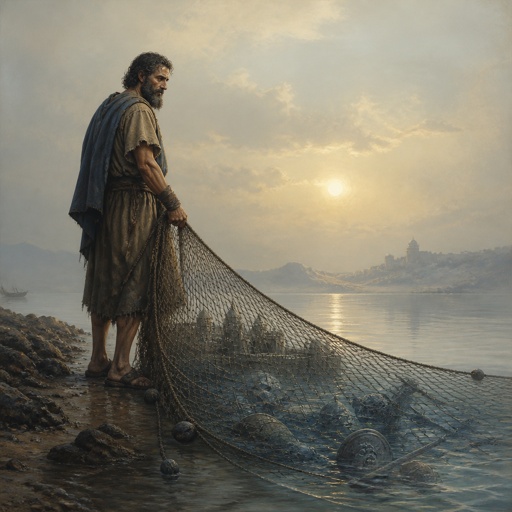
"Shall they therefore empty their net, and not spare continually to slay the nations?" - Habakkuk 1:17

Habakkuk 1:2 - "O LORD, how long shall I cry, and thou wilt not hear! even cry out unto thee of violence, and thou wilt not save!"
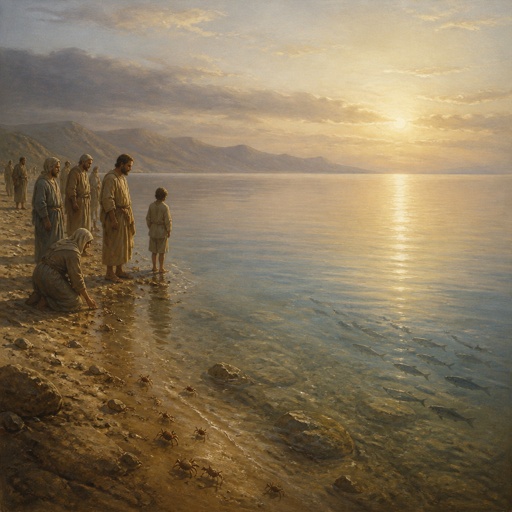
"And makest men as the fishes of the sea, as the creeping things, that have no ruler over them?" - Habakkuk 1:14
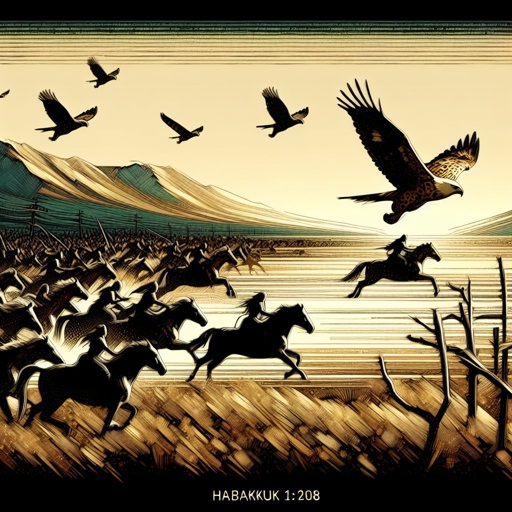
Habakkuk 1:8 - "Their horses also are swifter than the leopards, and are more fierce than the evening wolves: and their horsemen shall spread themselves, and their horsemen shall come from far; they shall fly as the eagle that hasteth to eat."

Habakkuk 2:1 - "I will stand upon my watch, and set me upon the tower, and will watch to see what he will say unto me, and what I shall answer when I am reproved."

Habakkuk 1:13 - "Thou art of purer eyes than to behold evil, and canst not look on iniquity: wherefore lookest thou upon them that deal treacherously, and holdest thy tongue when the wicked devoureth the man that is more righteous than he?"