Bearing the Burden: A Deep Dive into Habakkuk 1:1
"The burden which Habakkuk the prophet did see." - Habakkuk 1:1
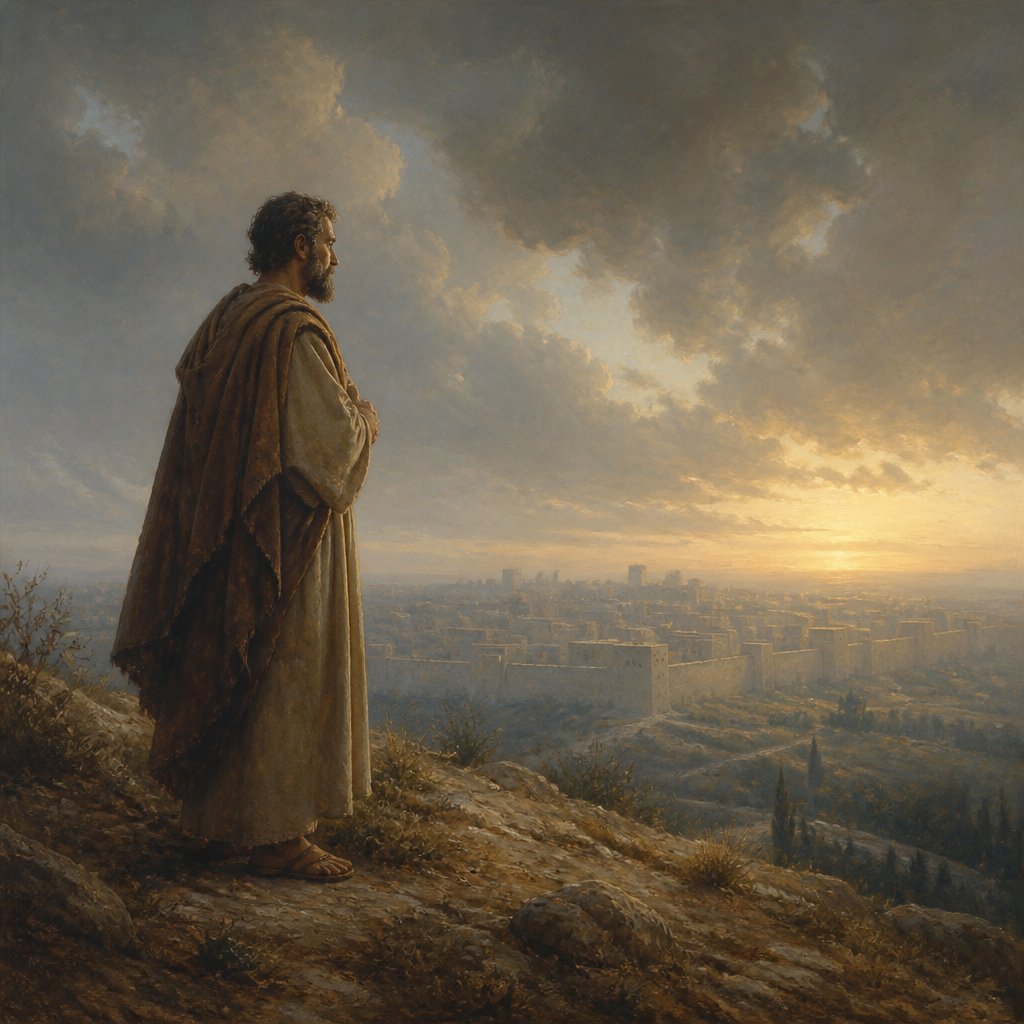
"The burden which Habakkuk the prophet did see." - Habakkuk 1:1 (KJV)
In our journey of faith, we often come across verses that resonate deeply with our experiences, and few capture the human condition as poignantly as Habakkuk 1:1. This brief yet powerful verse serves as a window into the heart of the prophet Habakkuk, who lived during a tumultuous period of Israel's history. The term "burden" here is significant; it speaks to the weight of the issues he was grappling with as well as the prophetic messages he was entrusted to deliver.
To understand the depth of this burden, we must first appreciate the historical and spiritual context in which Habakkuk operated. The Israelites were facing moral decay, social injustice, and impending threat from external forces, notably the Babylonians. Habakkuk's lamentation is not merely an account of his sorrow; it is a profound reflection of his struggle to reconcile God’s sovereignty with the reality of human suffering. Supported by the scriptures, he voiced the common questions of believers throughout the ages: "Why do You allow suffering? Where are You in our pain?"
This brings us to the core of our devotion today: the acknowledgment of burdens in our own lives. Each of us carries burdens, whether they are personal, familial, societal, or spiritual. Habakkuk’s burden represents a call to take notice of the weight we bear, to honestly confront our struggles, and to bring them to God. It is a reminder that our burdens are not meant to be endured in isolation but should be placed before the Lord who hears us, sees us, and loves us.
Habakkuk's role as a prophet challenges us as believers, as it teaches us how to respond to our burdens. The very act of acknowledging his burden leads him onto a path of dialogue with God. He does not bury it or gloss over it; instead, he raises his concerns directly to God. In the face of injustice and chaos, Habakkuk demonstrates that lament and complaint can be part of a faithful believer's prayer life. Too often, we feel that we must come to God with polished prayers and unwavering faith; yet, Habakkuk shows us that raw honesty is a valid expression of our relationship with God.
As we reflect on Habakkuk’s burden, let us also consider how we can transform our own burdens into conversations with God. Instead of allowing despair to lead us to silence, we are called to articulate our pain and confusion. God invites us into dialogue. He delights in our honesty and is willing to meet us in our doubts and fears. 1 Peter 5:7 encourages us to "cast all your care upon him; for he careth for you." The burdens we carry can serve to deepen our dependency on God and enhance our understanding of His character.
Moreover, Habakkuk’s prophetic vision compels us to shift our focus from our immediate struggles to the eternal perspective of God’s redemptive plan. Though the burdens are heavy, they are not the end of the story. The book of Habakkuk ultimately ends with a profound affirmation of faith (Habakkuk 3:17-19), illustrating that while the circumstances may not change, our trust in God and His sovereignty can transform our hearts.
As we meditate on Habakkuk 1:1, may we embrace our burdens as opportunities for deeper intimacy with God. Let us ask Him to reveal how He wants to use our struggles for His purposes, both in our lives and the lives of others. God is never indifferent to our pain; He is our refuge and strength, ready to bear our burdens alongside us. Allow the burdens you bear to draw you closer to Him, and may you find solace in His presence, knowing that even in times of turmoil, He is at work.
Want to reflect more on Habakkuk 1:1?
Continue your spiritual journey with Bible Chat — an AI-powered tool for exploring God's Word through conversation. Ask questions, discover connections, and deepen your understanding.
Get Our Apps


Habakkuk 1:1 Artwork

Habakkuk 1:1 - "The burden which Habakkuk the prophet did see."

"The burden which Habakkuk the prophet did see." - Habakkuk 1:1

Habakkuk 3:1 - "A prayer of Habakkuk the prophet upon Shigionoth."

Habakkuk 2:1-3

"A prayer of Habakkuk the prophet upon Shigionoth." - Habakkuk 3:1

"A prayer of Habakkuk the prophet upon Shigionoth." - Habakkuk 3:1

Habakkuk 1:7 - "They are terrible and dreadful: their judgment and their dignity shall proceed of themselves."

Habakkuk 1:17 - "Shall they therefore empty their net, and not spare continually to slay the nations?"

Habakkuk 1:14 - "And makest men as the fishes of the sea, as the creeping things, that have no ruler over them?"

Habakkuk 1:16 - "Therefore they sacrifice unto their net, and burn incense unto their drag; because by them their portion is fat, and their meat plenteous."

Habakkuk 1:11 - "Then shall his mind change, and he shall pass over, and offend, imputing this his power unto his god."

"They are terrible and dreadful: their judgment and their dignity shall proceed of themselves." - Habakkuk 1:7

Habakkuk 1:9 - "They shall come all for violence: their faces shall sup up as the east wind, and they shall gather the captivity as the sand."

Habakkuk 1:15 - "They take up all of them with the angle, they catch them in their net, and gather them in their drag: therefore they rejoice and are glad."

Habakkuk 1:6 - "For, lo, I raise up the Chaldeans, that bitter and hasty nation, which shall march through the breadth of the land, to possess the dwellingplaces that are not their's."

Habakkuk 1:5 - "¶ Behold ye among the heathen, and regard, and wonder marvellously: for I will work a work in your days, which ye will not believe, though it be told you."

Habakkuk 1:4 - "Therefore the law is slacked, and judgment doth never go forth: for the wicked doth compass about the righteous; therefore wrong judgment proceedeth."

Habakkuk 1:10 - "And they shall scoff at the kings, and the princes shall be a scorn unto them: they shall deride every strong hold; for they shall heap dust, and take it."

"I will stand upon my watch, and set me upon the tower, and will watch to see what he will say unto me, and what I shall answer when I am reproved." - Habakkuk 2:1

Habakkuk 1:3 - "Why dost thou shew me iniquity, and cause me to behold grievance? for spoiling and violence are before me: and there are that raise up strife and contention."
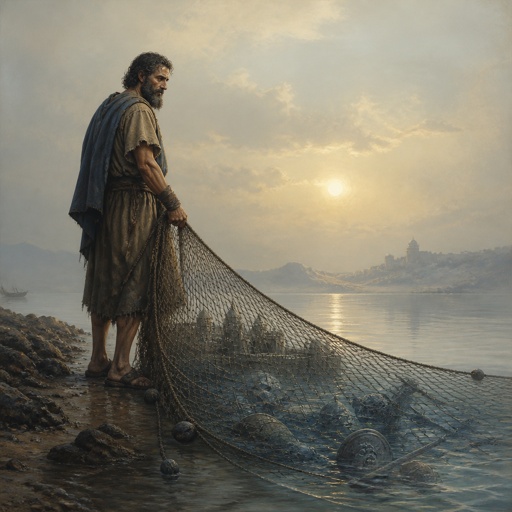
"Shall they therefore empty their net, and not spare continually to slay the nations?" - Habakkuk 1:17

Habakkuk 1:2 - "O LORD, how long shall I cry, and thou wilt not hear! even cry out unto thee of violence, and thou wilt not save!"
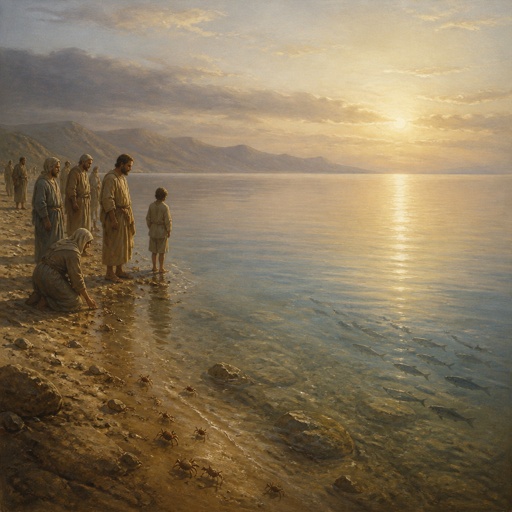
"And makest men as the fishes of the sea, as the creeping things, that have no ruler over them?" - Habakkuk 1:14
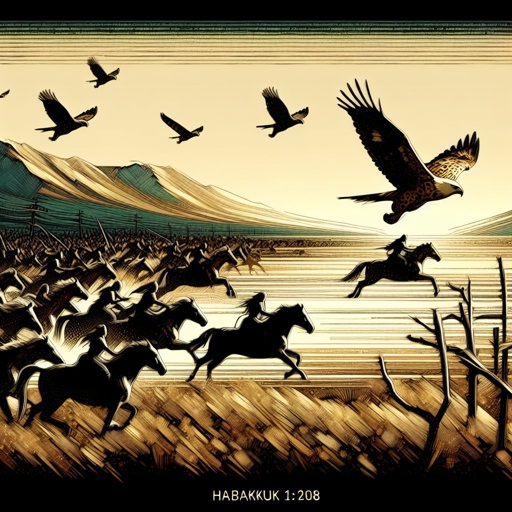
Habakkuk 1:8 - "Their horses also are swifter than the leopards, and are more fierce than the evening wolves: and their horsemen shall spread themselves, and their horsemen shall come from far; they shall fly as the eagle that hasteth to eat."

Habakkuk 2:1 - "I will stand upon my watch, and set me upon the tower, and will watch to see what he will say unto me, and what I shall answer when I am reproved."

Habakkuk 1:13 - "Thou art of purer eyes than to behold evil, and canst not look on iniquity: wherefore lookest thou upon them that deal treacherously, and holdest thy tongue when the wicked devoureth the man that is more righteous than he?"
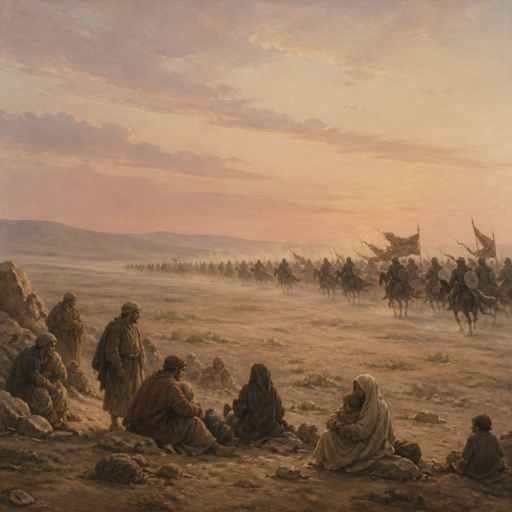
"They shall come all for violence: their faces shall sup up as the east wind, and they shall gather the captivity as the sand." - Habakkuk 1:9

Habakkuk 1:12 - "¶ Art thou not from everlasting, O LORD my God, mine Holy One? we shall not die. O LORD, thou hast ordained them for judgment; and, O mighty God, thou hast established them for correction."
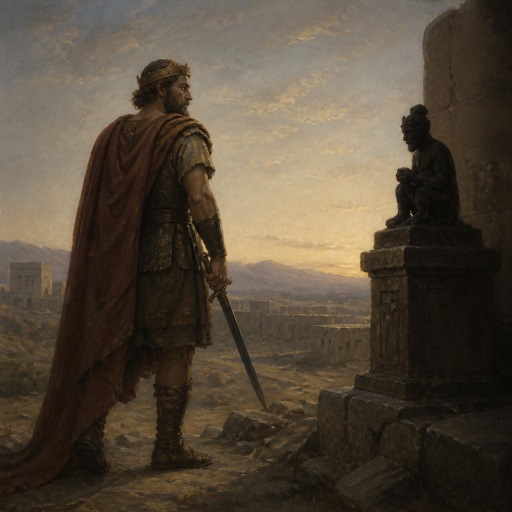
"Then shall his mind change, and he shall pass over, and offend, imputing this his power unto his god." - Habakkuk 1:11
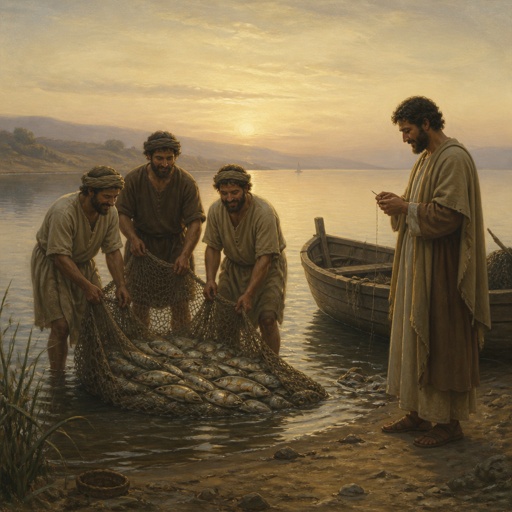
"They take up all of them with the angle, they catch them in their net, and gather them in their drag: therefore they rejoice and are glad." - Habakkuk 1:15