Journey to Honor: Lessons from Joseph's Grief
"¶ And Joseph went up to bury his father: and with him went up all the servants of Pharaoh, the elders of his house, and all the elders of the land of Egypt," - Genesis 50:7
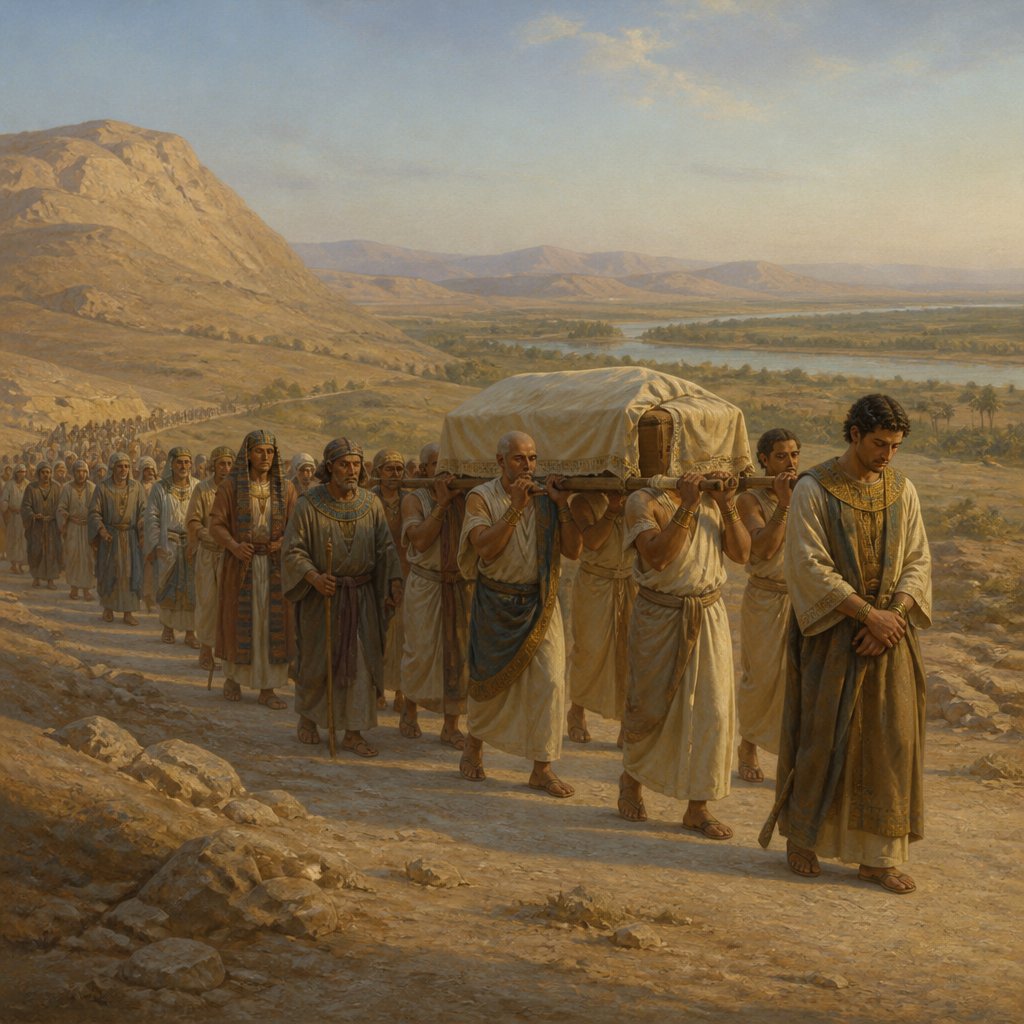
As we reflect on the poignant moment captured in Genesis 50:7, "And Joseph went up to bury his father: and with him went up all the servants of Pharaoh, the elders of his house, and all the elders of the land of Egypt," we find ourselves drawn into a profound narrative of love, respect, and the complexities of family dynamics. Joseph, the favored son of Jacob, now embodies a man who has ascended to a position of great power and responsibility, yet amidst his success lies the painful experience of loss. This verse serves as a poignant reminder of the sanctity of family bonds and the importance of honoring those who have shaped our lives.
At first glance, the act of Joseph traveling to bury his father may seem straightforward, yet it encompasses layers of significance deserving of our contemplation. Joseph had been estranged from his family for a considerable time—betrayed by his brothers, sold into slavery, and unjustly imprisoned. Yet, when the time came to prepare his father for burial, he did not hesitate to return. This speaks volumes about Joseph's character and his commitment to familial duty, revealing the strength of forgiveness and the loyalty that transcends past grievances.
In Genesis 50:1, it is recorded that Joseph fell upon his father's face and wept, mourning for him. This raw, human response to loss signifies the depth of their relationship; it mirrors the biblical perspective that grief is not just inevitable but is, in fact, a testimony of love. In a world often quick to dismiss feelings or to mask them with stoicism, Joseph's open lament teaches us that to grieve is to honor those we have loved. It is an acknowledgment of their impact on our lives, a reverence of their journeys, and a recognition that the ties we build through love are everlasting, even in death.
Moreover, the fact that all the servants of Pharaoh and the elders of Egypt accompanied Joseph on his journey to bury Jacob emphasizes the respect that Joseph commanded not only as a leader but also as a son. This procession is emblematic of the integrity and dignity he brought to his role, and it reflects how our actions and character resonate beyond our immediate circles. His actions converted a moment of personal sorrow into a communal experience of honor, aligning with Proverbs 22:1, which states, "A good name is rather to be chosen than great riches, and loving favor rather than silver and gold.” Joseph's reputation and moral standing inspired profound respect, uniting people from different backgrounds toward a common purpose.
Joseph's story teaches us to honor our loved ones through our actions, reflecting the essence of service and integrity. As we navigate our own lives, the intersections of love and loss will invariably shape us. The manner in which we respond to grief can either bind us closer to our values or lead us astray from them. It is in these moments of vulnerability that we are offered an opportunity to embody grace and compassion, just as Joseph did.
As you reflect on your relationships, consider the legacy you wish to leave in times of both joy and sorrow. Have you taken the time to express your love and appreciation to those who matter most? Indeed, life is frail, and as we experience loss, let us remember the importance of honoring those who have impacted our lives profoundly.
In the end, as Joseph honored his father’s memory, so too are we beckoned to honor the memories of our loved ones—by living our lives fully and richly, embodying the values of love, integrity, and service that they instilled within us. Let every gaze towards the sky, every tear shed, and every word spoken in memory remind us: to honor our loved ones is to carry their legacy forward in our hearts.
Want to reflect more on Genesis 50:7?
Continue your spiritual journey with Bible Chat — an AI-powered tool for exploring God's Word through conversation. Ask questions, discover connections, and deepen your understanding.
Get Our Apps


Genesis 50:7 Artwork

Genesis 50:7 - "¶ And Joseph went up to bury his father: and with him went up all the servants of Pharaoh, the elders of his house, and all the elders of the land of Egypt,"
"¶ And Joseph went up to bury his father: and with him went up all the servants of Pharaoh, the elders of his house, and all the elders of the land of Egypt," - Genesis 50:7

Genesis 24-50

Genesis 50:26

Genesis 50:25

Genesis 50:26

Genesis 50:25

Genesis 50:26

Genesis 50:25

Genesis 50:26

Luke 7:50

Luke 7:50

Luke 7:36–50

Luke 7:36-50

Isaiah 50:7–9

Genesis 50:12 - "And his sons did unto him according as he commanded them:"

Genesis 50:19 - "And Joseph said unto them, Fear not: for am I in the place of God?"

Create a coffin for Joseph Genesis 50:26

Numbers 7:50 - "One golden spoon of ten shekels, full of incense:"

Genesis 50:1 - "And Joseph fell upon his father's face, and wept upon him, and kissed him."

Genesis 50:9 - "And there went up with him both chariots and horsemen: and it was a very great company."

Acts 7:50 - "Hath not my hand made all these things?"

Nehemiah 7:50 - "The children of Reaiah, the children of Rezin, the children of Nekoda,"

Genesis 50:22 - "¶ And Joseph dwelt in Egypt, he, and his father's house: and Joseph lived an hundred and ten years."

Genesis 50:2 - "And Joseph commanded his servants the physicians to embalm his father: and the physicians embalmed Israel."

Genesis 50:6 - "And Pharaoh said, Go up, and bury thy father, according as he made thee swear."

John 7:50 - "Nicodemus saith unto them, (he that came to Jesus by night, being one of them,)"

Genesis 50:16 - "And they sent a messenger unto Joseph, saying, Thy father did command before he died, saying,"

Luke 7:50 - "And he said to the woman, Thy faith hath saved thee; go in peace."

Genesis 50:18 - "And his brethren also went and fell down before his face; and they said, Behold, we be thy servants."