From Mourning to Mission: Joseph's Call to Purpose
"And when the days of his mourning were past, Joseph spake unto the house of Pharaoh, saying, If now I have found grace in your eyes, speak, I pray you, in the ears of Pharaoh, saying," - Genesis 50:4
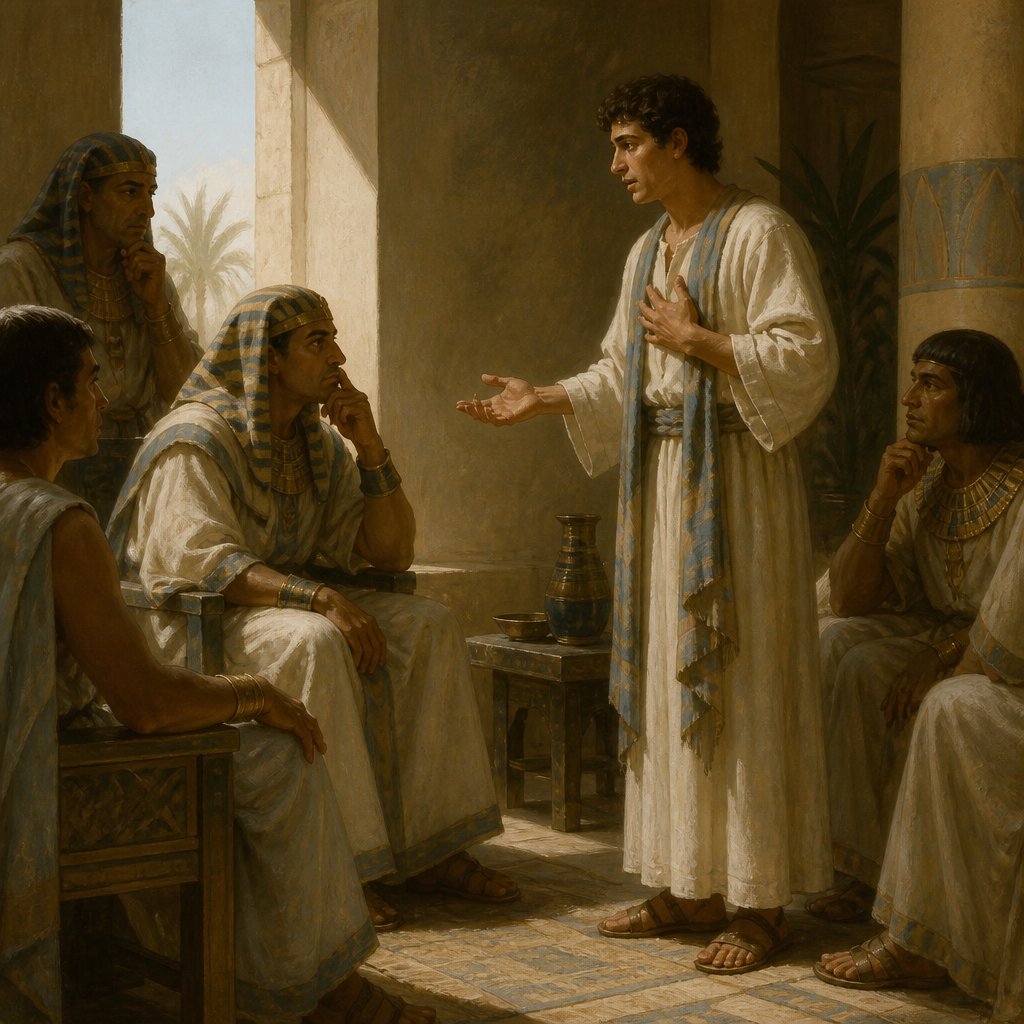
In the book of Genesis, we encounter the profound story of Joseph— a narrative that is not only rich in drama and familial intrigue but also a tapestry of God's providential hand in the life of a servant who was destined for greatness. Genesis 50:4 provides us with a pivotal moment: "And when the days of his mourning were past, Joseph spake unto the house of Pharaoh, saying, If now I have found grace in your eyes, speak, I pray you, in the ears of Pharaoh, saying..." This moment emerges as Joseph transitions from grief to a critical mission, reminding us of the process of mourning and the call to purpose.
The context of this verse lies in the unfortunate passing of Jacob, Joseph's father. Joseph, deeply saddened by this loss, goes through his period of mourning—a time that would allow him to grieve the loss of a man who had profoundly influenced his life. Mourning is an essential aspect of the human experience; it is a reflection of love and connection to the lost. Yet, what stands out in this passage is the clarity with which Joseph recognizes the end of this mourning period and the shift he must make outwardly.
Joseph’s mourning period symbolizes not just personal loss but a pause for reflection. Mourning serves a purpose— it allows for the acknowledgment of a loss, a time to engage with grief, and to find closure. However, Joseph doesn’t linger longer than necessary in this state. He understands that while grief is real and valid, the life that follows must be purposeful and aligned with God’s greater plan. How easy it is for us to allow our mourning to dampen our spirit permanently or to carry the weight of sorrow for far longer than needed. Yet, in Joseph’s story, we see a clear choice set before us: a choice to heal and proceed.
When Joseph speaks to Pharaoh’s house, he does so not for himself but for his father’s burial—a deep cultural concern and a sign of respect. His request stems from both his emotional state following Jacob's death and his rightful position as a trusted leader in Egypt. Even in mourning, Joseph recognized the necessity to continue life’s responsibilities. His strength of character in reaching out speaks to the grace he has received, a grace he longs to extend back into the world. Often we may feel disqualified from action or purpose due to our emotions; however, Joseph demonstrates that our weaknesses and sorrows can actually position us to be more compassionate because we understand need and loss.
Joseph’s plea, “If now I have found grace in your eyes,” is not just a formality; it is an acknowledgment of the relationships he has nurtured, even in the midst of his personal struggles. He appeals to their recognition of his contributions and his alignment with their power structure. He seeks favor, but this appeal is rooted in humility and honesty. By recognizing that he needs help, he models the importance of community and staying connected with others even during our lowest moments.
Let’s reflect on how we process our own mourning. Are we using this time to grow and reconnect or are we fostering a spirit of isolation? Are we willing to ask for help in our journeys, much like Joseph? As we read his journey through loss into purpose, we must consider what God might be saying to us today. He often transforms our mourning into a mission, guiding us from sorrow to service. So, like Joseph, we must be ready to hear divine nudges, ready to speak even when we feel worn down, and prepared to turn our periods of grief into paths of grace.
In conclusion, Joseph's transition from pain to purpose exhorts us to embrace our quiet periods of mourning and from them, catch a vision for the next steps God has for us. May we, too, step out of our grief and speak forth the grace that we have found, making us vessels of God's love, even in our brokenness.
Want to reflect more on Genesis 50:4?
Continue your spiritual journey with Bible Chat — an AI-powered tool for exploring God's Word through conversation. Ask questions, discover connections, and deepen your understanding.
Get Our Apps


Genesis 50:4 Artwork

Genesis 50:4 - "And when the days of his mourning were past, Joseph spake unto the house of Pharaoh, saying, If now I have found grace in your eyes, speak, I pray you, in the ears of Pharaoh, saying,"
"And when the days of his mourning were past, Joseph spake unto the house of Pharaoh, saying, If now I have found grace in your eyes, speak, I pray you, in the ears of Pharaoh, saying," - Genesis 50:4

Genesis 24-50

Genesis 50:26

Genesis 50:25

Genesis 50:26

Genesis 50:25

Genesis 50:26

Genesis 50:25

Genesis 50:26

Genesis 50:12 - "And his sons did unto him according as he commanded them:"

Genesis 50:19 - "And Joseph said unto them, Fear not: for am I in the place of God?"

Create a coffin for Joseph Genesis 50:26

Genesis 50:1 - "And Joseph fell upon his father's face, and wept upon him, and kissed him."

Genesis 50:9 - "And there went up with him both chariots and horsemen: and it was a very great company."

Genesis 50:22 - "¶ And Joseph dwelt in Egypt, he, and his father's house: and Joseph lived an hundred and ten years."

Genesis 50:2 - "And Joseph commanded his servants the physicians to embalm his father: and the physicians embalmed Israel."

Genesis 50:6 - "And Pharaoh said, Go up, and bury thy father, according as he made thee swear."

Genesis 50:16 - "And they sent a messenger unto Joseph, saying, Thy father did command before he died, saying,"

Genesis 50:18 - "And his brethren also went and fell down before his face; and they said, Behold, we be thy servants."

Genesis 50:26 - "So Joseph died, being an hundred and ten years old: and they embalmed him, and he was put in a coffin in Egypt."

Genesis 50:20 - "But as for you, ye thought evil against me; but God meant it unto good, to bring to pass, as it is this day, to save much people alive."

Genesis 50:3 - "And forty days were fulfilled for him; for so are fulfilled the days of those which are embalmed: and the Egyptians mourned for him threescore and ten days."

Genesis 24:50 - "Then Laban and Bethuel answered and said, The thing proceedeth from the LORD: we cannot speak unto thee bad or good."

Genesis 50:25 - "And Joseph took an oath of the children of Israel, saying, God will surely visit you, and ye shall carry up my bones from hence."

Genesis 50:8 - "And all the house of Joseph, and his brethren, and his father's house: only their little ones, and their flocks, and their herds, they left in the land of Goshen."

Genesis 50:7 - "¶ And Joseph went up to bury his father: and with him went up all the servants of Pharaoh, the elders of his house, and all the elders of the land of Egypt,"

Genesis 50:14 - "¶ And Joseph returned into Egypt, he, and his brethren, and all that went up with him to bury his father, after he had buried his father."

Genesis 50:21 - "Now therefore fear ye not: I will nourish you, and your little ones. And he comforted them, and spake kindly unto them."

Genesis 50:23 - "And Joseph saw Ephraim's children of the third generation: the children also of Machir the son of Manasseh were brought up upon Joseph's knees."