The Legacy of Blessing: Embracing Our Spiritual Inheritance
"And he blessed them that day, saying, In thee shall Israel bless, saying, God make thee as Ephraim and as Manasseh: and he set Ephraim before Manasseh." - Genesis 48:20
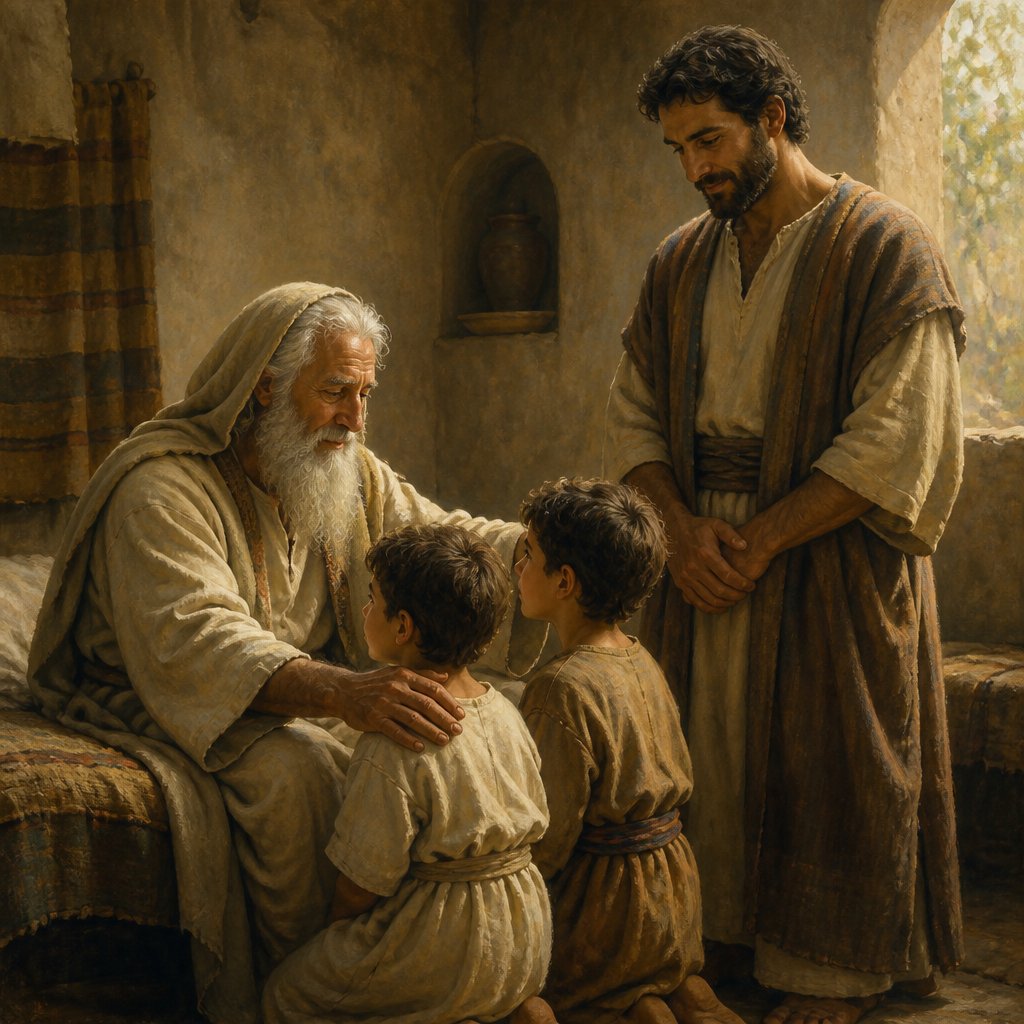
When we gather around the table at family reunions or holiday celebrations, we often find our grandparents reminiscing about their past, sharing stories of their struggles and triumphs. Similarly, in our journey through life, we inherit not just a name or a lineage but a rich tapestry of blessings that shape our identity in Christ. Genesis 48:20 resonates with this truth profoundly. It reads: "And he blessed them that day, saying, In thee shall Israel bless, saying, God make thee as Ephraim and as Manasseh: and he set Ephraim before Manasseh."
In this pivotal moment, the patriarch Jacob, nearing the end of his life, chooses to bless his grandsons, Ephraim and Manasseh. These boys were the sons of Joseph, Jacob's favorite son, benefiting from the unique relationship he had with Joseph. By promoting Ephraim before Manasseh, Jacob was not merely expressing favoritism but was also establishing a prophetic foundation for the future of Israel. This act of blessing is multi-faceted, deeply rooted in faith, identity, and divine order.
Firstly, we observe that Jacob's blessing of Ephraim and Manasseh signifies the importance of spiritual legacy. Jacob classifies the boys as his own children, indicating their place in the heritage of Israel. In assigning them a blessing that would flow through their lineage—"In thee shall Israel bless"—Jacob encapsulates an essential truth about our faith: we are heirs to a promise. As believers, we are adopted into the family of God (Ephesians 1:5), and our spiritual lineage extends back through generations of faithfulness. When we understand that we are part of a larger story, we begin to grasp that our lives have purpose and that we too can be vehicles of God’s blessings.
Moreover, the specific blessing that Jacob imparts, asking God to make them like Ephraim and Manasseh, speaks to the character and destiny he desires for them. Ephraim, named by Jacob to signify ‘fruitfulness’, is a reminder that a life in communion with God will yield abundant blessings and spiritual fruit. Manasseh, whose name means ‘to forget’, reflects the power of God to bring healing as He frees us from our past. In the invocation, we sense a profound hope that despite the trials that may come, there is a promise of prosperity and renewal in the lives of these boys. As we pray for our children or those we mentor, we must echo this sentiment; we should pray for them to walk in fruitfulness and healing, mirroring the blessings bestowed upon Ephraim and Manasseh.
Setting Ephraim before Manasseh also denotes the role of divine order in our lives, reminding us that God's plans often surpass our understanding. In our human perspective, we may prioritize the firstborn, but God chooses the second, highlighting His sovereignty in selecting who will carry forward the legacy. This situation serves as a divine indictment against our tendencies to judge others based on status, appearance, or even talent. God's ways are higher than our ways (Isaiah 55:8-9), and He delights in using the unlikely and the unassuming to carry out His mission (1 Corinthians 1:27).
In our lives, we must remain open to God’s lead. We must not limit ourselves by human logic, but trust in the path God has laid for us—whether it leads us through valleys or mounts us upon peaks. When we mirror Jacob's faith in blessing others, we become participants in God’s ongoing story—the story of redemption, restoration, and legacy.
As we dwell upon Genesis 48:20, let us then be reminded that we are part of a chain of faith, inheriting blessings and tasked with imparting them to the next generation. May we pray for those around us to be as fruitful as Ephraim and experience the healing and freedom akin to Manasseh. In doing so, we acknowledge the rich heritage of faith that encapsulates our lives, venturing forth boldly into the future with the assurance of God’s promises and blessings upon us.
Want to reflect more on Genesis 48:20?
Continue your spiritual journey with Bible Chat — an AI-powered tool for exploring God's Word through conversation. Ask questions, discover connections, and deepen your understanding.
Get Our Apps


Genesis 48:20 Artwork

Genesis 48:20 - "And he blessed them that day, saying, In thee shall Israel bless, saying, God make thee as Ephraim and as Manasseh: and he set Ephraim before Manasseh."
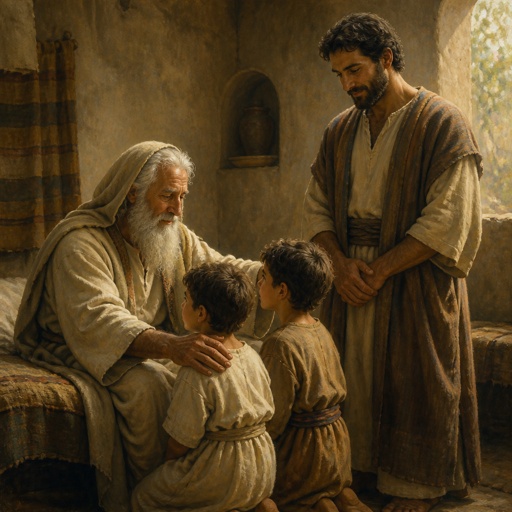
"And he blessed them that day, saying, In thee shall Israel bless, saying, God make thee as Ephraim and as Manasseh: and he set Ephraim before Manasseh." - Genesis 48:20
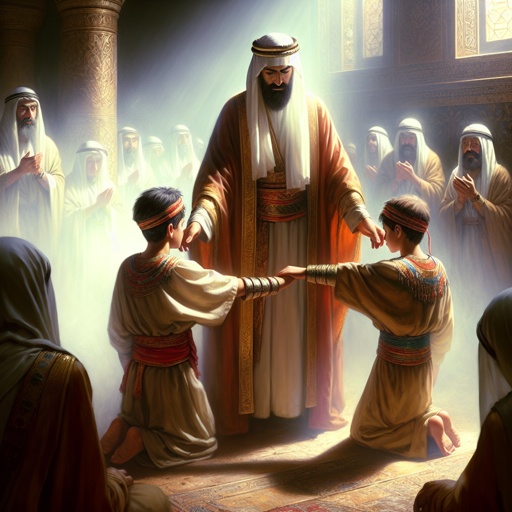
A man of Middle-Eastern descent wearing middle-eastern clothing crosses his arms and places his hands on two young boys who are also dressed in historical Middle-Eastern clothing. Ephraim and Manasseh, who are receiving the blessing, stand humbly and reverently. Ephraim, slighted in front of Manasseh, represents the text from Genesis 48:20. The scene conveys a strong sense of spirituality, reverence, and historical context, with softly glowing light and an ethereal atmosphere. The style should reflect the characteristics of digital painting, where the rich textures and bold strokes are visible.
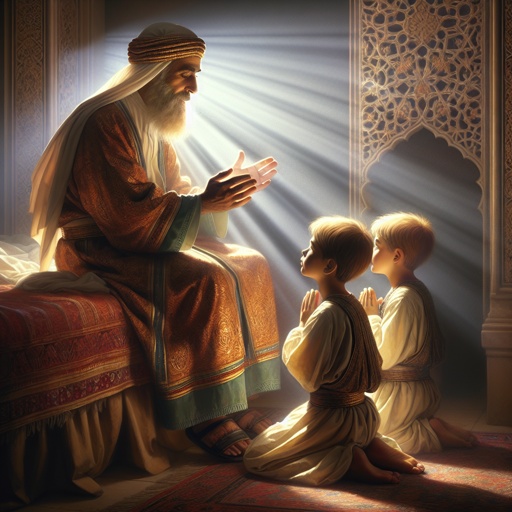
An man of Middle-Eastern descent wearing middle-eastern clothing is sitting on the edge of his bed. He is reaching out to his two young grandsons, and crosses his arms and places his hands on the two young boys who are also dressed in historical Middle-Eastern clothing. Ephraim and Manasseh, who are receiving the blessing, stand humbly and reverently. Ephraim, slighted in front of Manasseh, represents the text from Genesis 48:20. The scene conveys a strong sense of spirituality, reverence, and historical context, with softly glowing light and an ethereal atmosphere. The style should reflect the characteristics of digital painting, where the rich textures and bold strokes are visible.
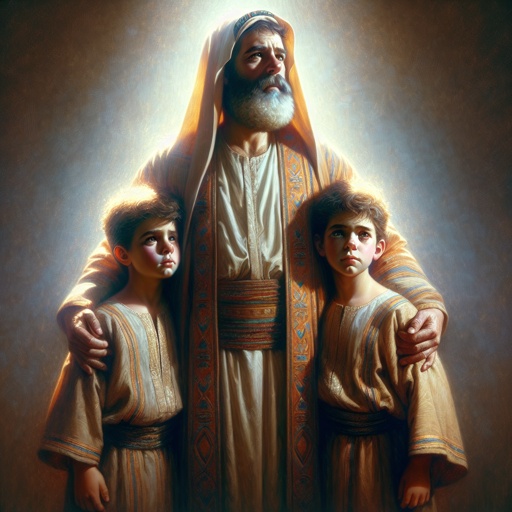
A man of Middle-Eastern descent wearing middle-eastern clothing crosses his arms and places his hands on two young boys who are also dressed in historical Middle-Eastern clothing. Ephraim and Manasseh, who are receiving the blessing, stand humbly and reverently. Ephraim, slighted in front of Manasseh, represents the text from Genesis 48:20. The scene conveys a strong sense of spirituality, reverence, and historical context, with softly glowing light and an ethereal atmosphere. The style should reflect the characteristics of digital painting, where the rich textures and bold strokes are visible.
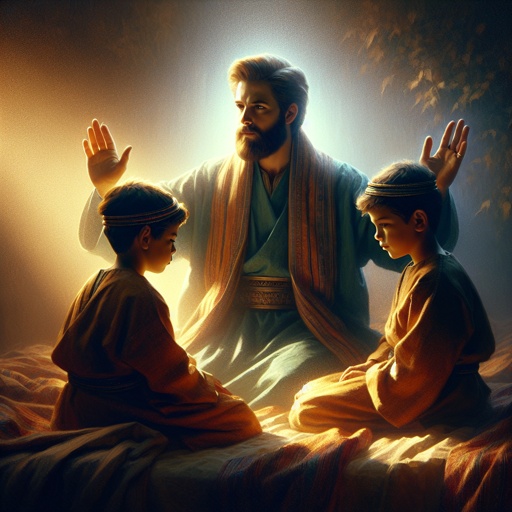
An man of Middle-Eastern descent wearing middle-eastern clothing is sitting on the edge of his bed. He is reaching out to his two young grandsons, and crosses his arms and places his hands on the two young boy's heads. The two boys are also dressed in historical Middle-Eastern clothing. Ephraim and Manasseh, who are receiving the blessing, stand humbly and reverently. Ephraim, slighted in front of Manasseh, represents the text from Genesis 48:20. The scene conveys a strong sense of spirituality, reverence, and historical context, with softly glowing light and an ethereal atmosphere. The style should reflect the characteristics of digital painting, where the rich textures and bold strokes are visible.

Genesis 24-48

Genesis 48:8 - "And Israel beheld Joseph's sons, and said, Who are these?"

Ezekiel 20:48 - "And all flesh shall see that I the LORD have kindled it: it shall not be quenched."

Jeremiah 48:20 - "Moab is confounded; for it is broken down: howl and cry; tell ye it in Arnon, that Moab is spoiled,"

Genesis 31:48 - "And Laban said, This heap is a witness between me and thee this day. Therefore was the name of it called Galeed;"

Genesis 48:3 - "And Jacob said unto Joseph, God Almighty appeared unto me at Luz in the land of Canaan, and blessed me,"

Genesis 48:12 - "And Joseph brought them out from between his knees, and he bowed himself with his face to the earth."
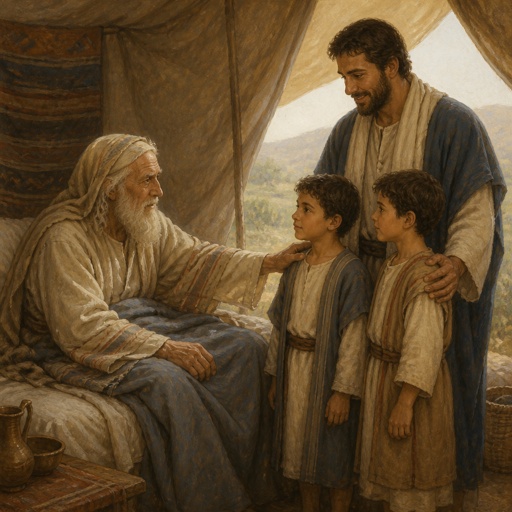
"And Israel beheld Joseph's sons, and said, Who are these?" - Genesis 48:8
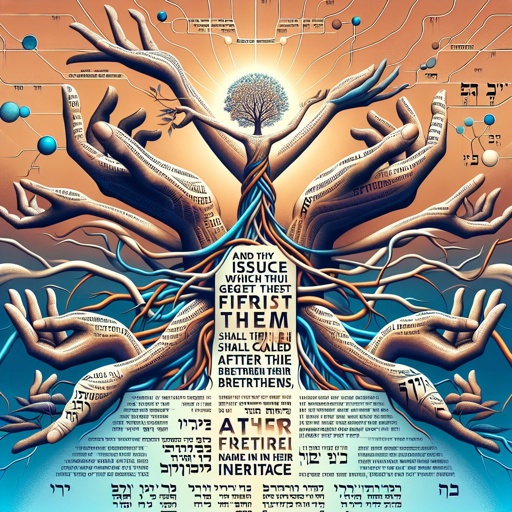
Genesis 48:6 - "And thy issue, which thou begettest after them, shall be thine, and shall be called after the name of their brethren in their inheritance."

Genesis 48:18 - "And Joseph said unto his father, Not so, my father: for this is the firstborn; put thy right hand upon his head."

Ezekiel 48:20 - "All the oblation shall be five and twenty thousand by five and twenty thousand: ye shall offer the holy oblation foursquare, with the possession of the city."
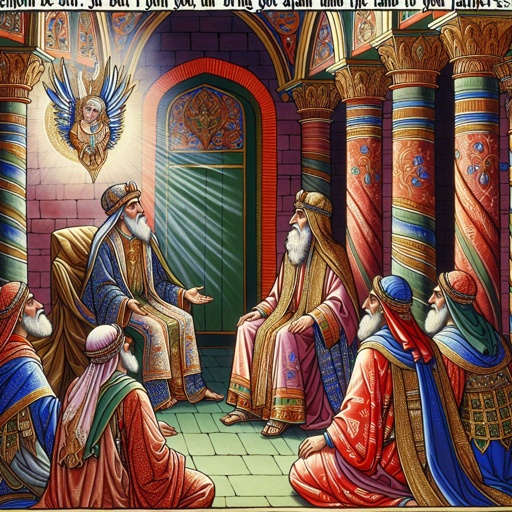
Genesis 48:21 - "And Israel said unto Joseph, Behold, I die: but God shall be with you, and bring you again unto the land of your fathers."

Genesis 48:2 - "And one told Jacob, and said, Behold, thy son Joseph cometh unto thee: and Israel strengthened himself, and sat upon the bed."
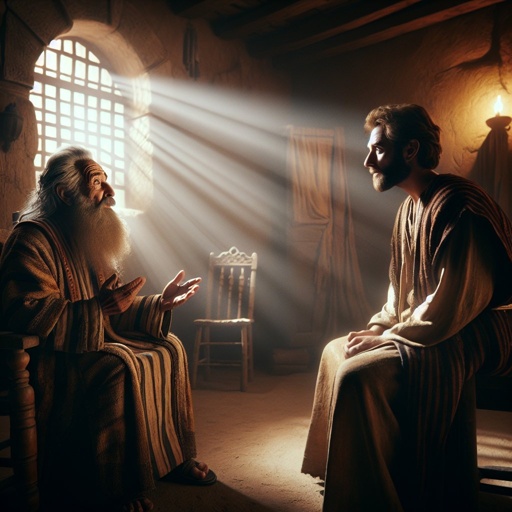
Genesis 48:11 - "And Israel said unto Joseph, I had not thought to see thy face: and, lo, God hath shewed me also thy seed."
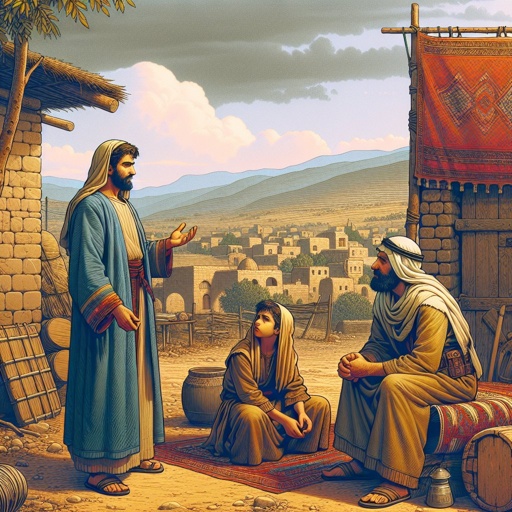
Genesis 48:1 - "And it came to pass after these things, that one told Joseph, Behold, thy father is sick: and he took with him his two sons, Manasseh and Ephraim."

Genesis 20

Genesis 48:22 - "Moreover I have given to thee one portion above thy brethren, which I took out of the hand of the Amorite with my sword and with my bow."

Genesis 48:10 - "Now the eyes of Israel were dim for age, so that he could not see. And he brought them near unto him; and he kissed them, and embraced them."
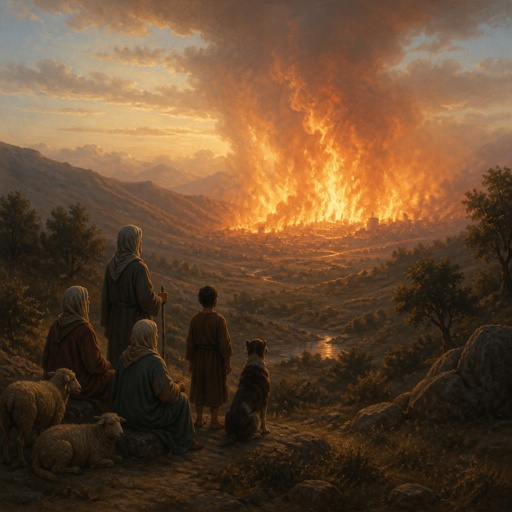
"And all flesh shall see that I the LORD have kindled it: it shall not be quenched." - Ezekiel 20:48

Genesis 20-18

Genesis 20-13

Genesis 20-16

Genesis 15:20

Genesis 20-4