Rejoicing in the Midst of Suffering: The Hope of Reunion
"And Israel said, It is enough; Joseph my son is yet alive: I will go and see him before I die." - Genesis 45:28
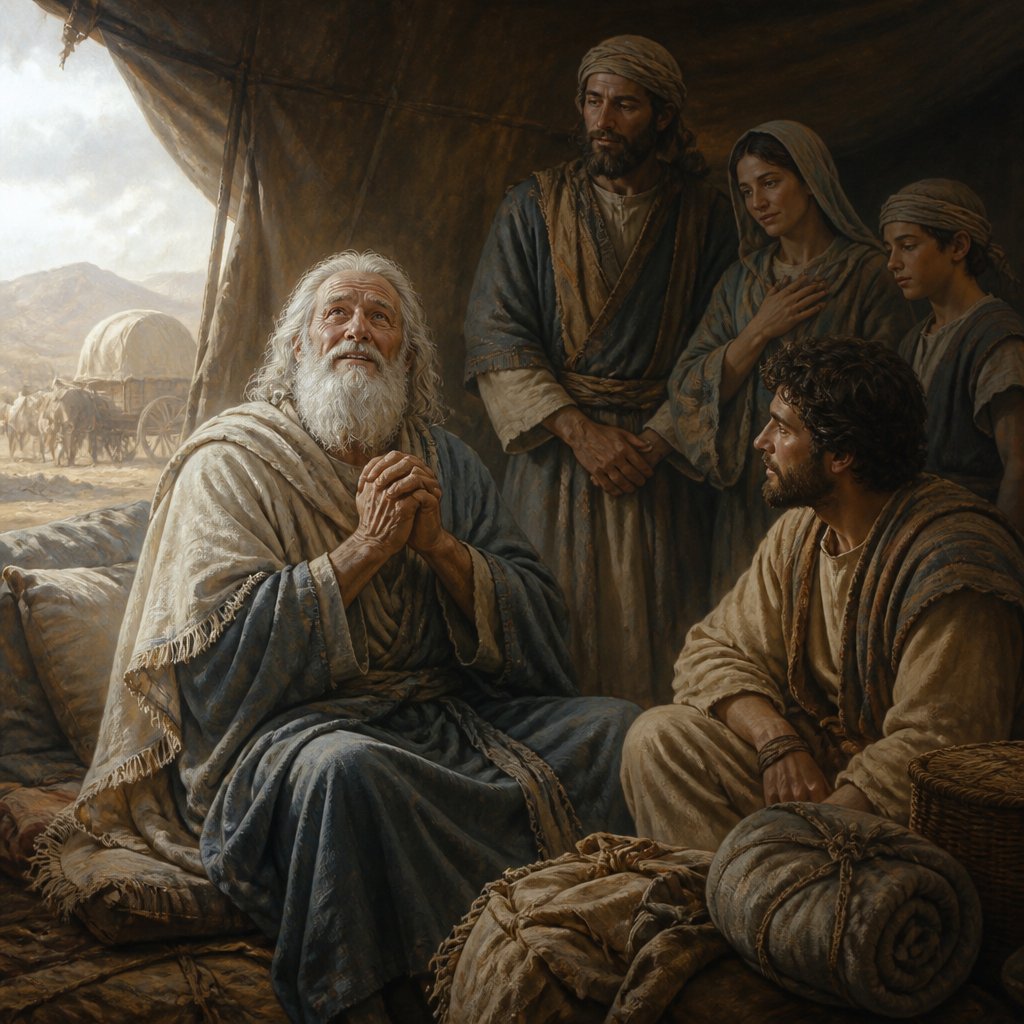
In Genesis 45:28, we hear the poignant words of Jacob, also known as Israel: "And Israel said, It is enough; Joseph my son is yet alive: I will go and see him before I die." This statement is not merely a declaration of hope; it is a testament to the faithfulness of God during times of great suffering and despair.
Jacob's life had been marked by profound heartache and loss. He had endured the immense pain of believing that his beloved son Joseph had been killed by a wild beast—a tragedy brought about by the jealousy of his other sons. The years of mourning had transformed him; every passing day wore heavy on him, adding layers to his grief. Yet, Jacob's story is one of remarkable resilience and unwavering faith, which crystallizes in this climactic moment of revelation.
When Joseph reveals himself to his brothers in Egypt and sends for Jacob to come to him, it represents not just a reunion but a restoration of a broken family. The declaration of Jacob, "It is enough; Joseph my son is yet alive," carries with it a profound sense of relief and elation. After all this time of mourning, Jacob can finally see the glimmer of hope. It also echoes something deeper, an affirmation of God’s providence. In the midst of Jacob's suffering, God was working behind the scenes, orchestrating events for Jacob's eventual blessing.
This verse stirs many emotions and lessons for us today. Jacob’s joy reminds us that while we may face dark seasons, there is always a possibility for joy. The circumstances of life may lead us toward despair, much like Jacob faced after believing he had lost Joseph forever. However, God invites us to hold onto faith, trusting that He can turn mourning into joy, just as He did for Jacob. It is in these moments that God’s presence is profoundly felt, and His divine plan is revealed.
Many of us experience loss and pain, whether through familial relationships, the death of loved ones, or personal failures. It’s easy to feel trapped in the narrative of our suffering, as Jacob was for so many years. Yet, we must remember that God operates outside our timeline. His plans often exceed our understanding, and His will can be placed in our hearts even amidst grief. In Lamentations 3:22-23, we are reminded, "It is of the LORD's mercies that we are not consumed, because his compassions fail not. They are new every morning: great is thy faithfulness." Just as Jacob’s hope was rekindled by the news of Joseph’s survival, our hope can be restored by the realization that God is always at work in our lives.
Moreover, Jacob's determination to see Joseph one last time is a reflection of his desire for closure, reconciliation, and the repair of his family. God's plan was to use Joseph to not only save Egypt during the years of famine but also to reunite this fractured family. This reveals to us that God's purpose often transcends our understanding of our situations. The disruptive and painful events in our lives can serve a divine purpose that we may not comprehend until later.
As believers, we must avoid the temptation to surrender to despair. Instead, we are called to have faith that God will fulfill His promises to us, just as He fulfilled His promise to Jacob. In Romans 8:28, we are reminds that "And we know that all things work together for good to them that love God, to them who are the called according to his purpose." This assurance encourages us to keep our eyes on the prize, which is ultimately our relationship with God and the hope of His eternal kingdom.
In conclusion, Jacob’s words in Genesis 45:28 resonate through time, reminding us of the hope that can be found in the most troubling circumstances. As we meditate on this verse, let us remember that our God is a God of restoration, who is always at work behind the scenes, no matter how dire things may appear. Like Jacob, may we embrace the promise of reunion and joy, trusting in the faithful hand of God.
Want to reflect more on Genesis 45:28?
Continue your spiritual journey with Bible Chat — an AI-powered tool for exploring God's Word through conversation. Ask questions, discover connections, and deepen your understanding.
Get Our Apps


Genesis 45:28 Artwork

Genesis 45:28 - "And Israel said, It is enough; Joseph my son is yet alive: I will go and see him before I die."
"And Israel said, It is enough; Joseph my son is yet alive: I will go and see him before I die." - Genesis 45:28

Luke 9:28-45

Genesis 24-45

Genesis 45:2 - "And he wept aloud: and the Egyptians and the house of Pharaoh heard."

Genesis 31:45 - "And Jacob took a stone, and set it up for a pillar."

Genesis 45:25 - "¶ And they went up out of Egypt, and came into the land of Canaan unto Jacob their father,"

Genesis 45:20 - "Also regard not your stuff; for the good of all the land of Egypt is your's."

Genesis 45:12 - "And, behold, your eyes see, and the eyes of my brother Benjamin, that it is my mouth that speaketh unto you."

"And Jacob took a stone, and set it up for a pillar." - Genesis 31:45

Genesis 45:14 - "And he fell upon his brother Benjamin's neck, and wept; and Benjamin wept upon his neck."

Genesis 45:6 - "For these two years hath the famine been in the land: and yet there are five years, in the which there shall neither be earing nor harvest."

Genesis 45:21 - "And the children of Israel did so: and Joseph gave them wagons, according to the commandment of Pharaoh, and gave them provision for the way."

Genesis 45:15 - "Moreover he kissed all his brethren, and wept upon them: and after that his brethren talked with him."

Genesis 45:7 - "And God sent me before you to preserve you a posterity in the earth, and to save your lives by a great deliverance."

Genesis 45:16 - "¶ And the fame thereof was heard in Pharaoh's house, saying, Joseph's brethren are come: and it pleased Pharaoh well, and his servants."

Genesis 45:11 - "And there will I nourish thee; for yet there are five years of famine; lest thou, and thy household, and all that thou hast, come to poverty."

Genesis 28-15

Genesis 28-22

Genesis 28-12

Genesis 28-21

Genesis 28-16

Genesis 28-17

Genesis 28:18

Genesis 24:28

Genesis 28:18

Genesis 21:28

Genesis 28-20

Genesis 28-19

Genesis 28-11