The Heart of Reunion: A Reflection on Joseph's Pain and Love
"And Joseph made haste; for his bowels did yearn upon his brother: and he sought where to weep; and he entered into his chamber, and wept there." - Genesis 43:30
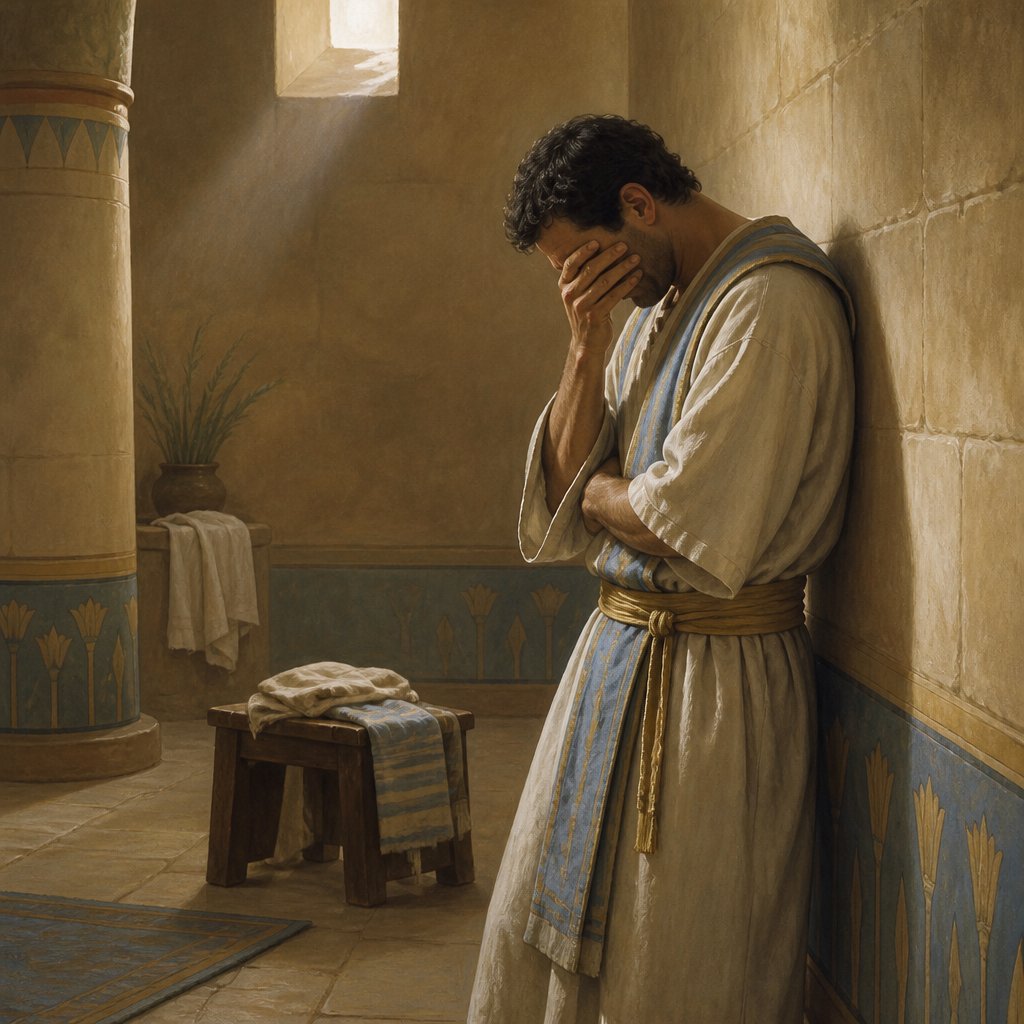
As we dive into the poignant moment captured in Genesis 43:30, we encounter a profound expression of familial love, longing, and the complexities of forgiveness. Joseph, once a favored son, betrayed by his own brothers, now stands in a position of power in Egypt, yet his heart is burdened with unresolved emotions. The verse reads: "And Joseph made haste; for his bowels did yearn upon his brother: and he sought where to weep; and he entered into his chamber, and wept there."
This moment is a culmination of years of suffering, both for Joseph, who endured slavery and imprisonment, and for his brothers, who bore the weight of their guilt. The phrase "his bowels did yearn upon his brother" speaks to the deep emotional and physical response Joseph has; his very core feels the ache of longing for connection and reconciliation. In ancient Hebrew culture, the bowels were seen as the seat of emotion, expressing deep feelings of compassion, love, and even anguish. Thus, Joseph's yearning is not solely a fleeting moment but a deep, visceral longing for the brother he lost amidst betrayal.
The context surrounding this moment adds layers to our understanding of Joseph’s character. He has dealt with betrayal and loss, and now faces the challenge of reconciling with the very individuals who wronged him. His rush to seclude himself to weep indicates a complex interplay of emotions—joy mingled with sorrow, love tinged with pain. As we reflect on this, we are reminded that reconciliation is rarely a straightforward journey; it encompasses acknowledgment of hurt and the willingness to embrace vulnerability.
Joseph's haste to weep also illustrates a key aspect of emotional health—acknowledging and expressing our feelings. In a society that often encourages suppression of emotions, biblical figures like Joseph remind us of the importance of processing our experiences. Emotions are a vital component of our humanity, and in Joseph's act of weeping, he demonstrates that tears can be a pathway to healing and restoration. When faced with our own trials and tribulations, are we willing to seek a safe place to weep and reflect? Are we brave enough to confront our own emotions, instead of burying them?
Moreover, Joseph's choice to enter into his chamber to weep illustrates the necessity of personal space when grappling with intense feelings. This act of finding solitude is not merely about escaping but about gathering strength and clarity. In our own experiences of familial discord or personal struggles, we might also find the need to step away—to pray, to reflect, to seek counsel or comfort in solitude. Jesus Himself often withdrew to solitary places to pray (Luke 5:16), modeling for us the importance of drawing away to connect with God during tumultuous times.
As we ponder Joseph's story, we are called to explore our own relationships. Are there unresolved tensions in our lives? Are there brothers and sisters, metaphorically speaking, that we need to embrace, forgive, or reconcile with? Joseph’s heart teaches us that genuine love demands vulnerability—it takes courage to forgive and to extend compassion, particularly to those who have caused us pain.
Finally, Joseph’s weeping is also an emblem of hope—the hope that familial ties can mend, that forgiveness can flow, and that love can truly transcend beyond past hurts. The ensuing reconciliation between Joseph and his brothers is a reminder that no relationship is beyond repair through love and grace. Just as William Shakespeare wrote of the unbreakable bonds of blood, so does Scripture affirm that with God’s love and mercy, we can rebuild what was lost.
As we meditate on this verse and Joseph’s poignant emotions, may we be inspired to extend grace to those who have wronged us and seek to restore broken relationships. In our own chambers, may we weep, heal, and ultimately rejoice in the beauty of reconciliation.
Want to reflect more on Genesis 43:30?
Continue your spiritual journey with Bible Chat — an AI-powered tool for exploring God's Word through conversation. Ask questions, discover connections, and deepen your understanding.
Get Our Apps


Genesis 43:30 Artwork

Genesis 43:30 - "And Joseph made haste; for his bowels did yearn upon his brother: and he sought where to weep; and he entered into his chamber, and wept there."
"And Joseph made haste; for his bowels did yearn upon his brother: and he sought where to weep; and he entered into his chamber, and wept there." - Genesis 43:30

Genesis 30:43 - "And the man increased exceedingly, and had much cattle, and maidservants, and menservants, and camels, and asses."
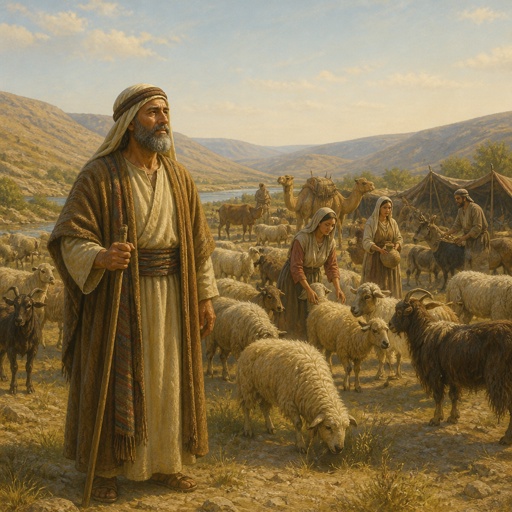
"And the man increased exceedingly, and had much cattle, and maidservants, and menservants, and camels, and asses." - Genesis 30:43

Exodus 28:30-43

Genesis 24-43

Genesis 43:1 - "And the famine was sore in the land."

"And the famine was sore in the land." - Genesis 43:1

Genesis 43:19 - "And they came near to the steward of Joseph's house, and they communed with him at the door of the house,"

Genesis 43:13 - "Take also your brother, and arise, go again unto the man:"

Genesis 43:17 - "And the man did as Joseph bade; and the man brought the men into Joseph's house."

Genesis 43:20 - "And said, O sir, we came indeed down at the first time to buy food:"

Genesis 43:25 - "And they made ready the present against Joseph came at noon: for they heard that they should eat bread there."

Genesis 43:4 - "If thou wilt send our brother with us, we will go down and buy thee food:"

Genesis 43:10 - "For except we had lingered, surely now we had returned this second time."

Genesis 43:31 - "And he washed his face, and went out, and refrained himself, and said, Set on bread."

Genesis 19-30

Genesis 24-30

Genesis 18-30

Genesis 21-30

Genesis 43:24 - "And the man brought the men into Joseph's house, and gave them water, and they washed their feet; and he gave their asses provender."

Genesis 36:43 - "Duke Magdiel, duke Iram: these be the dukes of Edom, according to their habitations in the land of their possession: he is Esau the father of the Edomites."

Genesis 43:6 - "And Israel said, Wherefore dealt ye so ill with me, as to tell the man whether ye had yet a brother?"

Genesis 27:43 - "Now therefore, my son, obey my voice; and arise, flee thou to Laban my brother to Haran;"

Genesis 43:26 - "¶ And when Joseph came home, they brought him the present which was in their hand into the house, and bowed themselves to him to the earth."

Genesis 30:10-11

Genesis 29:15-30

Genesis 43:33 - "And they sat before him, the firstborn according to his birthright, and the youngest according to his youth: and the men marvelled one at another."

Genesis 43:28 - "And they answered, Thy servant our father is in good health, he is yet alive. And they bowed down their heads, and made obeisance."

Genesis 43:12 - "And take double money in your hand; and the money that was brought again in the mouth of your sacks, carry it again in your hand; peradventure it was an oversight:"