The Weight of Shame: A Reflection on Judah’s Response
"And Judah said, Let her take it to her, lest we be shamed: behold, I sent this kid, and thou hast not found her." - Genesis 38:23
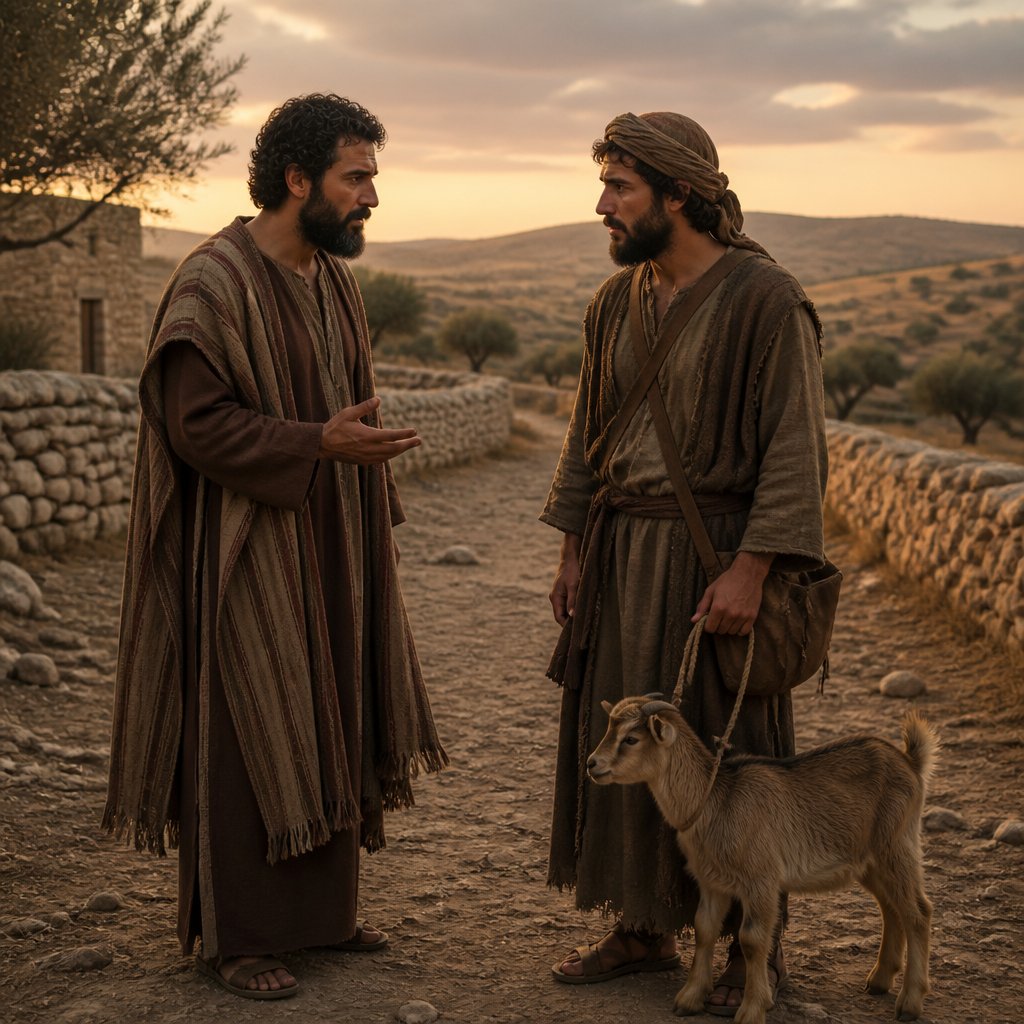
In Genesis 38, we encounter a gripping narrative involving Judah, one of Jacob’s sons, that is both poignant and instructive. The verse that stands out is Genesis 38:23 in the King James Version (KJV): "And Judah said, Let her take it to her, lest we be shamed: behold, I sent this kid, and thou hast not found her." This moment captures the depths of human emotion, the complexities of morality, and the heavy burden of shame.
To set the stage, Judah had unknowingly encountered his daughter-in-law, Tamar, who was in a precarious situation. After being widowed, she disguised herself and acted as a harlot to secure her rights in the absence of her husband’s lineage – a shocking step when viewed through the lens of ancient customs. Judah, on the other hand, found himself entangled in his own failures, having promised Tamar that she would receive what was due to her, but subsequently neglecting that promise.
Judah’s statement, "Let her take it to her, lest we be shamed," encapsulates his internal conflict. He is aware of the potential public scandal that could arise from this situation. Judah's concern for his reputation has taken precedence over his responsibility to Tamar and, by extension, his deceased sons. This reflects a deep-seated societal issue - the fear of shame often outweighs the necessity of right action. Judah prioritized his image over his commitment, seemingly resigned to let Tamar bear the burden of shame alone.
This scenario invites us to reflect on the concept of shame — a powerful emotion that can drive our decisions, shape our identities, and influence our relationships. Shame can lead us to conceal truth, justify wrong behaviors, and often, to compromise our values. Judah was willing to let Tamar take the hit for what he had failed to do, rather than face the discomfort of the truth. This not only reveals his character but also highlights a broader human tendency to evade accountability when the pressures of reputation loom large.
In our lives, we may encounter situations where we are tempted to protect our image at the cost of others. Perhaps it is in our workplaces, schools, or even within our families where a desire to maintain appearances can lead to harmful decisions. Just as Judah chose to cast shame upon Tamar rather than uphold his promise and acknowledge the truth of the situation, we too may inadvertently repeat this cycle.
Yet, it’s essential to consider that God's grace and redemptive plan are woven through every narrative in Scripture, including this flawed story of Judah. The Bible does not shy away from the imperfections of its characters, instead showcasing how God can take our brokenness and work it for good. Tamar, though cast aside in shame, ultimately becomes a significant figure in the lineage of Christ, showing that even when humans err, God's purpose prevails.
As we reflect on Genesis 38:23, we are challenged to confront our own tendencies towards shame and avoidance. Are we allowing the fear of public perception to dictate our actions? Are we quick to place blame rather than seeking reconciliation and accountability? God calls us to a different response, one that embraces honesty, integrity, and a commitment to uphold justice. We are to reflect God’s character, which is continually gracious and compassionate, even amidst our failures.
In conclusion, it is vital to remember that while Judah grappled with shame, we have the opportunity to approach our shortcomings with repentance and a desire for restoration. Let us learn from Judah’s mistakes, choosing to embody vulnerability and truth, and ultimately reflecting the love of Christ in our interactions. Rather than causing others to bear our shame, may we strive to uplift one another, standing in solidarity with those who are marginalized, just as our Lord Jesus would.
Want to reflect more on Genesis 38:23?
Continue your spiritual journey with Bible Chat — an AI-powered tool for exploring God's Word through conversation. Ask questions, discover connections, and deepen your understanding.
Get Our Apps


Genesis 38:23 Artwork

Genesis 38:23 - "And Judah said, Let her take it to her, lest we be shamed: behold, I sent this kid, and thou hast not found her."
"And Judah said, Let her take it to her, lest we be shamed: behold, I sent this kid, and thou hast not found her." - Genesis 38:23

Genesis 19-38

Genesis 24-38

2 Samuel 23:38 - "Ira an Ithrite, Gareb an Ithrite,"

Matthew 23:38 - "Behold, your house is left unto you desolate."

Genesis 38:6 - "And Judah took a wife for Er his firstborn, whose name was Tamar."

Genesis 38:3 - "And she conceived, and bare a son; and he called his name Er."

Genesis 38:7 - "And Er, Judah's firstborn, was wicked in the sight of the LORD; and the LORD slew him."

Genesis 36:38 - "And Saul died, and Baal-hanan the son of Achbor reigned in his stead."

Job 38:23 - "Which I have reserved against the time of trouble, against the day of battle and war?"

Luke 23:38 - "And a superscription also was written over him in letters of Greek, and Latin, and Hebrew, THIS IS THE KING OF THE JEWS."

"Ira an Ithrite, Gareb an Ithrite," - 2 Samuel 23:38

Genesis 38:27 - "¶ And it came to pass in the time of her travail, that, behold, twins were in her womb."

Genesis 38:4 - "And she conceived again, and bare a son; and she called his name Onan."

Genesis 38:10 - "And the thing which he did displeased the LORD: wherefore he slew him also."

Exodus 38:23 - "And with him was Aholiab, son of Ahisamach, of the tribe of Dan, an engraver, and a cunning workman, and an embroiderer in blue, and in purple, and in scarlet, and fine linen."

Ezekiel 23:38 - "Moreover this they have done unto me: they have defiled my sanctuary in the same day, and have profaned my sabbaths."

Genesis 38:21 - "Then he asked the men of that place, saying, Where is the harlot, that was openly by the way side? And they said, There was no harlot in this place."

Genesis 41:38 - "And Pharaoh said unto his servants, Can we find such a one as this is, a man in whom the Spirit of God is?"

Genesis 38:19 - "And she arose, and went away, and laid by her vail from her, and put on the garments of her widowhood."

Genesis 38:22 - "And he returned to Judah, and said, I cannot find her; and also the men of the place said, that there was no harlot in this place."

Ezekiel 38:23 - "Thus will I magnify myself, and sanctify myself; and I will be known in the eyes of many nations, and they shall know that I am the LORD."

Genesis 23-19

Genesis 23-13

Genesis 23:11

Genesis 23-17

Genesis 23-3

Genesis 23-9

Genesis 23-18