The Power of Communication: Embracing Difficult Conversations
"¶ And Hamor the father of Shechem went out unto Jacob to commune with him." - Genesis 34:6
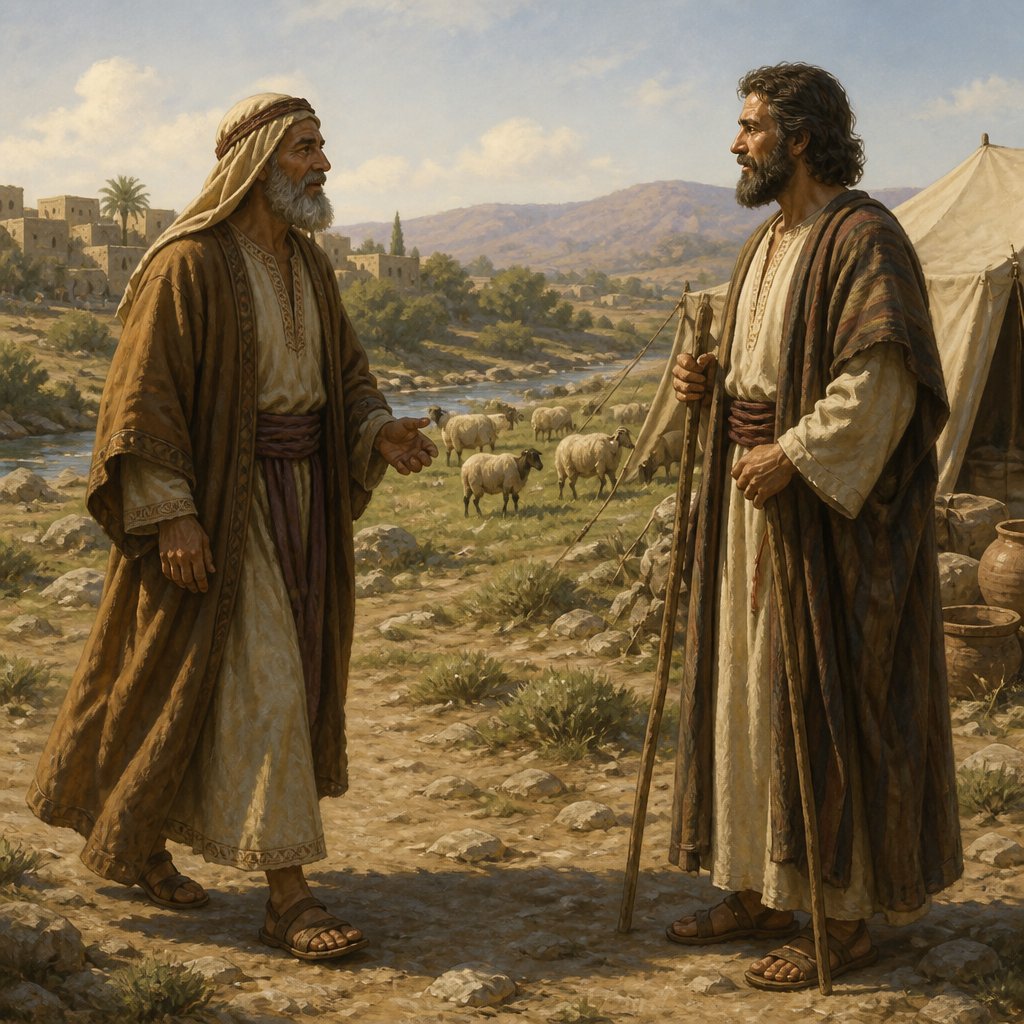
Genesis 34:6 states, "And Hamor the father of Shechem went out unto Jacob to commune with him." This interaction, seemingly straightforward, encapsulates profound themes of communication, conflict resolution, and the complexities of relationships in a broken world.
In the context of Genesis 34, Jacob and his family face an undeniable challenge after the incident concerning their daughter Dinah, who has been violated by Shechem, the son of Hamor. The dialogue that unfolds is pivotal, marking the intersection of personal pain and social responsibility. Hamor approaches Jacob, setting the stage for a complex negotiation that involves deep emotional wounds, societal expectations, and familial honor. It is essential for us to reflect on the purpose and nature of Hamor's visit, which serves as a reminder that communication is often our first step toward resolution.
The word "commune" in the Hebrew context indicates a deeper sense of coming together – not merely to speak but to share and understand. In human relationships, especially in matters of conflict, the intent behind our communications greatly influences the outcome. Hamor's decision to engage Jacob represents an essential aspect of conflict resolution; he acknowledges the need for dialogue amidst turmoil. Often we find ourselves embroiled in situations where silence feels like the easier option. Yet, as believers, we are called to communicate openly as difficult as that may be. This encounter teaches us that avoidance can lead to misunderstanding, whereas open dialogue leads to the possibility of resolution, repentance, and restoration.
Jacob’s response to Hamor will significantly shape how this narrative unfolds. Scripture makes it clear that Jacob's emotional state is tied to his love for his daughter and his sense of justice. Subconsciously, Jacob is also wrestling with his identity and responsibilities as a father and as a man of God. Herein lies another lesson – as we engage in difficult conversations, we must harness our emotions and focus on what the Lord desires for us. How do we navigate wounded relationships that require grace and truth? Jeopardizing the state of any relationship without first seeking divine guidance can lead to further conflict.
The Bible calls us to be "speaking the truth in love" (Ephesians 4:15). Jacob's engagement with Hamor must exhibit this balance. While expressing hurt and seeking justice, there must be a willingness to listen. Jacob's journey teaches us that conflict needs not only to be faced but approached with a heart prepared for understanding rather than solely vindication. In a world where self-promotion often supersedes understanding, God reminds us that He is present in our conversations.
Throughout this passage, it is vital to acknowledge how society's expectations can complicate our communications. Hamor's approach signifies societal conventions shaped by cultural practices about marriage and alliances. Jacob stands at a crossroads, representing God’s chosen people balancing faith in God's plan and the norms around him. This narrative prompts us to reflect: how often do we let societal pressures dictate our decisions and communication? Do we, like Jacob, hold fast to our covenant with God even when it’s at odds with cultural expectations?
In prayer, let us bring forth our conflicts and our fears around communication. Ask God for wisdom to face difficult conversations and, like Jacob, to balance grace and truth. Let us desire resolution that aligns with God’s will and reflects His love. Embrace the Lord’s promise that He is present in our dialogues. Remember, communication is transformative, and within our struggles, there lies immense potential for healing, restoration, and unity.
In conclusion, Genesis 34:6, reveals the richness of communication. Hamor’s visit is a reminder that amidst conflict, the initial step towards reconciliation begins with a humble heart willing to listen and share. Let us approach our own Hamor-like scenarios with prayer, courage, and faith, trusting that God will guide our words and actions towards profound transformation and peace.
Want to reflect more on Genesis 34:6?
Continue your spiritual journey with Bible Chat — an AI-powered tool for exploring God's Word through conversation. Ask questions, discover connections, and deepen your understanding.
Get Our Apps


Genesis 34:6 Artwork

Genesis 34:6 - "¶ And Hamor the father of Shechem went out unto Jacob to commune with him."
"¶ And Hamor the father of Shechem went out unto Jacob to commune with him." - Genesis 34:6

Genesis 21-34

Genesis 19-34

Genesis 24-34

Matthew 6:34

Genesis 21:34 - "And Abraham sojourned in the Philistines' land many days."

Matthew 6:34

Matthew 6:34

Matthew 6:34

Matthew 6:34

Genesis 34:18 - "And their words pleased Hamor, and Shechem Hamor's son."

Genesis 24:34 - "And he said, I am Abraham's servant."

Genesis 34:31 - "And they said, Should he deal with our sister as with an harlot?"

Genesis 36:34 - "And Jobab died, and Husham of the land of Temani reigned in his stead."

Genesis 34:28 - "They took their sheep, and their oxen, and their asses, and that which was in the city, and that which was in the field,"

Deuteronomy 34:5-6

Matthew 6:25 – 34

Genesis 30:34 - "And Laban said, Behold, I would it might be according to thy word."

Genesis 34:15 - "But in this will we consent unto you: If ye will be as we be, that every male of you be circumcised;"

Genesis 34:27 - "The sons of Jacob came upon the slain, and spoiled the city, because they had defiled their sister."

Genesis 34:4 - "And Shechem spake unto his father Hamor, saying, Get me this damsel to wife."

Genesis 34:17 - "But if ye will not hearken unto us, to be circumcised; then will we take our daughter, and we will be gone."

John 6:34 - "Then said they unto him, Lord, evermore give us this bread."

Genesis 34:29 - "And all their wealth, and all their little ones, and their wives took they captive, and spoiled even all that was in the house."

Genesis 34:20 - "¶ And Hamor and Shechem his son came unto the gate of their city, and communed with the men of their city, saying,"

Proverbs 6:34 - "For jealousy is the rage of a man: therefore he will not spare in the day of vengeance."

Genesis 34:1 - "And Dinah the daughter of Leah, which she bare unto Jacob, went out to see the daughters of the land."

Genesis 37:34 - "And Jacob rent his clothes, and put sackcloth upon his loins, and mourned for his son many days."
"And he said, I am Abraham's servant." - Genesis 24:34