The Weight of Blessing: Understanding God's Sovereignty in Our Lives
"And Isaac answered and said unto Esau, Behold, I have made him thy lord, and all his brethren have I given to him for servants; and with corn and wine have I sustained him: and what shall I do now unto thee, my son?" - Genesis 27:37
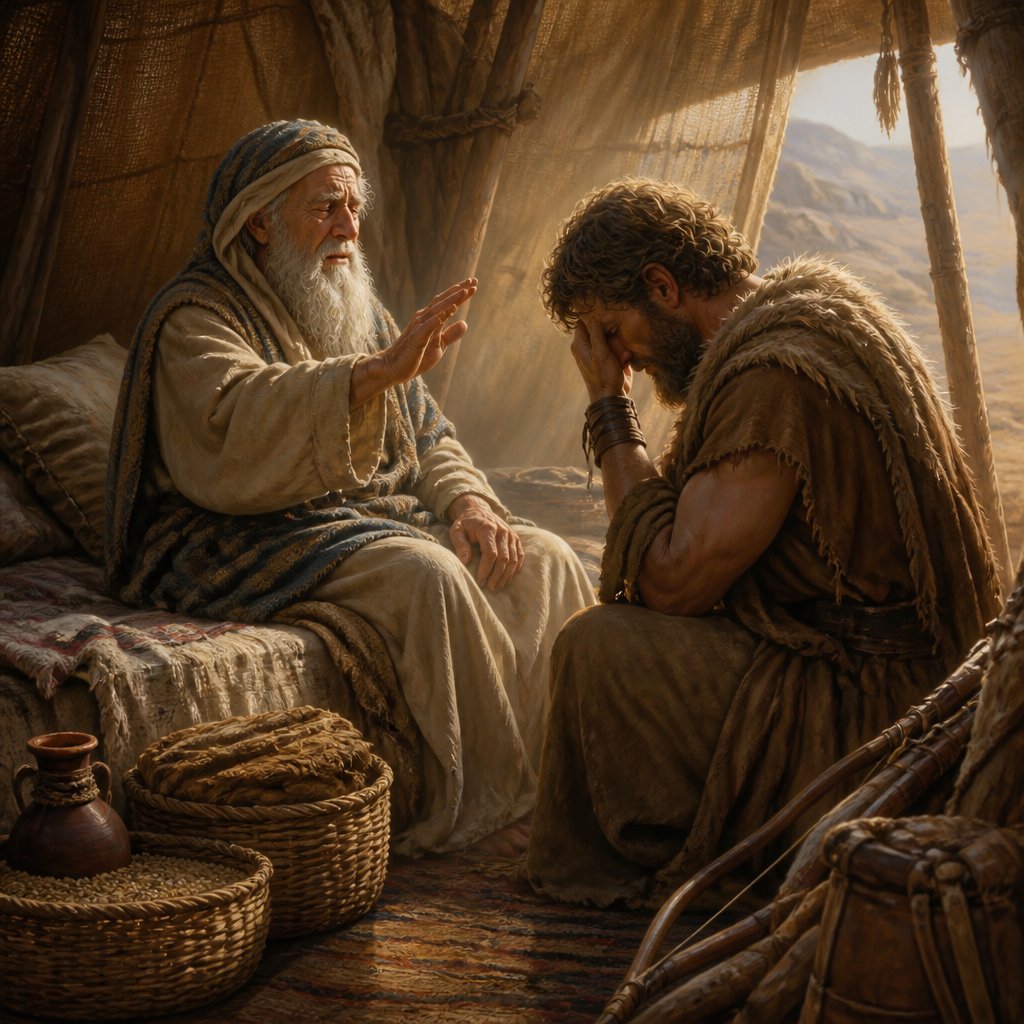
In the midst of a heart-rending familial drama, we encounter Genesis 27:37: "And Isaac answered and said unto Esau, Behold, I have made him thy lord, and all his brethren have I given to him for servants; and with corn and wine have I sustained him: and what shall I do now unto thee, my son?" This moment captures the profound conflict between human intentions and Divine sovereignty, and it invites us to reflect deeply on the nature of blessings, submission, and God's overarching plan for our lives.
The backdrop to this verse is a narrative filled with deceit and rivalry. Jacob, through cunning and manipulation, obtains the blessing that was rightfully Esau's as the elder son. Esau, upon realizing the gravity of his loss, responds with a heart full of anguish, culminating in Isaac's helpless response. This account compels us to confront our understanding of blessings: Who issues them? Who receives them? And perhaps most importantly, what do they signify within the broader context of God’s unfolding will?
Isaac’s answer to his son Esau reveals the finality and weight of the blessing he has bestowed upon Jacob. Isaac states clearly, "I have made him thy lord", an assertion that not only underscores the irrevocable transfer of authority but also encapsulates a divine principle – that God often chooses the unlikely to fulfill His purpose. In the eyes of man, Esau would seem the rightful heir; yet, God’s choices for blessing often defy our expectations (1 Corinthians 1:27).
In examining Isaac’s predicament—one where he must acknowledge the gravity of his previous actions—we see a poignant reality: once a blessing is given, it can’t simply be taken back. Isaac’s declaration serves as a reminder that when we act in faith and obedience, we may not always see the immediate outcome, but God's design is at play through the choices we make. We are reminded that God's purposes prevail despite human machinations. No matter the schemes devised around us, His will is ultimately unassailable.
Isaac’s question, "what shall I do now unto thee, my son?", encapsulates a sense of bewilderment and helplessness. As parents or guardians, how often do we find ourselves at a similar crossroads, feeling inadequate to bestow upon our loved ones the guidance, support, or blessings they seek? This question underscores the reality that while our gifts and blessings as earthly beings may seem limited, God’s provision is abundant. While Isaac’s earthly resources were exhausted, he could trust that God's grace was sufficient for Esau, just as it is for us today.
In our lives, there comes a time when we may face similar perplexities, feeling as though our blessings do not align with our circumstances. We might witness others receiving grace or favor in ways that seem undeserved, and question God’s fairness or our worthiness. At these moments, it is vital to remember that our understanding is limited, but God sees the bigger picture. He orchestrates blessings according to His divine timetable, not merely human expectation.
As we meditate on this passage, let us learn to submit our desires and our dreams to the sovereignty of God. May we recognize that He is in control, even when we feel lost or overlooked. With each decision and every outcome, remember that His plans for us are good (Jeremiah 29:11), and like Isaac, our response should be rooted in trust. We must also consider how we pass on blessings to others and embody kindness, grace, and forgiveness. We are called to cultivate a spirit of generosity, just as God generously blesses us.
In conclusion, let Genesis 27:37 serve as both a reminder and a challenge: blessings, once given, reflect the sovereign hand of God at work in our lives, guiding our paths and shaping our destinies. In the end, God’s provision and purpose surpass our understanding. Let us embrace His plans and goodness, both in the blessings we receive and how we share them with others.
Want to reflect more on Genesis 27:37?
Continue your spiritual journey with Bible Chat — an AI-powered tool for exploring God's Word through conversation. Ask questions, discover connections, and deepen your understanding.
Get Our Apps


Genesis 27:37 Artwork
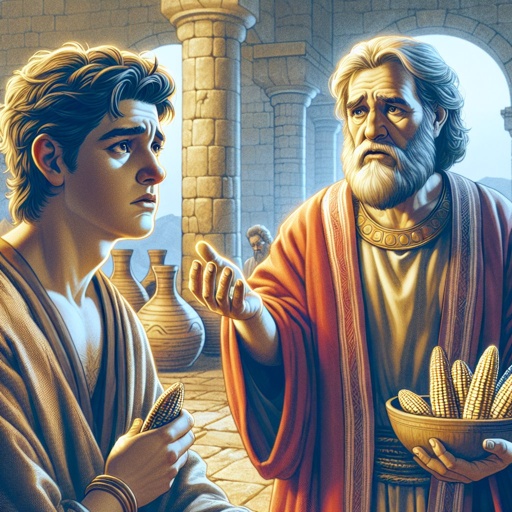
Genesis 27:37 - "And Isaac answered and said unto Esau, Behold, I have made him thy lord, and all his brethren have I given to him for servants; and with corn and wine have I sustained him: and what shall I do now unto thee, my son?"
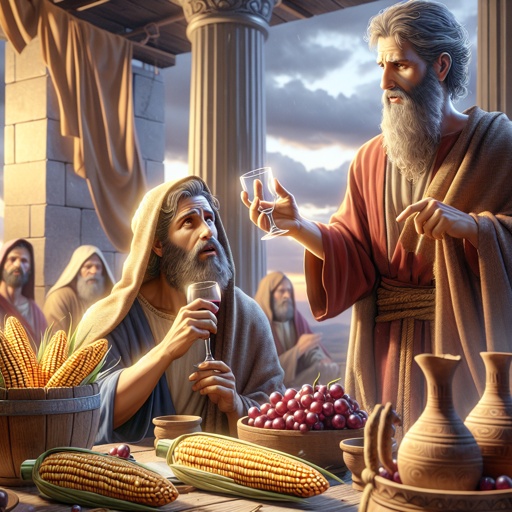
Genesis 27:37 KJV And Isaac answered and said unto Esau, Behold, I have made him thy lord, and all his brethren have I given to him for servants; and with corn and wine have I sustained him: and what shall I do now unto thee, my son?
"And Isaac answered and said unto Esau, Behold, I have made him thy lord, and all his brethren have I given to him for servants; and with corn and wine have I sustained him: and what shall I do now unto thee, my son?" - Genesis 27:37
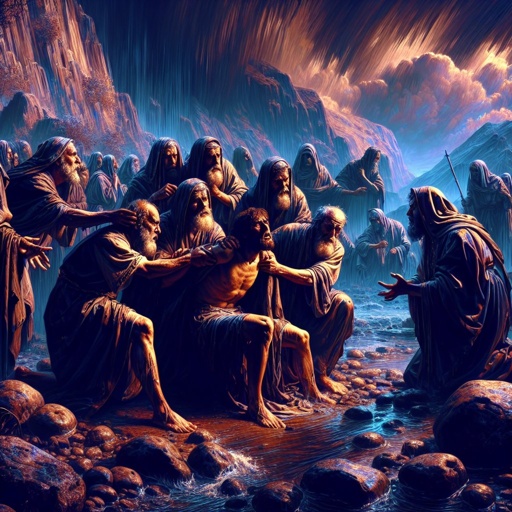
Genesis 37:27 - "Come, and let us sell him to the Ishmeelites, and let not our hand be upon him; for he is our brother and our flesh. And his brethren were content."

genesis 37

Genesis 19-37

Genesis 24-37

Genesis 37:2

Psalms 37:27 - "Depart from evil, and do good; and dwell for evermore."

Acts 27:37 - "And we were in all in the ship two hundred threescore and sixteen souls."

Genesis 37:19 - "And they said one to another, Behold, this dreamer cometh."

Ezekiel 37:27 - "My tabernacle also shall be with them: yea, I will be their God, and they shall be my people."

Matthew 27:37 - "And set up over his head his accusation written, THIS IS JESUS THE KING OF THE JEWS."

Genesis 37:12 - "¶ And his brethren went to feed their father's flock in Shechem."
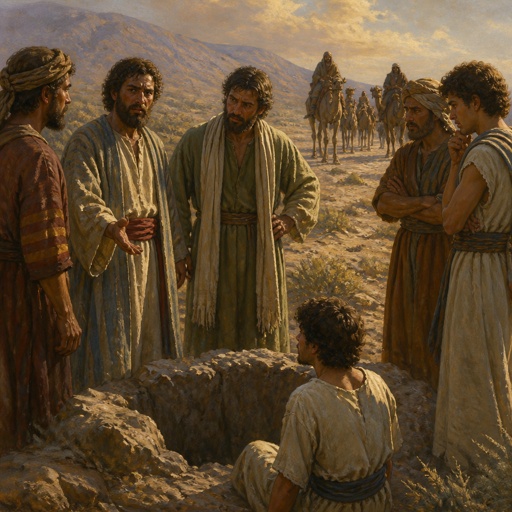
"Come, and let us sell him to the Ishmeelites, and let not our hand be upon him; for he is our brother and our flesh. And his brethren were content." - Genesis 37:27

Genesis 37:24 - "And they took him, and cast him into a pit: and the pit was empty, there was no water in it."

Genesis 37:11 - "And his brethren envied him; but his father observed the saying."

Genesis 41:37 - "¶ And the thing was good in the eyes of Pharaoh, and in the eyes of all his servants."

Genesis 36:37 - "And Samlah died, and Saul of Rehoboth by the river reigned in his stead."

Genesis 37:31 - "And they took Joseph's coat, and killed a kid of the goats, and dipped the coat in the blood;"

Genesis 37:1 - "And Jacob dwelt in the land wherein his father was a stranger, in the land of Canaan."

Genesis 27:32

Genesis 27:5

Genesis 25-27

Genesis 17-27

Genesis 18-27

Genesis 24-27

Genesis 21-27

Genesis 19-27

Genesis 37:36 - "And the Midianites sold him into Egypt unto Potiphar, an officer of Pharaoh's, and captain of the guard."