The Weight of a Blessing: A Reflection on Genesis 27:25
"And he said, Bring it near to me, and I will eat of my son's venison, that my soul may bless thee. And he brought it near to him, and he did eat: and he brought him wine, and he drank." - Genesis 27:25
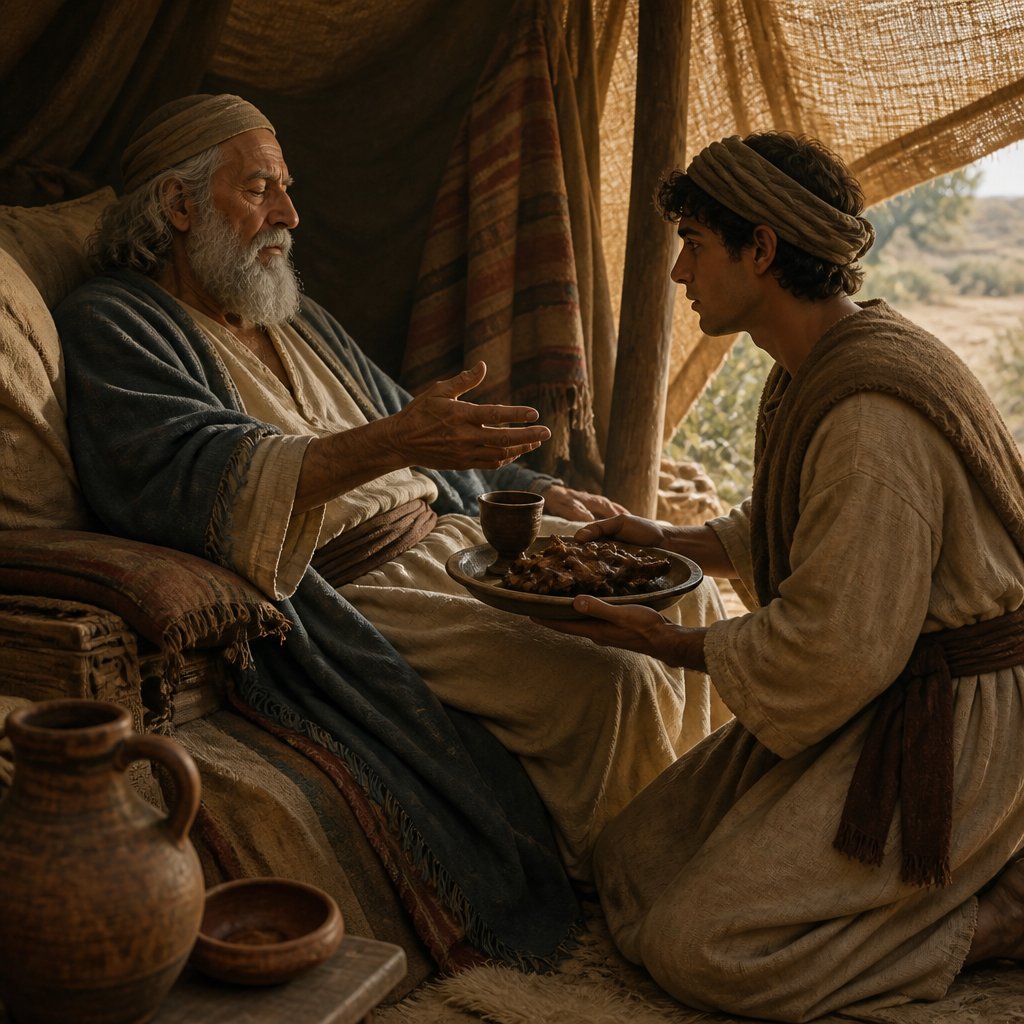
Genesis 27:25 (KJV) reads: "And he said, Bring it near to me, and I will eat of my son’s venison, that my soul may bless thee. And he brought it near to him, and he did eat: and he brought him wine, and he drank." This passage, nestled in the intricate narrative of Isaac, Rebekah, Esau, and Jacob, unveils profound truths about blessings, identity, and the choices we face.
At first glance, we see Isaac preparing to pass on his blessing, a ritual steeped in tradition that signified authority, approval, and divine favor. To the ancient Hebrews, a blessing carried immense power. It was not merely a wish for prosperity, but a declaration that invoked God’s grace upon the recipient. Isaac's desire to eat before blessing his son reflects an innate human longing for connection—shared meals often symbolize intimate relationships and the significance of bonding.
The context surrounding this verse is indeed layered. Rebekah orchestrated an elaborate scheme: disguising Jacob as Esau to receive the blessing that belonged to his elder brother. Jacob, equipped with the scent of the field, wore clothes taken from Esau and covered himself with goat skins to deceive his father’s blind eyes. In this dramatic moment, we witness the desperation that drives human actions. Jacob’s pursuit of the blessing speaks to a deeper need—the longing for approval and identity.
Isaac's insistence on tasting the venison is not merely a matter of food but an act laden with intention. He desires to connect with his son through this meal, a connection that echoes throughout centuries of familial relationships. When we share a meal, there is an openness that fosters intimacy and trust. It serves as a bridge, creating memories that can last generations. As Isaac savors the taste of the venison, he also prepares himself to impart something invaluable.
"That my soul may bless thee," Isaac declares, revealing the depth of the blessing's significance. It is a blessing that pertains to his essence—his soul. In a world filled with fleeting affirmations, Isaac's words carry heft. They imply enduring favor, not just for moments but for the entirety of life. It compels us to reflect on what blessings we seek and how we perceive them. Are we solely after material gains, or do we hunger for deep spiritual nourishment?
The act of bringing the venison close to Isaac symbolizes the closeness that blessings require. Achievements and destinies are not determined in isolation; they flourish in connection with God and our loved ones. Jacob, feeling the weight of this act, recognizes that a blessing would not only define his life but would also establish where he falls within God’s covenantal plan. In our lives, there are moments when we must approach God with our offerings, whether they be our gifts, struggles, or even our sins, and wait patiently for the divine blessing that follows.
This verse reverberates with the understanding that the blessings we receive come with tremendous responsibility. When we are blessed, it is a call to live in alignment with God's intentions—acting justly, loving mercy, and walking humbly before our God (Micah 6:8). Like Jacob, we may find ourselves caught in the complexities of life, seeking to navigate our circumstances while grasping for what we believe we deserve.
Moreover, this narrative serves as a powerful reminder of God’s sovereignty and grace. While the means by which the blessing was ultimately secured were fraught with deception, God still orchestrated His plan through flawed individuals. This demonstrates that our mistakes do not thwart God’s purposes. He weaves our stories, including our failures, into a tapestry of grace and redemption.
As we meditate on Genesis 27:25, let us reflect on the nature of blessings in our lives. Are we approaching God with our offerings? Are we mindful of the weight and responsibility that come with the blessings we receive? May we seek to bless others in the way that God has blessed us, always striving to embody His love and grace in our actions, so that our souls may speak life into the lives of others.
Want to reflect more on Genesis 27:25?
Continue your spiritual journey with Bible Chat — an AI-powered tool for exploring God's Word through conversation. Ask questions, discover connections, and deepen your understanding.
Get Our Apps


Genesis 27:25 Artwork
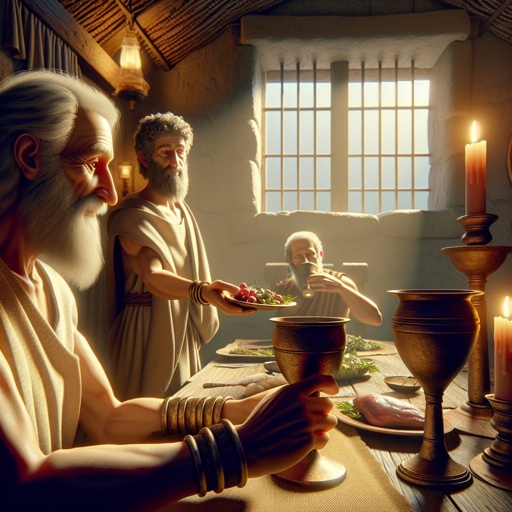
Genesis 27:25 - "And he said, Bring it near to me, and I will eat of my son's venison, that my soul may bless thee. And he brought it near to him, and he did eat: and he brought him wine, and he drank."

Genesis 27:25 KJV And he said, Bring it near to me, and I will eat of my son's venison, that my soul may bless thee. And he brought it near to him, and he did eat: and he brought him wine, and he drank.
"And he said, Bring it near to me, and I will eat of my son's venison, that my soul may bless thee. And he brought it near to him, and he did eat: and he brought him wine, and he drank." - Genesis 27:25

Genesis 25-27

Genesis 25:27 - "And the boys grew: and Esau was a cunning hunter, a man of the field; and Jacob was a plain man, dwelling in tents."
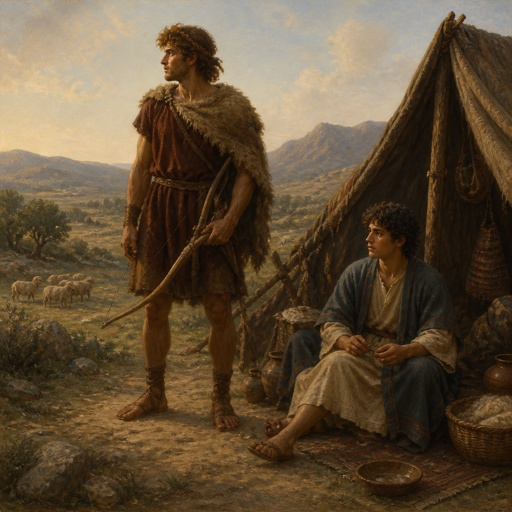
"And the boys grew: and Esau was a cunning hunter, a man of the field; and Jacob was a plain man, dwelling in tents." - Genesis 25:27

Genesis 25:25

1 Corinthians 9:25-27

1 Corinthians 9:25-27

1 Corinthians 9:25-27

1 Corinthians 9:25-27

John 19:25-27

John 19:25-27

Genesis 1:1-25

Genesis 1:1-25

Genesis 1:1-25

Genesis 27:5

Genesis 27:32

Genesis 17-27

Genesis 18-27

Genesis 24-27

Genesis 21-27

Genesis 19-27

Genesis 25-18

Genesis 25-24

Genesis 25-2

Genesis 25-7

Genesis 25-23

Genesis 25-14

Genesis 50:25