Finding Refuge in the Cave: Lessons from Lot’s Journey
"¶ And Lot went up out of Zoar, and dwelt in the mountain, and his two daughters with him; for he feared to dwell in Zoar: and he dwelt in a cave, he and his two daughters." - Genesis 19:30
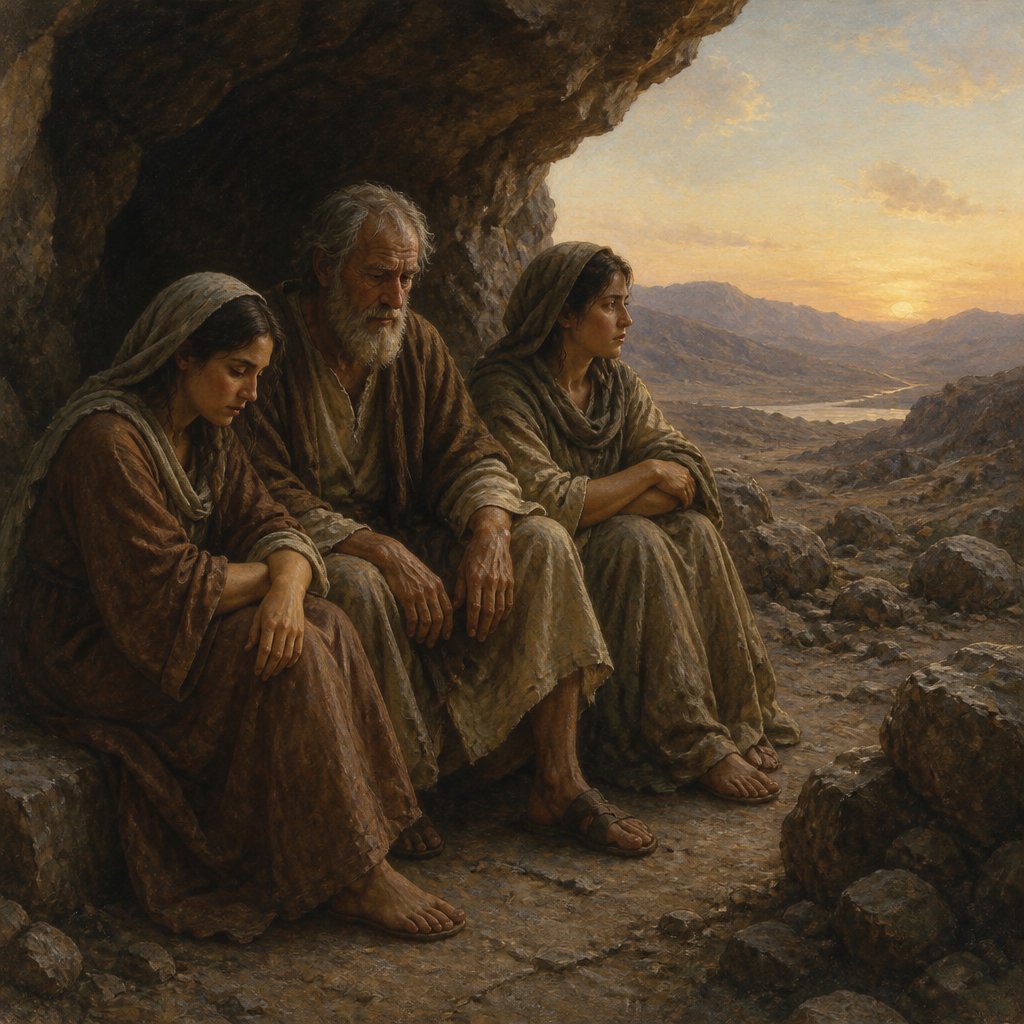
The story of Lot is a complex tapestry of choices, consequences, and divine interaction. In Genesis 19:30, we read: "And Lot went up out of Zoar, and dwelt in the mountain, and his two daughters with him; for he feared to dwell in Zoar: and he dwelt in a cave, he and his two daughters." This verse sets the stage for an exploration of fear, isolation, and ultimately the quest for refuge in a world that can feel overwhelming.
Lot's journey is one marked by a series of decisions that lead him from the bustling urban life of Sodom to a desolate cave in the mountains. His fear of dwelling in Zoar speaks volumes about the transformative experiences he endured during the destruction of Sodom and Gomorrah. Lot had witnessed the devastation brought by sin and rebellion against God, and though Zoar offered him a semblance of safety, it was steeped in the remnants of destruction that he could not ignore.
Fear often dictates the paths we choose in life. For Lot, the overwhelming fear of the unknown pushed him to retreat to the mountains, to live in isolation in a cave with only his daughters. This fear was not merely of physical danger but also of the moral and spiritual ramifications of living in a place marked by sin. How often do we find ourselves making decisions based on fear? Fear of rejection, fear of failure, and fear of what the future holds can lead us away from vibrant connections and into self-imposed isolation.
In Lot's case, the mountain might symbolize a level of sanctity and separation from the morally compromised world in which he had found himself; however, it also represents his retreat. Sometimes, when we turn away from the world, we retreat into caves, both physically and emotionally. We find ourselves cut off not only from the dangers outside but also from the healing and support that relationships bring us. In the cave, there is darkness and quiet—but there's also an absence of hope and purpose.
As we contemplate this scene, we must ask ourselves: What are the caves we dwell in today? They may not be physical caves like Lot's, but places of emotional or spiritual hiding where we try to escape the noise of life. We might seek comfort in these caves, thinking they offer us safety, but like Lot, they can lead us into an even darker place. Lot’s story reminds us that while fear might lead us to seek refuge, it can also lead us into a shadowy existence if we do not consciously seek the light beyond the cave.
Furthermore, we notice that Lot is not alone in his retreat—his daughters are with him. They, like him, become entangled in the consequences of the choices made. When parents—like Lot—choose fear-driven paths, their children often accompany them into the caves of fear and isolation. This connection emphasizes the importance of leading our children into light and hope rather than allowing fear to dictate our family dynamics.
In this cave, Lot and his daughters would later experience unfortunate outcomes; the decisions made in isolation reflect the peril of not seeking God’s guidance when faced with fear. We must seek to navigate our fears through trust in God. Instead of fleeing to caves of despair, we should rise to meet our fears with faith, believing that God can transform our situations.
In future generations, God still uses Lot’s story as a warning and a lesson. It reminds us that while we can choose to withdraw due to fear, God desires for us to confront our circumstances in faith. Instead of retreating into fear, let us confront the mountains and seek the refuge found in God’s love and community. Like Lot, we may have been impacted by a world filled with sin and chaos, but we are called to live differently.
May we come down from our mountains and caves, allowing God to guide us out of our fears and into His purpose. For in every journey, God remains a refuge of hope, even when we find ourselves in the darkest of caves.
Want to reflect more on Genesis 19:30?
Continue your spiritual journey with Bible Chat — an AI-powered tool for exploring God's Word through conversation. Ask questions, discover connections, and deepen your understanding.
Get Our Apps


Genesis 19:30 Artwork

Genesis 19-30

Genesis 19:30 - "¶ And Lot went up out of Zoar, and dwelt in the mountain, and his two daughters with him; for he feared to dwell in Zoar: and he dwelt in a cave, he and his two daughters."
"¶ And Lot went up out of Zoar, and dwelt in the mountain, and his two daughters with him; for he feared to dwell in Zoar: and he dwelt in a cave, he and his two daughters." - Genesis 19:30

Genesis 30:19 - "And Leah conceived again, and bare Jacob the sixth son."

"And Leah conceived again, and bare Jacob the sixth son." - Genesis 30:19

Deuteronomy 30:19:

Genesis 24-30

Genesis 18-30

Genesis 21-30

Genesis 19-19

Philippians 2:19-30

Genesis 30:10-11

Genesis 29:15-30

Genesis 30:5 - "And Bilhah conceived, and bare Jacob a son."

Genesis 11:30 - "But Sarai was barren; she had no child."

Matthew 19:30 - "But many that are first shall be last; and the last shall be first."

Genesis 30:10 - "And Zilpah Leah's maid bare Jacob a son."

Genesis 26:30 - "And he made them a feast, and they did eat and drink."

Genesis 30:12 - "And Zilpah Leah's maid bare Jacob a second son."
Joshua 19:30 - "Ummah also, and Aphek, and Rehob: twenty and two cities with their villages."

Exodus 30:19 - "For Aaron and his sons shall wash their hands and their feet thereat:"

Genesis 30:28 - "And he said, Appoint me thy wages, and I will give it."

Proverbs 30:18-19 – "There are three things that are too amazing for me, four that I do not understand."

Genesis 30:21 - "And afterwards she bare a daughter, and called her name Dinah."

Genesis 15:19

Genesis 19-26

Genesis 19-13

Genesis 23-19

Genesis 28-19

Genesis 19-31