The Consequences of Taking Matters into Our Own Hands
"And Sarai Abram's wife took Hagar her maid the Egyptian, after Abram had dwelt ten years in the land of Canaan, and gave her to her husband Abram to be his wife." - Genesis 16:3
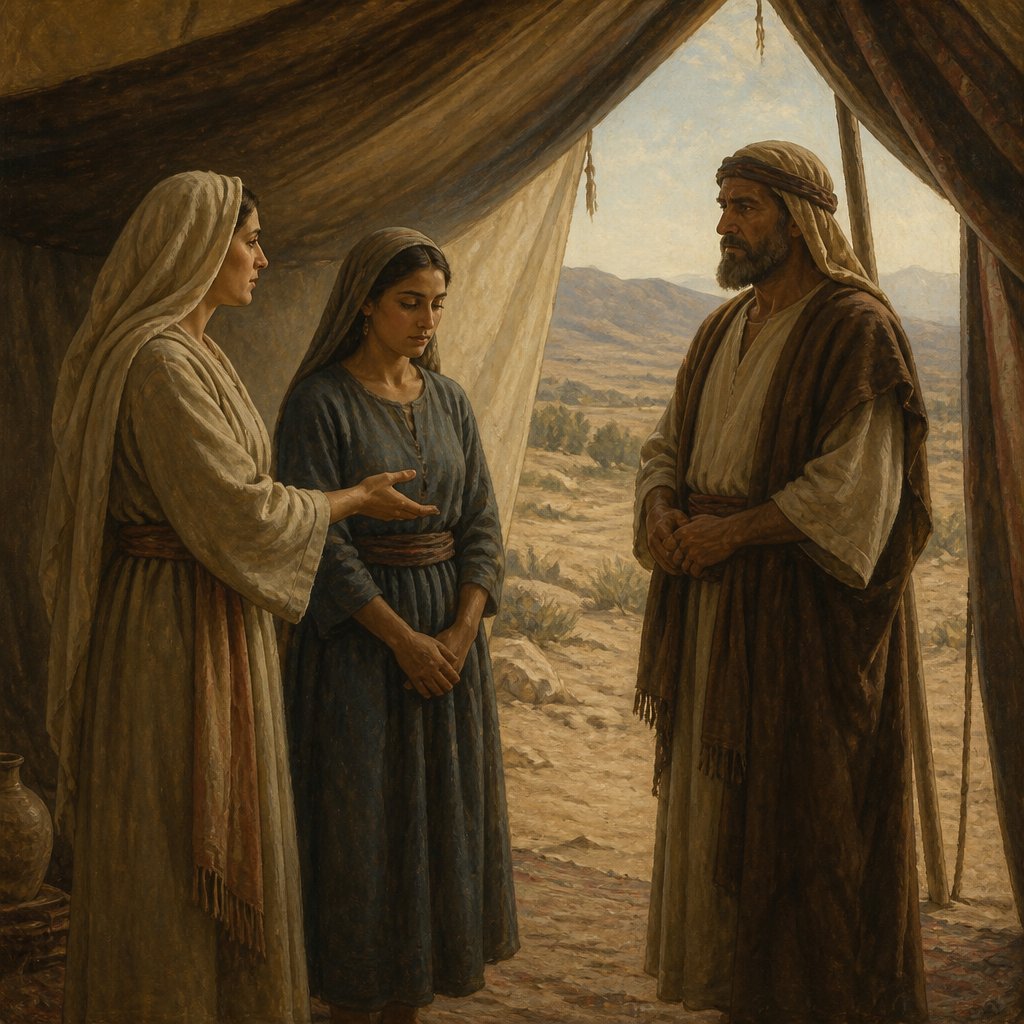
In Genesis 16:3, we read: "And Sarai Abram's wife took Hagar her maid the Egyptian, after Abram had dwelt ten years in the land of Canaan, and gave her to her husband Abram to be his wife." This profound moment resonates throughout Scripture as an emblem of human impatience and the costly consequences of failing to trust in God's timing.
At its core, this passage illustrates the deeply human tendency to circumvent divine plans when the waiting becomes unbearable. Sarai, who had been given a remarkable promise from God—that she would bear a child—found herself grappling with the agonizing silence from heaven. Despite the assurances from God made to Abram, after a decade in the land of Canaan and no sight of the fulfillment of that promise, Sarai felt compelled to take matters into her own hands.
This narrative draws us into the complexities of longing and the very real struggle of waiting. Sarai’s decision to offer Hagar as a surrogate is laden with desperation; her actions reflect a moment of human folly where faith is overshadowed by fear. It’s easy to judge Sarai in hindsight, but how often do we, too, find ourselves in situations where we are tempted to create our own solutions instead of trusting in God’s perfect will and timing?
In waiting, we are called to cultivate patience and trust, qualities that often bear the weight of significant spiritual growth. The silence of God can feel deafening in our lives when we seek direction, healing, or provision, just as Sarai must have felt it in her years of waiting for a child. Yet, the Scriptures remind us that God’s delays are not denials. Psalm 27:14 encourages us: "Wait on the Lord: be of good courage, and he shall strengthen thine heart: wait, I say, on the Lord!"
To understand the magnitude of Sarai's choice, we must delve deeper into the implications of her actions. Hagar, her maid, was used as a means to an end, the goal being a child that Sarai felt she could not bear due to her own biological limitations. This decision did not save Sarai from the heartache of infertility but led to a cascade of further complications and conflicts, including jealousy, strife, and deep relational rifts. The child born from this union, Ishmael, would bring about struggles that would affect future generations and serve as a painful reminder of the consequences of a lack of trust.
Moreover, this passage teaches us about the flawed nature of human solutions. When we step outside of God’s ordained timing, aligning ourselves more with impatience than with divine purpose, we risk sowing discord not only in our lives but in the lives of those around us. Our choices can set into motion events that extend far beyond our immediate understanding, impacting relationships, communities, and even futures. Hagar would eventually suffer the consequences of Sarai's choices, enduring hardship and rejection.
However, God, in His unfathomable grace, does not abandon those who falter in faith. He sees Hagar, He hears her despair, and He acknowledges her pain. In the midst of turmoil, He extends kindness and promise, showing that even when we err, His plans continue to unfold. The assurance in Genesis 16 is that God is intimately aware of our suffering and has a comprehensive plan that includes restoration.
As we reflect on Sarai's story, let us challenge ourselves to wait upon the Lord in our own lives. Are there areas in which we feel tempted to act impulsively or out of desperation? Let us remind ourselves that patience is not merely passive waiting; it is active trust in God’s sovereignty and love. May we seek to submit our needs to Him, confident that in His perfect timing, He will fulfill His promises, often in ways far beyond what we can think or imagine.
Ultimately, God's grace is sufficient in our failures. It calls us back into relationship with Him, encouraging us to seek Him first and trust that His plans are always working for our good and His glory.
Want to reflect more on Genesis 16:3?
Continue your spiritual journey with Bible Chat — an AI-powered tool for exploring God's Word through conversation. Ask questions, discover connections, and deepen your understanding.
Get Our Apps


Genesis 16:3 Artwork

Genesis 16:3

Genesis 16:3

Genesis 16:3 - "And Sarai Abram's wife took Hagar her maid the Egyptian, after Abram had dwelt ten years in the land of Canaan, and gave her to her husband Abram to be his wife."
"And Sarai Abram's wife took Hagar her maid the Egyptian, after Abram had dwelt ten years in the land of Canaan, and gave her to her husband Abram to be his wife." - Genesis 16:3

Genesis 3:16

Genesis 16:16

Genesis 3:16 - "Unto the woman he said, I will greatly multiply thy sorrow and thy conception; in sorrow thou shalt bring forth children; and thy desire shall be to thy husband, and he shall rule over thee."

Genesis 16:14

Genesis 16:2

Genesis 16:6

Genesis 1:16

Genesis 15:16

Genesis 16:8

Genesis 16:12

Genesis 25-16

Genesis 16:1

Genesis 18-16

Genesis 16:11

Genesis 17-16

Genesis 16:4

Genesis 16:7

Genesis 23-16

Genesis 16:9

Genesis 16:5

Genesis 20-16

Genesis 28-16

Genesis 22-16

Genesis 16:15

Genesis 16:10

Genesis 24-16