The Legacy of Arphaxad: A Journey Through Generations
"And Arphaxad begat Salah; and Salah begat Eber." - Genesis 10:24
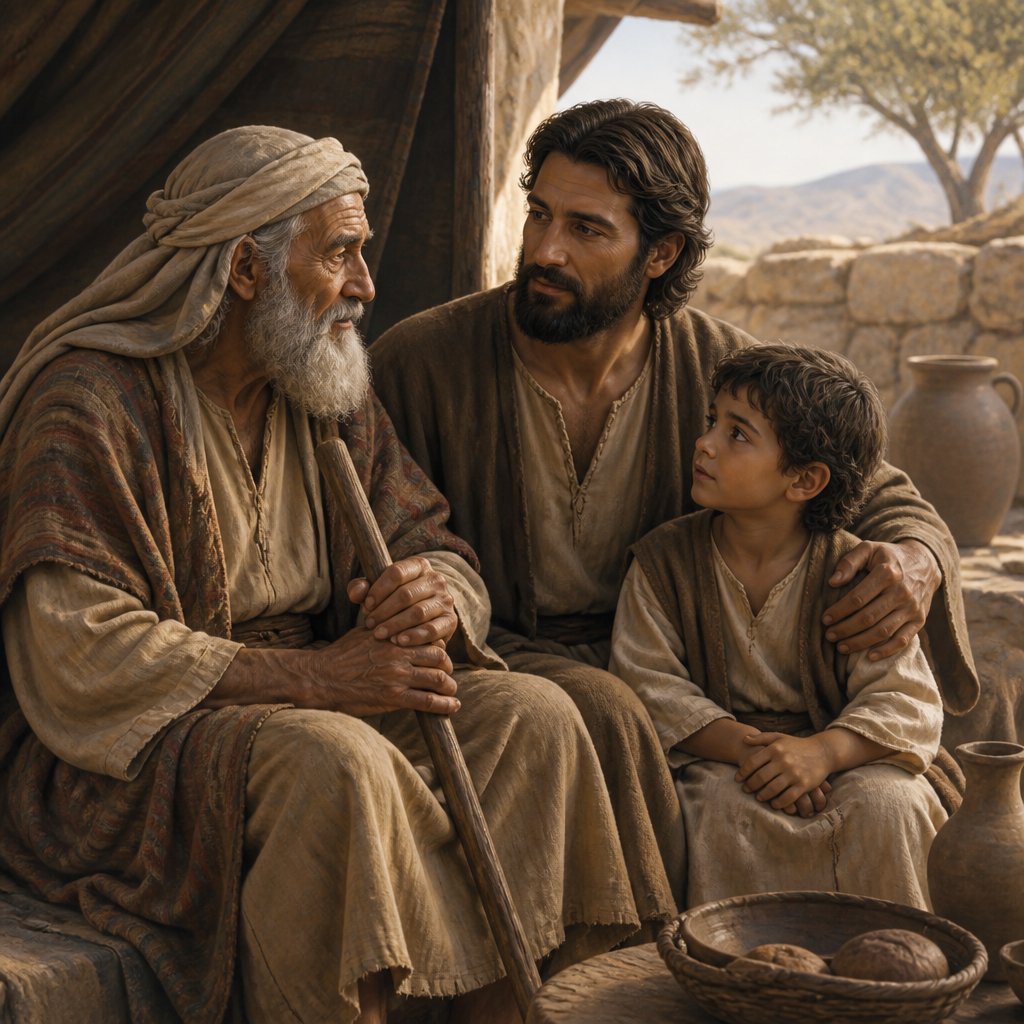
As we delve into the lineage of the human race found in the genealogical accounts of the Bible, we often come across verses that seem to present mere names and numbers. Yet, in Genesis 10:24 – "And Arphaxad begat Salah; and Salah begat Eber" – lies a profound narrative that invites us to reflect on the importance of legacy, faith, and divine purpose. This succinct verse, nestled among many in the genealogies of the Scriptures, opens a window into the lives of these historical figures, as well as the implications of their legacy on God’s overarching plan for humanity.
To begin with, we see that Arphaxad is the son of Shem, one of Noah's sons. The significance of a godly heritage cannot be overlooked. The mention of Arphaxad is more than a mere record; it signifies a continuing commitment to God’s covenant. In a world where moral and spiritual integrity seem increasingly rare, Arphaxad's existence highlights how each individual plays a role in weaving the narrative of faith through generations. Arphaxad begat Salah; their relationships serve as a reminder that every life has singular importance in God's grand design, a tapestry of families interconnected by time, faith, and purpose.
Salah, as the son of Arphaxad, inherits not only his father's name but also his legacy and faith. Names in biblical times were often rich with meaning, and Salah’s name itself signifies "sending out" or "to have a foundation." This speaks volumes about the responsibilities that Salah has inherited—he is called to continue the faith journey initiated by his father, Arphaxad, acting as a link between the past and future generations. In our lives, we, too, are called to build upon the foundations laid by those who came before us, nurturing the faith that has been entrusted to us and passing it down to the next generation.
Moving forward to Eber, the son of Salah, we find one of the most significant figures in the biblical narrative. Eber is often associated with the term "Hebrew," indicating a crucial transition in the history of God's people. His name reminds us that identities matter—the distinction of Eber as a Hebrew represents a spiritual lineage rooted in God’s promises. It reflects the notion that God is actively involved in the lives of His people, guiding them through the valleys of uncertainty toward a destiny filled with hope.
In contemplating the generations that Arphaxad, Salah, and Eber represent, we see that God's purpose is not merely historical but profoundly personal. The faith of each individual matters, and how we live out that faith can impact countless others. Our obedience, our choices, and our radical faith can lead to a legacy that outlives us, compelling our children and their children to walk in the ways of the Lord.
Today, we are invited to consider our own legacy. What are we passing on to the next generation? Are we instilling within them a deep-rooted faith? Are we committed to nurturing a relationship with the Lord that inspires those around us? In a rapidly changing world, our steadfastness in faith can create a ripple effect of change.
In summary, Genesis 10:24 may appear at first glance as a mere genealogical note, but when we peer beyond the surface, we discover a rich tapestry woven from the threads of faith, heritage, and divine purpose. Each name tells a story, a story that continues to unfold even in our modern lives. Let us take heart from Arphaxad, Salah, and Eber, and strive to leave a legacy of faith that will echo through the generations, leading our descendants closer to the heart of God.
Want to reflect more on Genesis 10:24?
Continue your spiritual journey with Bible Chat — an AI-powered tool for exploring God's Word through conversation. Ask questions, discover connections, and deepen your understanding.
Get Our Apps


Genesis 10:24 Artwork

Genesis 10:24 - "And Arphaxad begat Salah; and Salah begat Eber."
"And Arphaxad begat Salah; and Salah begat Eber." - Genesis 10:24

Genesis 24:10

Genesis 24:10 - "¶ And the servant took ten camels of the camels of his master, and departed; for all the goods of his master were in his hand: and he arose, and went to Mesopotamia, unto the city of Nahor."

Genesis 24:24

Genesis 24-26

Genesis 24-21

Genesis 24-7

Genesis 24-55

Genesis 3:24

Genesis 24-59

Genesis 24:60

Genesis 24-50

Genesis 24-54

Genesis 24:36

Genesis 24-61

Genesis 24-41

Genesis 25-24

Genesis 24-62

Genesis 24-56

Genesis 24-53

Genesis 24-63

Genesis 24-15

Genesis 24-66

Genesis 24-48

Genesis 24-43

Genesis 21-24

Genesis 19:24

Genesis 24:28

Genesis 24-17