The Weight of Consistent Disobedience
"Since the days of our fathers have we been in a great trespass unto this day; and for our iniquities have we, our kings, and our priests, been delivered into the hand of the kings of the lands, to the sword, to captivity, and to a spoil, and to confusion of face, as it is this day." - Ezra 9:7
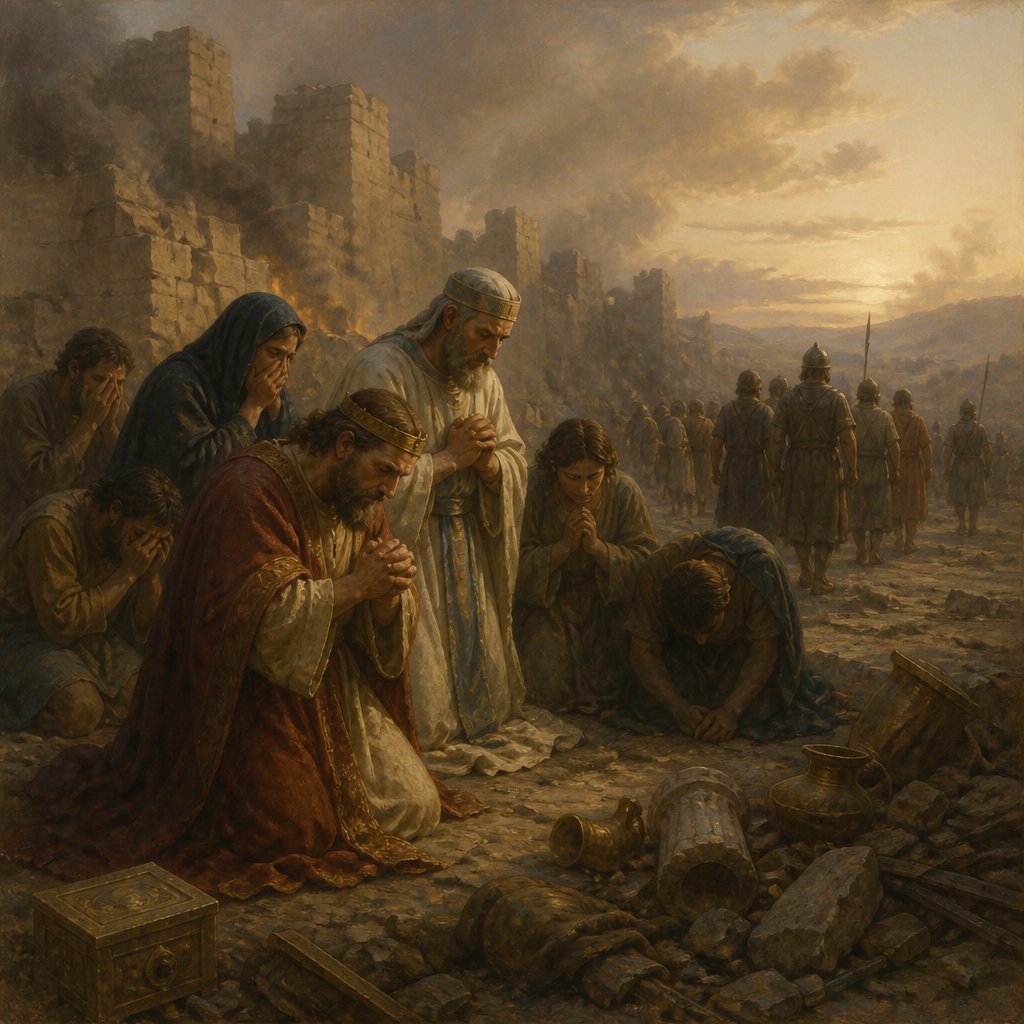
The verse from Ezra 9:7 (KJV) poignantly encapsulates the deep sorrow and recognition of sin that the people of Israel faced upon their return from Babylonian captivity. The verse reads: "Since the days of our fathers have we been in a great trespass unto this day; and for our iniquities have we, our kings, and our priests, been delivered into the hand of the kings of the lands, to the sword, to captivity, and to a spoil, and to confusion of face, as it is this day."
In this moment of reflection, Ezra, the scribe and leader, acknowledges a grievous history of disobedience against God that has persisted through generations. The tone here is one of profound humility and recognition of guilt. The people are not merely lamenting their own failures; they are recalling a legacy of rebellion that has deep roots in their collective identity. This acknowledgment is critical for us today as we strive to understand the implications of sin—not just in me, but in the community and throughout history.
Ezra's insights bring our attention to the stark reality of sin and its consequences. He acknowledges that the iniquities committed by the people, their kings, and their priests have led to dire consequences: subjugation by foreign kings, violence, exile, and ultimately, shame and confusion. Such a collective admission reminds us that our actions—particularly as leaders, influencers, and representatives of God—affect not only ourselves but the entire community around us.
The phrase "great trespass" serves as a profound reminder that sin is not simply a momentary slip or error. Instead, it is a grievous betrayal of the relationship between humanity and God. Trespasses imply a crossing over a boundary that leads to serious consequences. When we disregard God's commands and statutes, we actually cross over the line that He has delineated for our protection and flourishing. The weight of this transgression, as observed by Ezra, is immense and spans generations.
Moreover, the expression “to the sword, to captivity, and to a spoil, and to confusion of face” starkly illustrates the suffering that sin incurs. This multi-faceted damage can manifest in many forms: physical illness, broken relationships, spiritual desolation, and societal chaos. We, too, experience these ramifications in our lives and in the world around us. When we embrace sin, we forfeit peace and invite chaos.
Ezra’s pain echoes the greater narrative found throughout scripture—the story of humanity's brokenness and God’s relentless pursuit for redemption. The history of Israel underlines how frequently they turned away from God despite His love and faithfulness. The cycles of triumph followed by failures underscore the inherent struggle that exists between divine calling and human frailty. Similarly, we are urged to reflect on the patterns of sin in our lives. Are there iniquities we excuse or overlook? What are the ‘great trespasses’ that may linger unconfessed?
Yet, in acknowledging our failings, there lies hope for transformation. Ezra's prayer is an invitation for repentance. In recognizing the depths of dishonor toward God, there is a simultaneous call to return to Him—a call to restoration. The realization of the past should stir within us an urgent desire for change. Confession should lead to action, fostering a renewed commitment to follow God with integrity and sincerity.
As we meditate on Ezra 9:7, may we be challenged to own our past, not as a burden meant to condemn, but as a testimony of our need for grace. Let us cry out for forgiveness not only for ourselves but for our communities and leaders, for the healing of our land. The recognition of sin should lead us into deeper grace, compelling us not just to repent but also to live differently moving forward. God desires more than our sorrow; He longs for our commitment to walk uprightly in the light of His truth.
Want to reflect more on Ezra 9:7?
Continue your spiritual journey with Bible Chat — an AI-powered tool for exploring God's Word through conversation. Ask questions, discover connections, and deepen your understanding.
Get Our Apps


Ezra 9:7 Artwork

Ezra 9:7 - "Since the days of our fathers have we been in a great trespass unto this day; and for our iniquities have we, our kings, and our priests, been delivered into the hand of the kings of the lands, to the sword, to captivity, and to a spoil, and to confusion of face, as it is this day."
"Since the days of our fathers have we been in a great trespass unto this day; and for our iniquities have we, our kings, and our priests, been delivered into the hand of the kings of the lands, to the sword, to captivity, and to a spoil, and to confusion of face, as it is this day." - Ezra 9:7

Ezra 9:6

Ezra 3:9

Ezra 7:9 - "For upon the first day of the first month began he to go up from Babylon, and on the first day of the fifth month came he to Jerusalem, according to the good hand of his God upon him."

Ezra 9:3

Ezra 9:1

Ezra 9:1

Ezra 9:1

Ezra 7:12 - "Artaxerxes, king of kings, unto Ezra the priest, a scribe of the law of the God of heaven, perfect peace, and at such a time."

Ezra 9:1-2

Ezra 9:13-15

Ezra 7:10 - "For Ezra had prepared his heart to seek the law of the LORD, and to do it, and to teach in Israel statutes and judgments."

Ezra 7:1 - "Now after these things, in the reign of Artaxerxes king of Persia, Ezra the son of Seraiah, the son of Azariah, the son of Hilkiah,"

Ezra 9:1-2

Ezra 2:9 - "The children of Zaccai, seven hundred and threescore."

Ezra 7:11 - "¶ Now this is the copy of the letter that the king Artaxerxes gave unto Ezra the priest, the scribe, even a scribe of the words of the commandments of the LORD, and of his statutes to Israel."

Ezra 7:2 - "The son of Shallum, the son of Zadok, the son of Ahitub,"

Ezra 7:4 - "The son of Zerahiah, the son of Uzzi, the son of Bukki,"

Ezra 7:3 - "The son of Amariah, the son of Azariah, the son of Meraioth,"

Ezra 2:7 - "The children of Elam, a thousand two hundred fifty and four."
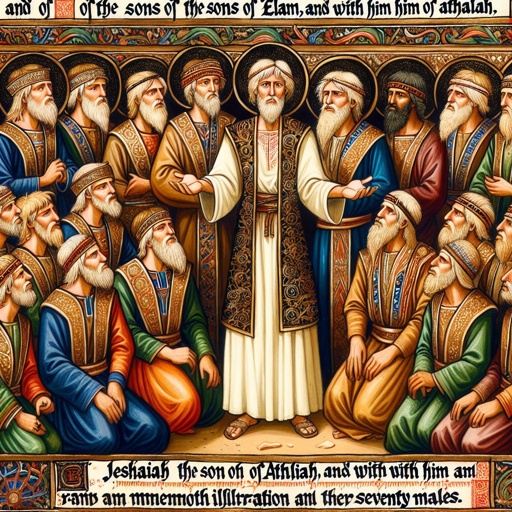
Ezra 8:7 - "And of the sons of Elam; Jeshaiah the son of Athaliah, and with him seventy males."

Ezra 7:8 - "And he came to Jerusalem in the fifth month, which was in the seventh year of the king."

Ezra 7:21 - "And I, even I Artaxerxes the king, do make a decree to all the treasurers which are beyond the river, that whatsoever Ezra the priest, the scribe of the law of the God of heaven, shall require of you, it be done speedily,"

Ezra 7:7 - "And there went up some of the children of Israel, and of the priests, and the Levites, and the singers, and the porters, and the Nethinims, unto Jerusalem, in the seventh year of Artaxerxes the king."

Ezra 8:9 - "Of the sons of Joab; Obadiah the son of Jehiel, and with him two hundred and eighteen males."

Ezra 7:5 - "The son of Abishua, the son of Phinehas, the son of Eleazar, the son of Aaron the chief priest:"

Ezra 1:9 - "And this is the number of them: thirty chargers of gold, a thousand chargers of silver, nine and twenty knives,"

Ezra 7:6 - "This Ezra went up from Babylon; and he was a ready scribe in the law of Moses, which the LORD God of Israel had given: and the king granted him all his request, according to the hand of the LORD his God upon him."

"The children of Zaccai, seven hundred and threescore." - Ezra 2:9