The Peril of Mixing: A Call to Holiness
"For they have taken of their daughters for themselves, and for their sons: so that the holy seed have mingled themselves with the people of those lands: yea, the hand of the princes and rulers hath been chief in this trespass." - Ezra 9:2
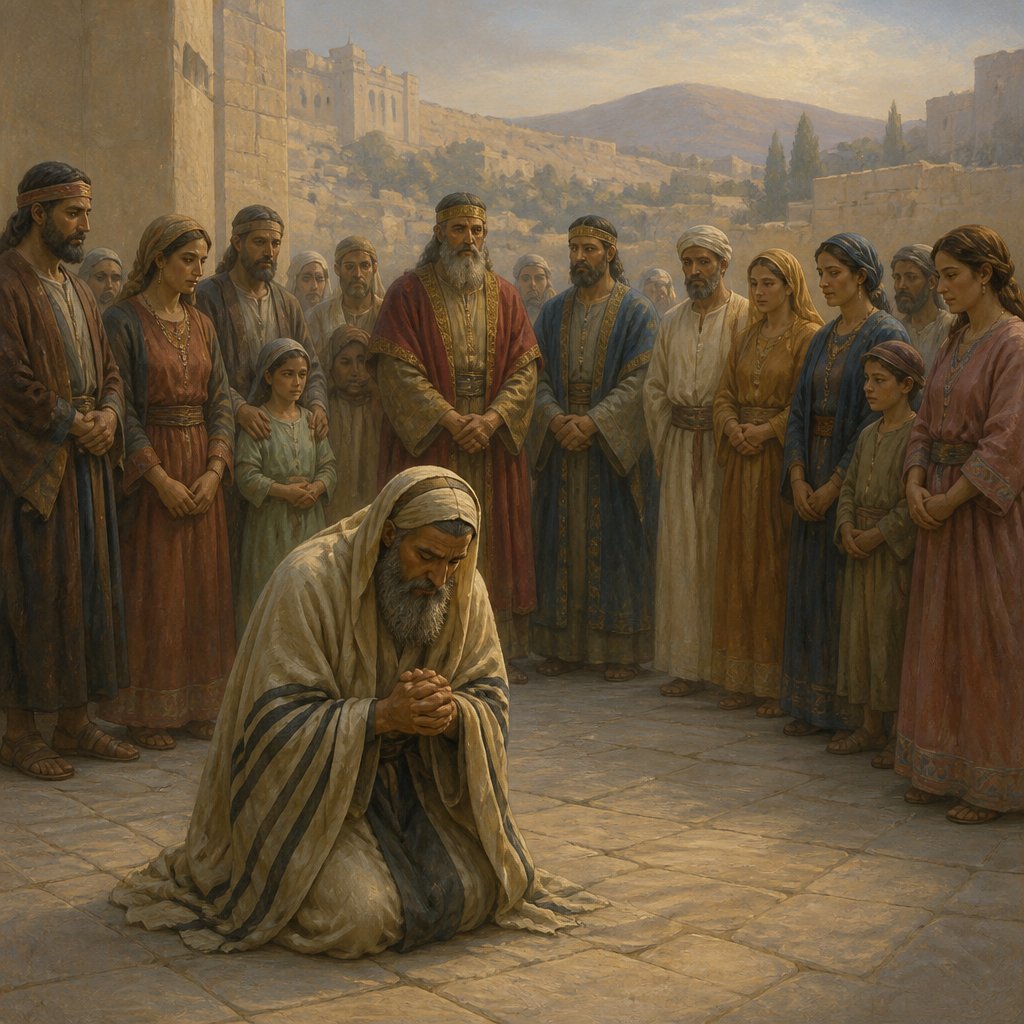
In Ezra 9:2, we encounter a poignant moment in Israel's history, where the faithful remnant returned from exile—spurred by God's mercy—faces a grave spiritual crisis. The King James Version records, "For they have taken of their daughters for themselves, and for their sons: so that the holy seed have mingled themselves with the people of those lands: yea, the hand of the princes and rulers hath been chief in this trespass." This verse starkly illustrates the dangers of intermingling with foreign ideologies and practices, which could undermine their identity as God's chosen people.
At this point in the narrative, Ezra, the scribe, is confronting a reality that both grieves and angers him. The returning exiles, through spiritual neglect and disobedience, are entering into marriages with the local peoples, thereby diluting the purity of their lineage and, symbolically, their covenant with God. This mingling is not merely a social issue; it embodies a profound spiritual crisis where allegiance to the one true God of Israel is compromised.
Understanding the historical context is vital. The Israelites, instructed in the Law of Moses, were told, "Neither shalt thou make marriages with them; thy daughter thou shalt not give unto his son, nor his daughter shalt thou take unto thy son" (Deuteronomy 7:3). This directive stemmed from God's wisdom, to protect His people from the spiritual corruption that arises from marrying outside the faith. The intention was clear—God desired a distinct people who would reflect His holiness and glory in the world.
Ezra’s lament reveals the heart of a leader who understands the seriousness of their transgression. He recognizes that such choices have a cascading impact not only on their immediate families but on the entire nation of Israel. The phrase "the holy seed have mingled themselves" speaks to the very essence of their being as a community set apart by God. Their identity is at stake. By sharing their lives, and intimately connecting with the people of the lands, they invite the erosion of their values and the absorption of foreign cultures which often practiced idolatry.
This scriptural passage serves as a sober reminder for believers today. The concept of holiness still applies, underscoring the need for Christians to guard their hearts and relationships. As followers of Christ, we are called to be "a chosen generation, a royal priesthood, an holy nation" (1 Peter 2:9). This isn't about isolation from the world, but rather about influence and integrity. We can engage with the world without compromising the holiness that God desires for us.
Ezra's deep distress and fervent prayer demonstrate another critical theme found in this passage—the role of leadership and accountability in the faith community. Ezra recognizes that the leaders, termed here as "the hand of the princes and rulers", have led the way in this trespass. This highlights the responsibility that those in positions of influence bear; their choices reverberate through the community. Similarly, in our churches and families today, those who lead must exemplify godly character and discernment, ensuring that they guide others toward faithfulness to God’s commandments.
As we meditate upon Ezra 9:2, may we reflect on our own lives and relationships and ask ourselves: Are there areas where we have mingled our faith with the ways of the world? In what ways are we compromising our distinctiveness as children of God? God calls us to uphold holiness not as a burdensome law but as a fulfilling invitation to live in harmony with His divine will.
Let us seek God's forgiveness where we have faltered and commit anew to living faithfully, ensuring that our choices reflect our identity as His holy people. Like Ezra, we must recognize the gravity of our commitments and pray for wisdom, purity, and strength to uphold God's truth in a world that often pulls us in conflicting directions.
In the spirit of separation from that which may corrupt, let us also find comfort in the truth that God stands ready to restore and redeem. The journey of faith is ongoing, and as we submit ourselves to Him, He will guide us in paths of righteousness for His name's sake.
Want to reflect more on Ezra 9:2?
Continue your spiritual journey with Bible Chat — an AI-powered tool for exploring God's Word through conversation. Ask questions, discover connections, and deepen your understanding.
Get Our Apps


Ezra 9:2 Artwork

Ezra 9:2 - "For they have taken of their daughters for themselves, and for their sons: so that the holy seed have mingled themselves with the people of those lands: yea, the hand of the princes and rulers hath been chief in this trespass."
"For they have taken of their daughters for themselves, and for their sons: so that the holy seed have mingled themselves with the people of those lands: yea, the hand of the princes and rulers hath been chief in this trespass." - Ezra 9:2

Ezra 9:1-2

Ezra 9:1-2

Ezra 2:9 - "The children of Zaccai, seven hundred and threescore."

"The children of Zaccai, seven hundred and threescore." - Ezra 2:9

Ezra 9:6

Ezra 3:9

Ezra 9:3

Ezra 9:1

Ezra 9:1

Ezra 9:1

Ezra 9:13-15

Ezra 3:2

Ezra 3:2

Ezra 3:2

Ezra 3:2

Ezra 3:2

Ezra 8:9 - "Of the sons of Joab; Obadiah the son of Jehiel, and with him two hundred and eighteen males."

Zerubbabel in Ezra chapter 2

Ezra 1:9 - "And this is the number of them: thirty chargers of gold, a thousand chargers of silver, nine and twenty knives,"

Ezra 2:22 - "The men of Netophah, fifty and six."
Ezra 2:18 - "The children of Jorah, an hundred and twelve."

Ezra 2:54 - "The children of Neziah, the children of Hatipha."

Ezra 2:20 - "The children of Gibbar, ninety and five."

Ezra 2:24 - "The children of Azmaveth, forty and two."

Ezra 2:39 - "The children of Harim, a thousand and seventeen."

Ezra 2:27 - "The men of Michmas, an hundred twenty and two."

Ezra 2:29 - "The children of Nebo, fifty and two."

Ezra 9:10 - "And now, O our God, what shall we say after this? for we have forsaken thy commandments,"