When the Work Ceases: A Reflection on Ezra 4:24
"Then ceased the work of the house of God which is at Jerusalem. So it ceased unto the second year of the reign of Darius king of Persia." - Ezra 4:24
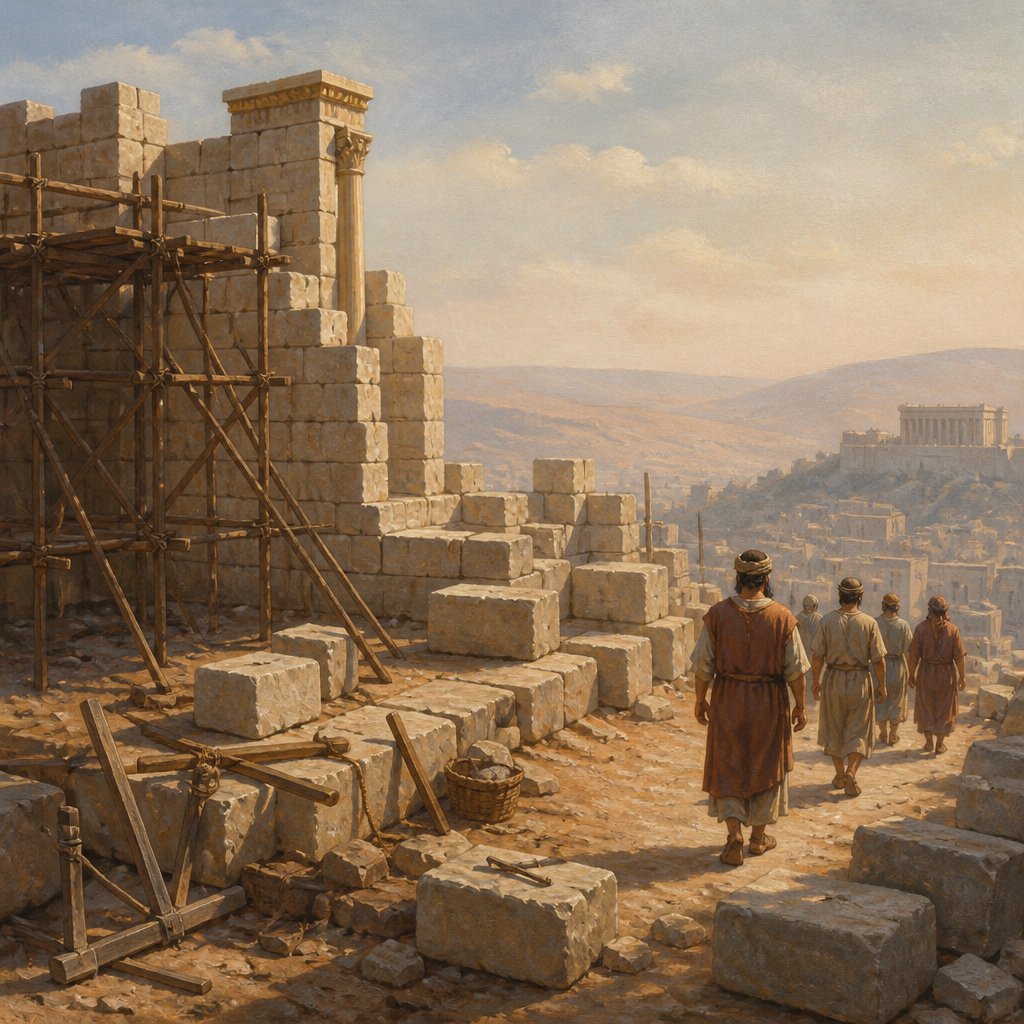
The verse Ezra 4:24 in the King James Version reads: "Then ceased the work of the house of God which is at Jerusalem. So it ceased unto the second year of the reign of Darius king of Persia."
In this concise yet profound passage, we encounter a pivotal moment in the history of God's people, the Jewish exiles who returned to their homeland after years of captivity. Upon their return, they were filled with zeal to rebuild the Temple, the house of God in Jerusalem, but faced opposition from surrounding nations that sought to thwart their efforts. The circumstances were dire, and despite their fervent intentions, the work ceased.
This cessation of work serves as a powerful metaphor for our lives today. Often, we find ourselves in periods where our spiritual endeavors—our commitments to serve, to grow, to worship—come to an abrupt halt. Life's pressures, doubts, and challenges can weigh heavily upon our spirit, leading us to a place where we feel indistinct, sidelined, or even defeated in our spiritual journey. Just like the returned exiles, we may struggle to understand why the work has ceased.
Understanding the context of Ezra 4:24 is critical for a comprehensive reflection. The opposition faced by the Jewish people was fierce. The letter discouraging the rebuilding of the temple reached the Persian king, and it led to the immediate cessation of their work. This moment reveals an important truth: sometimes, external forces—whether they be societal pressures, personal crises, or spiritual dryness—can hinder our spiritual projects and aspirations. In our modern context, this is akin to confessing that we are all vulnerable to losing momentum in our relationship with God or in our mission to serve others.
So, what do we do when the work has ceased? First, we acknowledge the reality of our circumstances and our emotions. When the work ceases, it is easy to fall into a realm of despair or inactivity. However, we must remember that cessation does not mean the end. The very next verse illustrates that while work ceased under King Darius, it did not abandon them forever. Instead, it reminds us that God is always at work, even when our efforts seem to falter.
In moments when we feel halted, we are called to pause and reflect. It is essential to assess our spiritual lives, to recalibrate our vision, and to allow God to reignite our passion and purpose. We can invite Him into our disappointed hearts, seeking clarity and strength for the next steps. The period of dormancy is a critical time for renewal, allowing for reflection upon what God was teaching during the building process.
Furthermore, we find our fortress in prayer. In the face of adversity, we must turn to God, seeking wisdom and direction. We can find solace in psalms of lament or prophecy, recalling God's previous promises to Israel, knowing that He did not abandon His people in their time of need. Just as He would later inspire the hearts of Zerubbabel and Joshua to resume the work of the temple, He can inspire us anew.
Additionally, we must cultivate community. The returned exiles did not labor alone, and neither should we. Engaging with others, sharing our struggles and our encouragement, reminds us that we are not solitary workers but part of a shared mission. Community strengthens us, and sometimes, it is through the encouragement of fellow believers that we can reignite our passion for service and worship.
In conclusion, while Ezra 4:24 paints a picture of halted progress, it simultaneously opens the door to renewed hope. The work may cease, but it will not cease forever. God is diligently working on our behalf, guiding our paths. The call remains for us to trust in His timing, seek His presence, and prepare our hearts for the moment when we hear the call to resume the work of His house—wherever that may be in our lives.
Want to reflect more on Ezra 4:24?
Continue your spiritual journey with Bible Chat — an AI-powered tool for exploring God's Word through conversation. Ask questions, discover connections, and deepen your understanding.
Get Our Apps


Ezra 4:24 Artwork

Ezra 4:24 - "Then ceased the work of the house of God which is at Jerusalem. So it ceased unto the second year of the reign of Darius king of Persia."
"Then ceased the work of the house of God which is at Jerusalem. So it ceased unto the second year of the reign of Darius king of Persia." - Ezra 4:24

Ezra 4:4

Ezra 2:24 - "The children of Azmaveth, forty and two."

Ezra 4:4

Ezra 10:24 - "Of the singers also; Eliashib: and of the porters; Shallum, and Telem, and Uri."
"The children of Azmaveth, forty and two." - Ezra 2:24

Ezra 8:24 - "¶ Then I separated twelve of the chief of the priests, Sherebiah, Hashabiah, and ten of their brethren with them,"

Zerubbabel in Ezra chapter 4

Zerubbabel in Ezra chapter 4

Ezra 4:4 - "Then the people of the land weakened the hands of the people of Judah, and troubled them in building,"

Letter to the king in Ezra chapter 4

Ezra 7:4 - "The son of Zerahiah, the son of Uzzi, the son of Bukki,"

Ezra 2:4 - "The children of Shephatiah, three hundred seventy and two."
"Of the singers also; Eliashib: and of the porters; Shallum, and Telem, and Uri." - Ezra 10:24

Ezra 8:4 - "Of the sons of Pahath-moab; Elihoenai the son of Zerahiah, and with him two hundred males."

Ezra 4:22 - "Take heed now that ye fail not to do this: why should damage grow to the hurt of the kings?"

Ezra 5:4 - "Then said we unto them after this manner, What are the names of the men that make this building?"

Ezra 4:8 - "Rehum the chancellor and Shimshai the scribe wrote a letter against Jerusalem to Artaxerxes the king in this sort:"

Ezra 10:4 - "Arise; for this matter belongeth unto thee: we also will be with thee: be of good courage, and do it."

"Then the people of the land weakened the hands of the people of Judah, and troubled them in building," - Ezra 4:4

Ezra 4:18 - "The letter which ye sent unto us hath been plainly read before me."

"The son of Zerahiah, the son of Uzzi, the son of Bukki," - Ezra 7:4

Ezra 7:24 - "Also we certify you, that touching any of the priests and Levites, singers, porters, Nethinims, or ministers of this house of God, it shall not be lawful to impose toll, tribute, or custom, upon them."

Ezra 4:6 - "And in the reign of Ahasuerus, in the beginning of his reign, wrote they unto him an accusation against the inhabitants of Judah and Jerusalem."

Ezra 6:4 - "With three rows of great stones, and a row of new timber: and let the expenses be given out of the king's house:"
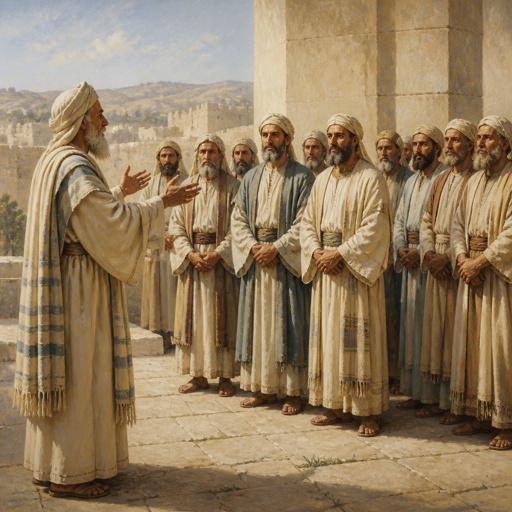
"¶ Then I separated twelve of the chief of the priests, Sherebiah, Hashabiah, and ten of their brethren with them," - Ezra 8:24

Ezra 4:10 - "And the rest of the nations whom the great and noble Asnappar brought over, and set in the cities of Samaria, and the rest that are on this side the river, and at such a time."

1 Chronicles 4:17 - "And the sons of Ezra were, Jether, and Mered, and Epher, and Jalon: and she bare Miriam, and Shammai, and Ishbah the father of Eshtemoa."

Ezra 4:1 - "Now when the adversaries of Judah and Benjamin heard that the children of the captivity builded the temple unto the LORD God of Israel;"