Counting the Congregation: Unity in Purpose and Faith
"¶ The whole congregation together was forty and two thousand three hundred and threescore," - Ezra 2:64

Ezra 2:64 states, "The whole congregation together was forty and two thousand three hundred and threescore." This verse, though a simple enumeration of those returning from exile in Babylon to Jerusalem, carries profound significance for the modern believer. The context of this passage reveals not just a number, but a people united in purpose and faith, embarking on a monumental journey to restore their homeland and their covenant with God.
Biblical narratives often capture specific moments in history that tell much about God's faithfulness and the human response to His call. In this specific account, as the exiles assembled, it was essential for them to recognize their shared identities as a people. The number forty-two thousand three hundred and threescore represents not just a headcount; it embodies unity, collective identity, and the restoration of a community deeply intertwined with God's promises.
As we delve deeper into what this verse signifies, it's important to consider the circumstances surrounding the return. These people had lived away from their ancestral land for generations—experiencing loss, longing, and a desperate yearning for home. Yet, God stirred their hearts. He inspired a remnant to return, to rebuild what was broken, and to reclaim what had been lost. This provided a fresh start—a new beginning characterized by faith and hope. How powerful it is to recognize that our God orchestrates events in our lives for His glory and our good!
In our contemporary lives, we may find ourselves longing for restoration—whether it be in our families, communities, or personal walks with God. We may feel like exiles in a foreign land, yearning for a place where we can worship freely and without fear. The returning exiles demonstrate that a significant part of restoration involves community; no one person carried the burden alone. They came together in collective faith to achieve a shared goal.
Consider, what does it mean to you to be part of a congregation? As each person counted in this verse marked the hope for the future, we can draw lessons about the vital role of community in our spiritual journeys. The Apostle Paul reminds us in 1 Corinthians 12, where he speaks about the body of Christ being one body made up of many parts—each with its unique purpose and function. This idea reflects the coming together of the people in Ezra's time.
Moreover, the act of counting signifies acknowledgment. God knows each of His children by name, as Isaiah 43:1 reminds us: “Fear not: for I have redeemed thee, I have called thee by thy name; thou art mine.” Each individual returning to Jerusalem represented a story, a family, a future. In a similar vein, being part of a congregation involves being seen, knowing that one’s presence matters, and embracing the responsibilities that come from being called into fellowship.
The number recorded in Ezra may seem abstract, yet every individual was important to God’s grand narrative. When we come together as a congregation, we combine our resources, talents, and faith to accomplish what God has called us to do. Like the exiles, our identity is not merely in our individual selves but in our communion with one another and with God. Together, we can restore hope where despair exists, love where hate resides, and joy where sorrow lingers.
As you reflect on Ezra 2:64, begin to appreciate your significance within your local congregation. Engage actively in the community of believers, recognize how your contributions build up the body of Christ, and pray for unity among your fellow believers. It is in togetherness that we can multiply our efforts, support one another, and ultimately reflect the love of Christ to the world around us.
Through this counting of the congregation in Ezra, let each number remind us of each soul represented—each with its struggles, its joys, and its story of redemption through Jesus Christ. May we find strength in unity and purpose in our shared faith.
Want to reflect more on Ezra 2:64?
Continue your spiritual journey with Bible Chat — an AI-powered tool for exploring God's Word through conversation. Ask questions, discover connections, and deepen your understanding.
Get Our Apps


Ezra 2:64 Artwork

Ezra 2:64 - "¶ The whole congregation together was forty and two thousand three hundred and threescore,"

"¶ The whole congregation together was forty and two thousand three hundred and threescore," - Ezra 2:64
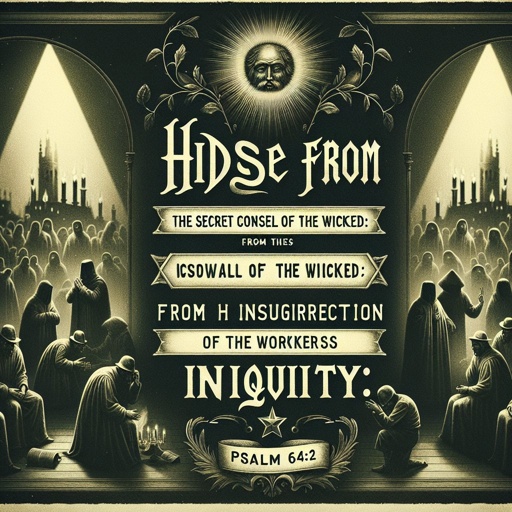
Psalms 64:2 - "Hide me from the secret counsel of the wicked; from the insurrection of the workers of iniquity:"

Isaiah 64:2 - "As when the melting fire burneth, the fire causeth the waters to boil, to make thy name known to thine adversaries, that the nations may tremble at thy presence!"

Ezra 3:2

Ezra 3:2

Ezra 3:2

Ezra 3:2

Ezra 3:2

Ezra 9:1-2

Zerubbabel in Ezra chapter 2

"Hide me from the secret counsel of the wicked; from the insurrection of the workers of iniquity:" - Psalms 64:2

Ezra 2:22 - "The men of Netophah, fifty and six."
Ezra 2:18 - "The children of Jorah, an hundred and twelve."

Ezra 2:54 - "The children of Neziah, the children of Hatipha."

Ezra 2:20 - "The children of Gibbar, ninety and five."

Ezra 2:24 - "The children of Azmaveth, forty and two."

Ezra 2:39 - "The children of Harim, a thousand and seventeen."

Ezra 9:1-2

Ezra 2:29 - "The children of Nebo, fifty and two."

Ezra 2:9 - "The children of Zaccai, seven hundred and threescore."

Ezra 2:27 - "The men of Michmas, an hundred twenty and two."

Ezra 2:37 - "The children of Immer, a thousand fifty and two."

Ezra 2:32 - "The children of Harim, three hundred and twenty."

Ezra 2:30 - "The children of Magbish, an hundred fifty and six."

Ezra 2:16 - "The children of Ater of Hezekiah, ninety and eight."

Ezra 2:23 - "The men of Anathoth, an hundred twenty and eight."

Ezra 2:56 - "The children of Jaalah, the children of Darkon, the children of Giddel,"

Ezra 2:11 - "The children of Bebai, six hundred twenty and three."

Ezra 2:53 - "The children of Barkos, the children of Sisera, the children of Thamah,"