Faithful Remnants: The Significance of Names in the Restoration
"The children of Bazluth, the children of Mehida, the children of Harsha," - Ezra 2:52
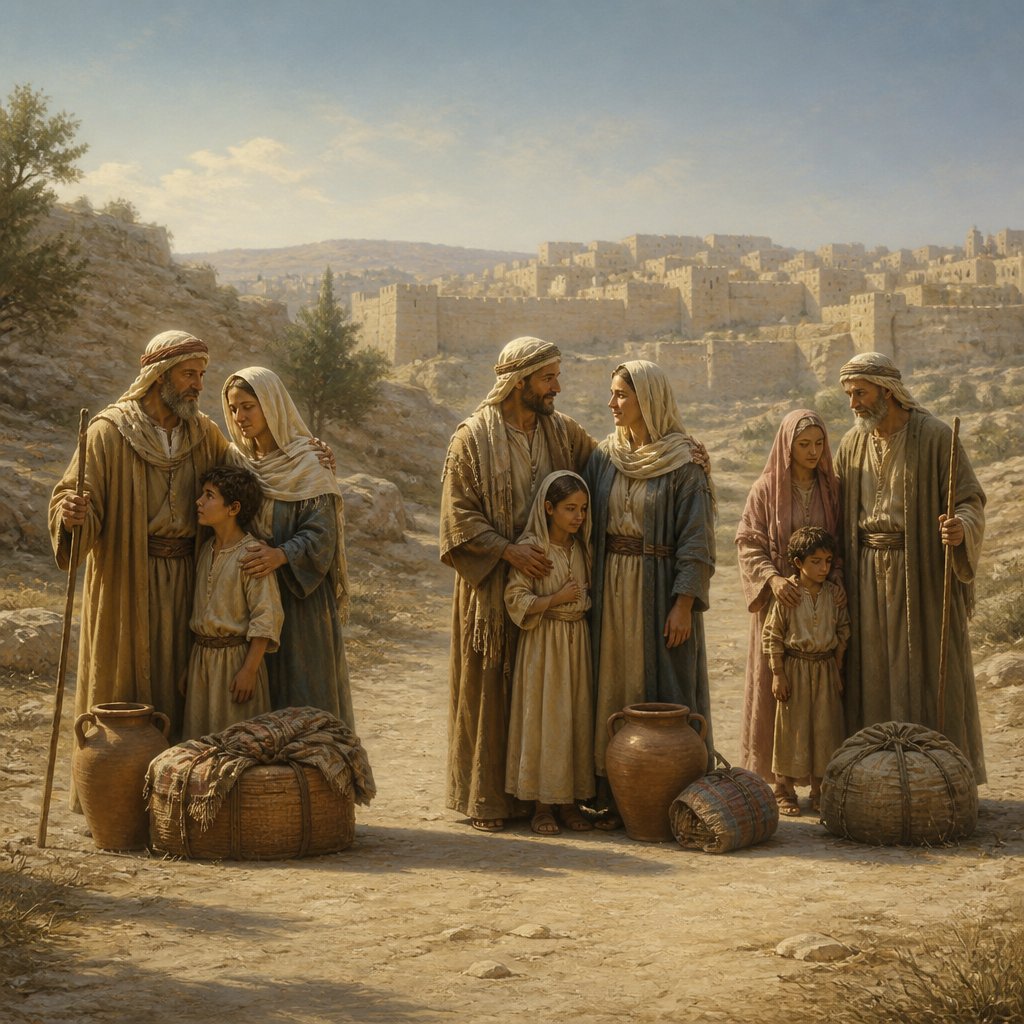
**Scripture Reading: Ezra 2:52**
*“The children of Bazluth, the children of Mehida, the children of Harsha.”*
The book of Ezra marks a momentous chapter in the history of the Israelites. After decades in captivity, they were finally returning to the land God had promised their ancestors. The list of names that occupies much of Ezra chapter 2 is often overlooked or considered a mere historical record, yet embedded within these names lies a treasure trove of spiritual truth and faithfulness.
At first glance, the verse speaks simply of descendants: “The children of Bazluth, the children of Mehida, the children of Harsha.” Each of the names represents a family, a heritage, and a legacy. However, as we meditate on this passage, we can glean profound meanings about identity, community, and God’s unwavering faithfulness through generations.
**1. The Importance of Names**
Names are powerful. In Scripture, a name often reflects the character and destiny of a person or family. Bazluth, Mehida, and Harsha were not just names; they were representatives of families who had endured significant trials and yet remained part of the community chosen to rebuild the temple and restore their nation.
The children of Bazluth, whose name might suggest 'the hind (or deer) of the Lord,' remind us that even during dark times, God is our sustainer. Their presence signifies a remnant faithfully returned to their homeland, driven by the promise of restoration. Each name carries the weight of stories untold—stories of perseverance, faith, and hope.
**2. Community and Collective Identity**
In an era that often champions individualism, Ezra 2:52 invites us to reflect on the power of community. The Israelites were not returning as individuals; they were a collective. They had a shared past, shared struggles, and now a shared mission.
“We” has always been more powerful than “I” in the narrative of God’s kingdom. The remnant of God's people, counting numbers based on family groups, establishes a sense of belonging and unity. As the children of Bazluth, Mehida, and Harsha are mentioned, we recognize that no one is insignificant in God’s eyes. Every individual matters in the tapestry of God’s plan.
**3. The Calling to Rebuild**
The context of Ezra 2 is that of a returning exiled community summoned to reconstruct. The Israelites had lost their homeland, their temple, and much of their identity during their time in captivity. Yet, God’s promise endured, and He called His people to return and rebuild.
In our lives today, the spiritual parallels are striking. We may face our own forms of captivity: sin, despair, or even societal pressures that lead us away from our true identities. God calls us, much like the children of Bazluth, to return to Him, to restore our hearts, and to rebuild our broken relationships and communities. The act of rebuilding is not just physical; it’s deeply spiritual. There are aspects of our lives and hearts that must be surrendered, reshaped, and renewed in God’s presence.
**4. God’s Faithfulness Through Generations**
As we continue to meditate on these names, we recognize that they bear witness to God's enduring faithfulness. The act of listing these individuals serves as a divine reminder that God remembers His people. The stories of hardship and survival are transformed into narratives of triumph by God’s hand.
In our own lives, we often find ourselves in situations where the future seems uncertain. However, as we look back at moments of our own history and familial lineage, we can trace the faithfulness of God throughout generations. We can take comfort in knowing that just as He was faithful to the Israelites in Ezra's time, He is faithful to us today.
As we read the simple line of scripture from Ezra 2:52, let us be encouraged. Each name reminds us that every child of God, including ourselves, has a place and purpose in His grand narrative of redemption and restoration. May we hold fast to our identity in Christ and embrace our calling to be part of His faithful remnant, actively participating in the work of rebuilding His kingdom on earth.
Want to reflect more on Ezra 2:52?
Continue your spiritual journey with Bible Chat — an AI-powered tool for exploring God's Word through conversation. Ask questions, discover connections, and deepen your understanding.
Get Our Apps


Ezra 2:52 Artwork
Ezra 2:52 - "The children of Bazluth, the children of Mehida, the children of Harsha,"
"The children of Bazluth, the children of Mehida, the children of Harsha," - Ezra 2:52

Luke 2:52

Luke 2:41-52

Luke 2:52 - "And Jesus increased in wisdom and stature, and in favour with God and man."

Psalms 52:2 - "Thy tongue deviseth mischiefs; like a sharp razor, working deceitfully."

Ezra 3:2

Ezra 3:2

Ezra 3:2

1 Chronicles 2:52 - "And Shobal the father of Kirjath-jearim had sons; Haroeh, and half of the Manahethites."

Ezra 3:2

Ezra 3:2

Jeremiah 52:2 - "And he did that which was evil in the eyes of the LORD, according to all that Jehoiakim had done."

Ezra 9:1-2

Zerubbabel in Ezra chapter 2

Ezra 2:22 - "The men of Netophah, fifty and six."
Ezra 2:18 - "The children of Jorah, an hundred and twelve."

Ezra 2:54 - "The children of Neziah, the children of Hatipha."

Ezra 2:20 - "The children of Gibbar, ninety and five."

Ezra 2:24 - "The children of Azmaveth, forty and two."

Ezra 2:39 - "The children of Harim, a thousand and seventeen."

Ezra 9:1-2

Ezra 2:29 - "The children of Nebo, fifty and two."

Ezra 2:9 - "The children of Zaccai, seven hundred and threescore."

Ezra 2:27 - "The men of Michmas, an hundred twenty and two."

Ezra 2:37 - "The children of Immer, a thousand fifty and two."

Ezra 2:32 - "The children of Harim, three hundred and twenty."

Ezra 2:30 - "The children of Magbish, an hundred fifty and six."

Ezra 2:16 - "The children of Ater of Hezekiah, ninety and eight."

Ezra 2:23 - "The men of Anathoth, an hundred twenty and eight."