Restoring Identity: Lessons from Ezra 2:38
"The children of Pashur, a thousand two hundred forty and seven." - Ezra 2:38

In the book of Ezra, we see a remarkable account of God’s people returning to Jerusalem after the Babylonian exile. It is a transition period, a time of restoration, and the re-establishment of the identities of Israel's tribes. In Ezra 2:38, we read, "The children of Pashur, a thousand two hundred forty and seven." At first glance, this verse may seem like a mere numerical reference to a family or clan, but it holds profound significance for our spiritual walk today.
The children of Pashur were part of the Levitical lineage, deriving from a priestly family. To fully appreciate the implications of this verse, we have to consider the context of the Israelites' return. After years in captivity, their cultural and spiritual identities had been diluted. Pashur, in Hebrew, means "to break forth," which symbolizes the breaking away from the captivity of Babylon—a call to rise and restore what had been lost.
This returns to the theme that resonates within many believers in our own lives: God’s constant call for us to return to Him. Just as Pashur’s descendants returned to their roots, we too are called to identify and reclaim our divine heritage. Many times, as we navigate life's challenges, we might find ourselves influenced by the world around us, feeling separated from our true identity as children of God. 1 Peter 2:9 declares, "But ye are a chosen generation, a royal priesthood, a holy nation, a peculiar people; that ye should shew forth the praises of him who hath called you out of darkness into his marvelous light."
The number, one thousand two hundred and forty-seven, is not merely a statistic; it signifies a community. Each individual represents not only a name but a story, a life transformed by the grace and mercy of God. As we reflect on this number, let us recognize that God sees us not merely as part of a collective but as individuals. He knows our names, our struggles, and our triumphs. This reminds us that in our journey of restoration, we are never alone. There is strength in community as we gather together to glorify Him and support each other in spiritual growth.
Throughout our journey, we often face trials that threaten to overshadow our identity. The Israelites experienced fear and uncertainty as they trekked back to Jerusalem, a city they had long been separated from. Similarly, we might find ourselves in seasons of struggle, feeling distant from our promises and purpose. However, just as the children of Pashur maintained their identity amidst opposition, we must ground ourselves in God's Word, fostering resilience and reminding ourselves of whose we are.
Furthermore, the return of the exiles exemplifies a movement toward communal worship and rebuilding. Each returning family, as recorded in Ezra, contributed to the ambitions of the community—laying foundations for the temple of the Lord. Likewise, as members of the body of Christ, our contributions matter. Each one of us possesses unique gifts and callings that benefit the body. Romans 12:4-6 reminds us, "For as we have many members in one body, and all members have not the same office: So we, being many, are one body in Christ, and every one members one of another."
In the process of rebuilding, we must not forget the significance of prayer and the commitment to God’s Word. As they returned, the Israelites understood the need for spiritual renewal to guide their physical restoration. Likewise, in our lives, we must immerse ourselves in prayer and the Scriptures to cultivate a spiritually rich environment that allows us to thrive.
As we meditate on the simple yet profound verse of Ezra 2:38, let us embrace our identity as the children of God equipped for His service. Just like the children of Pashur looked to rebuild their lives and their temple, so too can we focus on refurbishing our hearts for Worship and our communities for Christ. As we seek to restore, let us be encouraged that God delights in every step of our journey home.
Want to reflect more on Ezra 2:38?
Continue your spiritual journey with Bible Chat — an AI-powered tool for exploring God's Word through conversation. Ask questions, discover connections, and deepen your understanding.
Get Our Apps


Ezra 2:38 Artwork

Ezra 2:38 - "The children of Pashur, a thousand two hundred forty and seven."

"The children of Pashur, a thousand two hundred forty and seven." - Ezra 2:38

Ezra 10:38 - "And Bani, and Binnui, Shimei,"

"And Bani, and Binnui, Shimei," - Ezra 10:38

Ezra 3:2

Ezra 3:2

Ezra 3:2

Ezra 3:2

Ezra 3:2

Ezra 9:1-2

Zerubbabel in Ezra chapter 2

Ezra 2:22 - "The men of Netophah, fifty and six."
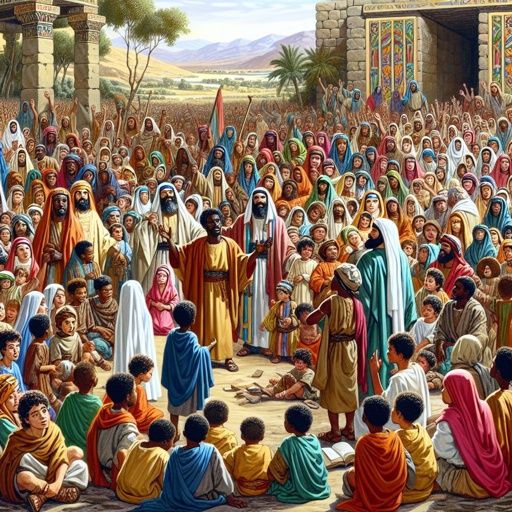
Ezra 2:18 - "The children of Jorah, an hundred and twelve."

Ezra 2:54 - "The children of Neziah, the children of Hatipha."

Ezra 2:20 - "The children of Gibbar, ninety and five."

Ezra 2:24 - "The children of Azmaveth, forty and two."

Ezra 2:39 - "The children of Harim, a thousand and seventeen."

Ezra 9:1-2

Ezra 2:29 - "The children of Nebo, fifty and two."

Ezra 2:9 - "The children of Zaccai, seven hundred and threescore."

Ezra 2:27 - "The men of Michmas, an hundred twenty and two."

Acts 2:38

Acts 2:38

Acts 2:38

Acts 2:38

Acts 2:38

Acts 2:38

Acts 2:38

Acts 2:38

Acts 2:38