Redeeming the Number: A Reflection on Ezra 2:13
"The children of Adonikam, six hundred sixty and six." - Ezra 2:13
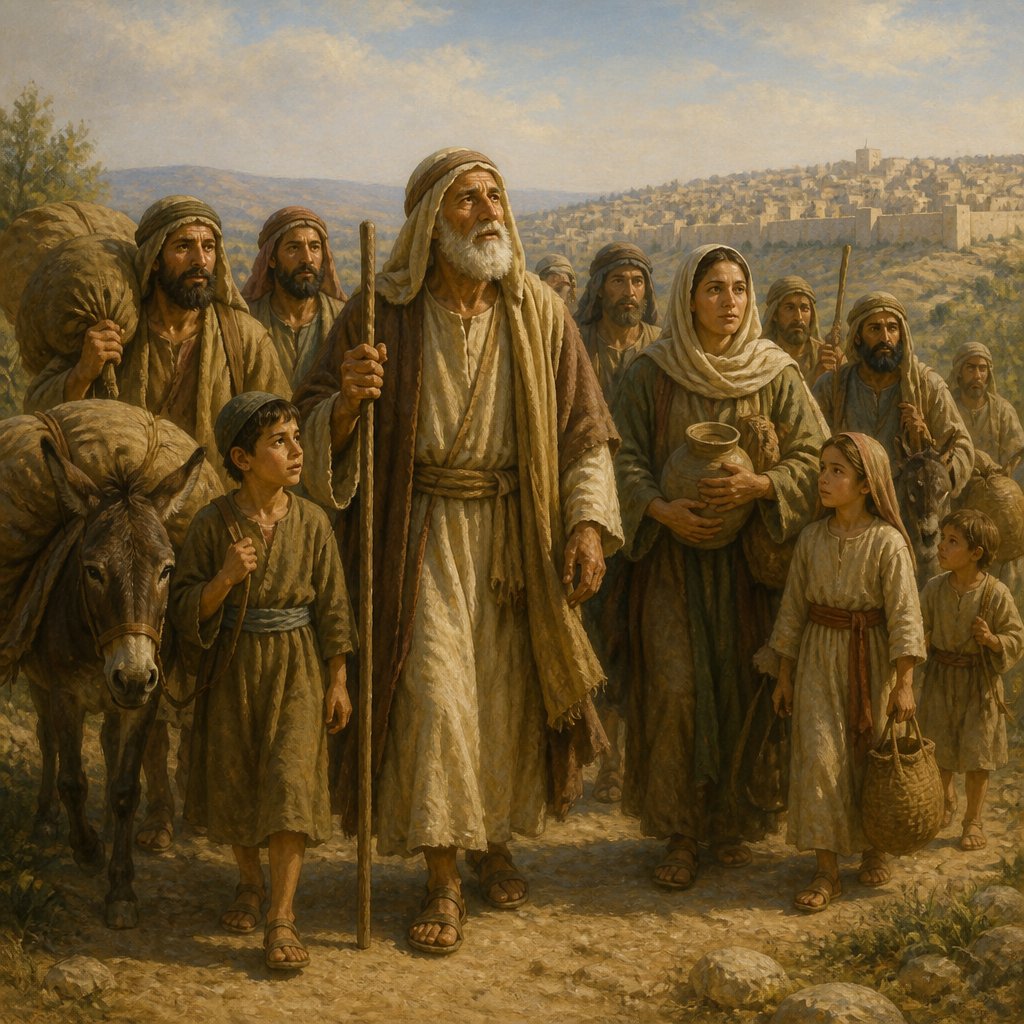
The historical context of Ezra 2:13 presents a vivid picture of the Jewish people's return from Babylonian exile and their efforts to rebuild their lives and worship in Jerusalem. The verse succinctly states, "The children of Adonikam, six hundred sixty and six." At first glance, this verse appears to be a mere numerical record of people—specifically, one of the families that returned to Jerusalem. However, like many scriptures, it holds deeper meanings that transcend the surface-level interpretation, allowing us to explore the significance of the number and the identity of Adonikam.
The name Adonikam means "The Lord is Rising" or "The Lord is My Master." This hint at divine authority encourages us to reflect on our own lives when we consider whose authority we are under. The children of Adonikam, numbering 666, symbolizes a return to God’s governance after a period of disobedience and estrangement from His ways. We may ponder how many of us are willing to surrender fully to God’s authority over our lives, especially after times of hardship or distress.
The number 666 in biblical interpretation often draws attention, as it is famously associated with apocalyptic texts in Revelation. However, in this context, we ought to view it from a more restoration-focused perspective. When Ezra compiles this genealogical record, the focus isn’t just on numbers, but on identity, community, and purpose. The returnees are not merely a headcount; they represent families, heritage, and a future restoration to their rightful place in God’s plan. After years of being in captivity, each individual counted is a testament to resilience and hope.
As we reflect on the number 666, let’s consider how we view our circumstances. Are there times when we feel trapped under significant burdens that feel ominous, as though we are weighed down like the weighty connotation that 666 carries in popular interpretations? Perhaps the idea of belonging to the family of Adonikam can serve as a reminder that we are called to identify ourselves not with the burdens of our past but as children of God, who leads us from exile into the promise of His presence.
Moreover, it’s essential to acknowledge the communal aspect of the return. When Ezra recorded those returning families, he highlighted their collective identity, journey, and purpose. Within our own lives, we are equally bound with others in our spiritual journey. Are we supporting each other as a community? Are we actively participating in the work of the Lord as the children of Adonikam did? This passage encourages us to remember the importance of community in faith and mission, to acknowledge that we do not walk this path alone, but as part of a greater body of believers.
In practical terms, let us ask ourselves how we are contributing to our spiritual communities. Are we living as ambassadors of God’s kingdom, helping to restore hope and purpose to those around us? The return from Babylon was not just about rebuilding walls but was also about establishing a worship-focused community that would honor God.
Each number in the genealogies serves a purpose, and Ezra's detailed account calls us to reflect on our personal journeys of faith. Just as every descendant in the line of Adonikam was crucial to the rebuilding of the temple in Jerusalem, every individual today has an essential part to play in God’s redemptive plan. Let us then embrace our identity as children of the Most High, count ourselves among those who engage in His works, and contribute to His glory in our lives today.
In conclusion, Ezra 2:13 teaches us about identity, communal responsibility, and hope. We are not merely remnants of an ancient past; we are part of God’s ongoing story. Just as the children of Adonikam were key in re-establishing a foundation for worship in Jerusalem, so too can we be foundational in the rebuilding of faith, hope, and love in our communities.
Want to reflect more on Ezra 2:13?
Continue your spiritual journey with Bible Chat — an AI-powered tool for exploring God's Word through conversation. Ask questions, discover connections, and deepen your understanding.
Get Our Apps


Ezra 2:13 Artwork
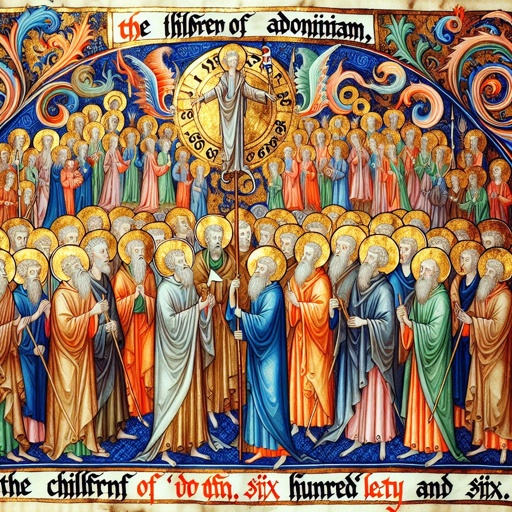
Ezra 2:13 - "The children of Adonikam, six hundred sixty and six."
"The children of Adonikam, six hundred sixty and six." - Ezra 2:13

Ezra 9:13-15

Nehemiah 12:13 - "Of Ezra, Meshullam; of Amariah, Jehohanan;"

"Of Ezra, Meshullam; of Amariah, Jehohanan;" - Nehemiah 12:13

Ezra 3:2

Ezra 3:2

Ezra 3:2

Ezra 8:13 - "And of the last sons of Adonikam, whose names are these, Eliphelet, Jeiel, and Shemaiah, and with them threescore males."

Ezra 3:2

Ezra 3:2

Ezra 9:1-2

Zerubbabel in Ezra chapter 2

Ezra 5:13 - "But in the first year of Cyrus the king of Babylon the same king Cyrus made a decree to build this house of God."

Ezra 2:22 - "The men of Netophah, fifty and six."
Ezra 2:18 - "The children of Jorah, an hundred and twelve."

Ezra 2:54 - "The children of Neziah, the children of Hatipha."

Ezra 2:20 - "The children of Gibbar, ninety and five."

Ezra 2:24 - "The children of Azmaveth, forty and two."

Ezra 2:39 - "The children of Harim, a thousand and seventeen."

Ezra 9:1-2

Ezra 2:9 - "The children of Zaccai, seven hundred and threescore."

Ezra 2:27 - "The men of Michmas, an hundred twenty and two."

Ezra 2:29 - "The children of Nebo, fifty and two."

Ezra 2:56 - "The children of Jaalah, the children of Darkon, the children of Giddel,"

Ezra 2:11 - "The children of Bebai, six hundred twenty and three."

Ezra 2:53 - "The children of Barkos, the children of Sisera, the children of Thamah,"

Ezra 2:48 - "The children of Rezin, the children of Nekoda, the children of Gazzam,"

Ezra 2:15 - "The children of Adin, four hundred fifty and four."

Ezra 7:2 - "The son of Shallum, the son of Zadok, the son of Ahitub,"