A Legacy of Faith: The Names of the Righteous
"Shallum, Amariah, and Joseph." - Ezra 10:42

Ezra 10:42 states, "Shallum, Amariah, and Joseph." At first glance, this verse may seem like a simple list of names. However, like many passages in Scripture, it holds a deeper significance that reflects themes of redemption, identity, and the continuity of God’s covenant people.
In the narrative of Ezra, we find a people returning from exile, grappling with the realities of their past. The Israelites had faced the consequences of their disobedience, and their return to Jerusalem was not merely a physical journey but a spiritual one as well. The names "Shallum, Amariah, and Joseph" represent individuals who were part of this remnant, leading their families and communities in a recommitment to God. Each name encapsulates a story — a journey of repentance and a commitment to restore a relationship with the Divine.
Shallum means "peaceful." As we reflect on the implications of peace in the context of Ezra’s narrative, we remember that true peace comes from aligning oneself with God’s will and commands. The Israelites were coming back to a city that had been ravaged, both physically and spiritually. In our own lives, we often find ourselves amidst chaos, whether due to external circumstances or inner turmoil. Shallum's name challenges us to seek peace not through avoidance but through active engagement with God's Word. True peace is not the absence of conflict but the presence of Christ in our lives, guiding us through turmoil.
Amariah means "Yah has promised." This name reminds us of God's faithfulness throughout history, especially when we feel overwhelmed by our circumstances. The Israelites could look back on their history and see repeated reminders of God’s promises — promises of restoration, guidance, and love. In our lives, we may forget God’s promises when faced with trials, leading us to question His faithfulness. Yet, Amariah encourages us to lean into those promises, to remind ourselves daily of who God is, and to trust that He will fulfill what He has spoken. As we meditate on this name, let us hold fast to the assurance that God’s promises endure through generations, and they are as relevant today as they were in the days of Ezra.
Joseph means "He will add." In the context of returning to Jerusalem, this name signifies hope and restoration. God was adding to His people, reconsolidating His covenant community after a period of separation. The act of returning to Jerusalem wasn’t merely about geographical relocation; it was about re-establishing a community rooted in faith. In our lives, may we reflect on how God is adding to our lives as well—whether that be through friendships, opportunities, or spiritual gifts. It is essential to recognize that God not only restores but also enhances and enriches our lives. Joseph’s legacy serves as a reminder that even after a season of loss, God is actively working to fulfill His plans and purposes in our lives.
In our modern-day context, we might reflect on what legacy we are leaving behind. Are we nurturing peace, holding fast to the promises of God, and being open to what He adds to our lives? Shallum, Amariah, and Joseph call us to consider our roles as bearers of God’s name in our communities. Like them, we are part of a greater story — one that connects us all under the banner of Christ.
As we conclude our reflection on Ezra 10:42, let us remember that the names inscribed in Scripture serve as profound reminders of faith, commitment, and the transformative power of God in the lives of ordinary people. Let us strive to embody these principles in our journeys, recognizing that God can use us to bring peace, uphold His promises, and add to the richness of His kingdom. May we, too, leave a legacy that echoes throughout generations, encouraging others to seek after the heart of God.
Want to reflect more on Ezra 10:42?
Continue your spiritual journey with Bible Chat — an AI-powered tool for exploring God's Word through conversation. Ask questions, discover connections, and deepen your understanding.
Get Our Apps


Ezra 10:42 Artwork

Ezra 10:42 - "Shallum, Amariah, and Joseph."

"Shallum, Amariah, and Joseph." - Ezra 10:42

Ezra 10:10-12

Ezra 10:10 - "And Ezra the priest stood up, and said unto them, Ye have transgressed, and have taken strange wives, to increase the trespass of Israel."
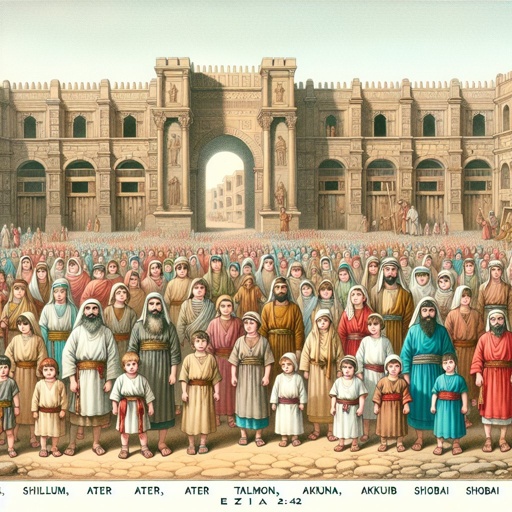
Ezra 2:42 - "¶ The children of the porters: the children of Shallum, the children of Ater, the children of Talmon, the children of Akkub, the children of Hatita, the children of Shobai, in all an hundred thirty and nine."

Ezra 10:3

Ezra 3:10

Ezra 10:3

Ezra 10:5 - "Then arose Ezra, and made the chief priests, the Levites, and all Israel, to swear that they should do according to this word. And they sware."

Ezra 7:10 - "For Ezra had prepared his heart to seek the law of the LORD, and to do it, and to teach in Israel statutes and judgments."

Ezra 10:38 - "And Bani, and Binnui, Shimei,"

Ezra 10:37 - "Mattaniah, Mattenai, and Jaasau,"

Ezra 10:40 - "Machnadebai, Shashai, Sharai,"

Ezra 10:32 - "Benjamin, Malluch, and Shemariah."

John 10:42 - "And many believed on him there."

Ezra 10:36 - "Vaniah, Meremoth, Eliashib,"

Ezra 10:35 - "Benaiah, Bedeiah, Chelluh,"

Ezra 10:41 - "Azareel, and Shelemiah, Shemariah,"

Ezra 10:39 - "And Shelemiah, and Nathan, and Adaiah,"

Ezra 10:20 - "And of the sons of Immer; Hanani, and Zebadiah."

Ezra 10:34 - "Of the sons of Bani; Maadai, Amram, and Uel,"

Ezra 2:10 - "The children of Bani, six hundred forty and two."

Ezra 10:21 - "And of the sons of Harim; Maaseiah, and Elijah, and Shemaiah, and Jehiel, and Uzziah."

Ezra 10:24 - "Of the singers also; Eliashib: and of the porters; Shallum, and Telem, and Uri."

Ezra 10:28 - "Of the sons also of Bebai; Jehohanan, Hananiah, Zabbai, and Athlai."

Ezra 10:31 - "And of the sons of Harim; Eliezer, Ishijah, Malchiah, Shemaiah, Shimeon,"

"Azareel, and Shelemiah, Shemariah," - Ezra 10:41

"And Bani, and Binnui, Shimei," - Ezra 10:38

"And Shelemiah, and Nathan, and Adaiah," - Ezra 10:39

"Vaniah, Meremoth, Eliashib," - Ezra 10:36