The Sticks of Unity: A Divine Illustration of God’s Promise
"¶ And the sticks whereon thou writest shall be in thine hand before their eyes." - Ezekiel 37:20
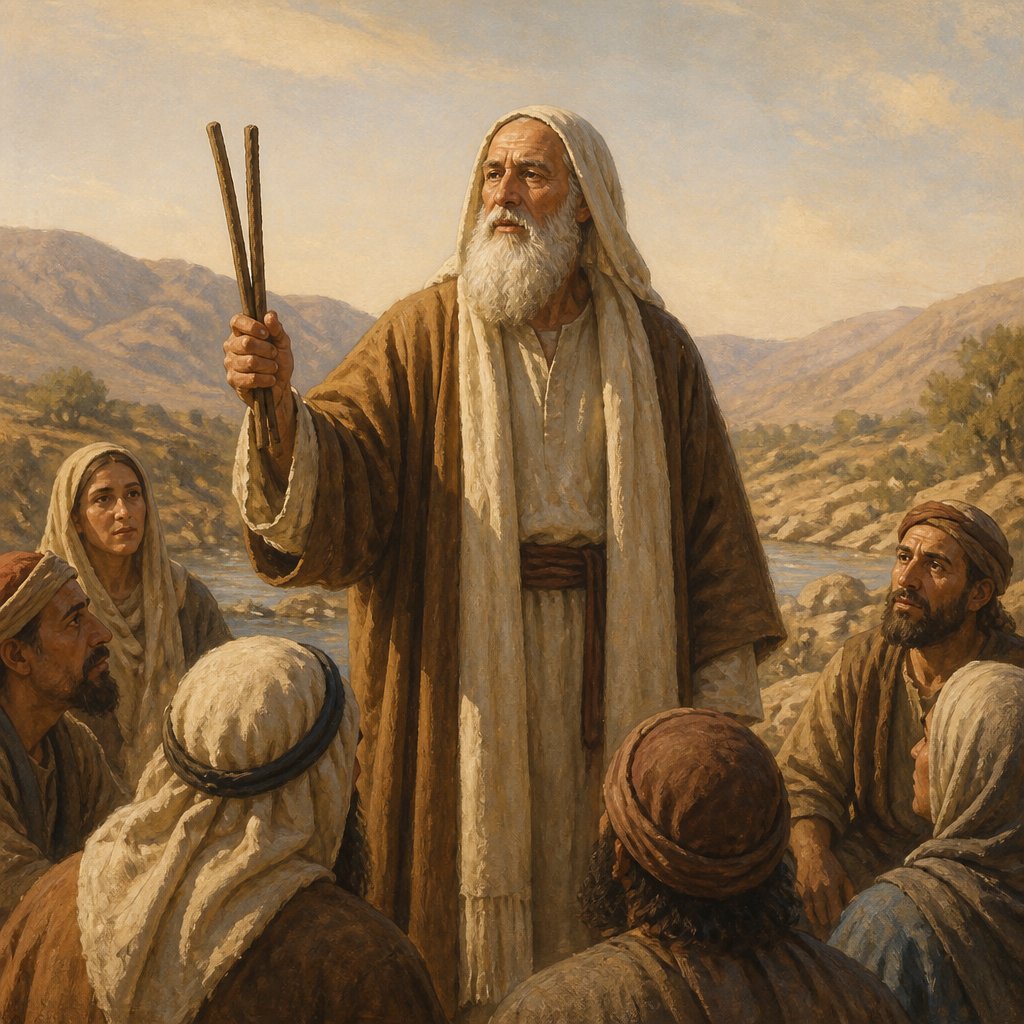
Ezekiel 37:20 states, “And the sticks whereon thou writest shall be in thine hand before their eyes.” At first glance, this verse from the book of Ezekiel might seem obscure, but it captures a profound message for both ancient Israel and the contemporary church today. Let us explore what this verse means for us, especially when viewed within the context of the entire chapter, which is a powerful vision of restoration, unity, and hope.
Ezekiel, a prophet during Israel’s Babylonian exile, was called to bring God’s message to a people who felt lost and divided. They were scattered, both physically and spiritually. The image of the sticks represents not just a literal object, but a powerful symbol of God’s intent to unify His people. In the preceding verses, God instructs Ezekiel to take two sticks: one for Judah and the children of Israel, and another for Joseph, the stick of Ephraim, and his companions. God’s vision is about merging these two groups into one nation, one people under His divine leadership. The fact that these sticks were to be held in Ezekiel’s hands, seen by the people, signals a prophetic declaration not just of unity, but visible evidence of God’s power to restore.
When we prophesy, or declare something in faith, we must understand its significance. Holding these sticks in his hands, Ezekiel was not merely performing a symbolic act; he was demonstrating to the people that God had a plan for their unity and redemption. For the Israelites, witnessing this act could stir hope and faith, allowing them to believe that despite their dispersion, God’s promise of a secure future remains intact. Just as Ezekiel held the sticks before their eyes, God calls us to live out our faith visibly, demonstrating His love and pursuit of unity among His followers.
What does this mean for us today? In a world that often promotes division—whether due to race, culture, politics, or even doctrinal differences—this passage teaches us that God desires His church to be one.
As followers of Christ, we are the modern-day vessels of God's assurance. We are called to represent His unity in a fragmented world. The two sticks that Ezekiel held so prominently can remind us of our own roles in bridging the gaps among believers and extending grace to those outside the church community. Whenever we take our stand for unity, we participate in God's reconciling work and bear witness to the transformative power of the gospel.
Moreover, this verse challenges us to be proactive about our faith. Holding something in our hands is an active gesture; it requires responsibility. As we embody the message of Christ, we must ask ourselves: What burdens or divisions am I called to address in my life? What sticks of unity can I hold out for others to see? By living out our faith authentically, we can inspire hope in those around us who might feel lost or divided.
The metaphor of sticks can also extend to the idea of our personal burdens and challenges. Much like the Israelites, we may feel fragmented, disjointed, or hopeless. Yet, as God demonstrated through Ezekiel, there is a divine purpose even in the midst of chaos. The great promise of restoration is not just for a nation centuries ago; it extends to us as individuals who yearn for completeness in Christ. Jesus came to bind our wounds, restore our spirits, and bring us into unity with Him and one another.
In conclusion, let Ezekiel 37:20 serve as an encouraging reminder of God's glorious plan for unity and redemption. As we carry our personal ‘sticks’—our testimony, our gifts, our love into the world—let’s declare boldly before others the truth of God’s work among us. Just as God showed His people that He could transform their brokenness into wholeness, we too can hold hope in our hands, visibly proclaiming His promise, making it real for everyone around us.
Want to reflect more on Ezekiel 37:20?
Continue your spiritual journey with Bible Chat — an AI-powered tool for exploring God's Word through conversation. Ask questions, discover connections, and deepen your understanding.
Get Our Apps


Ezekiel 37:20 Artwork

Ezekiel 37:20 - "¶ And the sticks whereon thou writest shall be in thine hand before their eyes."
"¶ And the sticks whereon thou writest shall be in thine hand before their eyes." - Ezekiel 37:20
"¶ And the sticks whereon thou writest shall be in thine hand before their eyes." - Ezekiel 37:20

Ezekiel 20:37 - "And I will cause you to pass under the rod, and I will bring you into the bond of the covenant:"
"And I will cause you to pass under the rod, and I will bring you into the bond of the covenant:" - Ezekiel 20:37

Ezekiel 37

Ezekiel 37:7

ezekiel 37 dry bones

Ezekiel 37:1-10 – The valley of dry bones.

Ezekiel 37 1-7

Ezekiel 37:1-10 – The vision of the valley of dry bones.

Ezekiel 37:1-10 – The vision of the valley of dry bones.

2 Chronicles 20:37

Ezekiel 37:15 - "¶ The word of the LORD came again unto me, saying,"

Acts 20:37 - "And they all wept sore, and fell on Paul's neck, and kissed him,"

Ezekiel 37:27 - "My tabernacle also shall be with them: yea, I will be their God, and they shall be my people."

Ezekiel 37:17 - "And join them one to another into one stick; and they shall become one in thine hand."

Full picture of dry bones Ezekiel 37:1-14

Ezekiel 20:41

Ezekiel 20:40

Ezekiel 20:41

Ezekiel 20:41

Exodus 37:20 - "And in the candlestick were four bowls made like almonds, his knops, and his flowers:"

in the context of Ezekiel 37, draw a valley full of dry human bones

Ezekiel 20:40

Ezekiel 20:40

Ezekiel 20:41

Ezekiel 20:40

Ezekiel 20:41

Ezekiel 20:41