The Weight of Obedience in Wearisome Work
"Exodus 5:1-21: And afterward Moses and Aaron went in, and told Pharaoh, Thus saith the Lord God of Israel, Let my people go, that they may hold a feast unto me in the wilderness. And Pharaoh said, Who is the Lord, that I should obey his voice to let Israel go? I know not the Lord, neither will I let Israel go. And they said, The God of the Hebrews hath met with us: let us go, we pray thee, three days' journey into the desert, and sacrifice unto the Lord our God; lest he fall upon us with pestilence, or with the sword. And the king of Egypt said unto them, Wherefore do ye, Moses and Aaron, let the people from their works? get you unto your burdens. And Pharaoh said, Behold, the people of the land now are many, and ye make them rest from their burdens. And Pharaoh commanded the same day the taskmasters of the people, and their officers, saying, Ye shall no more give the people straw to make brick, as heretofore: let them go and gather straw for themselves. And the tale of the bricks, which they did make heretofore, ye shall lay upon them; ye shall not diminish ought thereof: for they be idle; therefore they cry, saying, Let us go and sacrifice to our our God. Let there more work be laid upon the men, that they may labour therein; and let them not regard vain words. And the taskmasters of the people went out, and their officers, and they spake to the people, saying, Thus saith Pharaoh, I will not give you straw. Go ye, get you straw where ye can find it: yet not ought of your work shall be diminished. So the people were scattered abroad throughout all the land of Egypt to gather stubble instead of straw. And the taskmasters hasted them, saying, Fulfil your works, your daily tasks, as when there was straw. And the officers of the children of Israel, which Pharaoh's taskmasters had set over them, were beaten, and demanded, Wherefore have ye not fulfilled your task in making brick both yesterday and to day, as heretofore? Then the officers of the children of Israel came and cried unto Pharaoh, saying, Wherefore dealest thou thus with thy servants? There is no straw given unto thy servants, and they say to us, Make brick: and, behold, thy servants are beaten; but the fault is in thine own people. But he said, Ye are idle, ye are idle: therefore ye say, Let us go and do sacrifice to the Lord. Go therefore now, and work; for there shall no straw be given you, yet shall ye deliver the tale of bricks." - Exodus 5:1-21
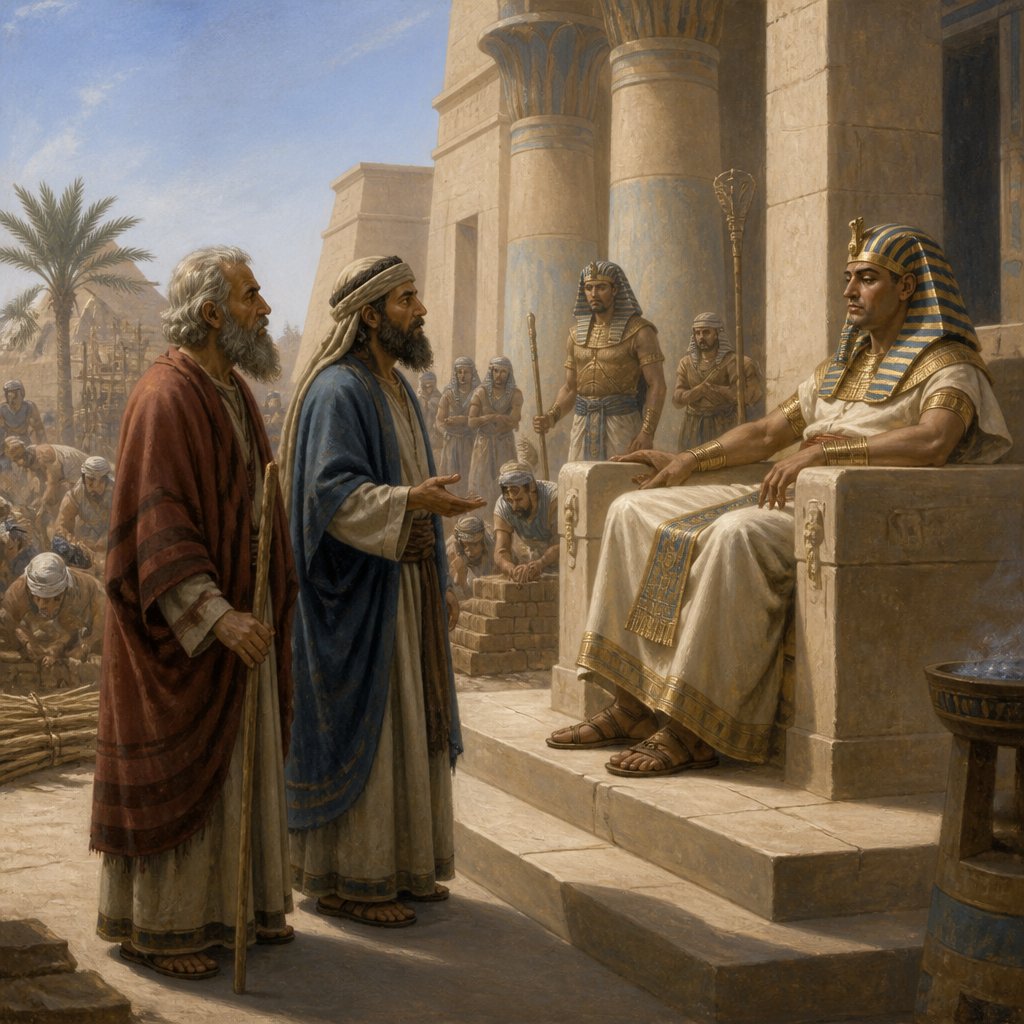
In Exodus 5:1-21, we encounter a poignant moment in the story of Israel's deliverance from Egypt. It is the initial confrontation between Moses, Aaron, and Pharaoh, a moment fraught with not only physical labor but spiritual significance as Moses and Aaron deliver the command of God: "Let my people go, that they may hold a feast unto me in the wilderness" (Exodus 5:1). This proclamation, while seemingly straightforward, unleashes a cascade of resistance and increased burdens upon God's people.
When Pharaoh responds with skepticism, saying, "Who is the Lord, that I should obey his voice?" (Exodus 5:2), it is a moment that challenges us to recognize the complexities of faith and obedience. Pharaoh's question resonates beyond the text; it is a question that reverberates in our hearts when we face discouragement in our endeavors. It reveals a state of human arrogance before divine authority and our tendency to dismiss God in the face of immediate challenges.
Moses and Aaron's imploration to Pharaoh embodies the earnestness of divine purpose. They state, "The God of the Hebrews hath met with us; let us go... lest he fall upon us with pestilence, or with the sword" (Exodus 5:3). Although they speak from a place of faith, the response from Pharaoh illustrates an all too common theme: often, the acknowledgment of God’s sovereignty leads not to immediate relief but instead to increased trials.
With the decree resulting from Pharaoh's hard heart, disaster unfolds. Instead of granting liberty, Pharaoh complicates their labor, commanding the taskmasters, "Ye shall no more give the people straw to make brick…but let them go and gather straw for themselves" (Exodus 5:7). As the workload intensifies, the people find themselves in a deeper state of despair. The burden is not merely physical but increasingly psychological, as they now contend with both the weight of labor and a sense of hopelessness. In their toil, we see a reflection of our own struggles in life, where obedience to God often requires us to bear an intolerable load.
The officers of the Israelites approach Pharaoh, pleading their case: "There is no straw given unto thy servants, and they say to us, Make brick" (Exodus 5:16). These words echo the lament of many who find themselves caught in the repercussions of obedience. When we strive to follow God's direction, we may feel overwhelmed, especially when our efforts seem fruitless in the face of intensified opposition.
Pharaoh's response to the officers speaks to a misunderstanding of divine purpose when facing adversity: "Ye are idle, ye are idle: therefore ye say, Let us go and do sacrifice to the Lord" (Exodus 5:17). This dismissal can be seen as a metaphor for how society often perceives the struggle of faith: that a true believer must simply persevere without complaint, even if those strivings result in suffering and additional burdens.
Yet, through this passage, we are encouraged to recognize that God is still at work even amidst the trials. The cries of the Israelites do not go unanswered; within their increasing hardships lies the seed of liberation. Pharaoh’s resistance is ultimately the foreground against which God's deliverance will be displayed. As we immerse ourselves in our burdens, it's crucial to remind ourselves that our labor in the Lord is not in vain (1 Corinthians 15:58).
The trials that Moses and the Israelites endure serve as a vivid illustration of the often painful process of obedience. When God leads us to act, we can expect challenges that test our faith. Yet, it is in this very struggle that we reroute our focus towards God – for He promises that our struggles have purpose, leading us to a deeper understanding of His character and plans. In our own deserts of life, we can affirm God’s presence and learn to trust Him through every burden we bear.
Reflecting on this text empowers us to ask ourselves how we respond to God's commands amidst difficulties. Do we react with doubt like Pharaoh, or do we, like Moses and Aaron, proceed despite the resistance? Our journey alongside God often includes increased trials, but may we steadfastly perservere, trusting that these burdens will lead to both personal growth and eventual liberation.
Want to reflect more on Exodus 5:1-21?
Continue your spiritual journey with Bible Chat — an AI-powered tool for exploring God's Word through conversation. Ask questions, discover connections, and deepen your understanding.
Get Our Apps


Exodus 5:1-21 Artwork

Exodus 5:1-21 - "Exodus 5:1-21 Afterward Moses and Aaron went to Pharaoh and said, “This is what the Lord, the God of Israel, says: ‘Let my people go, so that they may hold a festival to me in the wilderness.’” Pharaoh said, “Who is the Lord, that I should obey him and let Israel go? I do not know the Lord and I will not let Israel go.” Then they said, “The God of the Hebrews has met with us. Now let us take a three-day journey into the wilderness to offer sacrifices to the Lord our God, or he may strike us with plagues or with the sword.” But the king of Egypt said, “Moses and Aaron, why are you taking the people away from their labor? Get back to your work!” Then Pharaoh said, “Look, the people of the land are now numerous, and you are stopping them from working.” That same day Pharaoh gave this order to the slave drivers and overseers in charge of the people: “You are no longer to supply the people with straw for making bricks; let them go and gather their own straw. But require them to make the same number of bricks as before; don’t reduce the quota. They are lazy; that is why they are crying out, ‘Let us go and sacrifice to our God.’ Make the work harder for the people so that they keep working and pay no attention to lies.” Then the slave drivers and the overseers went out and said to the people, “This is what Pharaoh says: ‘I will not give you any more straw. Go and get your own straw wherever you can find it, but your work will not be reduced at all.’” So the people scattered all over Egypt to gather stubble to use for straw. The slave drivers kept pressing them, saying, “Complete the work required of you for each day, just as when you had straw.” And Pharaoh’s slave drivers beat the Israelite overseers they had appointed, demanding, “Why haven’t you met your quota of bricks yesterday or today, as before?” Then the Israelite overseers went and appealed to Pharaoh: “Why have you treated your servants this way? Your servants are given no straw, yet we are told, ‘Make bricks!’ Your servants are being beaten, but the fault is with your own people.” Pharaoh said, “Lazy, that’s what you are—lazy! That is why you keep saying, ‘Let us go and sacrifice to the Lord.’ Now get to work. You will not be given any straw, yet you must produce your full quota of bricks.” The Israelite overseers realized they were in trouble when they were told, “You are not to reduce the number of bricks required of you for each day.” "
"Exodus 5:1-21 Afterward Moses and Aaron went to Pharaoh and said, “This is what the Lord, the God of Israel, says: ‘Let my people go, so that they may hold a festival to me in the wilderness.’” Pharaoh said, “Who is the Lord, that I should obey him and let Israel go? I do not know the Lord and I will not let Israel go.” Then they said, “The God of the Hebrews has met with us. Now let us take a three-day journey into the wilderness to offer sacrifices to the Lord our God, or he may strike us with plagues or with the sword.” But the king of Egypt said, “Moses and Aaron, why are you taking the people away from their labor? Get back to your work!” Then Pharaoh said, “Look, the people of the land are now numerous, and you are stopping them from working.” That same day Pharaoh gave this order to the slave drivers and overseers in charge of the people: “You are no longer to supply the people with straw for making bricks; let them go and gather their own straw. But require them to make the same number of bricks as before; don’t reduce the quota. They are lazy; that is why they are crying out, ‘Let us go and sacrifice to our God.’ Make the work harder for the people so that they keep working and pay no attention to lies.” Then the slave drivers and the overseers went out and said to the people, “This is what Pharaoh says: ‘I will not give you any more straw. Go and get your own straw wherever you can find it, but your work will not be reduced at all.’” So the people scattered all over Egypt to gather stubble to use for straw. The slave drivers kept pressing them, saying, “Complete the work required of you for each day, just as when you had straw.” And Pharaoh’s slave drivers beat the Israelite overseers they had appointed, demanding, “Why haven’t you met your quota of bricks yesterday or today, as before?” Then the Israelite overseers went and appealed to Pharaoh: “Why have you treated your servants this way? Your servants are given no straw, yet we are told, ‘Make bricks!’ Your servants are being beaten, but the fault is with your own people.” Pharaoh said, “Lazy, that’s what you are—lazy! That is why you keep saying, ‘Let us go and sacrifice to the Lord.’ Now get to work. You will not be given any straw, yet you must produce your full quota of bricks.” The Israelite overseers realized they were in trouble when they were told, “You are not to reduce the number of bricks required of you for each day.” " - Exodus 5:1-21

Exodus 27:19-21

Exodus 4:1-5

Exodus 22:5

Exodus 22:5

Exodus 22:5

Exodus 21:5 - "And if the servant shall plainly say, I love my master, my wife, and my children; I will not go out free:"

Exodus 21:1 - "Now these are the judgments which thou shalt set before them."

Exodus 5:1 - "And afterward Moses and Aaron went in, and told Pharaoh, Thus saith the LORD God of Israel, Let my people go, that they may hold a feast unto me in the wilderness."

luke 21:5-19

Exodus 1:21 - "And it came to pass, because the midwives feared God, that he made them houses."

1 Thessalonians 5:21 - "Prove all things; hold fast that which is good."

1 John 5:21 - "Little children, keep yourselves from idols. Amen."
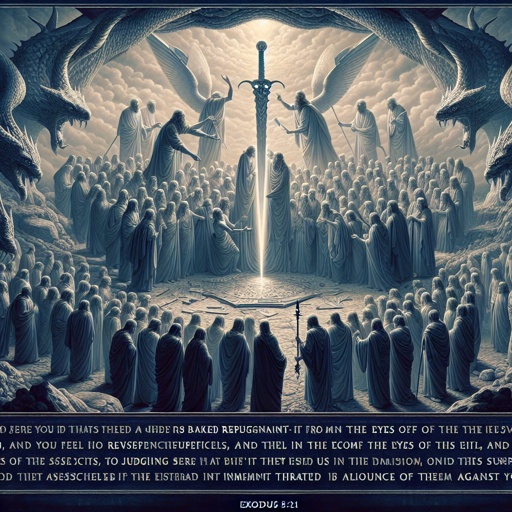
Exodus 5:21 - "And they said unto them, The LORD look upon you, and judge; because ye have made our savour to be abhorred in the eyes of Pharaoh, and in the eyes of his servants, to put a sword in their hand to slay us."

luke 21:5-19 with all people of color

luke 21:5-19 with all people of color

luke 21:5-19 with all people of color

Exodus 1:5 - "And all the souls that came out of the loins of Jacob were seventy souls: for Joseph was in Egypt already."
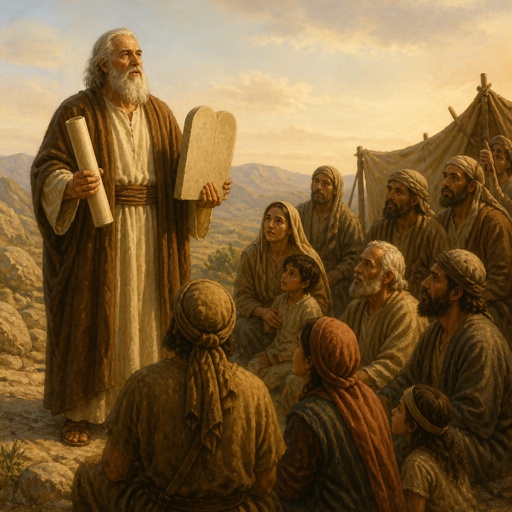
"Now these are the judgments which thou shalt set before them." - Exodus 21:1

Exodus 14: 21

Exodus 14: 21

Exodus 15:21

Exodus 21:21 - "Notwithstanding, if he continue a day or two, he shall not be punished: for he is his money."
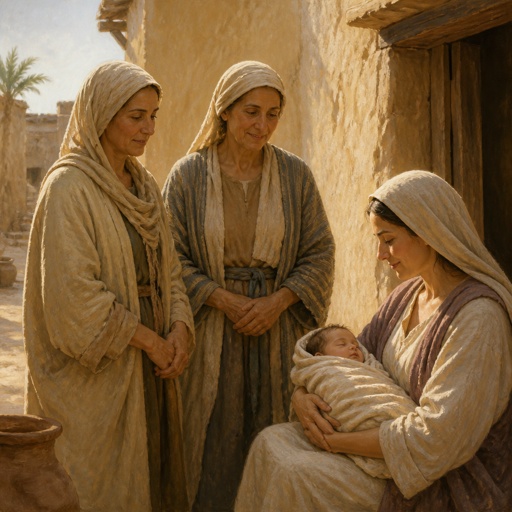
"And it came to pass, because the midwives feared God, that he made them houses." - Exodus 1:21
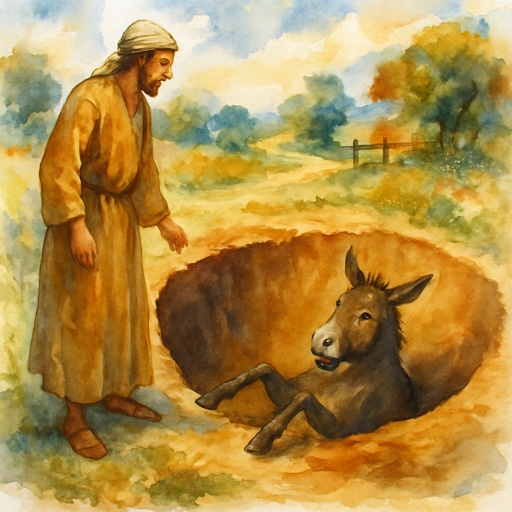
Exodus 21:33 And if a man shall open a pit, or if a man shall dig a pit, and not cover it, and an ox or an ass fall therein;

Exodus 6:21 - "¶ And the sons of Izhar; Korah, and Nepheg, and Zichri."

1 Kings 21:5 - "¶ But Jezebel his wife came to him, and said unto him, Why is thy spirit so sad, that thou eatest no bread?"
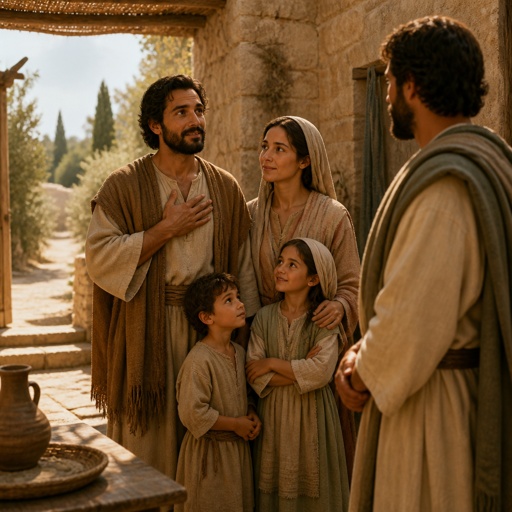
"And if the servant shall plainly say, I love my master, my wife, and my children; I will not go out free:" - Exodus 21:5

Exodus 21:25 - "Burning for burning, wound for wound, stripe for stripe."