From Staff to Serpent: The Transformative Power of Obedience
"And he said, Cast it on the ground. And he cast it on the ground, and it became a serpent; and Moses fled from before it." - Exodus 4:3
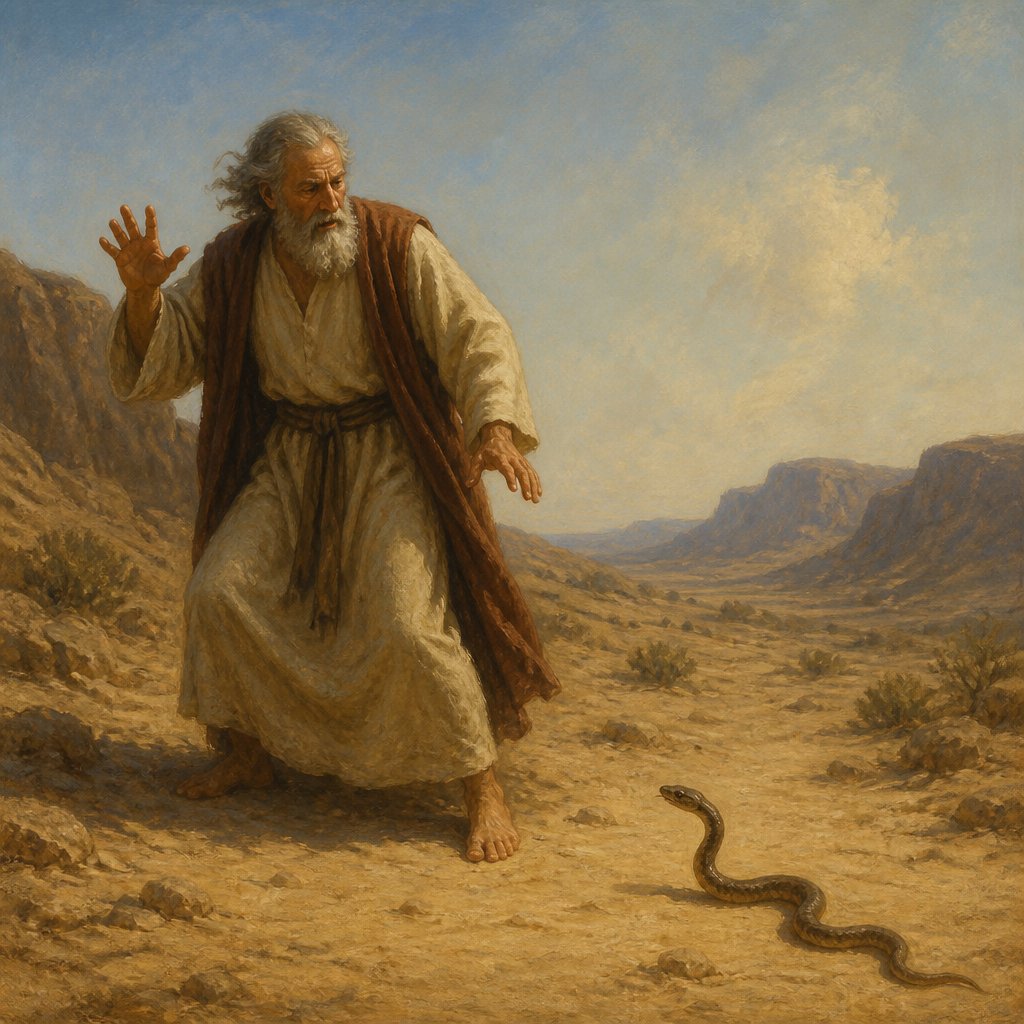
In the divine narrative of Exodus, we encounter a pivotal moment in the journey of Moses—one that transforms an ordinary shepherd’s staff into a potent symbol of God’s power. Exodus 4:3 presents a succinct yet profound command from God as He prepares Moses for the monumental task of leading the Israelites out of Egyptian bondage: "And he said, Cast it on the ground. And he cast it on the ground, and it became a serpent; and Moses fled from before it."
At first glance, this verse invites us to contemplate the act itself—Moses obeying God’s command to throw down his staff. The staff, a simple tool, represents his identity as a shepherd and, in many ways, his insignificance in the face of the overwhelming task ahead. However, through this small act of obedience, God reveals the vastness of His glory and power.
**The Call to Obedience**
Moses is called to an obedience that seems simple yet carries vast implications. When God tells him to cast down the staff, Moses must choose to trust in God’s command, knowing full well that he is embarking on a path fraught with difficulty. Every follower of Christ is often faced with similar moments— moments when God asks us to lay down what we hold dear or what represents our livelihood and security. The act of casting our burdens or possessions before God is both an invitation and a test of faith. What are we holding onto that we must surrender to Him?
**The Serpent and Its Symbolism**
Upon casting the staff to the ground, what was once a tool for shepherding turns into a serpent—a creature often associated with danger, fear, and deceit. The transformation from staff to serpent symbolizes how God can take what is ordinary and turn it into something extraordinary and intimidating. It teaches us that God can use even our fears, insecurities, and limitations to achieve His great purposes. Moses fled from before it, signifying a natural human reaction to the supernatural; fear is often an initial response when faced with the unknown or when God reveals Himself in unexpected ways.
**Confronting Our Fears**
Moses' fleeing demonstrates that even the most faithful servants of God can feel fear and trepidation when faced with God’s manifestations. In our lives, God often asks us to confront our fears—whether it’s fear of failure, fear of the future, or fear of the unknown. The serpent represents not only fear but also the lurking presence of obstacles in our paths. Yet, when we confront these fears in obedience to God’s calling, we open ourselves to transformative experiences wherein God can perform miracles. How often do we run from the very situation or calling that God commits us to?
**Embracing Transformation**
The act of casting the staff down also invites us to embrace God’s transformative power. After fleeing, Moses is called once more by God to pick up the serpent by its tail. In the next verses, God commands Moses to regain control over the serpent, turning it again into a staff. This return signifies a redemptive cycle; something that once evoked fear can be wielded again as a tool for deliverance. For us, God often leads us through intense trials, encouraging us to pick back up what once caused us fear or anxiety—our past mistakes, hurts, or disappointments—and to trust that He can redeem and repurpose them for His glory.
In conclusion, Exodus 4:3 challenges us to examine our lives and our relationship with obedience. Are we willing to cast down our own ‘staffs’ before God, trusting Him with the results? Will we confront the transformation that comes through obedience? Ultimately, this verse invites us into the redemptive story of God’s power that turns our fear into tools for His purposes. As we yield to His voice, we discover that great things arise from our willingness to surrender.
Want to reflect more on Exodus 4:3?
Continue your spiritual journey with Bible Chat — an AI-powered tool for exploring God's Word through conversation. Ask questions, discover connections, and deepen your understanding.
Get Our Apps


Exodus 4:3 Artwork

Exodus 4:3 - "And he said, Cast it on the ground. And he cast it on the ground, and it became a serpent; and Moses fled from before it."
"And he said, Cast it on the ground. And he cast it on the ground, and it became a serpent; and Moses fled from before it." - Exodus 4:3
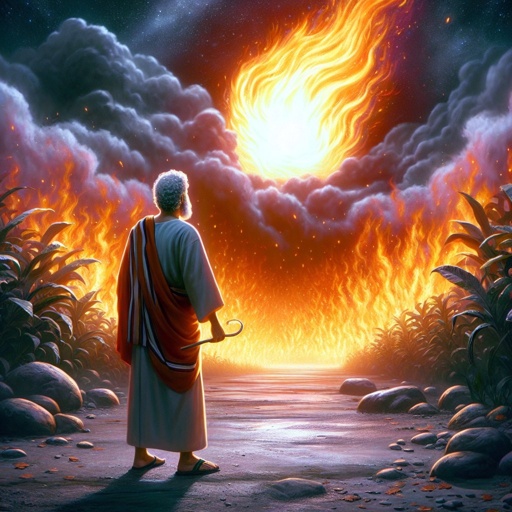
Exodus 3:4 - "And when the LORD saw that he turned aside to see, God called unto him out of the midst of the bush, and said, Moses, Moses. And he said, Here am I."

exodus 3

Exodus 23:4

Exodus 28:4

Exodus 28:4

Exodus 3:12

Exodus 3:12

Exodus 17:3

Exodus 3:12

Exodus 3:12

Exodus 3:12
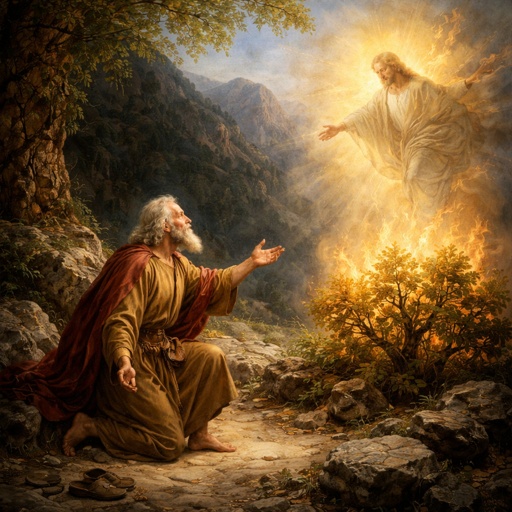
exodus 3:11

Exodus 3:14

Exodus 3:14

Exodus 3:14

exodus 3:14

Exodus 3:14

Exodus 17:3

Exodus 3:12

Exodus 3:12

Exodus 28:4

Exodus 28:4

Exodus 24:4

Exodus 23:4

Exodus 1:3 - "Issachar, Zebulun, and Benjamin,"

exodus 27:3 forks

Exodus 4:1-5

Exodus 1:4 - "Dan, and Naphtali, Gad, and Asher."