Beneath the Burdens: A Call to Compassion
"¶ And it came to pass in those days, when Moses was grown, that he went out unto his brethren, and looked on their burdens: and he spied an Egyptian smiting an Hebrew, one of his brethren." - Exodus 2:11
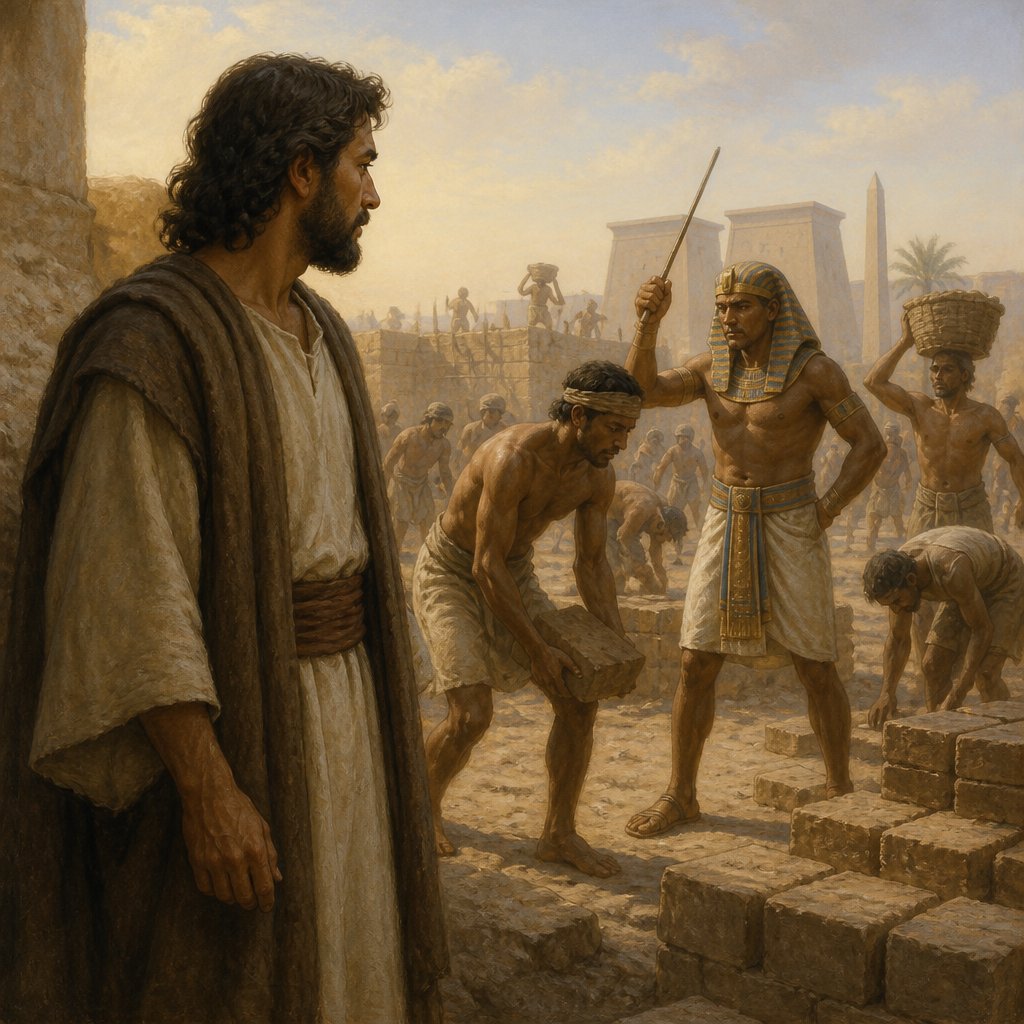
Exodus 2:11 (KJV) narrates a pivotal moment in Moses’ life: "And it came to pass in those days, when Moses was grown, that he went out unto his brethren, and looked on their burdens: and he spied an Egyptian smiting an Hebrew, one of his brethren." This verse encapsulates the essence of awakening to social injustice and the responsibility that accompanies such awareness.
Moses, raised in the palace as the son of Pharaoh’s daughter, had every worldly privilege one could imagine. Yet, deep within, a latent identity was stirring—a recognition of his true heritage as a Hebrew. This transformation from a life of luxury to a confrontation with the harsh realities of his people highlights the divine pull towards justice woven into our very beings.
In this moment of recognition, we see Moses stepping out from his comfortable existence into the world of his brethren. The act of “going out” is significant; it marks a movement, a decision to engage, rather than remain a passive observer. Often, we find ourselves encased in our own lives, eschewing the complexities of pain and suffering around us. But there is a call, as seen in Moses’ actions, to take a deep breath, step outside our bubble of comfort, and empathize with the burdens borne by others.
The phrase "looked on their burdens" conjures a vivid imagery. It indicates more than a mere glance; it signifies a deliberate act of seeing, understanding, and recognizing the weight that others carry. In our fast-paced, self-absorbed world, are we truly looking upon the burdens of those around us? The homeless on our streets, the troubled families within our communities, the marginalized and oppressed—are we aware of their struggles? As Christians, we are called to mirror the compassion of Christ, who continually reached out to the downtrodden and afflicted.
Moses’ immediate reaction to witnessing the Egyptian assaulting a Hebrew is filled with moral outrage. The Hebrew’s suffering stirs something profound within him, leading to a violent act of defense. It raises the question of how we respond to injustices in our world. While it's crucial to respond with compassion, it’s equally essential to approach these situations with wisdom and restraint. Anger can be a powerful catalyst for action, yet we must ensure it does not lead us down a path of sin.
Moreover, identifying with others in their struggle requires a measure of vulnerability. Moses could have chosen to turn a blind eye, to retreat back to his cushioned life in the palace. But instead, he bore witness to suffering and chose to act, even at a grave personal cost. This willingness to identify with suffering reminds us of Christ, who bore our burdens on the cross.
Furthermore, Moses’ actions hint at a broader theme of deliverance which God will fulfill through him; it underscores God’s plan of redemption that often involves human agency. In viewing and responding to the burdens of others, we often align ourselves with God’s greater purpose. Each time we advocate for the oppressed, comfort the grieving, or feed the hungry, we become vessels of God’s love and justice.
In conclusion, let Moses' awakening serve as a reminder—a gentle nudge—for us to engage deeply with the realities of the world around us. Let us be the ones who, rather than passively observing, actively choose to see, feel, and respond. In reflecting on Exodus 2:11, may we commit our lives to a path of compassionate action, recognizing that while we may lead different lives, beneath it all, we are all brethren. Let our hearts break for what breaks God’s heart, and from that place of empathy, may we rise up as voices for the voiceless, advocates for justice, and agents of change.
Want to reflect more on Exodus 2:11?
Continue your spiritual journey with Bible Chat — an AI-powered tool for exploring God's Word through conversation. Ask questions, discover connections, and deepen your understanding.
Get Our Apps


Exodus 2:11 Artwork

Exodus 2:11 - "¶ And it came to pass in those days, when Moses was grown, that he went out unto his brethren, and looked on their burdens: and he spied an Egyptian smiting an Hebrew, one of his brethren."
"¶ And it came to pass in those days, when Moses was grown, that he went out unto his brethren, and looked on their burdens: and he spied an Egyptian smiting an Hebrew, one of his brethren." - Exodus 2:11
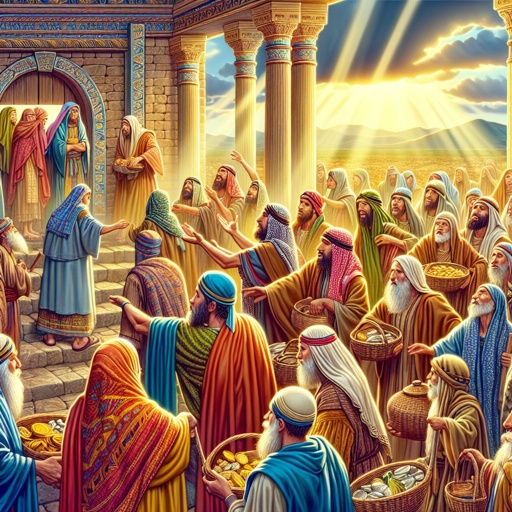
Exodus 11:2 - "Speak now in the ears of the people, and let every man borrow of his neighbour, and every woman of her neighbour, jewels of silver, and jewels of gold."

exodus 18:11
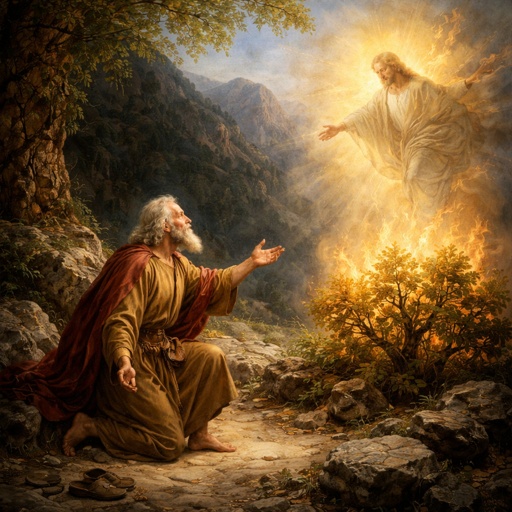
exodus 3:11

Exodus 17:11

The Plague on the Firstborn - Exodus 11
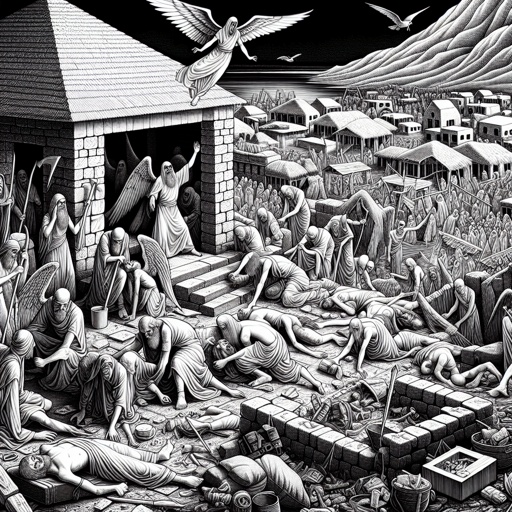
The Plague on the Firstborn - Exodus 11

The Plague on the Firstborn - Exodus 11
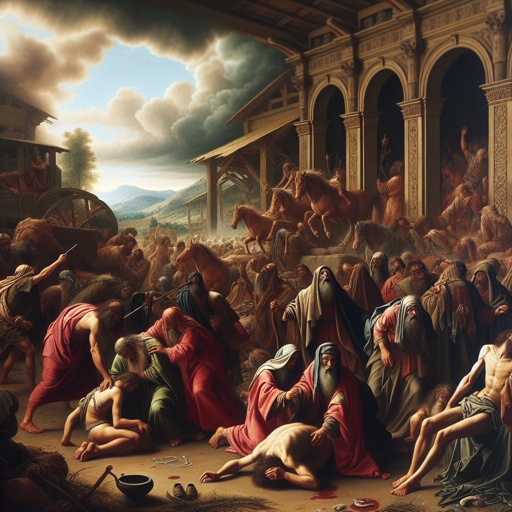
The Plague on the Firstborn - Exodus 11

Exodus 24:9-11

The Plague on the Firstborn - Exodus 11

The Plague on the Firstborn - Exodus 11

Exodus 16:11 - "¶ And the LORD spake unto Moses, saying,"

Exodus 30:11 - "¶ And the LORD spake unto Moses, saying,"

Exodus 39:11 - "And the second row, an emerald, a sapphire, and a diamond."

The Plague on the Firstborn Son - Exodus 11

Exodus 40:11 - "And thou shalt anoint the laver and his foot, and sanctify it."

Exodus 29:11 - "And thou shalt kill the bullock before the LORD, by the door of the tabernacle of the congregation."

The Plague on the Firstborn - Exodus 11, 12:1-30

The Plague on the Firstborn - Exodus 11, 12:1-30

Exodus 37:11 - "And he overlaid it with pure gold, and made thereunto a crown of gold round about."

Exodus 21:11 - "And if he do not these three unto her, then shall she go out free without money."

Exodus 11:4 - "And Moses said, Thus saith the LORD, About midnight will I go out into the midst of Egypt:"
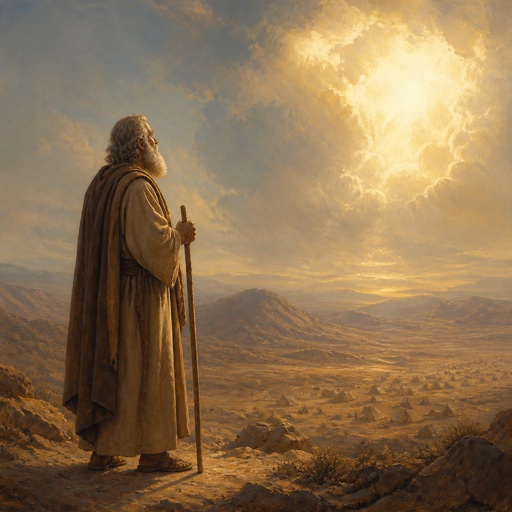
"¶ And the LORD spake unto Moses, saying," - Exodus 16:11
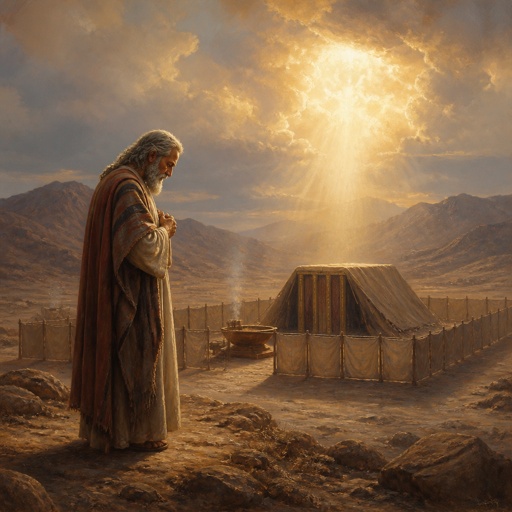
"¶ And the LORD spake unto Moses, saying," - Exodus 30:11

"And the second row, an emerald, a sapphire, and a diamond." - Exodus 39:11

Exodus 20:2
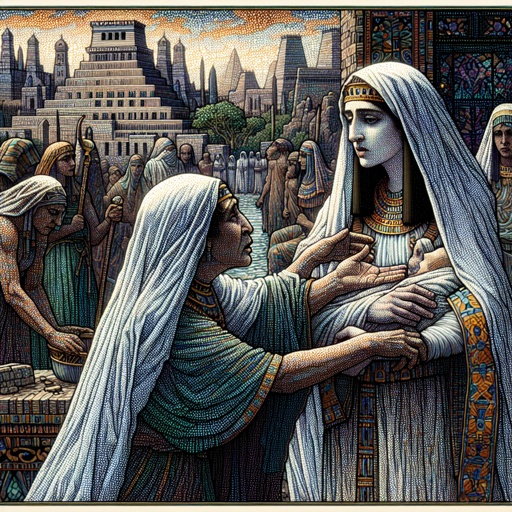
Exodus 2:9

Exodus 9:11 - "And the magicians could not stand before Moses because of the boils; for the boil was upon the magicians, and upon all the Egyptians."