The Weight of Our Actions: A Devotional Reflection on Exodus 21:18
"¶ And if men strive together, and one smite another with a stone, or with his fist, and he die not, but keepeth his bed:" - Exodus 21:18
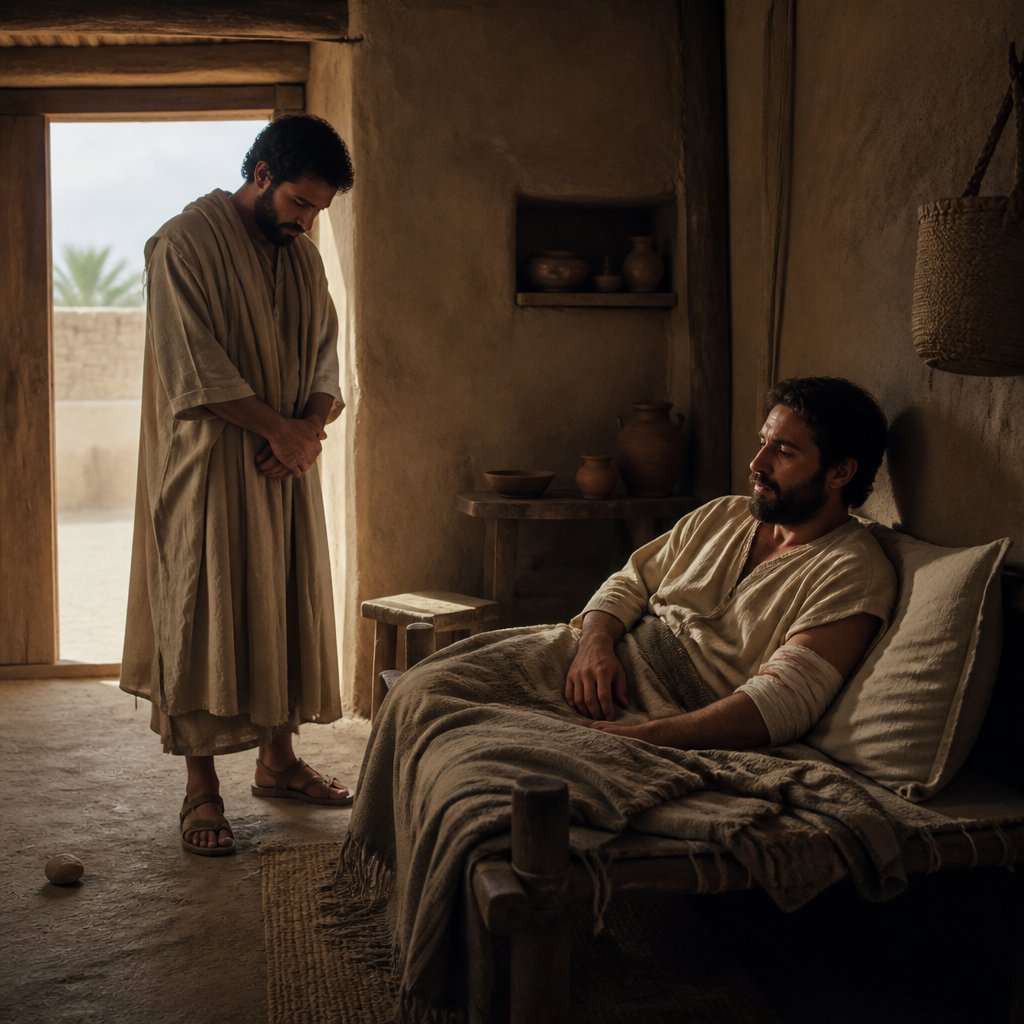
In a world that often seems chaotic and filled with strife, it is important to reflect on the gravity of our actions—their consequences for ourselves and others. Exodus 21:18 states, "And if men strive together, and one smite another with a stone, or with his fist, and he die not, but keepeth his bed." This verse captures a moment of conflict, illustrating yet another facet of human interaction: the struggle for power, the resort to violence, and the resulting frailty of human relationships.
At the surface, this verse is a legal standard set forth to address violence and injury in ancient Israel. The imagery evokes a physical confrontation where one man strikes another, using his strength—or in some cases, a weapon—to assert dominance. However, the real heart of this passage delves deeper into the moral implications of our actions. In striving together, these men engaged in a conflict that is not only physical but represents a larger battle of wills, emotions, and sometimes, desperation.
The use of the phrase "die not, but keepeth his bed" indicates that although one man has been hurt, he has not lost his life; instead, he is left in a weakened position, likely shaken and vulnerable. This highlights the Bible's recognition of injury, not only in the physical sense but also emotionally and spiritually. It shows us how our aggressive actions may lead to suffering—an experience of profound pain that stretches beyond the aftermath of violence.
When Jesus taught about conflict, His message transformed the understanding of struggle and confrontation. Throughout the New Testament, Christ emphasized reconciliation and the importance of loving one's neighbor. For example, in Matthew 5:39, Jesus says, "But I say unto you, That ye resist not evil: but whosoever shall smite thee on thy right cheek, turn to him the other also." Here we see a stark contrast to the assertion of power through violence, urging instead a response of humility and grace.
This brings us to the realization that our struggles aren't simply adversarial encounters; they can serve as opportunities for growth, healing, and reconciliation. How often do we see our conflicts in light of Christ’s teachings? Rather than engaging in fights that inflict wounds—whether they be physical, emotional, or spiritual—what if we sought to lift one another up? What if we approached disagreements with a spirit of love, seeking resolution and understanding rather than victory?
The passage serves as a profound reminder of the call to accountability. As individuals, we are not just warned against physical violence, but we are also called to consider the weight of our words and actions. Often, we can cause harm through gossip, dismissive behavior, or indifference, leading others to spiritual or emotional exhaustion. Holding each other accountable to a higher standard in conflict means actively choosing to engage with love and kindness, demonstrating Christ-like behavior that lifts others rather than tearing them down.
When we consider our engagements, especially in times of strife, let us remember that though conflict can arise, our responses can reflect our faith. We can either perpetuate the cycle of violence or break free from it by choosing peace, understanding, and reconciliation. His example stands before us as we learn to navigate the tumultuous waters of human relationships.
In prayer, we ask God to help us recognize moments when we are tempted to strike out in anger. May we choose instead to extend grace, seeking to understand the hearts of others, and striving to build each other up instead of pushing each other down. Let us commit to being peacemakers in a world frequently torn by conflict.
May we live out the love of Christ in all aspects of our lives, reflecting His character through every interaction, striving not to harm but to heal, not to impose but to liberate—keeping in mind that the life of the one who suffers impacts us all.
Want to reflect more on Exodus 21:18?
Continue your spiritual journey with Bible Chat — an AI-powered tool for exploring God's Word through conversation. Ask questions, discover connections, and deepen your understanding.
Get Our Apps


Exodus 21:18 Artwork

Exodus 21:18 - "¶ And if men strive together, and one smite another with a stone, or with his fist, and he die not, but keepeth his bed:"
"¶ And if men strive together, and one smite another with a stone, or with his fist, and he die not, but keepeth his bed:" - Exodus 21:18

Exodus 18:21 - "Moreover thou shalt provide out of all the people able men, such as fear God, men of truth, hating covetousness; and place such over them, to be rulers of thousands, and rulers of hundreds, rulers of fifties, and rulers of tens:"

Exodus 18

Exodus 14: 21

Exodus 14: 21

Exodus 15:21

Proverbs 18:21

Proverbs 18:21

Proverbs 18:21

Proverbs 18:21

Exodus 31: 18

exodus 18:11

Exodus 21:21 - "Notwithstanding, if he continue a day or two, he shall not be punished: for he is his money."

Proverbs 18:21

Proverbs 18:21

Proverbs 18:21

Proverbs 18:21

Proverbs 18:21

Proverbs 18:21

Proverbs 18:21

Proverbs 18:21

Exodus 27:19-21

Exodus 6:21 - "¶ And the sons of Izhar; Korah, and Nepheg, and Zichri."

Genesis 18-21

Genesis 21-18

Exodus 21:25 - "Burning for burning, wound for wound, stripe for stripe."

Exodus 22:18 - "¶ Thou shalt not suffer a witch to live."

Exodus 15:18 - "The LORD shall reign for ever and ever."

Exodus 35:18 - "The pins of the tabernacle, and the pins of the court, and their cords,"