The Power of Recognition: A Call to Awareness and Action
"And he said unto his people, Behold, the people of the children of Israel are more and mightier than we:" - Exodus 1:9
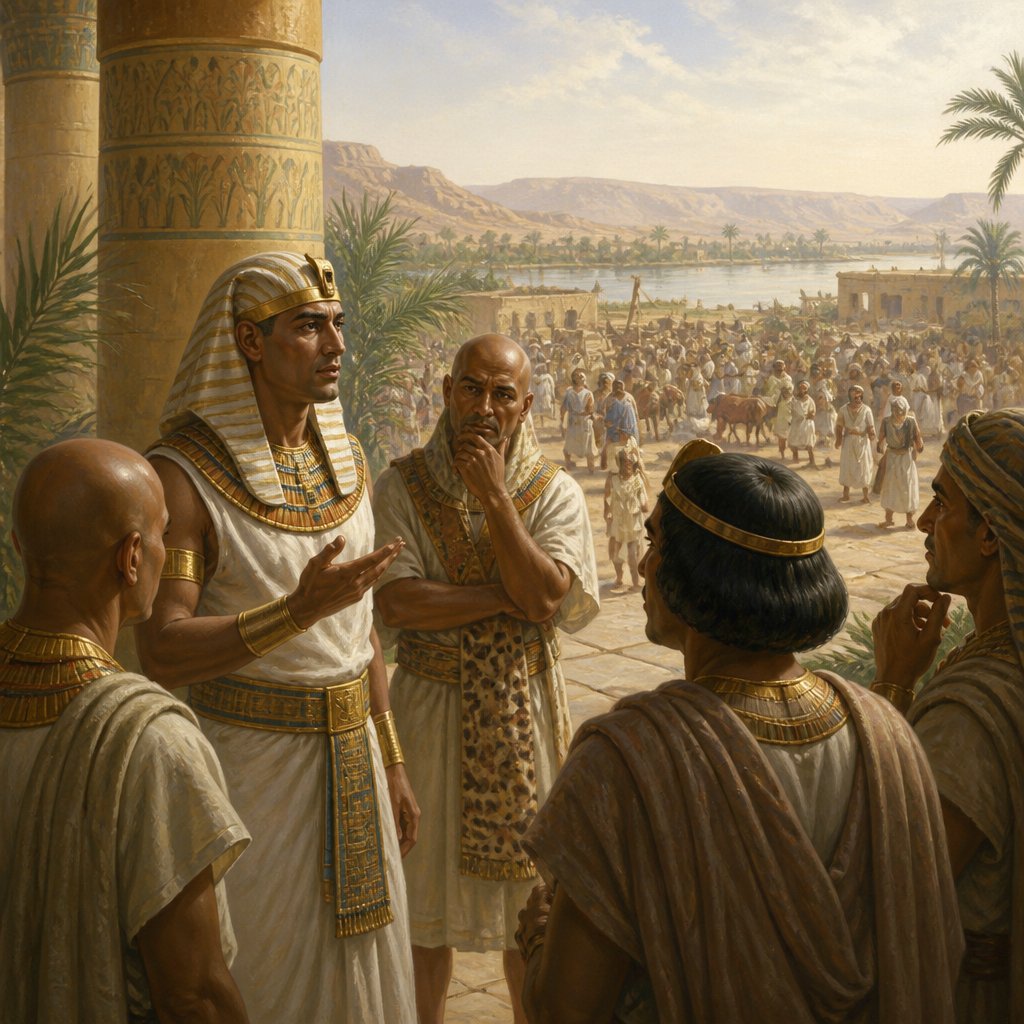
In Exodus 1:9, we are confronted with a profound statement made by the Pharaoh of Egypt: "And he said unto his people, Behold, the people of the children of Israel are more and mightier than we." This verse encapsulates a moment of awareness that carries significant implications not only for the Israelites but also for the Egyptians and for us today. It serves as a reminder of the power of recognition and the choices that follow such awareness.
The context of this verse is critical to understanding its weight. The children of Israel had found themselves in a place of blessing in Egypt, having come there due to Joseph’s wisdom and favor with Pharaoh. Over time, however, a new Pharaoh arose who did not remember Joseph, and the reality of the Israelites had drastically changed. They were no longer seen as a blessing but rather as a threat. The Pharaoh’s admission acknowledges the remarkable growth and strength of the Israelites; they had multiplied so greatly that they now outnumbered their oppressors.
This verse speaks volumes about the nature of power and the perception of threat. Pharaoh, in recognizing the might of the Israelites, felt compelled to take action to suppress them, illustrating a deep-seated fear that often follows the acknowledgment of another’s strength. As we reflect on this passage, we are reminded of how fear can lead to misguided choices, oppression, and ultimately, conflict. How many times have we allowed fear or jealousy to dictate our actions?
Moreover, the phrase “more and mightier” stirs a deeper understanding of identity and purpose. God’s chosen people, despite their current state of slavery, were imbued with strength and potential. They were more than their circumstances; they were mightier because their identity lay with God’s promises. This notion challenges us to reconsider how we view ourselves in light of God’s sovereignty. Just as the Israelites were more than what overt circumstances dictated, we too are called to recognize our identity in Christ.
In today’s culture, where so many feel overwhelmed by external circumstances, it’s vital that we, like the Israelites, remember who we are and whose we are. Philippians 4:13 tells us that "I can do all things through Christ which strengtheneth me.” This powerful truth roots our identity in divine strength rather than in earthly constraints. Just as Pharaoh acknowledged the might of Israel, we must also recognize the potential and strength that God has embedded within us.
Additionally, Pharaoh’s recognition leads to action, albeit negative. He sought to oppress the Israelites through brute force—an instinct that stems from fear. Consequently, as believers, we should consider our response to recognizing others' strengths. Instead of fear or envy, we are encouraged to celebrate the victories of others and acknowledge our collective strength as the body of Christ. Galatians 6:2 urges us to “bear one another’s burdens, and so fulfill the law of Christ.” This brings us to the importance of community; in knowing we are all powerful in Christ together, we should uplift one another rather than compete.
As this narrative unfolds, it is also pivotal to note God’s sovereignty amidst oppression. While Pharaoh saw the Israelites as a threat, God was preparing Moses to lead His people to freedom. This serves as a powerful reminder that while human leaders may view us as a resource or a threat, God sees us as His beloved children destined for greater things.
In conclusion, Exodus 1:9 urges us to recognize both our own strength and the strength of those around us. It’s a reminder that empowerment through faith leads to unity, courage, and overall growth within the body of Christ. Let us not be driven by fear or competition, but rather by a spirit of recognition, appreciation, and love that fosters community and reflects God’s glorious plans for all His children.
May we embrace our identity, celebrate the strengths of our neighbors, and act from a place of faith, recognizing that true power is found in unity and unwavering trust in God’s purpose.
Want to reflect more on Exodus 1:9?
Continue your spiritual journey with Bible Chat — an AI-powered tool for exploring God's Word through conversation. Ask questions, discover connections, and deepen your understanding.
Get Our Apps


Exodus 1:9 Artwork

Exodus 1:9 - "And he said unto his people, Behold, the people of the children of Israel are more and mightier than we:"
"And he said unto his people, Behold, the people of the children of Israel are more and mightier than we:" - Exodus 1:9

The Plague on Livestock - Exodus 9:1-7

The Plague on Livestock - Exodus 9:1-7

The Plague Death on Livestock - Exodus 9:1-7

The Plague Death on Livestock - Exodus 9:1-7

Exodus 40:9
Exodus 2:9

Exodus 2:9

Exodus 9:1 - "Then the LORD said unto Moses, Go in unto Pharaoh, and tell him, Thus saith the LORD God of the Hebrews, Let my people go, that they may serve me."

Exodus 24:9-11

Exodus 35:9 - "And onyx stones, and stones to be set for the ephod, and for the breastplate."

Exodus 9:31 - "And the flax and the barley was smitten: for the barley was in the ear, and the flax was bolled."

Exodus 9:32 - "But the wheat and the rie were not smitten: for they were not grown up."

The Plague of Boils - Exodus 9:8-12

The Plague of Boils - Exodus 9:8-12

The Plague of Boils - Exodus 9:8-12.

The Plague of Boils - Exodus 9:8-12

The Plague of Hail - Exodus 9:13-35

The Plague of Hail - Exodus 9:13-35

The Plague of Boils - Exodus 9:8-12

The Plague of Hail - Exodus 9:13-35

The Plague of Hail - Exodus 9:13-35

The Plague of Boils - Exodus 9:8-12

The Plague of Boils - Exodus 9:8-12

The Plague of Boils - Exodus 9:8-12

Exodus 9:26 - "Only in the land of Goshen, where the children of Israel were, was there no hail."

Exodus 24:9 - "¶ Then went up Moses, and Aaron, Nadab, and Abihu, and seventy of the elders of Israel:"

Exodus 31:9 - "And the altar of burnt offering with all his furniture, and the laver and his foot,"

Exodus 9:2 - "For if thou refuse to let them go, and wilt hold them still,"