The Wisdom of Counsel: Embracing Feedback for Growth
"And Moses' father in law said unto him, The thing that thou doest is not good." - Exodus 18:17
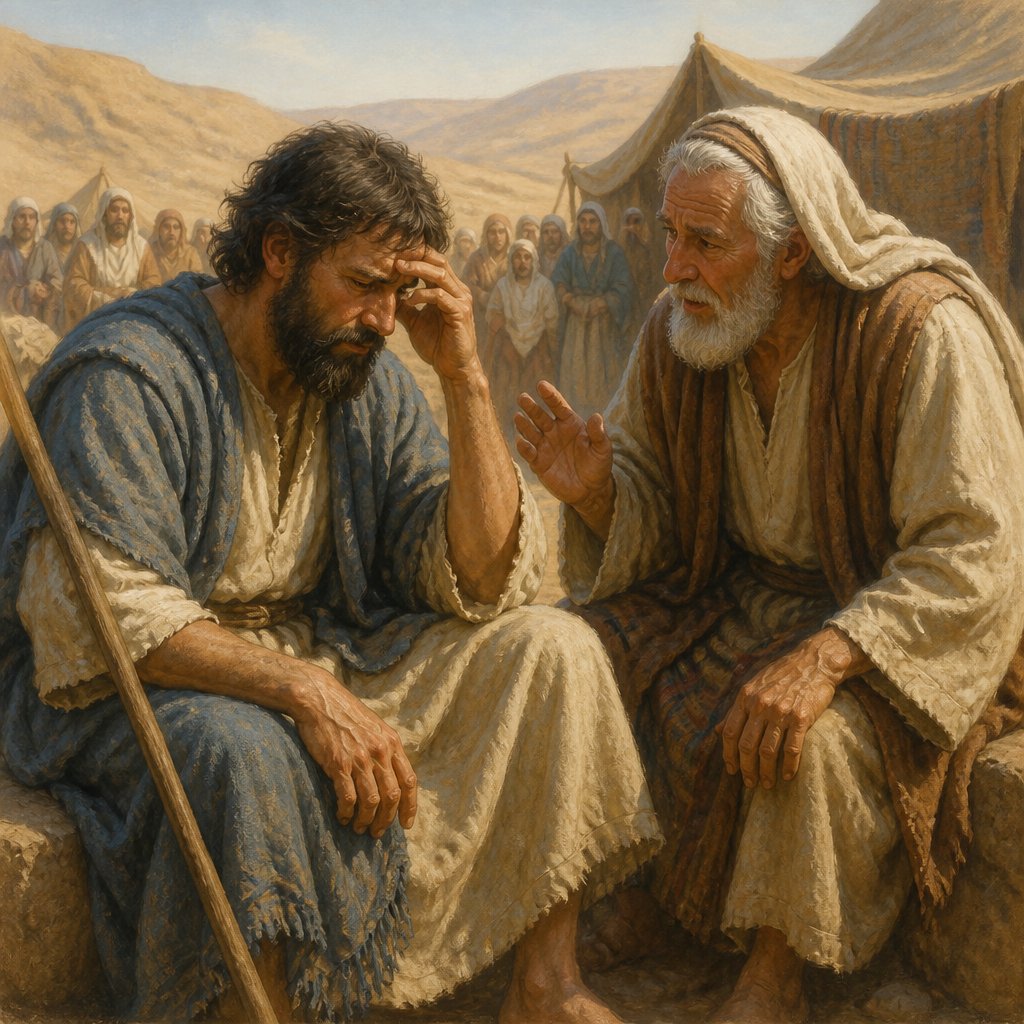
In Exodus 18:17, we encounter a pivotal moment in Moses’ leadership journey, as his father-in-law, Jethro, observes his overwhelming burden of leading the people of Israel. Jethro’s words ring with a timeless truth: "The thing that thou doest is not good." (Exodus 18:17 KJV) This verse invites us to reflect on the significance of constructive criticism and spiritual counsel in our lives and ministries.
Moses had been chosen by God to lead the Israelites out of slavery in Egypt to the Promised Land. The enormity of this task was staggering, and as the leader, he found himself inundated with responsibilities. From dawn until dusk, Moses sat as a judge for the people, hearing their disputes and offering guidance, a commendable effort to serve his community. However, in doing so, he was neglecting his own need for rest and the potential of empowering others to share in this leadership within the community.
How often do we find ourselves in situations similar to Moses? We take on familiar roles, striving to meet every demand, wielding our positions with earnestness, focus, and dedication. However, just as Jethro observed, if we are not careful, we may also be neglecting not only our own well-being but also the collective strength of the community we serve.
Jethro’s gentle intervention highlights several important lessons. Firstly, it shows us the value of external perspectives. Sometimes we become so engrossed in our duties and responsibilities that we fail to recognize the unsustainable patterns in our practices. It takes another set of eyes—like Jethro’s—to discern when something is amiss. In our own lives, we should be aware of our blind spots and remain open to the advice of trusted friends, mentors, or family members.
Moreover, Jethro’s counsel reflects the necessity of delegation. In the body of Christ, each member has unique gifts and roles to play, contributing to a more dynamic and supportive community. Jethro suggested appointing capable men to handle the less critical matters, allowing Moses to focus on the more essential aspects of leadership. In doing so, the burden is shared, and the effectiveness of their collective ministry increases. We too must recognize that leadership does not mean doing everything ourselves; it often means empowering others to rise and share the load.
The challenge that emerges from this passage is the need for vulnerability and humility. Accepting feedback or counsel may be difficult, especially for those in leadership positions who often feel the weight of authority and expectation. However, true wisdom emerges when we acknowledge our limits and seek help. Sharing the load and involving others not only strengthens the community but also enriches our own relationships and personal growth.
In addition, Jethro's advice serves as a powerful reminder of the importance of structure and organization in ministry. God is a God of order, and Jethro’s plan introduced a system that allowed for fair and timely judgment without overwhelming Moses. As we take on roles in our personal and community lives, we must ensure that we are working within a framework that honors God and promotes efficiency and empathy.
Finally, we must remember that Jethro’s guidance came from a place of love and concern. In our interactions, as we offer suggestions or corrections to others, let us do so in a spirit of grace, understanding that our ultimate goal is to uplift rather than criticize. As Proverbs 27:17 states, "Iron sharpeneth iron; so a man sharpeneth the countenance of his friend." Constructive feedback is part of our growth; it shapes us into better instruments for God’s purposes.
In conclusion, when we hear the echoes of Jethro’s advice in our own lives, let us respond with open hearts. Let us seek wisdom from those around us, practice the art of delegation, and create structures that serve not just ourselves but the entire community. Remember, every ounce of feedback we receive and offer is a step towards growth and an opportunity to fulfill God’s calling in our lives more effectively.
Want to reflect more on Exodus 18:17?
Continue your spiritual journey with Bible Chat — an AI-powered tool for exploring God's Word through conversation. Ask questions, discover connections, and deepen your understanding.
Get Our Apps


Exodus 18:17 Artwork
Exodus 18:17 - "And Moses' father in law said unto him, The thing that thou doest is not good."
"And Moses' father in law said unto him, The thing that thou doest is not good." - Exodus 18:17

Exodus 18

Matthew 17:17-18

Matthew 17:17-18

Exodus 17:10

Exodus 17:11

Exodus 17:6

Exodus 17:3

Exodus 31: 18

exodus 18:11

Exodus 17:3

Exodus 17:6

Exodus 17:6

Exodus 24:17

Exodus 17:6

John 7:17-18

John 7:17-18

John 7:17-18

John 7:17-18

Genesis 18-17

Exodus 30:17 - "¶ And the LORD spake unto Moses, saying,"

Exodus 17:8 - "¶ Then came Amalek, and fought with Israel in Rephidim."

Genesis 17-18

Exodus 13:17-14:29

Exodus 22:18 - "¶ Thou shalt not suffer a witch to live."

Exodus 15:18 - "The LORD shall reign for ever and ever."

Exodus 35:18 - "The pins of the tabernacle, and the pins of the court, and their cords,"

Exodus 6:17 - "The sons of Gershon; Libni, and Shimi, according to their families."

Exodus 28:18 - "And the second row shall be an emerald, a sapphire, and a diamond."