The Battle at Rephidim: Lessons from the Amalekites
"¶ Then came Amalek, and fought with Israel in Rephidim." - Exodus 17:8
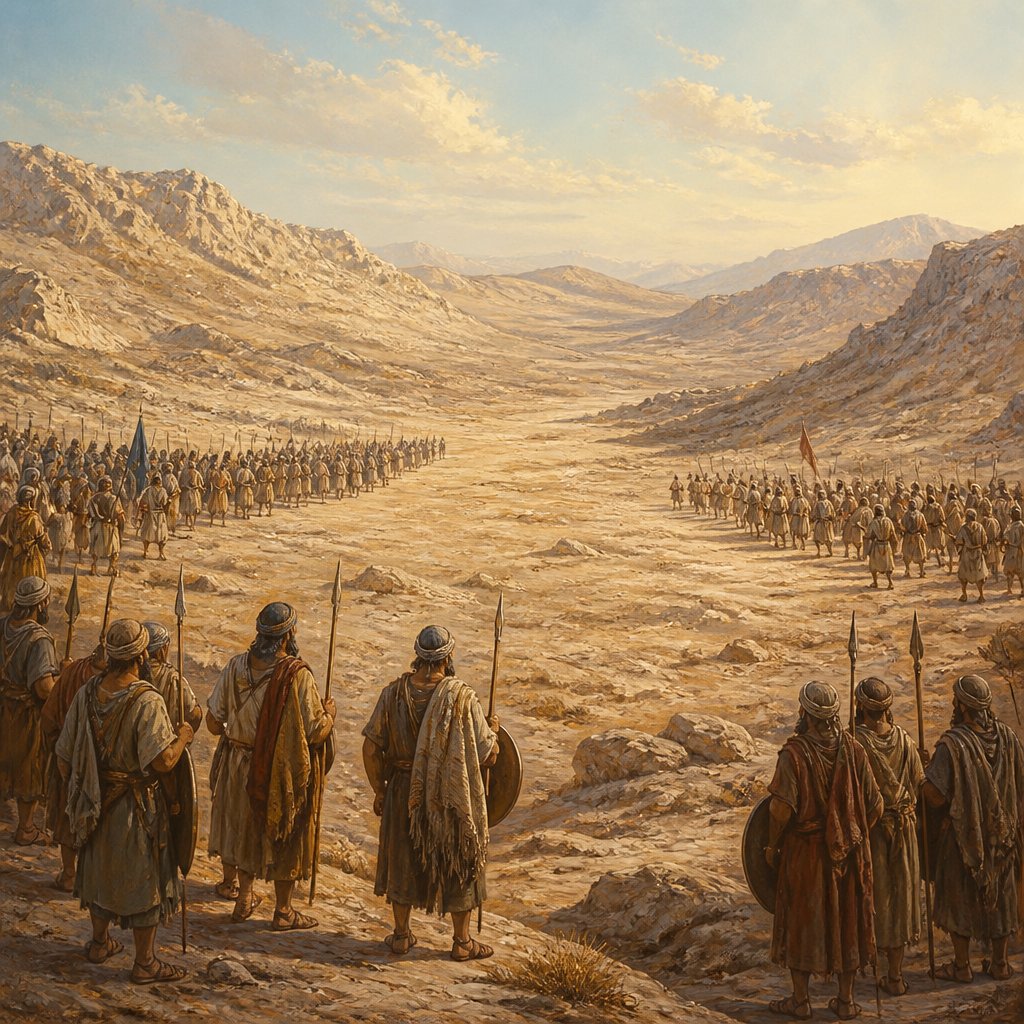
Exodus 17:8 (KJV) says, "Then came Amalek, and fought with Israel in Rephidim." This narrative in the book of Exodus takes us to a pivotal moment in the journey of the Israelites, providing profound insights into the nature of spiritual warfare and dependence on God.
As we delve into the context of this verse, we find the Israelites newly liberated from Egyptian bondage, yet still navigating the hardships of the wilderness. They had witnessed God’s miraculous hand in the parting of the Red Sea, they had received the manna from heaven, and yet they found themselves at a critical juncture. Rephidim, the place where Amalek decided to attack, literally means "resting place". It was here, in their moment of vulnerable repose, that they were confronted by an enemy willing to exploit their weariness and need for peace.
The Amalekites represent a significant symbol of opposition in the Bible. They were descendants of Esau and had historically been adversaries of Israel, embodying enmity towards God’s people. Their attack was unprovoked and ruthless, striking at the weakest among them. This teaches us an essential lesson: just as God’s people were physically vulnerable at Rephidim, we too are often susceptible to attacks when we let our guard down. Spiritually speaking, moments of rest can be when we are most vulnerable to confrontation by the enemy.
Consider how this scene plays out in our own lives. The Amalekites can represent numerous adversities we face—discouragement, doubt, temptation, or even sin that creeps in when we least expect it. Just as the Israelites were at rest, we can find ourselves complacent in our spiritual walk when things seem to be going well. However, we must remain vigilant. "Be sober, be vigilant; because your adversary the devil, as a roaring lion, walketh about, seeking whom he may devour" (1 Peter 5:8). The Israelites' plight serves as a stark reminder that spiritual vigilance is necessary regardless of our circumstances.
When faced with these battles, it is vital to recall the actions of Moses, who summoned Joshua, saying, "Choose us out men, and go out, fight with Amalek" (Exodus 17:9 KJV). This underscores the importance of community and leadership in facing challenges. Joshua, who would later lead Israel into the Promised Land, began to learn the values of combat and leadership during this seemingly daunting task. This collaboration highlights the importance of surrounding ourselves with strong, faithful companions who can assist us in our battles. In moments of struggle, we should not go alone but lean on our church community and fellow believers, harnessing the strength that comes from collective support.
Furthermore, as Moses holds up his hands, helping the Israelites prevail, we see that he could not do it alone—he required Aaron and Hur to support his arms in the battle (Exodus 17:12). This imagery presents another vital principle: the necessity of intercession in our lives. Just as Moses intercedes for the people, we too must engage in prayer—not only for ourselves but better yet, lifting each other up. Intercessory prayer is a powerful weapon in spiritual warfare, enabling us to battle not just with flesh but against spiritual forces.
Lastly, the narrative reveals the significance of relying on God’s power for victory. The name of the place where Moses built an altar after the battle was "Jehovah Nissi", meaning "The Lord is my Banner" (Exodus 17:15). This is a profound proclamation of faith that God is with us in our struggles. As we face our own Amalekites today—whether it be personal turmoil, societal issues, or spiritual battles—let us declare that the Lord is our banner, our leader, and our source of strength.
In conclusion, Exodus 17:8 draws us into a rich tapestry of lessons, highlighting the need for vigilance, community, intercession, and divine reliance in spiritual warfare. As we confront life's battles, may we continually return to the assurance that God fights for us, and no foe can stand against the power of our God when we lift high His name.
Want to reflect more on Exodus 17:8?
Continue your spiritual journey with Bible Chat — an AI-powered tool for exploring God's Word through conversation. Ask questions, discover connections, and deepen your understanding.
Get Our Apps


Exodus 17:8 Artwork

Exodus 17:8 - "¶ Then came Amalek, and fought with Israel in Rephidim."
"¶ Then came Amalek, and fought with Israel in Rephidim." - Exodus 17:8
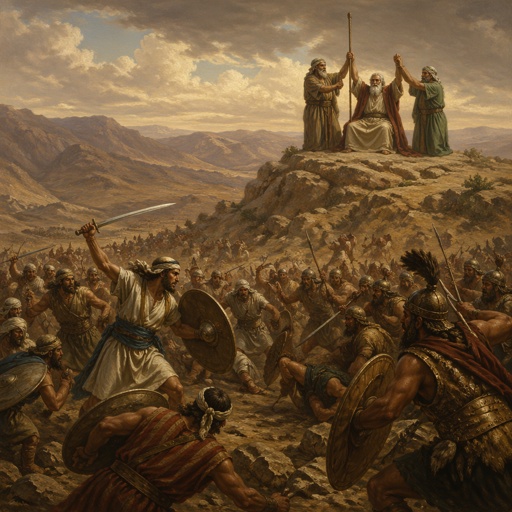
in the context of exodus 17:8, draw a picture of the Amalekites fighting against Joshua and the Israelites. The battle is raging in the valley, and on a hill beyond where the battle is taking place, Moses is sitting and Aaron and Hur are holding his hands up while his staff is in his hands.

Exodus 8:17 - "And they did so; for Aaron stretched out his hand with his rod, and smote the dust of the earth, and it became lice in man, and in beast; all the dust of the land became lice throughout all the land of Egypt."
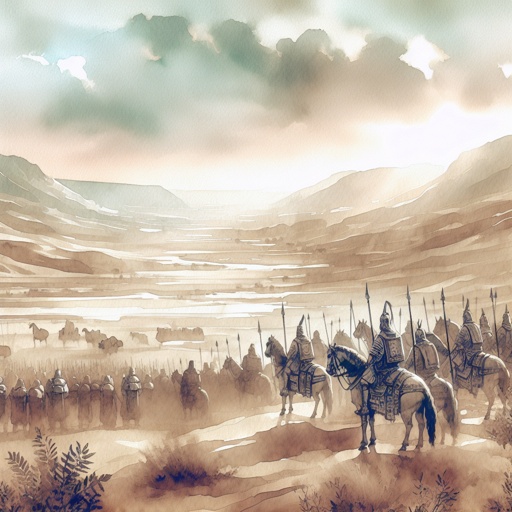
Exodus 17:10

Exodus 17:11

Exodus 17:6

Exodus 17:3

Exodus 17:3

Exodus 17:6

Exodus 17:6

Exodus 24:17

Exodus 17:6

Exodus 30:17 - "¶ And the LORD spake unto Moses, saying,"

Exodus 25:8

Exodus 13:17-14:29

Exodus 6:17 - "The sons of Gershon; Libni, and Shimi, according to their families."

Exodus 34:17 - "Thou shalt make thee no molten gods."

Exodus 17:15 - "And Moses built an altar, and called the name of it Jehovah-nissi:"

Exodus 17:13 - "And Joshua discomfited Amalek and his people with the edge of the sword."

Exodus 27:1-8

Exodus 8:1-15

Exodus 35:17 - "The hangings of the court, his pillars, and their sockets, and the hanging for the door of the court,"

Genesis 17:8

Exodus 16:17 - "And the children of Israel did so, and gathered, some more, some less."

Exodus 20:8 - "Remember the sabbath day, to keep it holy."

Luke 8:17

Exodus 39:17 - "And they put the two wreathen chains of gold in the two rings on the ends of the breastplate."
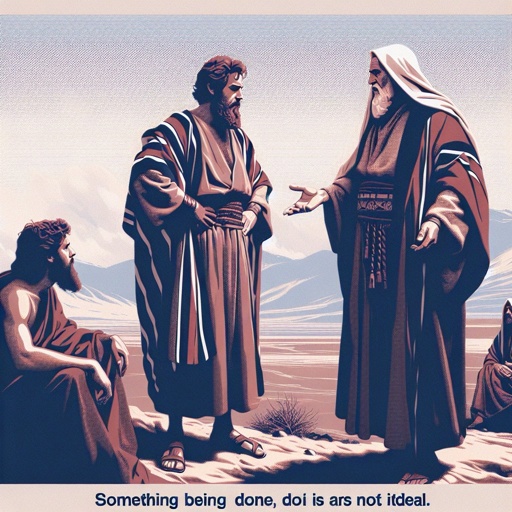
Exodus 18:17 - "And Moses' father in law said unto him, The thing that thou doest is not good."

Exodus 21:17 - "¶ And he that curseth his father, or his mother, shall surely be put to death."