From Bitterness to Sweetness: Trusting God's Provision
"Sure! Here is the verse you requested: When they came to Marah, they could not drink of the waters of Marah, for they were bitter: therefore the name of it was called Marah. And the people murmured against Moses, saying, What shall we drink? And he cried unto the LORD; and the LORD shewed him a tree, which when he had cast into the waters, the waters were made sweet: there he made for them a statute and an ordinance, and there he proved them," - Exodus 15:23-25

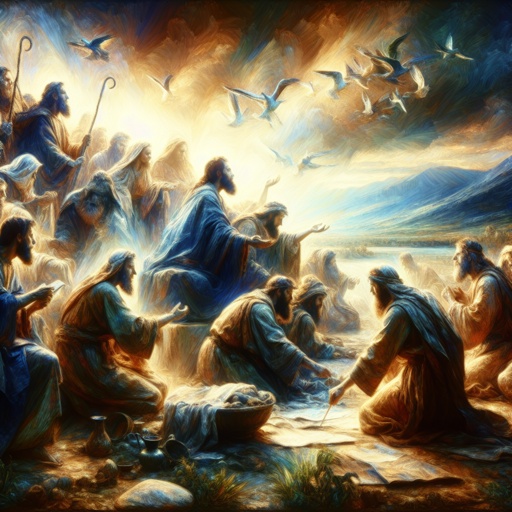
In the journey of faith, the path is often fraught with challenges and moments of despair. The passage of Exodus 15:23-25 showcases one such instance from the Israelites’ journey into the wilderness: **"When they came to Marah, they could not drink of the waters of Marah, for they were bitter: therefore the name of it was called Marah. And the people murmured against Moses, saying, What shall we drink? And he cried unto the LORD; and the LORD shewed him a tree, which when he had cast into the waters, the waters were made sweet: there he made for them a statute and an ordinance, and there he proved them."**
This biblical narrative occurs shortly after the Israelites experienced a victorious escape from slavery in Egypt. They have witnessed God’s miraculous hand parting the Red Sea and providing safety through the winds of divine intervention. Yet, in mere days, they encounter bitter waters, leading to discontent and murmuring—a stark contrast to their previous experience of jubilation and freedom.
The location of Marah symbolizes a bitter moment, both literally and metaphorically. The Israelites found themselves in a desperate situation where the very element necessary for survival—water—was unpalatable. It stands as a stark metaphor for the moments in our lives when our circumstances turn inexplicably difficult. Bitterness can creep into our spirits, causing us to murmur and seek accountability from those whom we believe are leading us, just as the Israelites blamed Moses. How often do we find ourselves murmuring against God or our circumstances because they do not align with our expectations? When faced with life's trials, our immediate response tends to focus on our discomfort rather than on God's providence.
Moses' reaction offers a profound lesson for us. Instead of joining the fray of complaints, he turned to the Lord in prayer. His immediate recourse to God highlights a crucial aspect of faith: in our bitterness, we must remember to cry out to God rather than allow our hearts to remain hardened. The Lord's response shows His willingness to provide. He revealed a tree to Moses, instructing him to cast it into the waters, transforming the bitter into sweet. This act serves as a representative foreshadowing of God’s redemptive plans through Jesus Christ, the Tree of Life, who can take our bitterness and transform it into joy and sweetness.
The transformation of water symbolizes renewal and restoration. Beloved, just when it feels like life has handed us cup after cup of bitterness, God is waiting to show us His provision—a provision we might not perceive immediately. Often, God’s solutions lie outside our understanding. It might be a scriptural promise, a wise counsel from a friend, or a direct answer to prayer that transforms our experience. We must trust that God sees our struggle, hears our cries, and has a plan that transcends our current difficulties.
The latter part of the passage reveals a deeper truth: **“there he made for them a statute and an ordinance, and there he proved them.”** Here, God establishes a covenantal relationship marked by trust and obedience. He tests our hearts not to torment us but to prove our faith—an invitation to deeper reliance upon Him in our daily lives. In the face of adversity, we encounter opportunities not just for survival but for divine intimacy and deeper spiritual growth.
Finally, as we reflect on Marah, let us remember that every bitter experience carries within it the potential for a transformed joy. Trust God to take your bitter waters and sweeten them according to His will. In your moments of despair, reach out to Him, presenting your struggles. Allow His grace to settle your heart and turn complaints into praises—turning bitterness into beautiful testimonies of His faithfulness.
As we trust in God’s provision, let us commit to seeing every challenge as a chance to draw closer to Him and allow His love to permeate our spirits, transforming our lives from bitterness to sweetness. Amen.
Want to reflect more on Exodus 15:23-25?
Continue your spiritual journey with Bible Chat — an AI-powered tool for exploring God's Word through conversation. Ask questions, discover connections, and deepen your understanding.
Get Our Apps


Exodus 15:23-25 Artwork

Exodus 15:23-25 - "When they came to Marah, they could not drink its water because it was bitter. (That is why the place is called Marah.) So the people grumbled against Moses, saying, "What are we to drink?" Then Moses cried out to the LORD, and the LORD showed him a piece of wood. He threw it into the water, and the water became fit to drink. There the LORD issued a ruling and instruction for them and put them to the test."

"When they came to Marah, they could not drink its water because it was bitter. (That is why the place is called Marah.) So the people grumbled against Moses, saying, "What are we to drink?" Then Moses cried out to the LORD, and the LORD showed him a piece of wood. He threw it into the water, and the water became fit to drink. There the LORD issued a ruling and instruction for them and put them to the test." - Exodus 15:23-25
Exodus 15:23

Exodus 15:23

Exodus 25:15 - "The staves shall be in the rings of the ark: they shall not be taken from it."

Exodus 15:23 - "¶ And when they came to Marah, they could not drink of the waters of Marah, for they were bitter: therefore the name of it was called Marah."

"The staves shall be in the rings of the ark: they shall not be taken from it." - Exodus 25:15

Exodus 25:23 - "¶ Thou shalt also make a table of shittim wood: two cubits shall be the length thereof, and a cubit the breadth thereof, and a cubit and a half the height thereof."

Exodus 23:25 - "And ye shall serve the LORD your God, and he shall bless thy bread, and thy water; and I will take sickness away from the midst of thee."

Exodus 15:25 - "And he cried unto the LORD; and the LORD shewed him a tree, which when he had cast into the waters, the waters were made sweet: there he made for them a statute and an ordinance, and there he proved them,"

Exodus 25:16

Exodus 25:31

"¶ And when they came to Marah, they could not drink of the waters of Marah, for they were bitter: therefore the name of it was called Marah." - Exodus 15:23

Exodus 25:8

Exodus 25:16

Exodus 25:16

Matthew 25:23

Exodus 2:23-25 - "During that long period, the king of Egypt died. The Israelites groaned in their slavery and cried out, and their cry for help because of their slavery went up to God. God heard their groaning and he remembered his covenant with Abraham, with Isaac and with Jacob. So God looked on the Israelites and was concerned about them."

Matthew 25:23

Genesis 25-23

Exodus 23:20

Exodus 23:4

Exodus 23:28

Exodus 23:15 - "Thou shalt keep the feast of unleavened bread: (thou shalt eat unleavened bread seven days, as I commanded thee, in the time appointed of the month Abib; for in it thou camest out from Egypt: and none shall appear before me empty:)"

Exodus 25:10-22

Exodus 23:4

Exodus 23:28

exodus 15

Exodus 25:1 - "And the LORD spake unto Moses, saying,"

Exodus 23:27-28