Unseen Battles: The Strength Found in Unity
"And Parmashta, and Arisai, and Aridai, and Vajezatha," - Esther 9:9
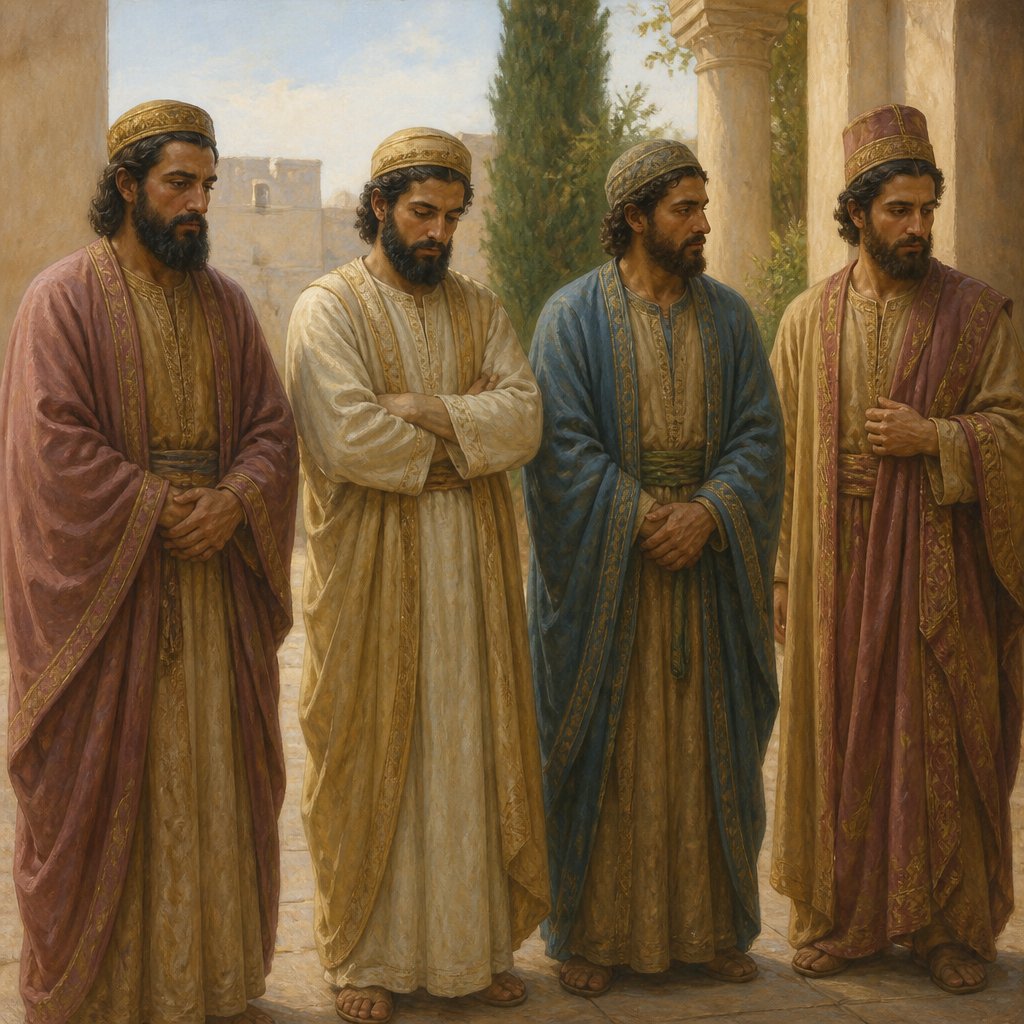
In the book of Esther, the narrative reaches a critical juncture in chapter 9, which recounts the final victory of the Jewish people over their adversaries. Among the myriad of names mentioned is the verse that states, "And Parmashta, and Arisai, and Aridai, and Vajezatha" (Esther 9:9, KJV). While at first glance these may seem like mere names, they represent profound truths about community, support, and the power of unity in the face of adversity.
### Understanding the Context
To fully comprehend the significance of Esther 9:9, we must remember the broader context of the book. The story of Esther is set in a time when the Jewish people found themselves threatened by a decree set forth by Haman, the king’s advisor, who sought to annihilate them. In a time when despair might have taken root, Esther, with boldness and faith, approached King Xerxes and revealed her identity as a Jew. It was her courage that turned the tide, leading to a reversal of the grim decree.
The names listed in Esther 9:9 represent some of the ten sons of Haman, who were captured and ultimately slain. These names are significant, not only because they represent those who opposed God's people, but they also symbolize the larger battle fought that day. They remind us that life is filled with battles—some seen, some unseen—where the forces of good and evil collide.
### The Power of Unity
The mention of these names collectively suggests a deep truth about unity. The Jewish people do not stand alone; they fight together, embodying the strength of their community. In our own lives, we often face diverse challenges—personal struggles, societal pressures, or spiritual warfare. Much like the Jews in the time of Esther, we must remember that we are not alone; we have friends, family, and a community that stands with us. The victories we achieve are rarely the result of solitary efforts; they are accomplished through the support and prayers of those around us. In Ecclesiastes 4:9-10, we are reminded that “Two are better than one; because they have a good reward for their labor. For if they fall, the one will lift up his fellow.”
### Seeking God’s Guidance
The victory of the Jewish people is also a reflection of their reliance on God. They fasted, prayed, and sought divine intervention. As believers, we should model this behavior in our lives. Before we confront our own battles, we must center our hearts on prayer, seeking guidance, wisdom, and strength from the Lord. James 1:5 comforts us by saying, "If any of you lack wisdom, let him ask of God, that giveth to all men liberally and upbraideth not; and it shall be given him." It is through steadfast prayer and seeking God collectively that we can find direction and overcome obstacles.
### The Assurance of Victory
Lastly, Esther 9:9 brings to light the assurance that God is mightier than any adversary we may face. For the Jewish people, the fall of Haman’s sons signified a concrete victory that radically transformed their fate. Similarly, we are assured through our faith that God fights for us. Romans 8:37 states, "Nay, in all these things we are more than conquerors through him that loved us." Our battles, much like those faced by Esther and her people, are not fought with swords but through the power of faith, prayer, and the unity of the church.
### Conclusion
As we reflect on the names mentioned in Esther 9:9, let us remember the importance of standing together as a community, seeking God’s wisdom, and trusting in the divine victory that awaits us. May our hearts be encouraged in knowing that we fight not alone, but as a collective force under God's mighty hand, ready to face the challenges that come our way. Let us honor our battles by preparing in prayer and supporting one another, for in unity we find our strength and our victory.
Want to reflect more on Esther 9:9?
Continue your spiritual journey with Bible Chat — an AI-powered tool for exploring God's Word through conversation. Ask questions, discover connections, and deepen your understanding.
Get Our Apps


Esther 9:9 Artwork

Esther 9:9 - "And Parmashta, and Arisai, and Aridai, and Vajezatha,"
"And Parmashta, and Arisai, and Aridai, and Vajezatha," - Esther 9:9

Esther 4:9 - "And Hatach came and told Esther the words of Mordecai."

Esther 9:32 - "And the decree of Esther confirmed these matters of Purim; and it was written in the book."

Esther 9:8 - "And Poratha, and Adalia, and Aridatha,"

Esther 9:7 - "And Parshandatha, and Dalphon, and Aspatha,"

Esther 9:29 - "Then Esther the queen, the daughter of Abihail, and Mordecai the Jew, wrote with all authority, to confirm this second letter of Purim."

"And Hatach came and told Esther the words of Mordecai." - Esther 4:9

"And the decree of Esther confirmed these matters of Purim; and it was written in the book." - Esther 9:32
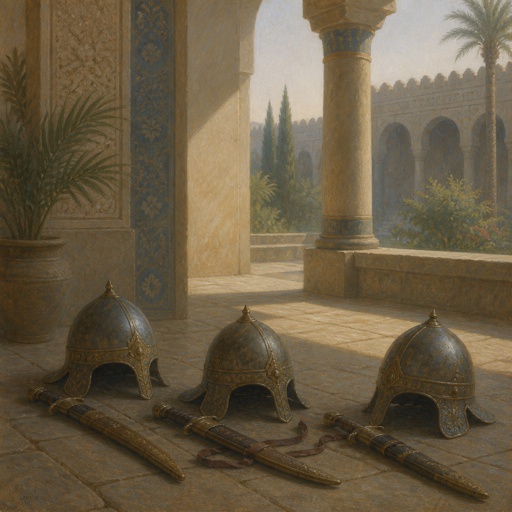
"And Parshandatha, and Dalphon, and Aspatha," - Esther 9:7
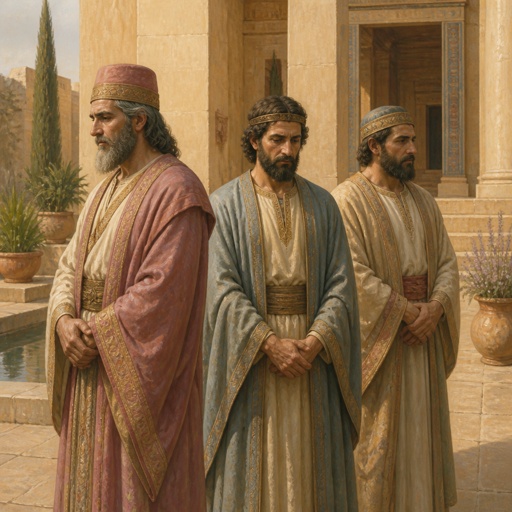
"And Poratha, and Adalia, and Aridatha," - Esther 9:8

Esther 9:6 - "And in Shushan the palace the Jews slew and destroyed five hundred men."

Esther 9:31 - "To confirm these days of Purim in their times appointed, according as Mordecai the Jew and Esther the queen had enjoined them, and as they had decreed for themselves and for their seed, the matters of the fastings and their cry."

Esther 9:13 - "Then said Esther, If it please the king, let it be granted to the Jews which are in Shushan to do to morrow also according unto this day's decree, and let Haman's ten sons be hanged upon the gallows."

Esther 9:11 - "On that day the number of those that were slain in Shushan the palace was brought before the king."

Esther 9:23 - "And the Jews undertook to do as they had begun, and as Mordecai had written unto them;"

Esther 9:10 - "The ten sons of Haman the son of Hammedatha, the enemy of the Jews, slew they; but on the spoil laid they not their hand."

Esther 9:14 - "And the king commanded it so to be done: and the decree was given at Shushan; and they hanged Haman's ten sons."

Esther 9:17 - "On the thirteenth day of the month Adar; and on the fourteenth day of the same rested they, and made it a day of feasting and gladness."

Esther 1:9 - "Also Vashti the queen made a feast for the women in the royal house which belonged to king Ahasuerus."

Esther 9:21 - "To stablish this among them, that they should keep the fourteenth day of the month Adar, and the fifteenth day of the same, yearly,"

Esther 9:25 - "But when Esther came before the king, he commanded by letters that his wicked device, which he devised against the Jews, should return upon his own head, and that he and his sons should be hanged on the gallows."

Esther 9:3 - "And all the rulers of the provinces, and the lieutenants, and the deputies, and officers of the king, helped the Jews; because the fear of Mordecai fell upon them."

Esther 9:30 - "And he sent the letters unto all the Jews, to the hundred twenty and seven provinces of the kingdom of Ahasuerus, with words of peace and truth,"
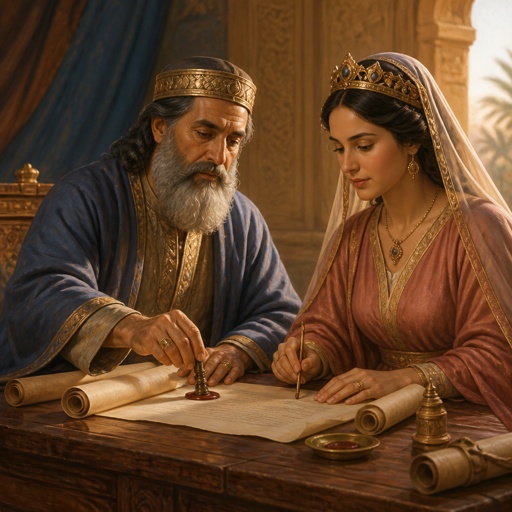
"Then Esther the queen, the daughter of Abihail, and Mordecai the Jew, wrote with all authority, to confirm this second letter of Purim." - Esther 9:29

Esther 9:4 - "For Mordecai was great in the king's house, and his fame went out throughout all the provinces: for this man Mordecai waxed greater and greater."

Esther 9:5 - "Thus the Jews smote all their enemies with the stroke of the sword, and slaughter, and destruction, and did what they would unto those that hated them."

Esther 9:20 - "¶ And Mordecai wrote these things, and sent letters unto all the Jews that were in all the provinces of the king Ahasuerus, both nigh and far,"

Esther 9:18 - "But the Jews that were at Shushan assembled together on the thirteenth day thereof, and on the fourteenth thereof; and on the fifteenth day of the same they rested, and made it a day of feasting and gladness."

"And in Shushan the palace the Jews slew and destroyed five hundred men." - Esther 9:6