Overcoming Adversity: The Courage of Esther's People
"And in Shushan the palace the Jews slew and destroyed five hundred men." - Esther 9:6
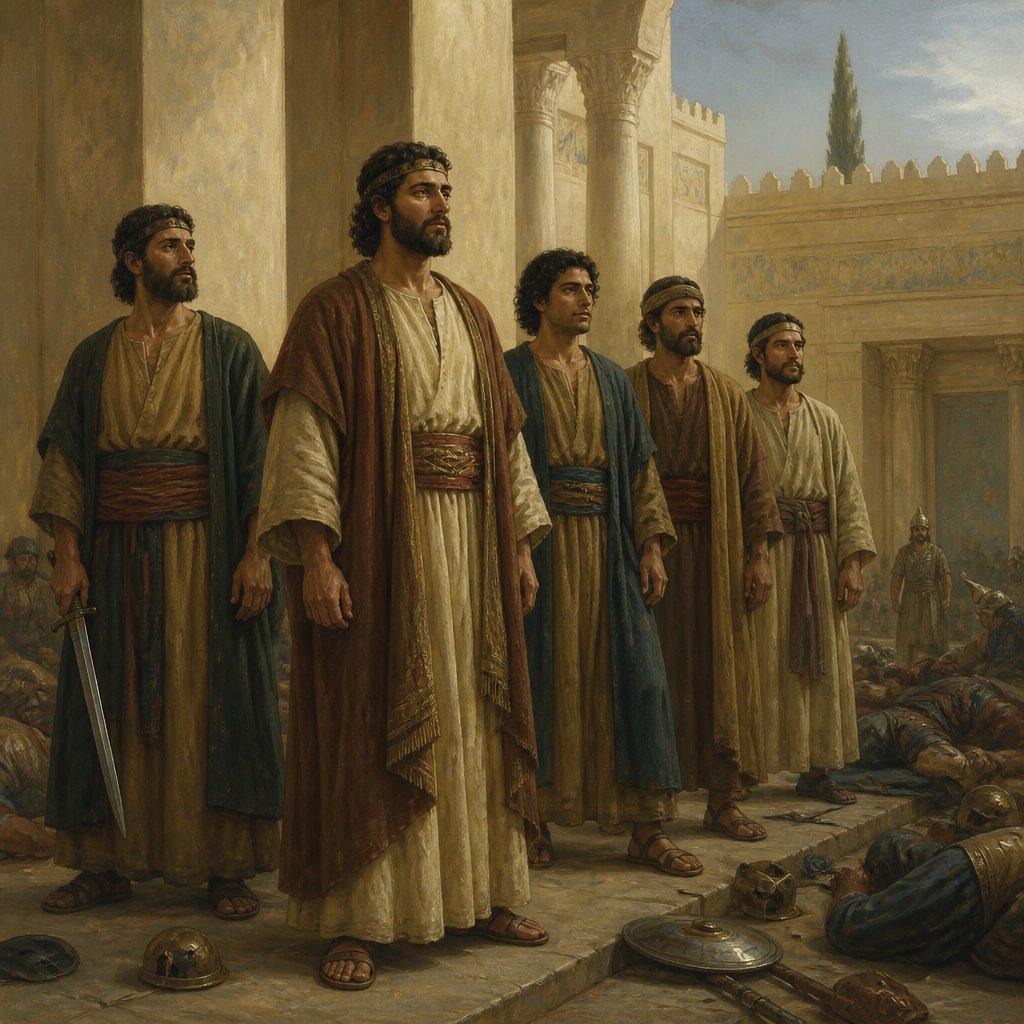
As we turn our attention to Esther 9:6, which states, "And in Shushan the palace the Jews slew and destroyed five hundred men," we encounter a pivotal moment in the narrative of Esther. This verse encapsulates a battle that extends far beyond the literal killing of adversaries; it symbolizes the triumph of God’s people overcoming oppression and the restoration of their dignity and identity.
Historically, Esther’s account takes place during a time when the Jewish people were facing imminent annihilation, decreed by Haman, a powerful adversary who harbored deep-seated hatred for the Jews. The King’s edict seemed irreversible and marked a shadow of despair over the Jewish community. Yet, within this dire context, God was orchestrating a miraculous unfolding of events.
The bravery of Esther and her cousin Mordecai is reminiscent of the kind of faith that does not cower in the face of danger but instead rallies for justice. Esther's courageous decision to approach King Xerxes is a profound testimony of her willingness to stand in the gap for her people. She risked her own life, understanding fully that she could face death for an act that was seen as presumptuous: entering the king’s presence uninvited. This scarcity of fear points towards a deeper trust in God, an assurance that He had destined her for such a time as this (Esther 4:14).
In the mayhem of Shushan, the action taken by the Jewish people—slaying and destroying their adversaries, as chronicled in Esther 9:6—was not one of violence for violence’s sake. It was a response to one colossal threat and a reclaiming of safety and existence. The passage directly speaks to the intensity of the struggle, reflecting deep societal and personal stakes; it showed a people on the brink, thrust into the battle to safeguard their lives and future.
When we meditate on the verse, we can see that the number ‘five hundred’ serves as more than a mere statistic; it clarifies the gravity of the struggle. This was not about mere survival; it was a decisive battle against centuries of oppression and fear. The Jews were not operating out of malice but from a desperate need to protect what God had given them—their lives and their identity.
From a spiritual standpoint, this can lead us to reflect on our own battles. While we may not face physical enemies as the Jews did, many of us engage in spiritual warfare—against doubt, temptation, fear, or societal injustices. Like the Jews in Shushan, we may find ourselves at a critical juncture where we must choose between passivity or action. Esther’s story invites us to navigate such moments with faith and courage.
Esther’s bravery could lead us to ask: What giants in our lives must we confront? What injustices demand our attention today? Are we willing to stand up and speak out on behalf of those who cannot protect themselves? The Jewish triumph is not merely an ancient victory; it is a blueprint for modern-day resilience.
As we recognize the significance of Esther 9:6, let us be reminded of the ultimate victory that we have through Jesus Christ, who fought the ultimate battle against sin and death for our sake. He empowers us to stand firm, to act justly, and to love mercy in a world that mirrors the tensions of Shushan—a world filled with adversities waiting to be overcome by faith.
May we have the tenacity of Esther and the strength of the Jewish people to face the battles ahead of us. Let every encounter we have, every adversary we confront, reflect not just our struggle, but our unwavering belief in God’s sovereign hand guiding us towards ultimate victory.
Want to reflect more on Esther 9:6?
Continue your spiritual journey with Bible Chat — an AI-powered tool for exploring God's Word through conversation. Ask questions, discover connections, and deepen your understanding.
Get Our Apps


Esther 9:6 Artwork

Esther 9:6 - "And in Shushan the palace the Jews slew and destroyed five hundred men."

"And in Shushan the palace the Jews slew and destroyed five hundred men." - Esther 9:6

Esther 4:9 - "And Hatach came and told Esther the words of Mordecai."

Esther 9:32 - "And the decree of Esther confirmed these matters of Purim; and it was written in the book."

Esther 9:9 - "And Parmashta, and Arisai, and Aridai, and Vajezatha,"

Esther 7:6 - "And Esther said, The adversary and enemy is this wicked Haman. Then Haman was afraid before the king and the queen."

Esther 9:29 - "Then Esther the queen, the daughter of Abihail, and Mordecai the Jew, wrote with all authority, to confirm this second letter of Purim."

Esther 1:6

"And Hatach came and told Esther the words of Mordecai." - Esther 4:9

Esther 9:8 - "And Poratha, and Adalia, and Aridatha,"

Esther 9:7 - "And Parshandatha, and Dalphon, and Aspatha,"

"And the decree of Esther confirmed these matters of Purim; and it was written in the book." - Esther 9:32

Esther 6:14 - "And while they were yet talking with him, came the king's chamberlains, and hasted to bring Haman unto the banquet that Esther had prepared."
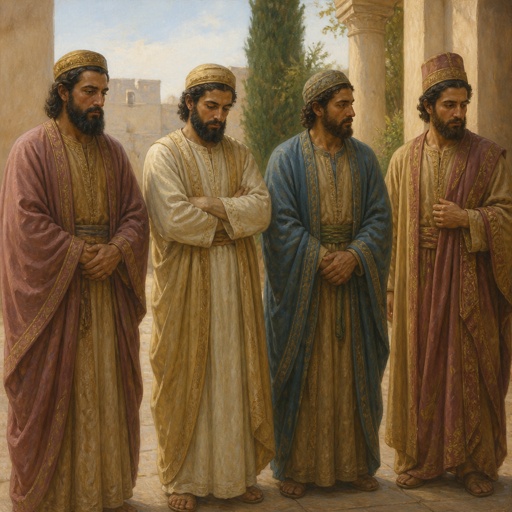
"And Parmashta, and Arisai, and Aridai, and Vajezatha," - Esther 9:9

Esther 9:31 - "To confirm these days of Purim in their times appointed, according as Mordecai the Jew and Esther the queen had enjoined them, and as they had decreed for themselves and for their seed, the matters of the fastings and their cry."

Esther 9:13 - "Then said Esther, If it please the king, let it be granted to the Jews which are in Shushan to do to morrow also according unto this day's decree, and let Haman's ten sons be hanged upon the gallows."

Esther 5:6 - "¶ And the king said unto Esther at the banquet of wine, What is thy petition? and it shall be granted thee: and what is thy request? even to the half of the kingdom it shall be performed."
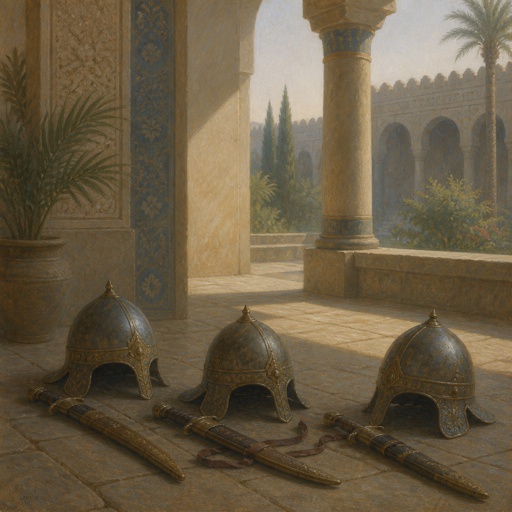
"And Parshandatha, and Dalphon, and Aspatha," - Esther 9:7
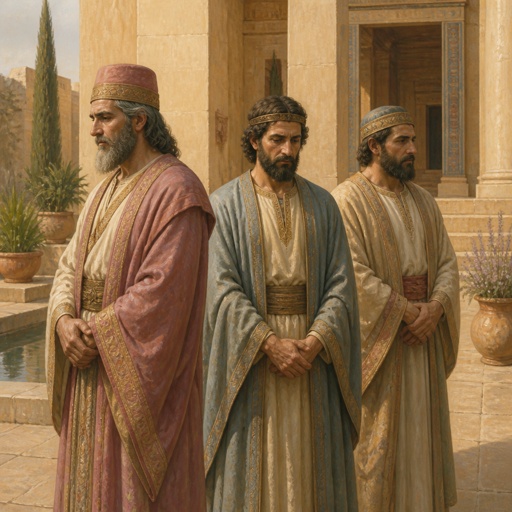
"And Poratha, and Adalia, and Aridatha," - Esther 9:8

Esther 6:7 - "And Haman answered the king, For the man whom the king delighteth to honour,"

Esther 6:9 - "And let this apparel and horse be delivered to the hand of one of the king's most noble princes, that they may array the man withal whom the king delighteth to honour, and bring him on horseback through the street of the city, and proclaim before him, Thus shall it be done to the man whom the king delighteth to honour."

"And Esther said, The adversary and enemy is this wicked Haman. Then Haman was afraid before the king and the queen." - Esther 7:6

Esther 9:25 - "But when Esther came before the king, he commanded by letters that his wicked device, which he devised against the Jews, should return upon his own head, and that he and his sons should be hanged on the gallows."

Esther 9:11 - "On that day the number of those that were slain in Shushan the palace was brought before the king."

Esther 9:23 - "And the Jews undertook to do as they had begun, and as Mordecai had written unto them;"

Esther 9:10 - "The ten sons of Haman the son of Hammedatha, the enemy of the Jews, slew they; but on the spoil laid they not their hand."
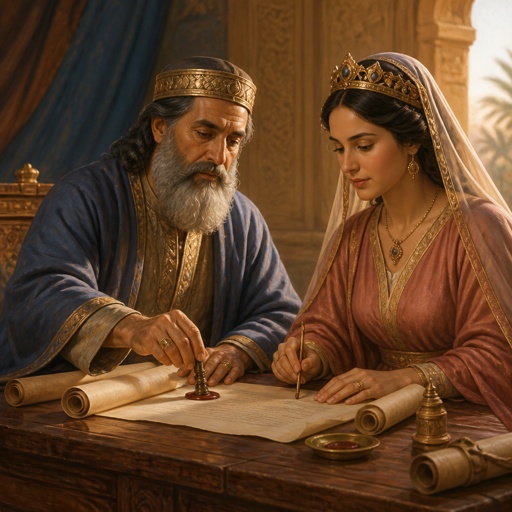
"Then Esther the queen, the daughter of Abihail, and Mordecai the Jew, wrote with all authority, to confirm this second letter of Purim." - Esther 9:29

Esther 9:17 - "On the thirteenth day of the month Adar; and on the fourteenth day of the same rested they, and made it a day of feasting and gladness."

Esther 1:9 - "Also Vashti the queen made a feast for the women in the royal house which belonged to king Ahasuerus."

Esther 9:14 - "And the king commanded it so to be done: and the decree was given at Shushan; and they hanged Haman's ten sons."