The Triumph of Divine Justice
"But when Esther came before the king, he commanded by letters that his wicked device, which he devised against the Jews, should return upon his own head, and that he and his sons should be hanged on the gallows." - Esther 9:25
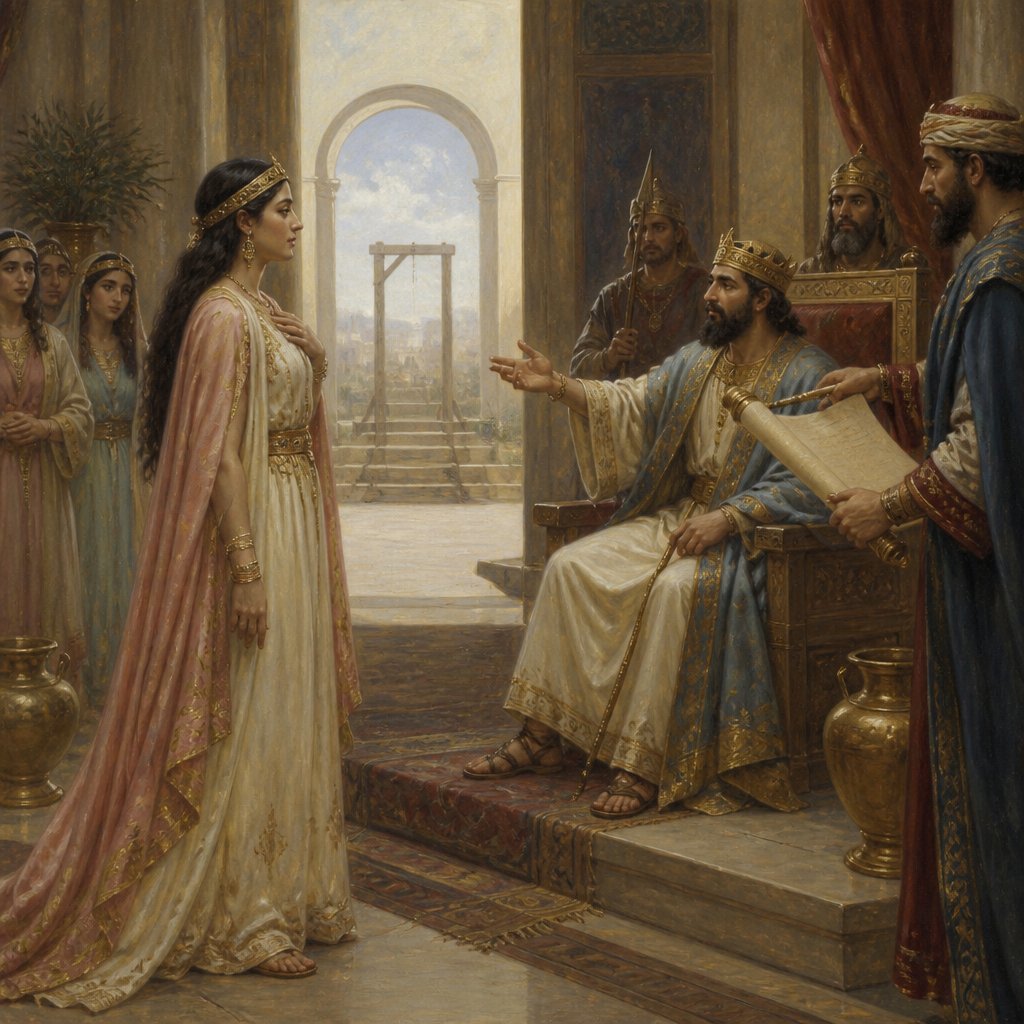
The passage of Esther 9:25 serves as a crucial moment in the narrative of Esther's bravery and the sovereign hand of God in the affairs of His people. The verse reads: "But when Esther came before the king, he commanded by letters that his wicked device, which he devised against the Jews, should return upon his own head, and that he and his sons should be hanged on the gallows." This powerful statement encapsulates themes of justice, reversal of fortunes, and divine protection that are prevalent throughout the Book of Esther.
Esther, a Jewish orphan raised in exile, becomes queen and ultimately stands as an intercessor for her people. Her courage in approaching King Xerxes, uninvited, highlights a deep-seated faith in God’s providence. It wasn’t mere happenstance that led her to that moment; it was her willingness to trust God and step into the unknown. For believers today, Esther's willingness to risk her life for the sake of her people is a poignant reminder that faith often calls us to confront our circumstances with bravery and trust in God's plan.
The context of this verse is wrapped in a backstory of wickedness and conspiracy led by Haman, a high-ranking official who harbored unyielding hatred toward the Jewish people. He sought not only to destroy them but devised a plan that would annihilate their existence. In the shadows of this conspiracy, Esther rises, not just as a queen but as a vessel for God’s purpose. Her actions remind us that, although we may face adversaries who seem overwhelmingly powerful, the God we serve is sovereign and will defend His people.
As we reflect on the nature of Haman's device—a plan marked by malice and arrogance—Isaiah speaks to us in Isaiah 54:17, “No weapon that is formed against thee shall prosper.” Haman's plot boomeranged spectacularly, and as Esther stood before the king advocating for her people, justice was restored. This concept that the evil intended for one can rebound upon the perpetrator challenges us today to consider how we respond to injustice. Rather than resorting to vengeance, we are called to trust God. Romans 12:19 encourages us, "Vengeance is mine; I will repay, saith the Lord.”
Haman’s fate and that of his sons being hung on gallows he had prepared serve as a stark reminder of God’s justice. The gallows, once intended for innocent victims, became instruments of judgment against the oppressor. This role reversal illustrates God's ultimate authority and the truth that no plot against His children will go unpunished. For those who face oppression, rejection, or hostility, this serves as a source of hope and reinforcement of our faith in God’s timing and justice.
Furthermore, in our personal lives, we may encounter situations where we feel overwhelmed by enemies or unjust circumstances. Esther's story reassures us that our appeals can reach the throne of Heaven. When adversities arise, do we seek God as Esther did, or do we hastily take matters into our own hands? It’s in quiet surrender and fervent prayer that we find strength to stand firm. God invites us into His divine narrative, where we, too, can become instruments of His justice.
The narrative of Esther is ultimately one of hope and redemption. It portrays the magnificent way God orchestrates details to protect His people and fulfill His promises. This verse invites us to celebrate not only the courage of Esther but also the assurance that in times of darkness, God’s light and justice prevail. As we walk our journeys, let us be encouraged by the truth that the Creator of the universe hears our cries, sees our struggles, and in His time, will turn the tables on those who would harm us.
In conclusion, Esther 9:25 is not merely a historical account but a profound declaration of God’s providence, a testament to the call of intercession, and a reminder of the surety of divine justice. May we be inspired not only to seek justice but also to be vessels of His hope in a world that desperately needs it.
Want to reflect more on Esther 9:25?
Continue your spiritual journey with Bible Chat — an AI-powered tool for exploring God's Word through conversation. Ask questions, discover connections, and deepen your understanding.
Get Our Apps


Esther 9:25 Artwork

Esther 9:25 - "But when Esther came before the king, he commanded by letters that his wicked device, which he devised against the Jews, should return upon his own head, and that he and his sons should be hanged on the gallows."
"But when Esther came before the king, he commanded by letters that his wicked device, which he devised against the Jews, should return upon his own head, and that he and his sons should be hanged on the gallows." - Esther 9:25

Esther 4:9 - "And Hatach came and told Esther the words of Mordecai."

Esther 9:32 - "And the decree of Esther confirmed these matters of Purim; and it was written in the book."

Esther 9:9 - "And Parmashta, and Arisai, and Aridai, and Vajezatha,"

Esther 9:29 - "Then Esther the queen, the daughter of Abihail, and Mordecai the Jew, wrote with all authority, to confirm this second letter of Purim."

"And Hatach came and told Esther the words of Mordecai." - Esther 4:9

Esther 9:8 - "And Poratha, and Adalia, and Aridatha,"

Esther 9:7 - "And Parshandatha, and Dalphon, and Aspatha,"

"And the decree of Esther confirmed these matters of Purim; and it was written in the book." - Esther 9:32
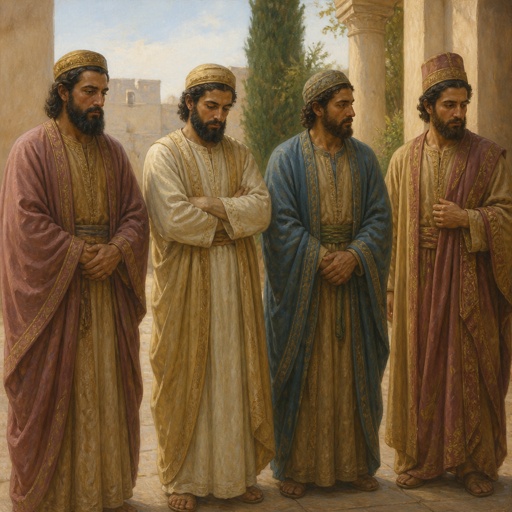
"And Parmashta, and Arisai, and Aridai, and Vajezatha," - Esther 9:9

Esther 9:31 - "To confirm these days of Purim in their times appointed, according as Mordecai the Jew and Esther the queen had enjoined them, and as they had decreed for themselves and for their seed, the matters of the fastings and their cry."

Esther 9:13 - "Then said Esther, If it please the king, let it be granted to the Jews which are in Shushan to do to morrow also according unto this day's decree, and let Haman's ten sons be hanged upon the gallows."
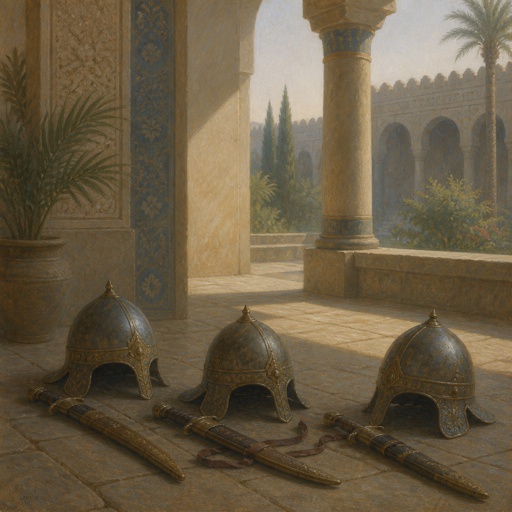
"And Parshandatha, and Dalphon, and Aspatha," - Esther 9:7
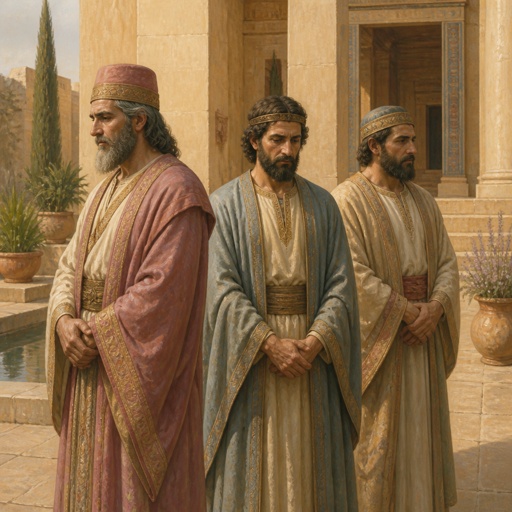
"And Poratha, and Adalia, and Aridatha," - Esther 9:8

Esther 9:6 - "And in Shushan the palace the Jews slew and destroyed five hundred men."

Esther 9:11 - "On that day the number of those that were slain in Shushan the palace was brought before the king."

Esther 9:23 - "And the Jews undertook to do as they had begun, and as Mordecai had written unto them;"

Esther 9:10 - "The ten sons of Haman the son of Hammedatha, the enemy of the Jews, slew they; but on the spoil laid they not their hand."
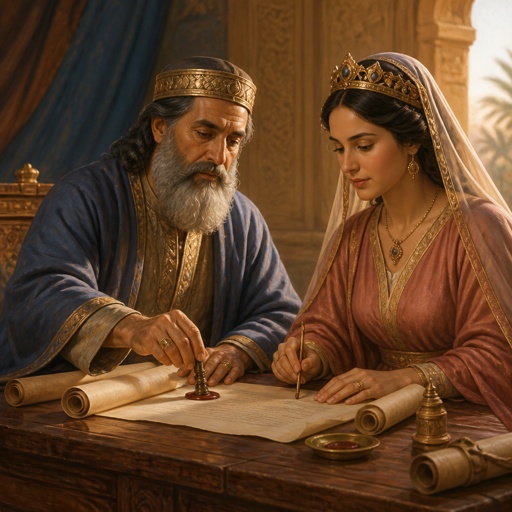
"Then Esther the queen, the daughter of Abihail, and Mordecai the Jew, wrote with all authority, to confirm this second letter of Purim." - Esther 9:29

Esther 9:17 - "On the thirteenth day of the month Adar; and on the fourteenth day of the same rested they, and made it a day of feasting and gladness."

Esther 1:9 - "Also Vashti the queen made a feast for the women in the royal house which belonged to king Ahasuerus."

Esther 9:14 - "And the king commanded it so to be done: and the decree was given at Shushan; and they hanged Haman's ten sons."

Esther 9:21 - "To stablish this among them, that they should keep the fourteenth day of the month Adar, and the fifteenth day of the same, yearly,"

Esther 9:3 - "And all the rulers of the provinces, and the lieutenants, and the deputies, and officers of the king, helped the Jews; because the fear of Mordecai fell upon them."

Esther 9:30 - "And he sent the letters unto all the Jews, to the hundred twenty and seven provinces of the kingdom of Ahasuerus, with words of peace and truth,"

Esther 9:12 - "¶ And the king said unto Esther the queen, The Jews have slain and destroyed five hundred men in Shushan the palace, and the ten sons of Haman; what have they done in the rest of the king's provinces? now what is thy petition? and it shall be granted thee: or what is thy request further? and it shall be done."

Esther 9:4 - "For Mordecai was great in the king's house, and his fame went out throughout all the provinces: for this man Mordecai waxed greater and greater."

Esther 9:5 - "Thus the Jews smote all their enemies with the stroke of the sword, and slaughter, and destruction, and did what they would unto those that hated them."

Esther 9:20 - "¶ And Mordecai wrote these things, and sent letters unto all the Jews that were in all the provinces of the king Ahasuerus, both nigh and far,"