Remembering the Deliverance: A Call to Celebration and Reflection
"To stablish this among them, that they should keep the fourteenth day of the month Adar, and the fifteenth day of the same, yearly," - Esther 9:21
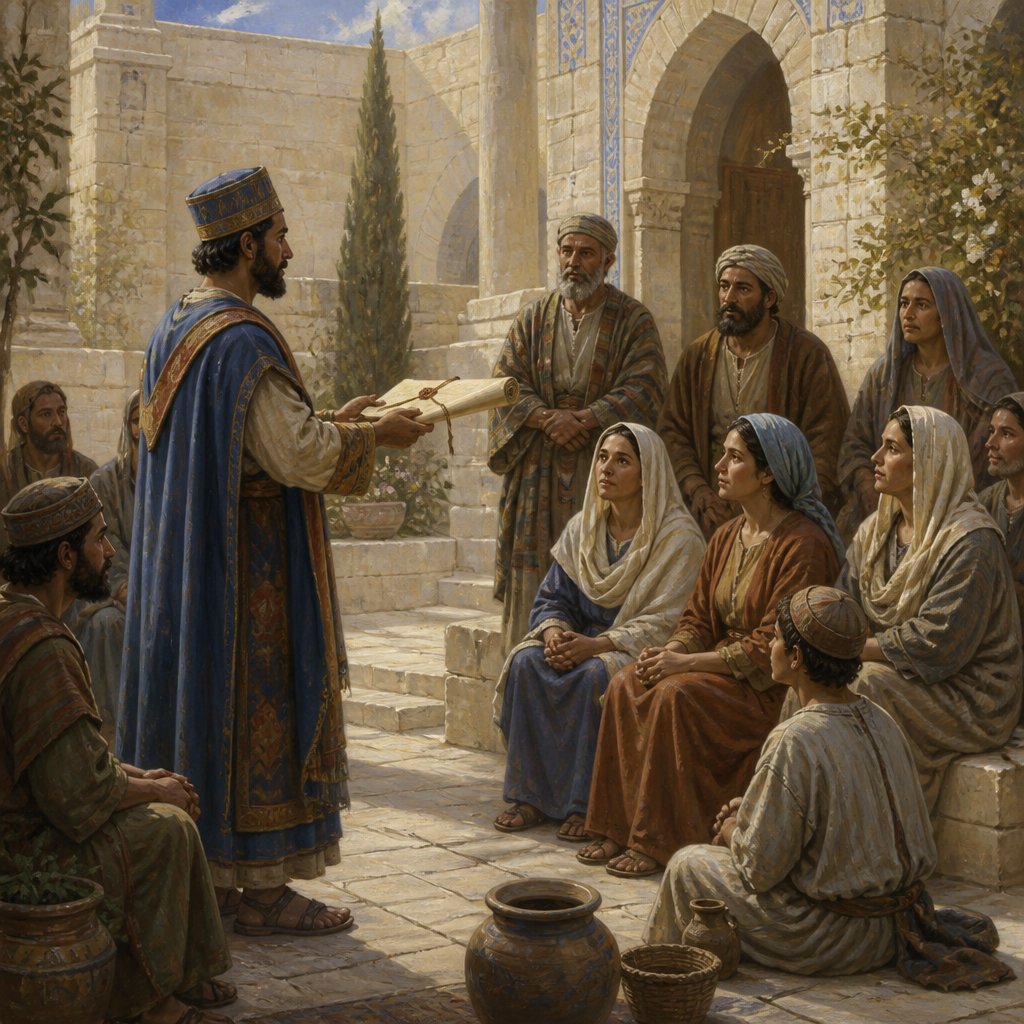
The book of Esther culminates in a powerful moment of victory and remembrance for the Jewish people, particularly encapsulated in Esther 9:21: "To stablish this among them, that they should keep the fourteenth day of the month Adar, and the fifteenth day of the same, yearly." This verse is not just a marker of time; it is a divine commandment to remember and celebrate the miraculous deliverance that God provided through the bravery of Esther and the strategic wisdom of Mordecai.
In examining this verse, we find that the days of Adar hold profound significance. They are set apart for the Jewish festival of Purim, a time when the Jewish people remember how they were spared from annihilation, an event that seemed impossible at the threat of Haman, the king's advisor. This historical context is crucial, for it sets the stage for understanding how we can apply the lessons of Esther to our lives today.
1. **Establishment of Remembrance**: The very act of establishing a remembrance serves multiple purposes. It calls the community together to acknowledge their past deliverance. In our own lives, celebrating milestones of God’s faithfulness plays a vital role in our spiritual growth. Regularly recalling how God has worked in our lives fosters a sense of gratitude and reinforces our faith.
2. **Encouragement in Trials**: The Jewish people faced grave peril, akin to trials we may encounter in our own lives. How often do we feel overwhelmed by our circumstances? The establishment of this festival serves as a reminder that God can turn our darkest moments into testimonies of His glory. As we reflect on the story of Esther, we see that God is at work, even when we cannot see Him, weaving together circumstances for our good and His purpose.
3. **Community and Solidarity**: The verse emphasizes the importance of communal remembrance. Esther’s actions in pleading for her people remind us of the significance of community in our faith journey. When we gather for worship, celebrations, or even in small groups, we not only share in joy but bear each other’s burdens. The celebration of Purim involves festivity, and during these times, we can be reminded of the strength found in unity.
4. **A Call to Joyful Celebration**: In keeping the fourteenth and fifteenth days of Adar, the Jewish people were commanded to celebrate with feasting and gladness. This spirit of joy reflects a profound truth in our relationship with God: we are called to rejoice in His goodness. It may not be during a festival, but daily, we can find reasons to celebrate God’s love and mercy in our lives. The joy of the Lord can be our strength, even amidst challenges.
5. **Legacy of Faithfulness**: The establishment of these days became a legacy for generations to follow. Esther 9:21 isn’t just a historical note; it speaks to the importance of establishing practices that sustain our faith across generations. In our families, the act of remembering God’s faithfulness can be as simple as sharing stories of His provision, establishing family prayer times, or creating traditions that honor His work in our lives.
In conclusion, Esther 9:21 calls us not only to remember a significant historical event but also to actively participate in rhythms of remembrance in our lives. As we reflect on how God delivered the Jewish people from Haman’s plot, let us consider how we can cultivate a spirit of celebration and gratitude. May we be emboldened by Esther’s courage and Mordecai’s wisdom, ensuring that we, too, anchor our lives in remembrance of God’s unfailing love and faithful deliverance.
Want to reflect more on Esther 9:21?
Continue your spiritual journey with Bible Chat — an AI-powered tool for exploring God's Word through conversation. Ask questions, discover connections, and deepen your understanding.
Get Our Apps


Esther 9:21 Artwork

Esther 9:21 - "To stablish this among them, that they should keep the fourteenth day of the month Adar, and the fifteenth day of the same, yearly,"
"To stablish this among them, that they should keep the fourteenth day of the month Adar, and the fifteenth day of the same, yearly," - Esther 9:21

Esther 4:9 - "And Hatach came and told Esther the words of Mordecai."

Esther 9:32 - "And the decree of Esther confirmed these matters of Purim; and it was written in the book."

Esther 9:9 - "And Parmashta, and Arisai, and Aridai, and Vajezatha,"

Esther 9:29 - "Then Esther the queen, the daughter of Abihail, and Mordecai the Jew, wrote with all authority, to confirm this second letter of Purim."

"And Hatach came and told Esther the words of Mordecai." - Esther 4:9

Esther 9:8 - "And Poratha, and Adalia, and Aridatha,"

Esther 9:7 - "And Parshandatha, and Dalphon, and Aspatha,"

"And the decree of Esther confirmed these matters of Purim; and it was written in the book." - Esther 9:32
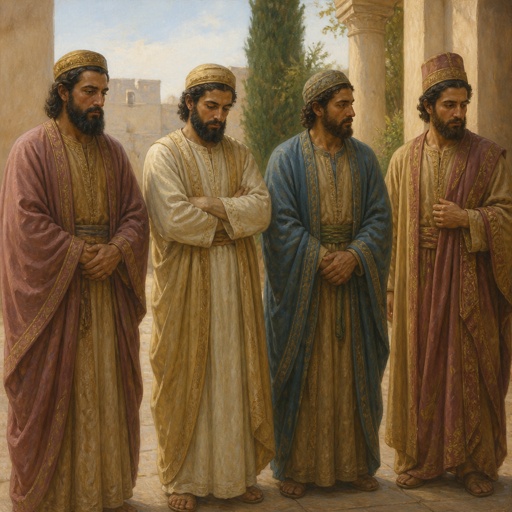
"And Parmashta, and Arisai, and Aridai, and Vajezatha," - Esther 9:9

Esther 1:21 - "And the saying pleased the king and the princes; and the king did according to the word of Memucan:"

Esther 9:31 - "To confirm these days of Purim in their times appointed, according as Mordecai the Jew and Esther the queen had enjoined them, and as they had decreed for themselves and for their seed, the matters of the fastings and their cry."

Esther 9:13 - "Then said Esther, If it please the king, let it be granted to the Jews which are in Shushan to do to morrow also according unto this day's decree, and let Haman's ten sons be hanged upon the gallows."

"And Parshandatha, and Dalphon, and Aspatha," - Esther 9:7
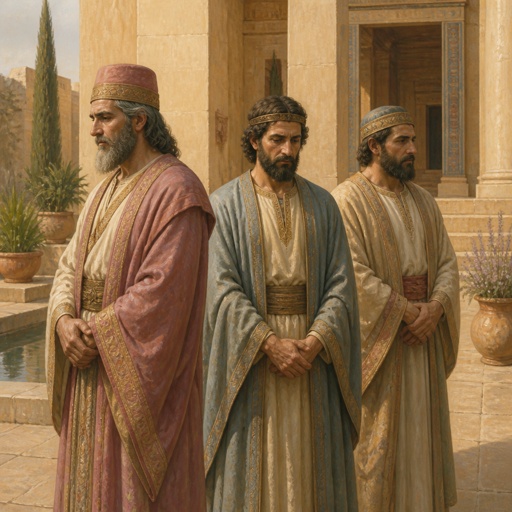
"And Poratha, and Adalia, and Aridatha," - Esther 9:8

Esther 9:6 - "And in Shushan the palace the Jews slew and destroyed five hundred men."

Esther 9:25 - "But when Esther came before the king, he commanded by letters that his wicked device, which he devised against the Jews, should return upon his own head, and that he and his sons should be hanged on the gallows."

Esther 9:11 - "On that day the number of those that were slain in Shushan the palace was brought before the king."

Esther 9:23 - "And the Jews undertook to do as they had begun, and as Mordecai had written unto them;"

Esther 9:10 - "The ten sons of Haman the son of Hammedatha, the enemy of the Jews, slew they; but on the spoil laid they not their hand."

"Then Esther the queen, the daughter of Abihail, and Mordecai the Jew, wrote with all authority, to confirm this second letter of Purim." - Esther 9:29

Esther 9:17 - "On the thirteenth day of the month Adar; and on the fourteenth day of the same rested they, and made it a day of feasting and gladness."

Esther 1:9 - "Also Vashti the queen made a feast for the women in the royal house which belonged to king Ahasuerus."

Esther 9:14 - "And the king commanded it so to be done: and the decree was given at Shushan; and they hanged Haman's ten sons."

Esther 9:3 - "And all the rulers of the provinces, and the lieutenants, and the deputies, and officers of the king, helped the Jews; because the fear of Mordecai fell upon them."

Esther 9:30 - "And he sent the letters unto all the Jews, to the hundred twenty and seven provinces of the kingdom of Ahasuerus, with words of peace and truth,"

Esther 9:12 - "¶ And the king said unto Esther the queen, The Jews have slain and destroyed five hundred men in Shushan the palace, and the ten sons of Haman; what have they done in the rest of the king's provinces? now what is thy petition? and it shall be granted thee: or what is thy request further? and it shall be done."

Esther 9:4 - "For Mordecai was great in the king's house, and his fame went out throughout all the provinces: for this man Mordecai waxed greater and greater."
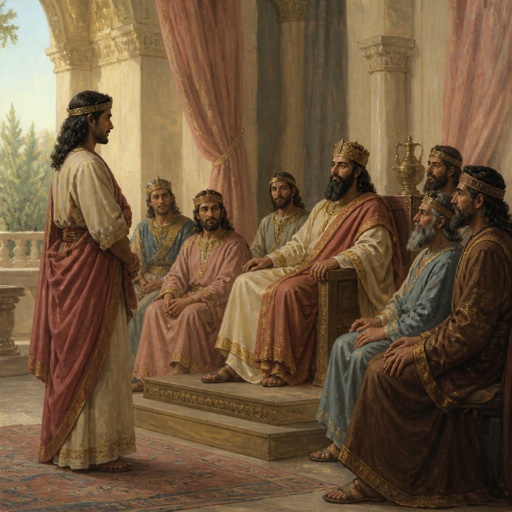
"And the saying pleased the king and the princes; and the king did according to the word of Memucan:" - Esther 1:21