The Joy of Deliverance: Celebrating God’s Faithfulness
"But the Jews that were at Shushan assembled together on the thirteenth day thereof, and on the fourteenth thereof; and on the fifteenth day of the same they rested, and made it a day of feasting and gladness." - Esther 9:18
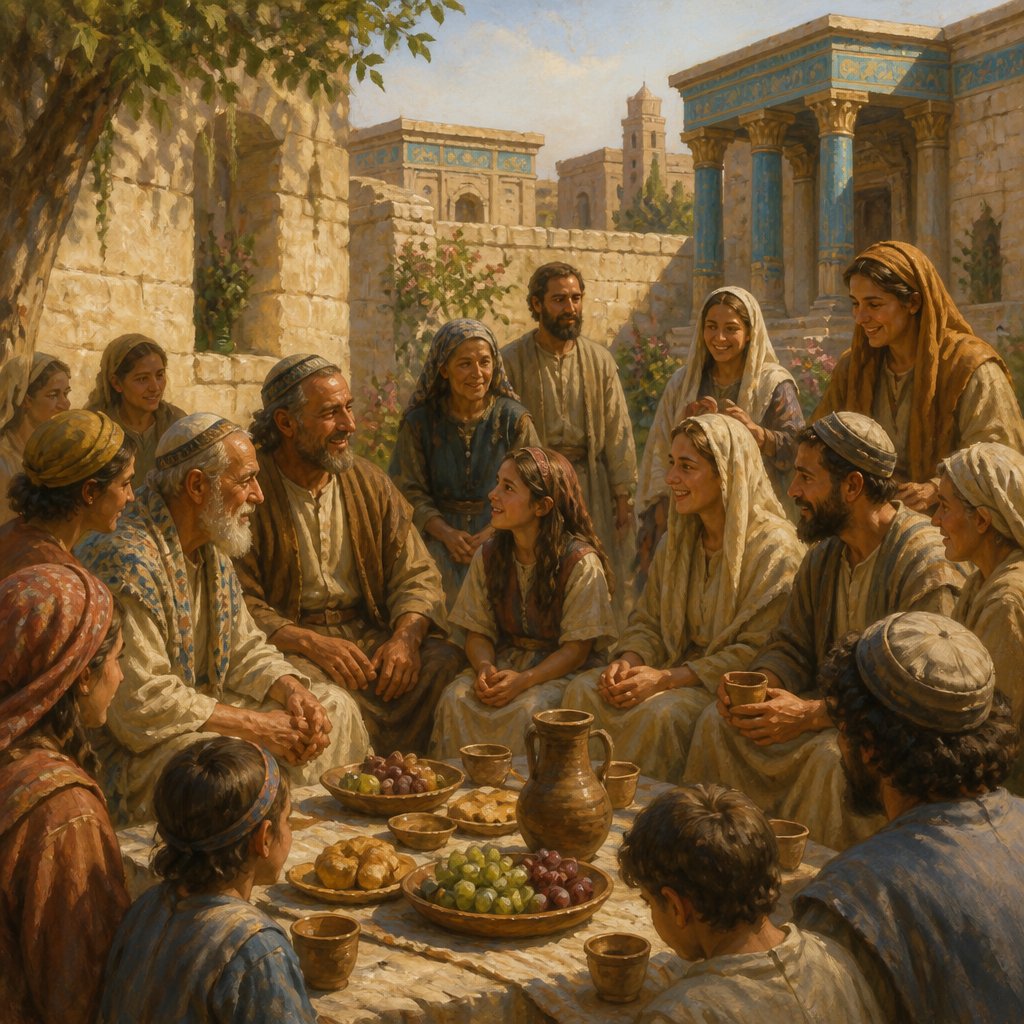
The verse Esther 9:18 says, "But the Jews that were at Shushan assembled together on the thirteenth day thereof, and on the fourteenth thereof; and on the fifteenth day of the same they rested, and made it a day of feasting and gladness." This passage captures a pivotal moment in the life of the Jewish people, a time of great peril turned to victory, and it invites us to reflect on the significance of celebration in the life of faith.
As we delve into the context of Esther 9, we find that it follows the occasion of divine intervention where the Jews, under the threat of annihilation orchestrated by the evil Haman, experienced God’s miraculous deliverance. This deliverance came not just as an escape from death but as a robust reminder of God’s sovereignty and faithfulness. The Jews responded to their extraordinary deliverance by commemorating it through the establishment of the festival of Purim, a word derived from “pur,” meaning lot, which Haman cast to decide the date of the Jews' destruction.
This moment of assembling together arises in the heart of Shushan, the royal city, perhaps symbolizing a place of significant challenges which they've transformed into a site of rejoicing. On the thirteenth day of Adar, the date set for their destruction, the Jews defended themselves and ultimately, prevailed. On the fourteenth day, they came together to rejoice in their survival, and ultimately, on the fifteenth day, they rested, making it a day of feasting and gladness. Each action serves a powerful purpose: gathering, celebrating, and resting.
In our modern lives, we too face predicaments that often seem insurmountable. The pressures of life, anxiety about the future, or facing the consequences of sin can feel like a heavy darkness enveloping our existence. When deliverance ultimately comes—whether it be healing, reconciliation, spiritual growth, or even a new direction—it is right and fitting to respond with a spirit of jubilation. Just as the Jews did in Shushan, we should mark our deliverance with joy and acknowledgment of God’s active role in our lives.
The act of celebration holds significance beyond mere revelry. It is a moment to reflect deeply on where we have been and how far God has brought us. It encourages the community to remember that, while they may have faced trials, there was a God who intervened on their behalf. In celebrating, we publicly declare God’s faithfulness, not only nourishing our hearts but also strengthening the faith of others—much like how the establishment of Purim served to remind every future generation of God’s providence.
As we consider rest, as noted in Esther 9:18, we find it is more than just pausing work; it represents the completion of a cycle. God rested on the seventh day of creation, not because He was weary, but as a model of satisfaction in His work. Following deliverance with rest acknowledges that God has completed a work in us. It calls us to reflect not on the chaos of life but to lean back and relish in the peace that comes from God (Philippians 4:7).
In moments where we face our own battles, may we remember the story of Esther and the Jews in Shushan. They not only grieved their potential fate but ultimately rejoiced completely in their deliverance. We must be diligent to observe the rhythms of celebration, rest, and reflection in our lives. Let’s examine our own experiences, seeking to recognize God’s hand at work, and responding with the same spirit of feasting and gladness. Let our lives be full of moments that declare to ourselves and the world: He is faithful, He is good, and His deliverance is worth celebrating.
Want to reflect more on Esther 9:18?
Continue your spiritual journey with Bible Chat — an AI-powered tool for exploring God's Word through conversation. Ask questions, discover connections, and deepen your understanding.
Get Our Apps


Esther 9:18 Artwork

Esther 9:18 - "But the Jews that were at Shushan assembled together on the thirteenth day thereof, and on the fourteenth thereof; and on the fifteenth day of the same they rested, and made it a day of feasting and gladness."
"But the Jews that were at Shushan assembled together on the thirteenth day thereof, and on the fourteenth thereof; and on the fifteenth day of the same they rested, and made it a day of feasting and gladness." - Esther 9:18

Esther 4:9 - "And Hatach came and told Esther the words of Mordecai."

Esther 9:32 - "And the decree of Esther confirmed these matters of Purim; and it was written in the book."

Esther 9:9 - "And Parmashta, and Arisai, and Aridai, and Vajezatha,"

Esther 9:29 - "Then Esther the queen, the daughter of Abihail, and Mordecai the Jew, wrote with all authority, to confirm this second letter of Purim."

"And Hatach came and told Esther the words of Mordecai." - Esther 4:9

Esther 9:8 - "And Poratha, and Adalia, and Aridatha,"

Esther 9:7 - "And Parshandatha, and Dalphon, and Aspatha,"

"And the decree of Esther confirmed these matters of Purim; and it was written in the book." - Esther 9:32
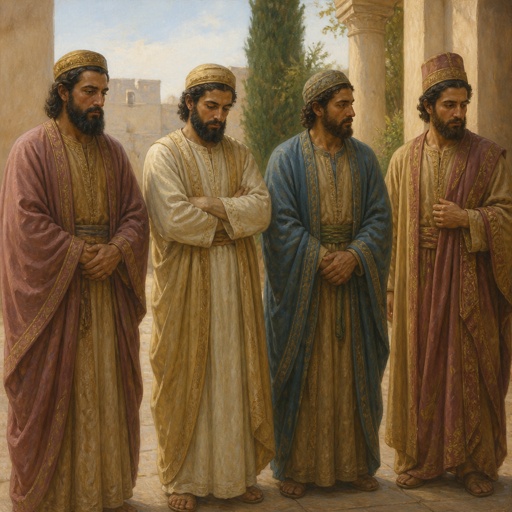
"And Parmashta, and Arisai, and Aridai, and Vajezatha," - Esther 9:9

Esther 9:31 - "To confirm these days of Purim in their times appointed, according as Mordecai the Jew and Esther the queen had enjoined them, and as they had decreed for themselves and for their seed, the matters of the fastings and their cry."

Esther 9:13 - "Then said Esther, If it please the king, let it be granted to the Jews which are in Shushan to do to morrow also according unto this day's decree, and let Haman's ten sons be hanged upon the gallows."
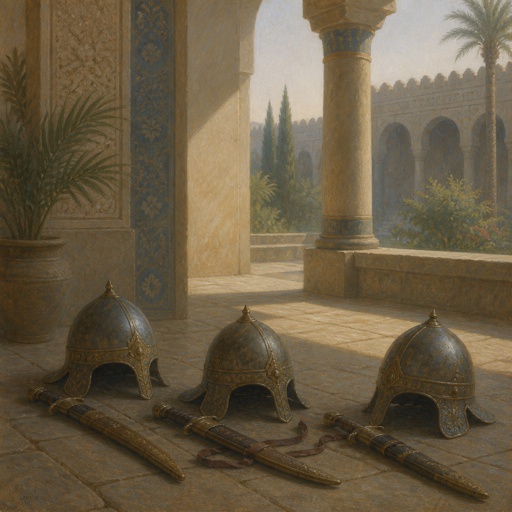
"And Parshandatha, and Dalphon, and Aspatha," - Esther 9:7
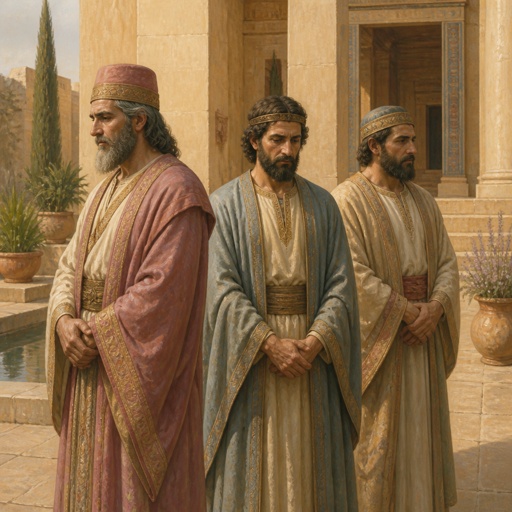
"And Poratha, and Adalia, and Aridatha," - Esther 9:8

Esther 9:6 - "And in Shushan the palace the Jews slew and destroyed five hundred men."

Esther 9:25 - "But when Esther came before the king, he commanded by letters that his wicked device, which he devised against the Jews, should return upon his own head, and that he and his sons should be hanged on the gallows."

Esther 9:11 - "On that day the number of those that were slain in Shushan the palace was brought before the king."

Esther 9:23 - "And the Jews undertook to do as they had begun, and as Mordecai had written unto them;"

Esther 9:10 - "The ten sons of Haman the son of Hammedatha, the enemy of the Jews, slew they; but on the spoil laid they not their hand."
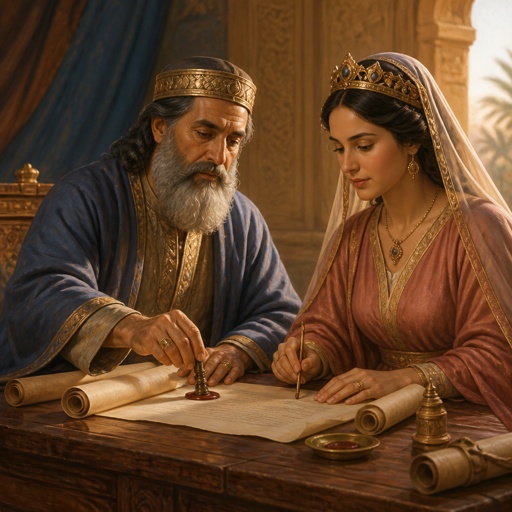
"Then Esther the queen, the daughter of Abihail, and Mordecai the Jew, wrote with all authority, to confirm this second letter of Purim." - Esther 9:29

Esther 9:17 - "On the thirteenth day of the month Adar; and on the fourteenth day of the same rested they, and made it a day of feasting and gladness."

Esther 1:9 - "Also Vashti the queen made a feast for the women in the royal house which belonged to king Ahasuerus."

Esther 9:14 - "And the king commanded it so to be done: and the decree was given at Shushan; and they hanged Haman's ten sons."

Esther 9:21 - "To stablish this among them, that they should keep the fourteenth day of the month Adar, and the fifteenth day of the same, yearly,"

Esther 9:3 - "And all the rulers of the provinces, and the lieutenants, and the deputies, and officers of the king, helped the Jews; because the fear of Mordecai fell upon them."

Esther 9:30 - "And he sent the letters unto all the Jews, to the hundred twenty and seven provinces of the kingdom of Ahasuerus, with words of peace and truth,"

Esther 9:12 - "¶ And the king said unto Esther the queen, The Jews have slain and destroyed five hundred men in Shushan the palace, and the ten sons of Haman; what have they done in the rest of the king's provinces? now what is thy petition? and it shall be granted thee: or what is thy request further? and it shall be done."
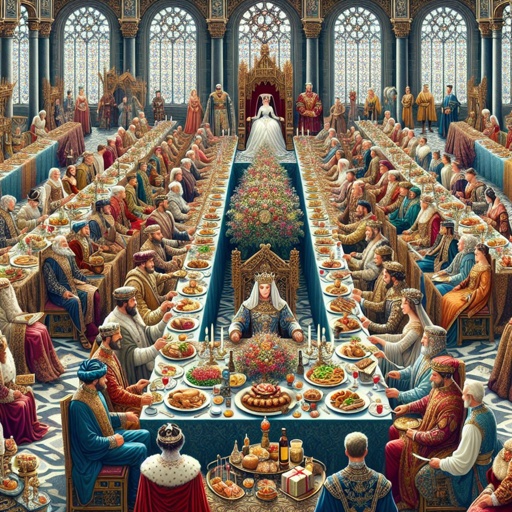
Esther 2:18 - "Then the king made a great feast unto all his princes and his servants, even Esther's feast; and he made a release to the provinces, and gave gifts, according to the state of the king."

Esther 9:4 - "For Mordecai was great in the king's house, and his fame went out throughout all the provinces: for this man Mordecai waxed greater and greater."