The Unfolding of Divine Justice: Lessons from Esther 7:8
"Then the king returned out of the palace garden into the place of the banquet of wine; and Haman was fallen upon the bed whereon Esther was. Then said the king, Will he force the queen also before me in the house? As the word went out of the king's mouth, they covered Haman's face." - Esther 7:8
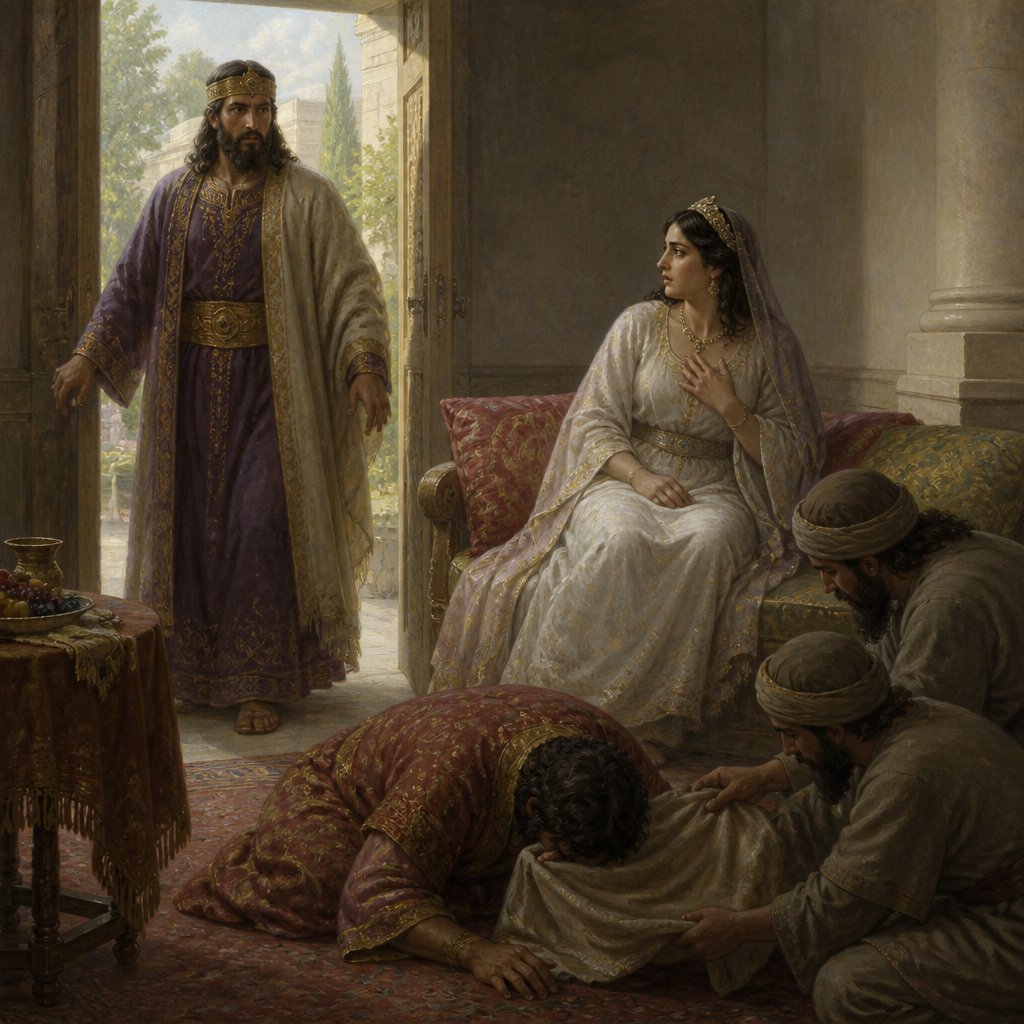
In the book of Esther, we find a narrative that illustrates not only divine providence but also the stark realities of justice and retribution. Esther 7:8 states, "Then the king returned out of the palace garden into the place of the banquet of wine; and Haman was fallen upon the bed whereon Esther was. Then said the king, Will he force the queen also before me in the house? As the word went out of the king's mouth, they covered Haman's face." This single verse sets the stage for a dramatic turn of events and compels us to reflect on the themes of honor, justice, and the inescapable consequences of our actions.
To understand the gravity of this scene, we must consider the context of Esther's journey. An orphaned Jewish girl, Esther was chosen for her beauty to be the queen of Persia, tasked with a pivotal role during a time of existential threat to her people. Her bravery to approach the king uninvited could have resulted in her death, yet she obeyed God's prompting. Her risks paid off when she eventually reveals her Jewish identity to the king while confronting Haman, the villain orchestrating the destruction of her people. Esther's life exemplifies a person obedient to God's calling, even in perilous situations.
In this moment, as the king returns from the garden to the banquet, he finds Haman in a position of utter disgrace — fallen on the bed where Esther reclined. This was an act that could be interpreted as insolent, a testament to Haman’s audacity and arrogance. He had already plotted the annihilation of the Jews and was now trying to manipulate the circumstances to his favor. As he attempted to ingratiate himself with Queen Esther, the king's reaction was one of horrified disbelief. "Will he force the queen also before me in the house?" The intensity of the question reflects the king's protective instinct and reveals not just Haman's miscalculation but the depth of his impending judgment.
The immediate consequence of this encounter is striking — Haman’s face was covered, signifying judgment and shame. In Persian culture, covering a face was a symbolic act of removing one’s identity and honor. Haman, who once stood high in authority, suddenly finds himself at the mercy of the very queen he sought to betray. The moral fabric throughout Scripture illustrates that pride goes before destruction (Proverbs 16:18); Haman’s hubris left him vulnerable to God’s justice.
As believers, we are reminded that God is a righteous judge, and although it may seem that the wicked prosper, there will come a day when true justice will be served. Haman’s fate is a warning not just to him but to all of us. It highlights the dangers involved in scheming against others and manipulating circumstances for selfish gain. Furthermore, it encourages us to trust in God’s providence, knowing that He is aware of every plot against us and has the ultimate power to protect and vindicate.
In applying this verse to our lives, ask yourself: Are there situations where you have been tempted to manipulate or scheme against others for personal gain? Are you aware of the potential consequences that such actions can bring upon you? More poignantly, how can we mirror Esther’s faith and courage in the face of adversity? In our own lives, let us choose clarity over deception, integrity over dishonor, and trust over fear.
In conclusion, Esther 7:8 serves as a powerful reminder of the impermanence of human authority and the enduring nature of divine justice. As we immerse ourselves in this narrative, may we strive for righteousness and stand firm in our beliefs, allowing God to fight our battles and vindicate us in His perfect timing.
Want to reflect more on Esther 7:8?
Continue your spiritual journey with Bible Chat — an AI-powered tool for exploring God's Word through conversation. Ask questions, discover connections, and deepen your understanding.
Get Our Apps


Esther 7:8 Artwork

Esther 7:8 - "Then the king returned out of the palace garden into the place of the banquet of wine; and Haman was fallen upon the bed whereon Esther was. Then said the king, Will he force the queen also before me in the house? As the word went out of the king's mouth, they covered Haman's face."
"Then the king returned out of the palace garden into the place of the banquet of wine; and Haman was fallen upon the bed whereon Esther was. Then said the king, Will he force the queen also before me in the house? As the word went out of the king's mouth, they covered Haman's face." - Esther 7:8

Esther 8:7 - "¶ Then the king Ahasuerus said unto Esther the queen and to Mordecai the Jew, Behold, I have given Esther the house of Haman, and him they have hanged upon the gallows, because he laid his hand upon the Jews."

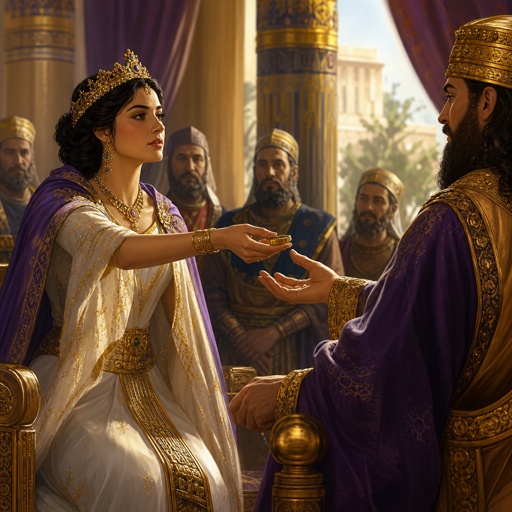
Esther 8:4 - "Then the king held out the golden sceptre toward Esther. So Esther arose, and stood before the king,"

Esther 5:7 - "Then answered Esther, and said, My petition and my request is;"

Esther 7:1 - "So the king and Haman came to banquet with Esther the queen."

Esther 7:6 - "And Esther said, The adversary and enemy is this wicked Haman. Then Haman was afraid before the king and the queen."

Esther 8:1 - "On that day did the king Ahasuerus give the house of Haman the Jews' enemy unto Esther the queen. And Mordecai came before the king; for Esther had told what he was unto her."
Esther 8:4

Esther 9:8 - "And Poratha, and Adalia, and Aridatha,"

Esther 7:2 - "And the king said again unto Esther on the second day at the banquet of wine, What is thy petition, queen Esther? and it shall be granted thee: and what is thy request? and it shall be performed, even to the half of the kingdom."

Esther 7:7 - "¶ And the king arising from the banquet of wine in his wrath went into the palace garden: and Haman stood up to make request for his life to Esther the queen; for he saw that there was evil determined against him by the king."
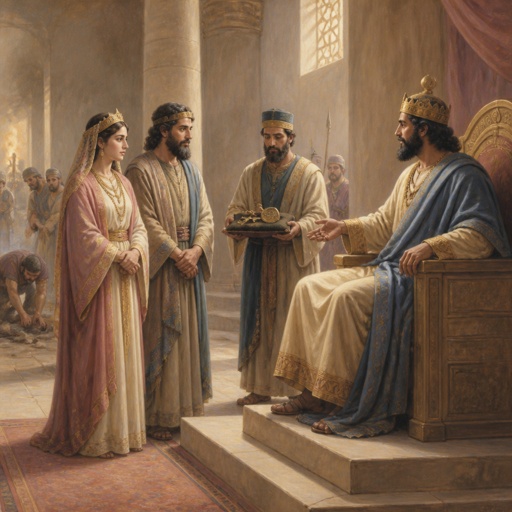
"¶ Then the king Ahasuerus said unto Esther the queen and to Mordecai the Jew, Behold, I have given Esther the house of Haman, and him they have hanged upon the gallows, because he laid his hand upon the Jews." - Esther 8:7

Esther 9:7 - "And Parshandatha, and Dalphon, and Aspatha,"

"So the king and Haman came to banquet with Esther the queen." - Esther 7:1
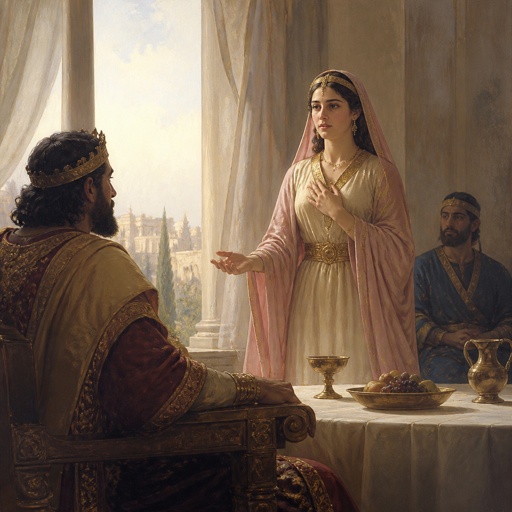
"Then answered Esther, and said, My petition and my request is;" - Esther 5:7

Esther 8:16 - "The Jews had light, and gladness, and joy, and honour."

Esther 7:5 - "¶ Then the king Ahasuerus answered and said unto Esther the queen, Who is he, and where is he, that durst presume in his heart to do so?"
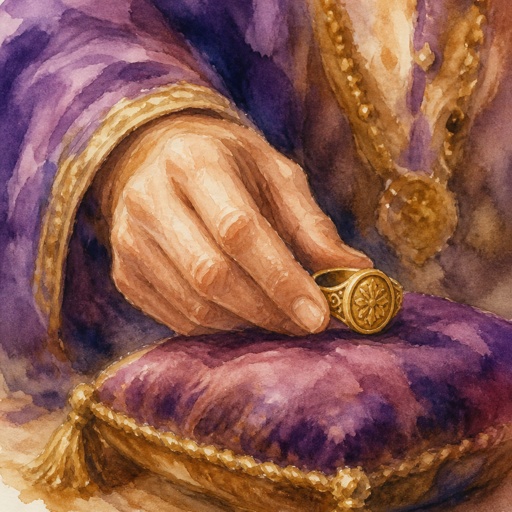
Esther 8:2 focus on the ring

"Then the king held out the golden sceptre toward Esther. So Esther arose, and stood before the king," - Esther 8:4

Esther 8:2 - "And the king took off his ring, which he had taken from Haman, and gave it unto Mordecai. And Esther set Mordecai over the house of Haman."
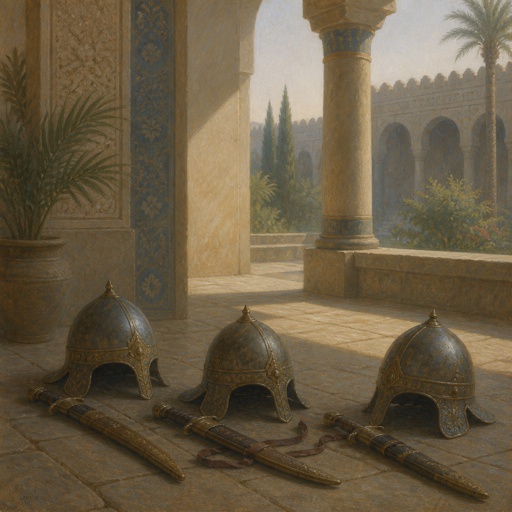
"And Parshandatha, and Dalphon, and Aspatha," - Esther 9:7
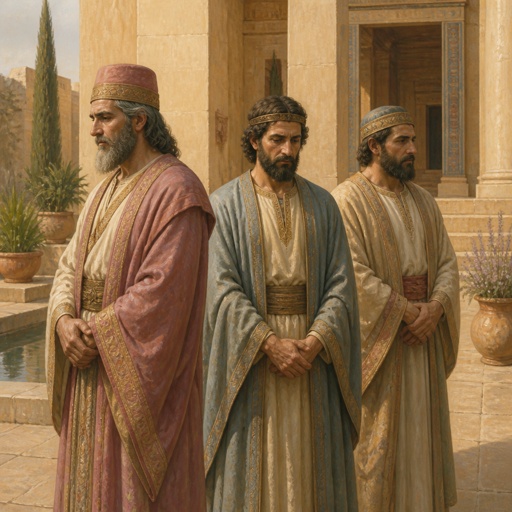
"And Poratha, and Adalia, and Aridatha," - Esther 9:8

Esther 8:3 - "¶ And Esther spake yet again before the king, and fell down at his feet, and besought him with tears to put away the mischief of Haman the Agagite, and his device that he had devised against the Jews."

Esther 6:7 - "And Haman answered the king, For the man whom the king delighteth to honour,"

"And Esther said, The adversary and enemy is this wicked Haman. Then Haman was afraid before the king and the queen." - Esther 7:6

Esther 7:3 - "Then Esther the queen answered and said, If I have found favour in thy sight, O king, and if it please the king, let my life be given me at my petition, and my people at my request:"

Esther 7:10 - "So they hanged Haman on the gallows that he had prepared for Mordecai. Then was the king's wrath pacified."

Esther 2:7 - "And he brought up Hadassah, that is, Esther, his uncle's daughter: for she had neither father nor mother, and the maid was fair and beautiful; whom Mordecai, when her father and mother were dead, took for his own daughter."

Esther 2:8 - "¶ So it came to pass, when the king's commandment and his decree was heard, and when many maidens were gathered together unto Shushan the palace, to the custody of Hegai, that Esther was brought also unto the king's house, to the custody of Hegai, keeper of the women."