Courage in Uncertainty: The Call of Esther
"And they told to Mordecai Esther's words." - Esther 4:12
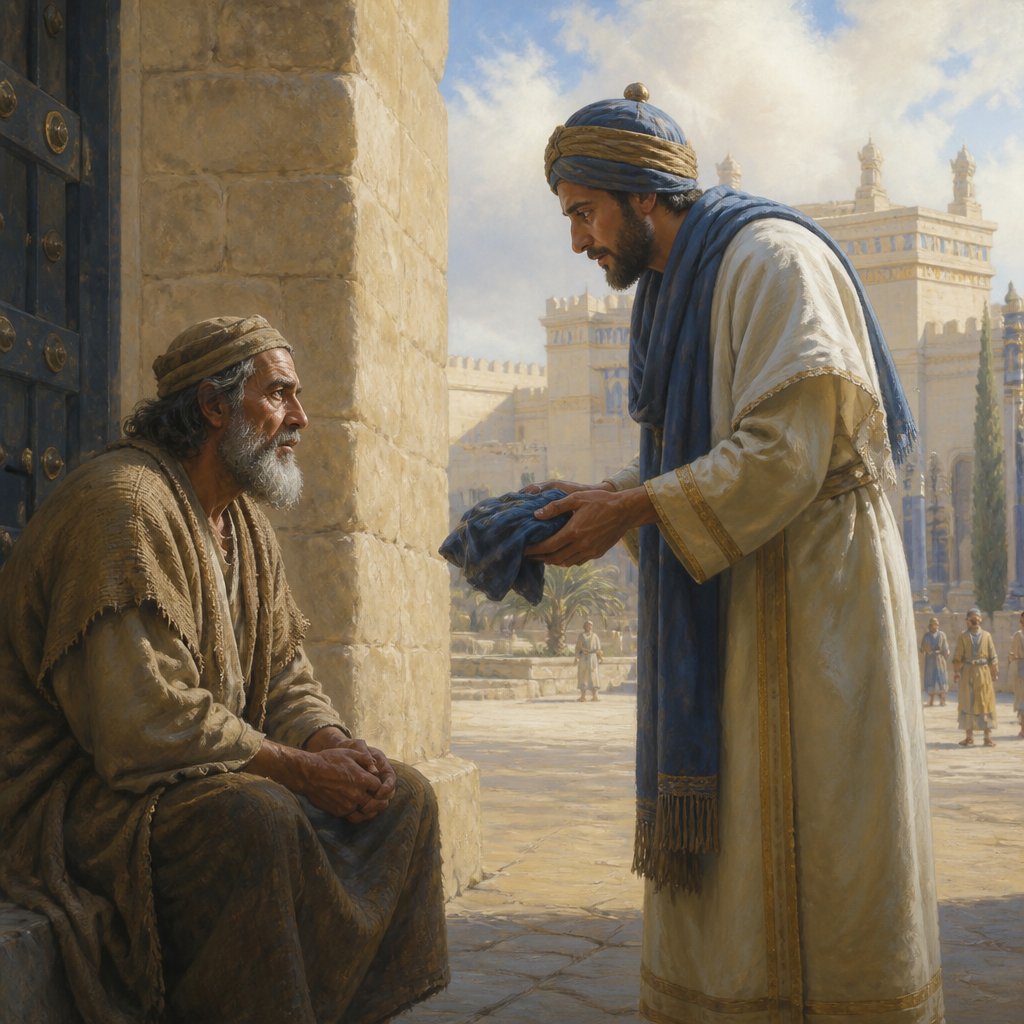
Esther 4:12 says, "And they told to Mordecai Esther's words." This seemingly simple phrase encapsulates a moment of profound tension and life-altering decision-making in the Book of Esther. It invites us to delve deeper into the story of Esther, a young Jewish woman thrust into the palace of King Xerxes, who must find the courage to act on behalf of her people at a perilous moment in history.
The backdrop of this narrative is steeped in desperation and danger. Haman, the king's advisor, has conspired to destroy the Jewish people, and through Mordecai—Esther's uncle and guardian—she learns that her silence could lead to the annihilation of her community. Yet, the call to speak and stand up is laden with turmoil. Esther is not just a quiet maiden; she has ascended to royalty but finds herself caught in a web of favoritism, fear, and looming violence against her kin.
We find in Esther's response a mixture of fear, reality, and a hint of hope. She grapples with the implications of stepping into the king’s court uninvited—an act that could cost her life. This is not merely a moment of personal risk; it is also a moment that tests her identity, purpose, and devotion to God and her people. This dilemma ultimately echoes one of life's pivotal truths: the call to courage often comes wrapped in uncertainty.
Mordecai’s declaration, preceding Esther's response, resonates with weighty implications: "...who knoweth whether thou art come to the kingdom for such a time as this?" (Esther 4:14). This rhetorical question propels Esther—and us—into self-reflection regarding our moments of divine opportunity. It questions our understanding of purpose and our willingness to act when called upon, especially in the face of fear.
As believers, we too are often presented with moments that require us to weigh our commitment to God against the comforts of our circumstances. In the contemporary world, it can feel daunting to advocate for our faith amidst an environment that often feels hostile or indifferent to biblical truth. We might wonder: What can we do when our faith compels us to act, yet our circumstances lead us to hesitate?
Mordecai’s response reminds us of the providential oversight God has in our lives. Esther was not just a random choice; her rise to the throne was part of a divine plan. When Mordecai implores her, he underscores the idea that she might possess the influence necessary to change the outcome for her people, thus reinstating Esther’s significance within God’s greater purpose. Similarly, in our lives, we are called to assess our own positions and talents—what influence do we possess, and how can it be used for God’s glory and for the benefit of others?
The phrase "And they told to Mordecai Esther’s words" signifies communication and collaboration. It embodies the idea that God often works through community. When Esther relays her concerns about Haman's decree, she engages in dialogue that empowers collective action, showing the importance of unity in confronting adversity.
In moments of fear and uncertainty, let us be reminded of Esther’s courage to rise against the oppression of her people. She had the choice of silence—a passive existence beneath oppression—but instead, she chose the daunting path of action. Her faith, cultured through the influences of her upbringing with Mordecai, would not allow her to stand idly by.
As we move through our lives, may we take pause to evaluate shouldering responsibilities as Esther did. What may seem like small acts of courage in our everyday settings can collectively contribute to great movements of divine justice and mercy. Let us share our words, as Esther did, and recognize the critical moments in our lives to act, speak, and stand boldly in faith for God’s glory.
Want to reflect more on Esther 4:12?
Continue your spiritual journey with Bible Chat — an AI-powered tool for exploring God's Word through conversation. Ask questions, discover connections, and deepen your understanding.
Get Our Apps


Esther 4:12 Artwork

Esther 4:12 - "And they told to Mordecai Esther's words."
"And they told to Mordecai Esther's words." - Esther 4:12

Esther 8:4 - "Then the king held out the golden sceptre toward Esther. So Esther arose, and stood before the king,"

Esther 4:15 - "¶ Then Esther bade them return Mordecai this answer,"

Esther 4:9 - "And Hatach came and told Esther the words of Mordecai."

Esther 4:10 - "¶ Again Esther spake unto Hatach, and gave him commandment unto Mordecai;"

Esther 4:17 - "So Mordecai went his way, and did according to all that Esther had commanded him."

Esther 8:4

"And Hatach came and told Esther the words of Mordecai." - Esther 4:9

"¶ Then Esther bade them return Mordecai this answer," - Esther 4:15

Esther 4:13 - "Then Mordecai commanded to answer Esther, Think not with thyself that thou shalt escape in the king's house, more than all the Jews."

Esther 5:4 - "And Esther answered, If it seem good unto the king, let the king and Haman come this day unto the banquet that I have prepared for him."

"Then the king held out the golden sceptre toward Esther. So Esther arose, and stood before the king," - Esther 8:4

Esther 4:5 - "Then called Esther for Hatach, one of the king's chamberlains, whom he had appointed to attend upon her, and gave him a commandment to Mordecai, to know what it was, and why it was."

"¶ Again Esther spake unto Hatach, and gave him commandment unto Mordecai;" - Esther 4:10

Esther 5:12 - "Haman said moreover, Yea, Esther the queen did let no man come in with the king unto the banquet that she had prepared but myself; and to morrow am I invited unto her also with the king."

"So Mordecai went his way, and did according to all that Esther had commanded him." - Esther 4:17

Esther 6:12 - "¶ And Mordecai came again to the king's gate. But Haman hasted to his house mourning, and having his head covered."
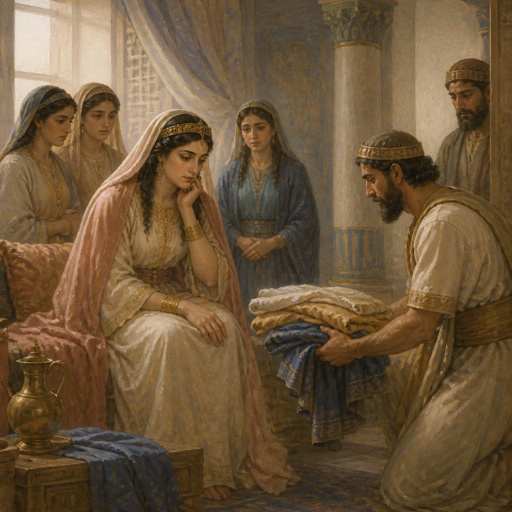
"¶ So Esther's maids and her chamberlains came and told it her. Then was the queen exceedingly grieved; and she sent raiment to clothe Mordecai, and to take away his sackcloth from him: but he received it not." - Esther 4:4

Esther 4:6 - "So Hatach went forth to Mordecai unto the street of the city, which was before the king's gate."

Esther 4:4 - "¶ So Esther's maids and her chamberlains came and told it her. Then was the queen exceedingly grieved; and she sent raiment to clothe Mordecai, and to take away his sackcloth from him: but he received it not."

Esther 9:12 - "¶ And the king said unto Esther the queen, The Jews have slain and destroyed five hundred men in Shushan the palace, and the ten sons of Haman; what have they done in the rest of the king's provinces? now what is thy petition? and it shall be granted thee: or what is thy request further? and it shall be done."

Esther 4:2 - "And came even before the king's gate: for none might enter into the king's gate clothed with sackcloth."

Esther 4:8 - "Also he gave him the copy of the writing of the decree that was given at Shushan to destroy them, to shew it unto Esther, and to declare it unto her, and to charge her that she should go in unto the king, to make supplication unto him, and to make request before him for her people."

Esther 8:12 - "Upon one day in all the provinces of king Ahasuerus, namely, upon the thirteenth day of the twelfth month, which is the month Adar."

Esther 1:12 - "But the queen Vashti refused to come at the king's commandment by his chamberlains: therefore was the king very wroth, and his anger burned in him."

"Then Mordecai commanded to answer Esther, Think not with thyself that thou shalt escape in the king's house, more than all the Jews." - Esther 4:13

Esther 2:4 - "And let the maiden which pleaseth the king be queen instead of Vashti. And the thing pleased the king; and he did so."

Esther 9:4 - "For Mordecai was great in the king's house, and his fame went out throughout all the provinces: for this man Mordecai waxed greater and greater."
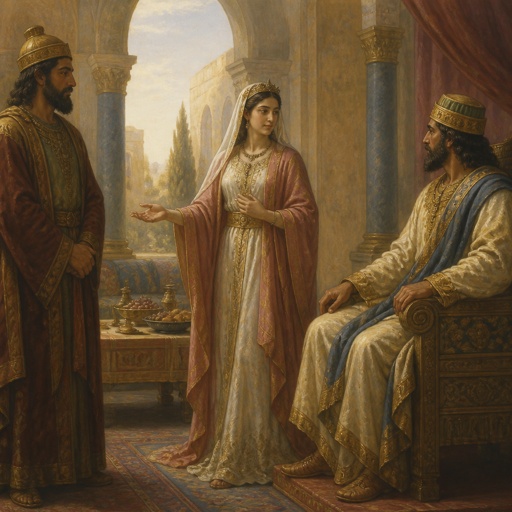
"And Esther answered, If it seem good unto the king, let the king and Haman come this day unto the banquet that I have prepared for him." - Esther 5:4