Standing Firm in the Face of Opposition: Lessons from Esther 3:8
"¶ And Haman said unto king Ahasuerus, There is a certain people scattered abroad and dispersed among the people in all the provinces of thy kingdom; and their laws are diverse from all people; neither keep they the king's laws: therefore it is not for the king's profit to suffer them." - Esther 3:8
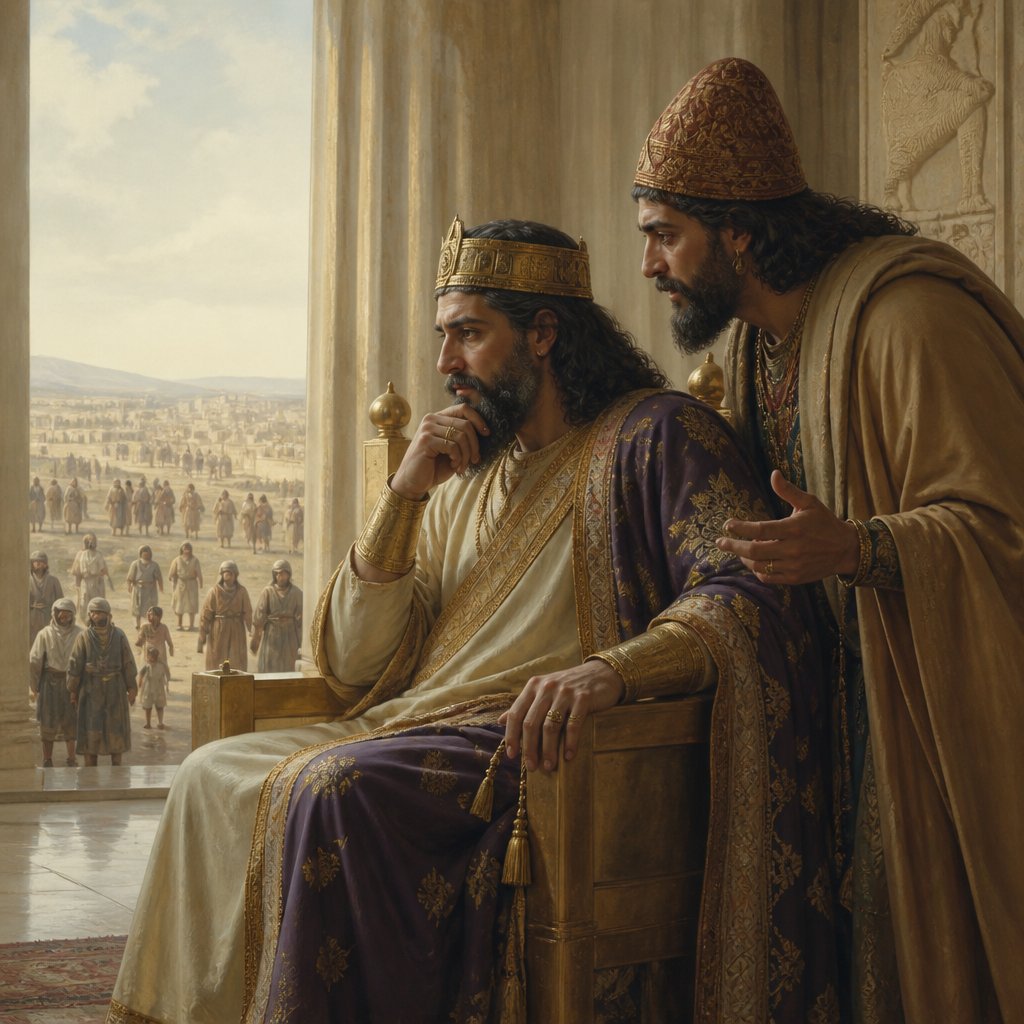
The story of Esther is a remarkable account of courage and divine providence, encapsulated in the turbulent interactions between Haman, King Ahasuerus, and the Jewish people. In Esther 3:8, Haman articulates a dangerous political strategy: "And Haman said unto king Ahasuerus, There is a certain people scattered abroad and dispersed among the people in all the provinces of thy kingdom; and their laws are diverse from all people; neither keep they the king's laws: therefore it is not for the king's profit to suffer them."
In this verse, we see Haman's shrewdness and manipulation. He presents a compelling case to the king, painting the Jewish people as a threat to stability and order within the empire. His statement underscores a two-fold reality: the existence of cultural and legal diversity within the kingdom and the potential for conflict arising from that diversity. Haman's strategy is to instill fear and suspicion in King Ahasuerus, using the differences of the Jewish people to justify a decree that ultimately seeks their annihilation.
In reading this passage, we are invited to consider themes of identity, belonging, and the experience of being perceived as 'other.' The Jewish people, chosen by God, were indeed a distinct community with their own laws and traditions, set apart from the majority of the Persian Empire. This distinction, which for them was a matter of faith and heritage, was painted by Haman as a liability, an adversarial stance against the king and his authority.
Haman’s appeal to the king is a reminder that righteous living can sometimes provoke hostility in a world that thrives on conformity. For believers today, this is a relevant concern. We also exist in a culture that often prioritizes uniformity, where divergent beliefs can lead to misunderstanding and persecution, much like with the Jewish people in Esther's time.
Haman's assertion that it is 'not for the king's profit to suffer them' resonates with a common refrain we hear in today's society: a passion for profit often eclipses the value of individual lives, beliefs, and rights. It raises the ethical question of how leaders and societies treat minority groups. As Christians, we are called to be steadfast in our beliefs, just as the Jews remained faithful to their identity despite Haman’s threats. Their very existence and commitment to their faith posed a challenge to the prevailing powers that sought to marginalize or extinguish them.
For Esther and her people, the threat demanded a response—not just passive acceptance of their fate but active engagement in prayer, fasting, and courageous action. Esther herself would need to confront an uncaring king and reveal her identity as a Jew to seek justice for her people. Likewise, believers today are invited to take up the mantle of intercession, standing in the gap for those who face oppression or injustice.
Furthermore, this passage brings to light the urgency of knowing who we are in Christ. We are described as a chosen generation, a royal priesthood (1 Peter 2:9), and it is vital to recognize the implications of such a calling in a world that may vilify our beliefs. Just as Esther became an instrument for God to safeguard her people, each of us is called to be a light in darkness, boldly proclaiming the truth of the Gospel while loving unconditionally those who oppose us.
In conclusion, Esther 3:8 prompts a deeper reflection on our response to opposition because of our identities as Christians. Let us remind ourselves that we are part of a larger narrative—one that intertwines God’s sovereignty with human action. Let us remain steadfast in our faith, proactively love those who may oppose us, and stand firmly for the truth that God has written in our hearts, knowing that He allows trials in our path as opportunities for us to shine His light brighter than ever. In moments of challenge, may we never forget that the God who placed us in this conflict is also the God who prepares the way for our victory.
Want to reflect more on Esther 3:8?
Continue your spiritual journey with Bible Chat — an AI-powered tool for exploring God's Word through conversation. Ask questions, discover connections, and deepen your understanding.
Get Our Apps


Esther 3:8 Artwork
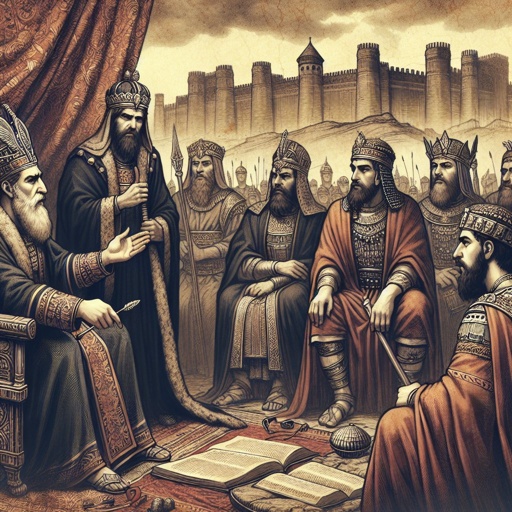
Esther 3:8 - "¶ And Haman said unto king Ahasuerus, There is a certain people scattered abroad and dispersed among the people in all the provinces of thy kingdom; and their laws are diverse from all people; neither keep they the king's laws: therefore it is not for the king's profit to suffer them."
"¶ And Haman said unto king Ahasuerus, There is a certain people scattered abroad and dispersed among the people in all the provinces of thy kingdom; and their laws are diverse from all people; neither keep they the king's laws: therefore it is not for the king's profit to suffer them." - Esther 3:8

Esther 8:3 - "¶ And Esther spake yet again before the king, and fell down at his feet, and besought him with tears to put away the mischief of Haman the Agagite, and his device that he had devised against the Jews."

Esther 8:4 - "Then the king held out the golden sceptre toward Esther. So Esther arose, and stood before the king,"

Esther 8:1 - "On that day did the king Ahasuerus give the house of Haman the Jews' enemy unto Esther the queen. And Mordecai came before the king; for Esther had told what he was unto her."

Esther 8:4

Esther 9:8 - "And Poratha, and Adalia, and Aridatha,"

Esther 8:7 - "¶ Then the king Ahasuerus said unto Esther the queen and to Mordecai the Jew, Behold, I have given Esther the house of Haman, and him they have hanged upon the gallows, because he laid his hand upon the Jews."

Esther 8:16 - "The Jews had light, and gladness, and joy, and honour."
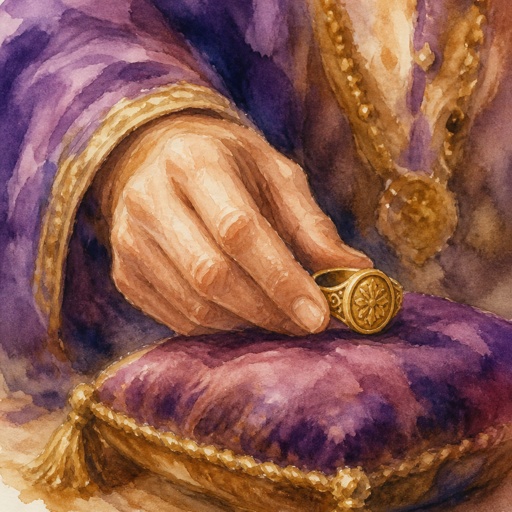
Esther 8:2 focus on the ring

"Then the king held out the golden sceptre toward Esther. So Esther arose, and stood before the king," - Esther 8:4

Esther 8:2 - "And the king took off his ring, which he had taken from Haman, and gave it unto Mordecai. And Esther set Mordecai over the house of Haman."

Esther 5:3 - "Then said the king unto her, What wilt thou, queen Esther? and what is thy request? it shall be even given thee to the half of the kingdom."
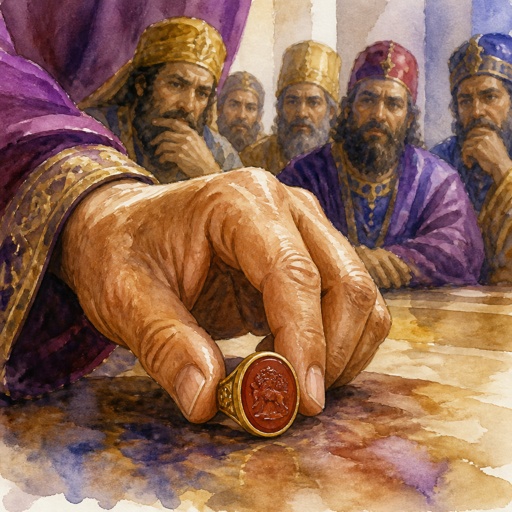
Esther 3:10 focus on ring
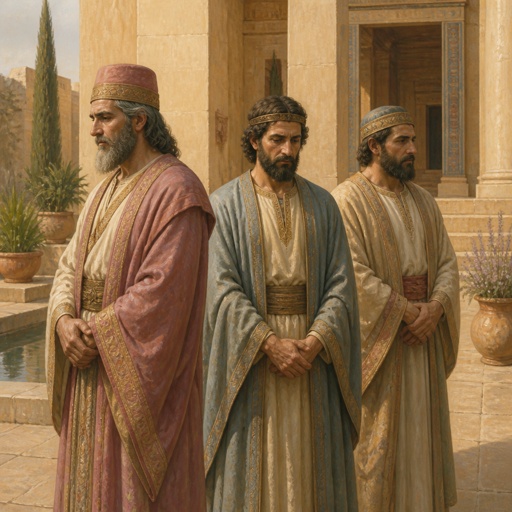
"And Poratha, and Adalia, and Aridatha," - Esther 9:8
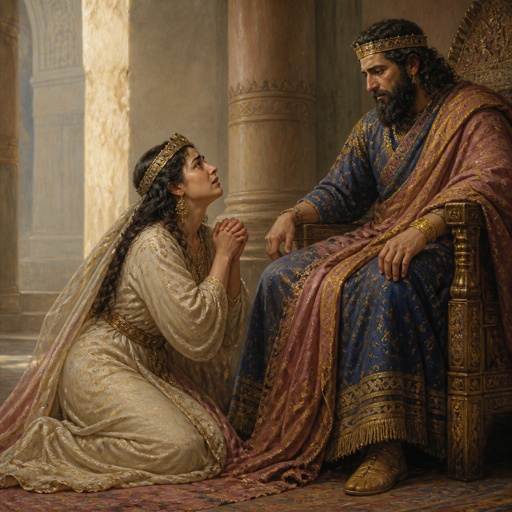
"¶ And Esther spake yet again before the king, and fell down at his feet, and besought him with tears to put away the mischief of Haman the Agagite, and his device that he had devised against the Jews." - Esther 8:3

Esther 3:3 - "Then the king's servants, which were in the king's gate, said unto Mordecai, Why transgressest thou the king's commandment?"

Esther 7:3 - "Then Esther the queen answered and said, If I have found favour in thy sight, O king, and if it please the king, let my life be given me at my petition, and my people at my request:"

Esther 2:8 - "¶ So it came to pass, when the king's commandment and his decree was heard, and when many maidens were gathered together unto Shushan the palace, to the custody of Hegai, that Esther was brought also unto the king's house, to the custody of Hegai, keeper of the women."

"On that day did the king Ahasuerus give the house of Haman the Jews' enemy unto Esther the queen. And Mordecai came before the king; for Esther had told what he was unto her." - Esther 8:1

Esther 8:8 - "Write ye also for the Jews, as it liketh you, in the king's name, and seal it with the king's ring: for the writing which is written in the king's name, and sealed with the king's ring, may no man reverse."

Esther 7:8 - "Then the king returned out of the palace garden into the place of the banquet of wine; and Haman was fallen upon the bed whereon Esther was. Then said the king, Will he force the queen also before me in the house? As the word went out of the king's mouth, they covered Haman's face."

Esther 4:8 - "Also he gave him the copy of the writing of the decree that was given at Shushan to destroy them, to shew it unto Esther, and to declare it unto her, and to charge her that she should go in unto the king, to make supplication unto him, and to make request before him for her people."

Esther 3:5 - "And when Haman saw that Mordecai bowed not, nor did him reverence, then was Haman full of wrath."
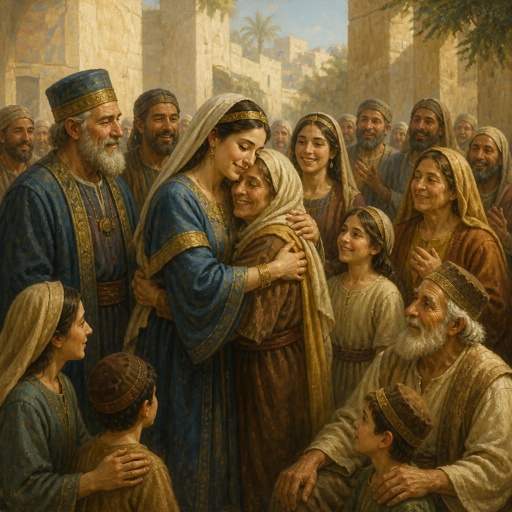
"The Jews had light, and gladness, and joy, and honour." - Esther 8:16

Esther 8:14 - "So the posts that rode upon mules and camels went out, being hastened and pressed on by the king's commandment. And the decree was given at Shushan the palace."

Esther 8:10 - "And he wrote in the king Ahasuerus' name, and sealed it with the king's ring, and sent letters by posts on horseback, and riders on mules, camels, and young dromedaries:"

Esther 8:12 - "Upon one day in all the provinces of king Ahasuerus, namely, upon the thirteenth day of the twelfth month, which is the month Adar."

Esther 9:3 - "And all the rulers of the provinces, and the lieutenants, and the deputies, and officers of the king, helped the Jews; because the fear of Mordecai fell upon them."

Esther 3:14 - "The copy of the writing for a commandment to be given in every province was published unto all people, that they should be ready against that day."