Standing Firm in the Face of Fury
"And when Haman saw that Mordecai bowed not, nor did him reverence, then was Haman full of wrath." - Esther 3:5
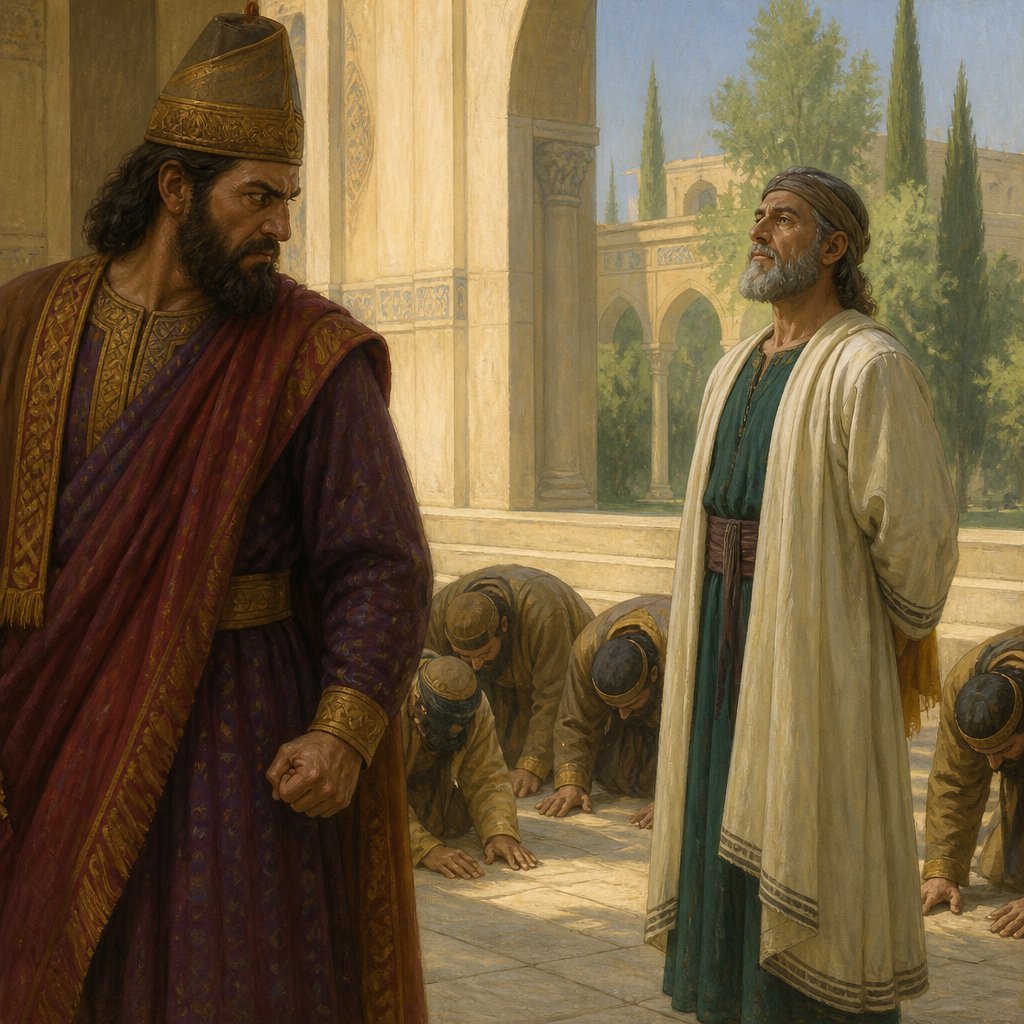
The narrative of Esther is one of courage, divine providence, and the stark realities of human emotions, encapsulated in a moment of conflict in Esther 3:5: "And when Haman saw that Mordecai bowed not, nor did him reverence, then was Haman full of wrath." This poignant verse reveals not just the interplay of power and pride but also serves as a reflection of our spiritual journey when faced with the forces that oppose our convictions.
At the heart of this passage is Mordecai, a man who understood the importance of loyalty to God over allegiance to man. In refusing to bow to Haman, the highest-ranking official in the Persian empire, Mordecai was not just defying a decree of respect; he was standing firm in his faith and identity as a Jew. This is a powerful stance, one that many might falter in. In a society where fitting in often takes precedence over standing out, Mordecai's refusal serves as a tremendous example of integrity. He knew that bowing down to Haman would not just be an act of fealty; it would signify a compromise of his beliefs.
Haman's furious wrath stands as a reminder of how often our convictions can provoke hostility in a world that prizes conformity over authenticity. It is critical to recognize that standing for our beliefs might ignite anger in others; however, our ultimate allegiance must be to God and His statutes. There is a distinct line drawn between the fear of man and the fear of the Lord—a boundary that Mordecai took seriously. This boldness can inspire us to evaluate our lives. Are there areas where we may be bowing down to societal pressures? Are we choosing convenience over conviction?
Haman's reaction—his wrath—illustrates the dangers of pride and entitlement. He perceived Mordecai's refusal to honor him not as a personal affront but as a challenge against his authority. Such wrath is often fueled by insecurities and the need for control. When we encounter individuals who unleash their fury upon us for our convictions, we must remember that their response speaks more to their character than ours. Haman’s fury was misplaced; it was a reflection of his own inability to cope with rejection and disrespect.
Moreover, this moment sets the stage for a much larger narrative of divine intervention and justice. Haman's rage leads him down a path of conspiracies and plots that ultimately culminate in his own downfall. This serves as a sobering reminder that wickedness, fueled by pride and fury, will not ultimately prevail. While Mordecai stood firm, trusting in God's sovereignty, Haman's life was destined to spiral into chaos—an outcome we sometimes see play out in our own lives. When individuals choose anger and vengeance over humility and grace, they often set themselves on a trajectory that leads to their own demise.
As followers of Christ, we are called to embody humility, love, and the strength of conviction. In taking a stand like Mordecai, we open ourselves to potential backlash, but we also position ourselves for God’s providential care. Remember that our battles are not against flesh and blood, but against the principalities that influence the world around us (Ephesians 6:12). When we refuse to bow to the pressures and expectations of society, we align ourselves with the purpose and destiny God has for us.
Conclusively, Esther 3:5 awakens us to the real challenges of faith and integrity in a world often ruled by fear and pride. Let us strive to honor God above all, stand firm in our faith, and trust in His mighty hand. In doing so, we follow the path set before us, much like Mordecai, confident that He works all things for the good of those who love Him and are called according to His purpose (Romans 8:28).
Want to reflect more on Esther 3:5?
Continue your spiritual journey with Bible Chat — an AI-powered tool for exploring God's Word through conversation. Ask questions, discover connections, and deepen your understanding.
Get Our Apps


Esther 3:5 Artwork

Esther 3:5 - "And when Haman saw that Mordecai bowed not, nor did him reverence, then was Haman full of wrath."
"And when Haman saw that Mordecai bowed not, nor did him reverence, then was Haman full of wrath." - Esther 3:5

Est 3:5 ESV (5) And when Haman saw that Mordecai did not bow down or pay homage to him, Haman was filled with fury.

Esther 5:3 - "Then said the king unto her, What wilt thou, queen Esther? and what is thy request? it shall be even given thee to the half of the kingdom."

Esther 5:5 - "Then the king said, Cause Haman to make haste, that he may do as Esther hath said. So the king and Haman came to the banquet that Esther had prepared."

Esther 5:7 - "Then answered Esther, and said, My petition and my request is;"

Esther 5:2

Esther 5:2 - "And it was so, when the king saw Esther the queen standing in the court, that she obtained favour in his sight: and the king held out to Esther the golden sceptre that was in his hand. So Esther drew near, and touched the top of the sceptre."

Esther 5:2

Esther 5:2
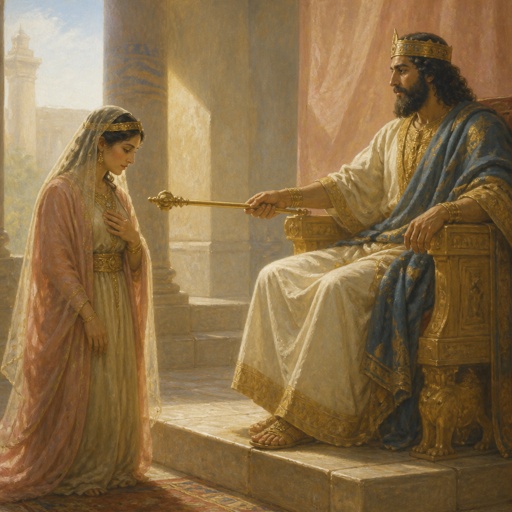
"Then said the king unto her, What wilt thou, queen Esther? and what is thy request? it shall be even given thee to the half of the kingdom." - Esther 5:3
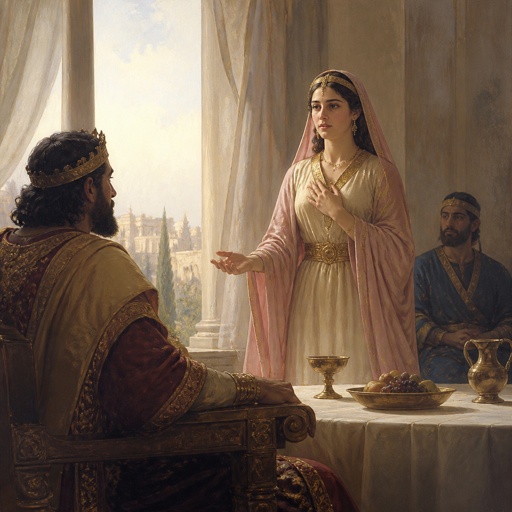
"Then answered Esther, and said, My petition and my request is;" - Esther 5:7

Esther 5:4 - "And Esther answered, If it seem good unto the king, let the king and Haman come this day unto the banquet that I have prepared for him."

Esther 7:5 - "¶ Then the king Ahasuerus answered and said unto Esther the queen, Who is he, and where is he, that durst presume in his heart to do so?"

Esther 5:2 - "And it was so, when the king saw Esther the queen standing in the court, that she obtained favour in his sight: and the king held out to Esther the golden sceptre that was in his hand. So Esther drew near, and touched the top of the sceptre."
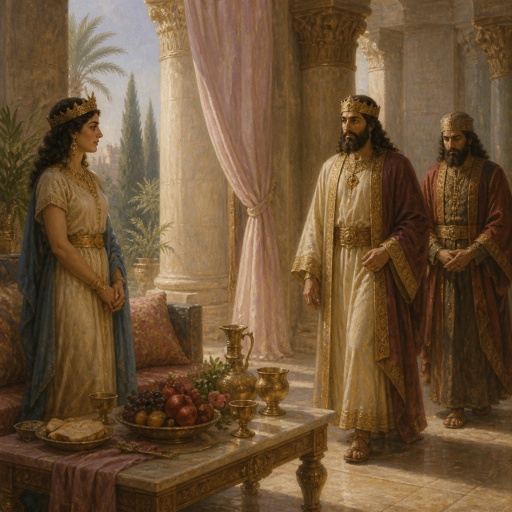
"Then the king said, Cause Haman to make haste, that he may do as Esther hath said. So the king and Haman came to the banquet that Esther had prepared." - Esther 5:5

Esther 4:5 - "Then called Esther for Hatach, one of the king's chamberlains, whom he had appointed to attend upon her, and gave him a commandment to Mordecai, to know what it was, and why it was."

Esther 5:6 - "¶ And the king said unto Esther at the banquet of wine, What is thy petition? and it shall be granted thee: and what is thy request? even to the half of the kingdom it shall be performed."
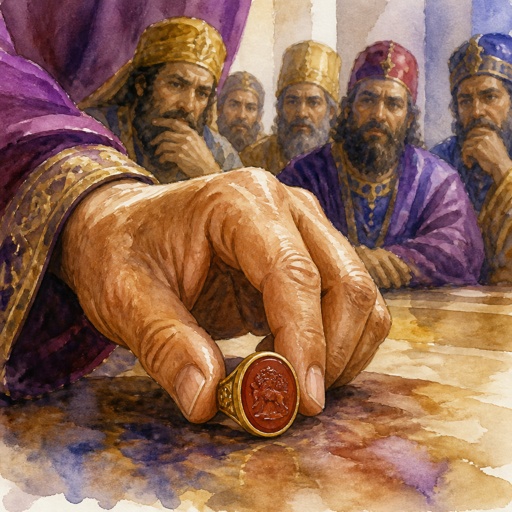
Esther 3:10 focus on ring

Esther 3:3 - "Then the king's servants, which were in the king's gate, said unto Mordecai, Why transgressest thou the king's commandment?"

Esther 5:12 - "Haman said moreover, Yea, Esther the queen did let no man come in with the king unto the banquet that she had prepared but myself; and to morrow am I invited unto her also with the king."

Esther 8:3 - "¶ And Esther spake yet again before the king, and fell down at his feet, and besought him with tears to put away the mischief of Haman the Agagite, and his device that he had devised against the Jews."

Esther 7:3 - "Then Esther the queen answered and said, If I have found favour in thy sight, O king, and if it please the king, let my life be given me at my petition, and my people at my request:"

Esther 5:1 - "Now it came to pass on the third day, that Esther put on her royal apparel, and stood in the inner court of the king's house, over against the king's house: and the king sat upon his royal throne in the royal house, over against the gate of the house."
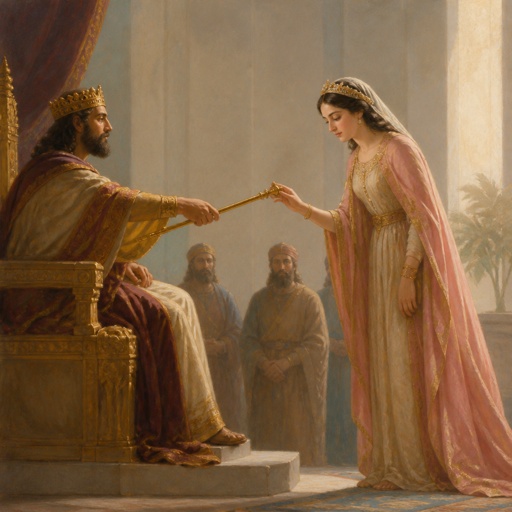
"And it was so, when the king saw Esther the queen standing in the court, that she obtained favour in his sight: and the king held out to Esther the golden sceptre that was in his hand. So Esther drew near, and touched the top of the sceptre." - Esther 5:2

Esther 6:5 - "And the king's servants said unto him, Behold, Haman standeth in the court. And the king said, Let him come in."

Esther 5:13 - "Yet all this availeth me nothing, so long as I see Mordecai the Jew sitting at the king's gate."

Esther 2:5 - "¶ Now in Shushan the palace there was a certain Jew, whose name was Mordecai, the son of Jair, the son of Shimei, the son of Kish, a Benjamite;"

Esther 5:10 - "Nevertheless Haman refrained himself: and when he came home, he sent and called for his friends, and Zeresh his wife."

"¶ Then the king Ahasuerus answered and said unto Esther the queen, Who is he, and where is he, that durst presume in his heart to do so?" - Esther 7:5