Standing Firm in Faith: The Courage of Mordecai
"And all the king's servants, that were in the king's gate, bowed, and reverenced Haman: for the king had so commanded concerning him. But Mordecai bowed not, nor did him reverence." - Esther 3:2
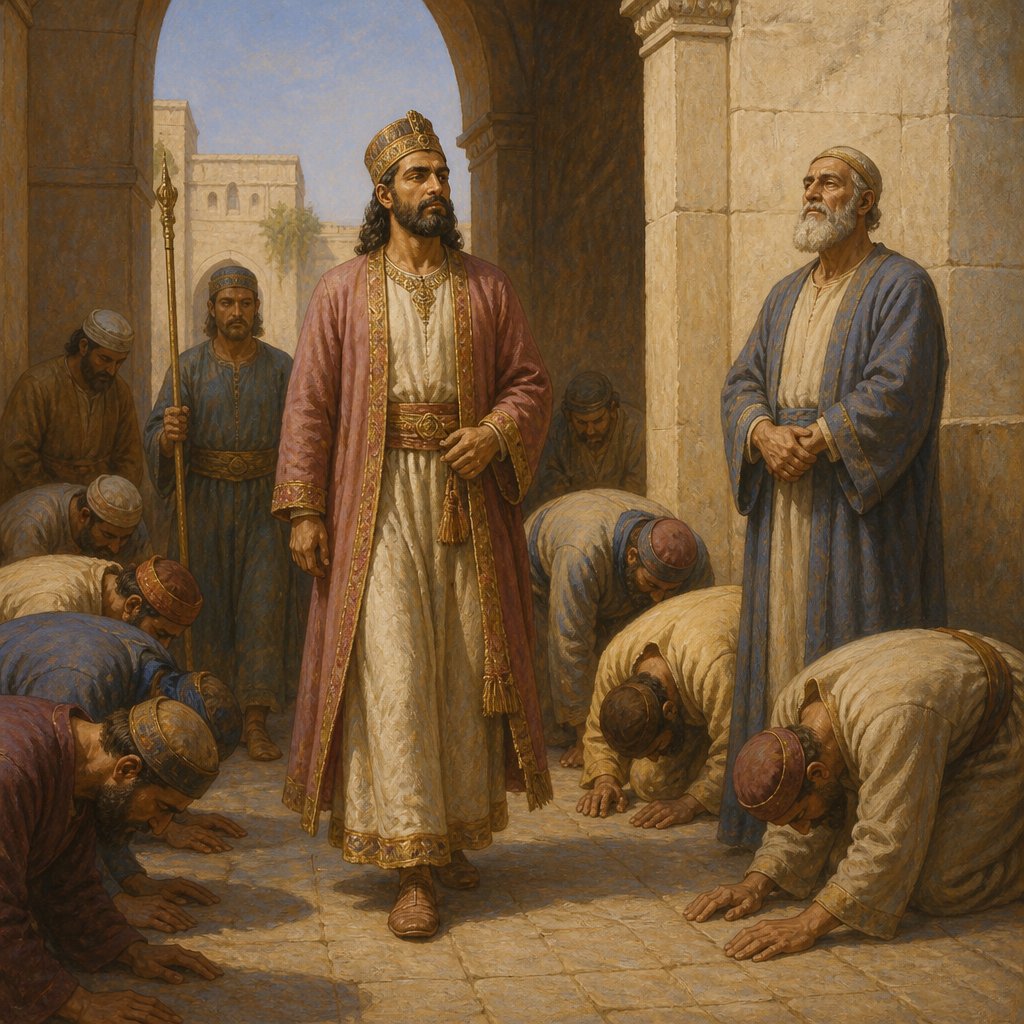
The story of Esther is one woven with themes of courage, identity, and the providential nature of God’s sovereignty. At the heart of this narrative lies Mordecai, whose actions in Esther 3:2 stand in stark contrast to the expectations of society and power. The verse states, "And all the king's servants, that were in the king's gate, bowed, and reverenced Haman: for the king had so commanded concerning him. But Mordecai bowed not, nor did him reverence."
In this instance, we are confronted with a critical moment that illustrates not only Mordecai’s faith and principles but also the heavy weight of compromise that many face when society imposes conformity. Haman, elevated to a position of great authority, demanded respect and reverence from all. Yet we see Mordecai's resolute stand — he refused to bow.
Why did Mordecai choose to reject the king’s command? The answer goes deeper than a mere act of defiance; it encompasses his identity as a Jew and his unwavering loyalty to God. To bow before Haman, an Amalekite (an enemy of the Israelites), would symbolize not only respect for a man but the potential for compromise in his faith. For Mordecai, this was not just about defying an order; it was about adhering to the first commandment — having no other gods before the true God.
Mordecai's narrative encourages us to reflect on our values and what we are willing to compromise for societal acceptance. In a world where peer pressure and authority can lead individuals to stray from their beliefs, Mordecai's boldness challenges us to examine our own lives. Are we bowing to cultural norms that contradict the principles of our faith? Are we, like Mordecai, willing to stand alone even when it means facing the potential consequences?
Standing firm in faith often comes with a cost. Mordecai's refusal to bow inevitably resulted in repercussions, as the narrative unfolds to reveal Haman’s vengeful decree against the Jewish people (Esther 3:5-6). There will be moments in our lives when standing up for our beliefs might invoke anger, retaliation or even isolation from those who do not understand our stance. Yet it is in these moments we find strength in knowing that God is with us, observing our faithfulness.
Moreover, Mordecai understood the gravity of his decision; by not bowing, he not only preserved his integrity but also set in motion events that would lead to the deliverance of his people. This principle demonstrates the ripple effect of a single act of faithfulness. Sometimes it takes one person’s courage to inspire others, and Mordecai’s example revives a spirit of resistance against oppression and injustice. In doing so, he exemplifies how God can use our unwavering faith to create miracles and drive change.
The story of Esther invites us to recognize our role in God’s unfolding plan. Though it may seem like we are standing alone at times, we must remember that our actions contribute to the broader narrative of God’s redemptive work. As Mordecai declared later in the book, “for such a time as this” (Esther 4:14), we too are placed in our contexts for a reason, called to act according to our convictions firmly anchored in faith.
In conclusion, let us earnestly seek the courage of Mordecai as we navigate our lives. May we refuse to bow to societal pressures that conflict with our values and convictions, knowing that our steadfastness might very well contribute to a larger purpose within the fabric of God’s plan. Stand strong, for your resolute faith can spark hope in the darkest of places.
Want to reflect more on Esther 3:2?
Continue your spiritual journey with Bible Chat — an AI-powered tool for exploring God's Word through conversation. Ask questions, discover connections, and deepen your understanding.
Get Our Apps


Esther 3:2 Artwork

Esther 3:2 - "And all the king's servants, that were in the king's gate, bowed, and reverenced Haman: for the king had so commanded concerning him. But Mordecai bowed not, nor did him reverence."
Est 3:2 ESV (2) And all the king's servants who were at the king's gate bowed down and paid homage to Haman, for the king had so commanded concerning him. But Mordecai did not bow down or pay homage.
"And all the king's servants, that were in the king's gate, bowed, and reverenced Haman: for the king had so commanded concerning him. But Mordecai bowed not, nor did him reverence." - Esther 3:2

Esther 2:22 - "And the thing was known to Mordecai, who told it unto Esther the queen; and Esther certified the king thereof in Mordecai's name."

Esther 5:3 - "Then said the king unto her, What wilt thou, queen Esther? and what is thy request? it shall be even given thee to the half of the kingdom."

Esther 5:2 - "And it was so, when the king saw Esther the queen standing in the court, that she obtained favour in his sight: and the king held out to Esther the golden sceptre that was in his hand. So Esther drew near, and touched the top of the sceptre."
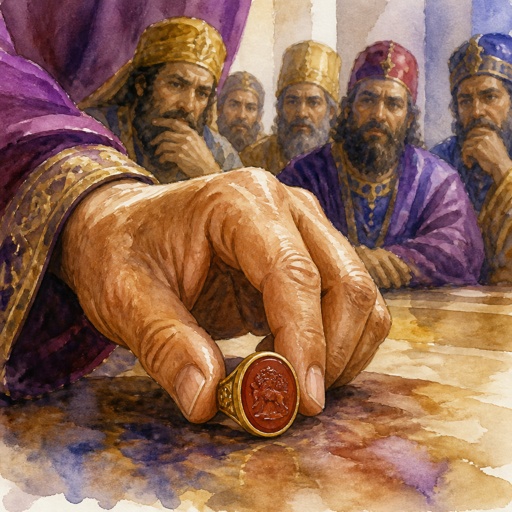
Esther 3:10 focus on ring

Esther 2:20 - "Esther had not yet shewed her kindred nor her people; as Mordecai had charged her: for Esther did the commandment of Mordecai, like as when she was brought up with him."

Esther 7:2 - "And the king said again unto Esther on the second day at the banquet of wine, What is thy petition, queen Esther? and it shall be granted thee: and what is thy request? and it shall be performed, even to the half of the kingdom."

Esther 5:2

Esther 5:2

Esther 5:2

Esther 2:11 - "And Mordecai walked every day before the court of the women's house, to know how Esther did, and what should become of her."

Esther 3:3 - "Then the king's servants, which were in the king's gate, said unto Mordecai, Why transgressest thou the king's commandment?"

Esther 2:10 - "Esther had not shewed her people nor her kindred: for Mordecai had charged her that she should not shew it."

Esther 8:3 - "¶ And Esther spake yet again before the king, and fell down at his feet, and besought him with tears to put away the mischief of Haman the Agagite, and his device that he had devised against the Jews."

Esther 5:2 - "And it was so, when the king saw Esther the queen standing in the court, that she obtained favour in his sight: and the king held out to Esther the golden sceptre that was in his hand. So Esther drew near, and touched the top of the sceptre."

"And the thing was known to Mordecai, who told it unto Esther the queen; and Esther certified the king thereof in Mordecai's name." - Esther 2:22

Esther 7:3 - "Then Esther the queen answered and said, If I have found favour in thy sight, O king, and if it please the king, let my life be given me at my petition, and my people at my request:"

Esther 2:16 - "So Esther was taken unto king Ahasuerus into his house royal in the tenth month, which is the month Tebeth, in the seventh year of his reign."

Esther 8:2 - "And the king took off his ring, which he had taken from Haman, and gave it unto Mordecai. And Esther set Mordecai over the house of Haman."
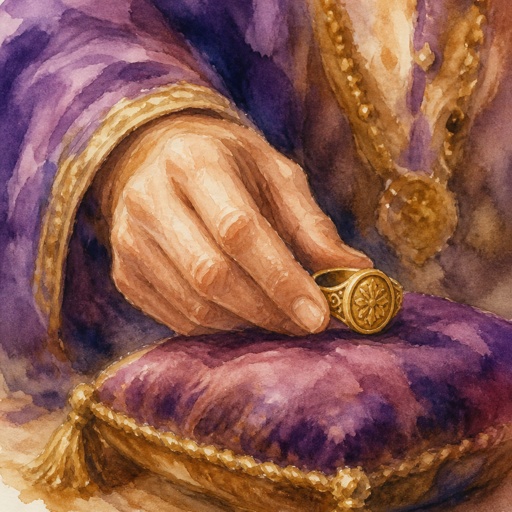
Esther 8:2 focus on the ring

Esther 3:5 - "And when Haman saw that Mordecai bowed not, nor did him reverence, then was Haman full of wrath."

Esther 2:15 - "¶ Now when the turn of Esther, the daughter of Abihail the uncle of Mordecai, who had taken her for his daughter, was come to go in unto the king, she required nothing but what Hegai the king's chamberlain, the keeper of the women, appointed. And Esther obtained favour in the sight of all them that looked upon her."

Esther 2:3 - "And let the king appoint officers in all the provinces of his kingdom, that they may gather together all the fair young virgins unto Shushan the palace, to the house of the women, unto the custody of Hege the king's chamberlain, keeper of the women; and let their things for purification be given them:"

Esther 2:2 - "Then said the king's servants that ministered unto him, Let there be fair young virgins sought for the king:"

Esther 9:3 - "And all the rulers of the provinces, and the lieutenants, and the deputies, and officers of the king, helped the Jews; because the fear of Mordecai fell upon them."

Esther 3:14 - "The copy of the writing for a commandment to be given in every province was published unto all people, that they should be ready against that day."

Esther 3:11 - "And the king said unto Haman, The silver is given to thee, the people also, to do with them as it seemeth good to thee."

Esther 3:10 - "And the king took his ring from his hand, and gave it unto Haman the son of Hammedatha the Agagite, the Jews' enemy."