The Weight of Authority: Recognizing Our Choices
"And the king took his ring from his hand, and gave it unto Haman the son of Hammedatha the Agagite, the Jews' enemy." - Esther 3:10
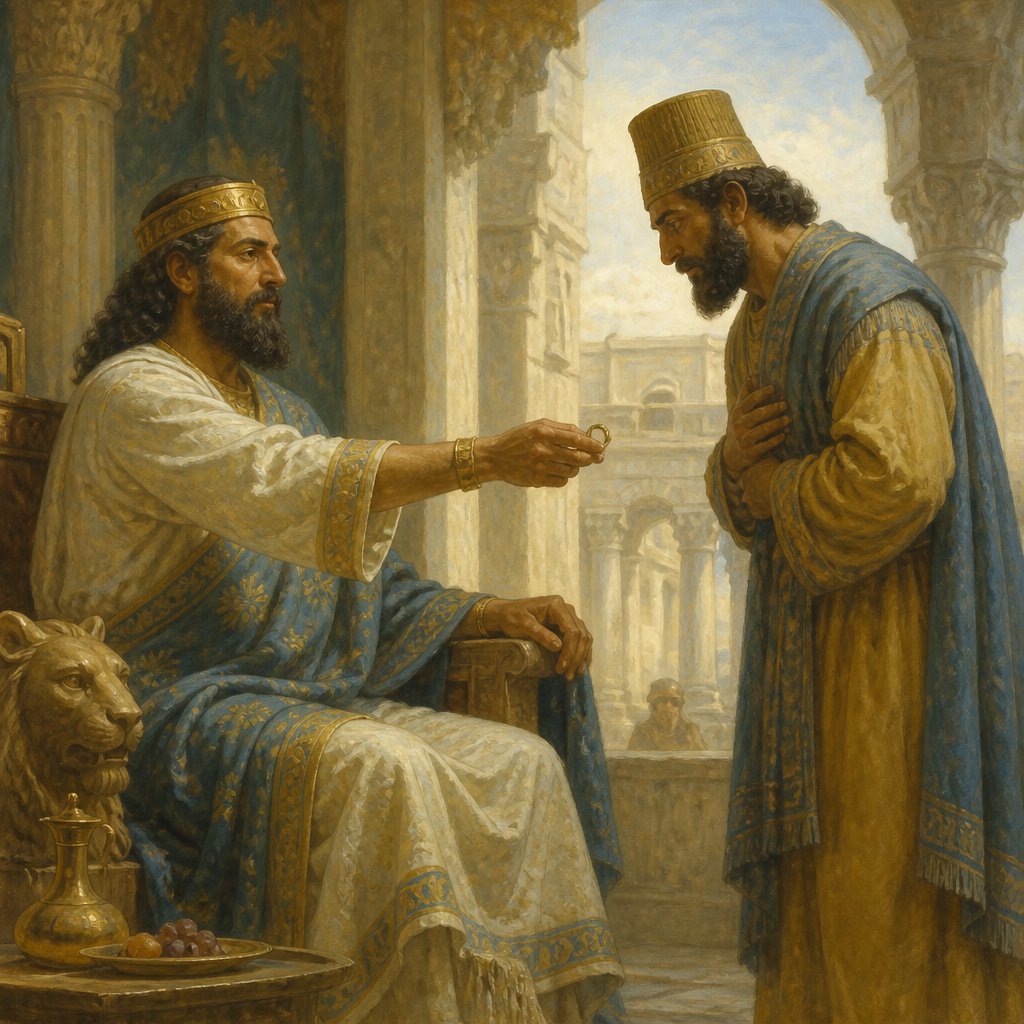
The profound narrative of Esther unveils itself with layers of courage, betrayal, and divine providence. In Esther 3:10, we encounter a pivotal moment that alters the trajectory of an entire people: "And the king took his ring from his hand, and gave it unto Haman the son of Hammedatha the Agagite, the Jews' enemy."
To understand the ramifications of this verse, we must first consider the cultural context of authority in the ancient Persian Empire. The king's ring symbolized his power and decree; to possess it was to hold the king's will in one’s own hands. Haman's rise to power not only marks the elevation of an ambitious man but also signifies a grave threat to the Jewish people. The decision of King Ahasuerus, in granting Haman authority, reveals the interplay of personal choices and broader consequences.
Haman, identified as "the Jews' enemy," represents more than just an individual full of malice; he embodies the spiritual and social challenges faced by God’s people throughout history. His ancestry as an Agagite alludes to a longstanding enmity with Israel, rooted in the historical conflict between the Amalekites and the Israelites. This detail is not incidental; it points to the ongoing struggles against forces that oppose God’s chosen. Herein lies a crucial lesson: no matter the hostility directed at us, God is ever in control, weaving His purposes even through the actions of those who oppose Him.
The king’s decision to elevate Haman illuminates the responsibility of those in authority. It reminds leaders—and by extension, all of us, in whatever capacity we serve—that our actions have profound implications. A king must discern wisdom in his counsel and the potential consequences of his approval. Within our communities, and even in our personal spheres of influence, we are called to consider how our decisions resonate with the realities of those whom our choices affect.
Let’s draw closer to the heart of the matter. Ahasuerus seems to act on impulse, perhaps blinded by flattery or the promise of loyalty from Haman. Do we sometimes make choices without considering possible repercussions? In the haste of life's decisions, particularly in leadership, we must remain vigilant that our choices reflect righteousness and justice. When we reflect on our daily decisions, are we seeking God’s wisdom? Are we acting out of careful thought, or are we swayed by allurements that may lead us down paths detrimental to others?
Furthermore, this verse invites self-examination regarding how we respond to authority and the influences in our lives. When Haman received the king’s ring, he was not merely given power; he was bearers of significant moral responsibility. Each of us has a degree of influence, whether in family, friendships, workplaces, or even on social media. How do we wield that influence? Do we align ourselves with God’s values, or are we quick to follow the agendas of Haman-like figures, driven by pride and self-advancement?
The story of Esther ultimately affirms God’s sovereign ability to use even the darkest plots for the good of His people. As we continue to reflect upon Esther 3:10, let it inspire us to pursue righteousness and integrity in the weighty decisions we make. The legacy of Haman serves as a cautionary tale, reminding us that authority must come with accountability, and our choices, however insignificant they may seem, can carry ramifications far beyond our immediate understanding.
In conclusion, let us carry forth the lesson of Esther 3:10 with a posture of humility and discernment. As we encounter our spheres of influence, may we remember the weight of the authority we possess and choose actions that uphold justice and truth, reflecting God’s heart towards those around us. With every decision, let us strive to be instruments of God’s love, bringing hope and life, rather than despair and destruction.
Want to reflect more on Esther 3:10?
Continue your spiritual journey with Bible Chat — an AI-powered tool for exploring God's Word through conversation. Ask questions, discover connections, and deepen your understanding.
Get Our Apps


Esther 3:10 Artwork
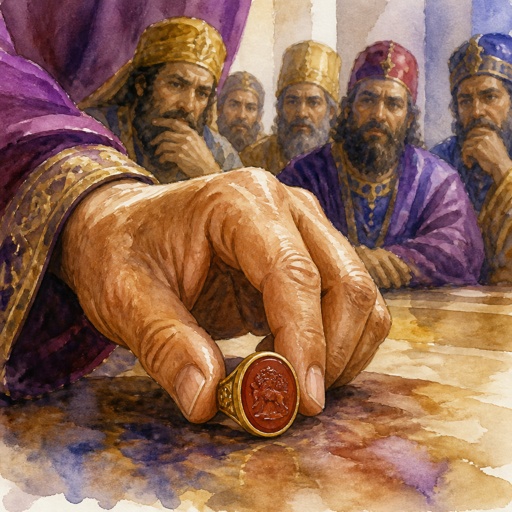
Esther 3:10 focus on ring

Esther 3:10 - "And the king took his ring from his hand, and gave it unto Haman the son of Hammedatha the Agagite, the Jews' enemy."
"And the king took his ring from his hand, and gave it unto Haman the son of Hammedatha the Agagite, the Jews' enemy." - Esther 3:10

Esther 4:10 - "¶ Again Esther spake unto Hatach, and gave him commandment unto Mordecai;"

Esther 10:3 - "For Mordecai the Jew was next unto king Ahasuerus, and great among the Jews, and accepted of the multitude of his brethren, seeking the wealth of his people, and speaking peace to all his seed."

Esther 2:10 - "Esther had not shewed her people nor her kindred: for Mordecai had charged her that she should not shew it."

Esther 5:3 - "Then said the king unto her, What wilt thou, queen Esther? and what is thy request? it shall be even given thee to the half of the kingdom."

"¶ Again Esther spake unto Hatach, and gave him commandment unto Mordecai;" - Esther 4:10

Esther 10:1 - "And the king Ahasuerus laid a tribute upon the land, and upon the isles of the sea."

Esther 3:3 - "Then the king's servants, which were in the king's gate, said unto Mordecai, Why transgressest thou the king's commandment?"

Esther 8:3 - "¶ And Esther spake yet again before the king, and fell down at his feet, and besought him with tears to put away the mischief of Haman the Agagite, and his device that he had devised against the Jews."

Esther 9:10 - "The ten sons of Haman the son of Hammedatha, the enemy of the Jews, slew they; but on the spoil laid they not their hand."

Esther 7:3 - "Then Esther the queen answered and said, If I have found favour in thy sight, O king, and if it please the king, let my life be given me at my petition, and my people at my request:"

Esther 7:10 - "So they hanged Haman on the gallows that he had prepared for Mordecai. Then was the king's wrath pacified."

Esther 3:5 - "And when Haman saw that Mordecai bowed not, nor did him reverence, then was Haman full of wrath."

"Esther had not shewed her people nor her kindred: for Mordecai had charged her that she should not shew it." - Esther 2:10

Esther 5:10 - "Nevertheless Haman refrained himself: and when he came home, he sent and called for his friends, and Zeresh his wife."

Esther 8:10 - "And he wrote in the king Ahasuerus' name, and sealed it with the king's ring, and sent letters by posts on horseback, and riders on mules, camels, and young dromedaries:"

Esther 9:3 - "And all the rulers of the provinces, and the lieutenants, and the deputies, and officers of the king, helped the Jews; because the fear of Mordecai fell upon them."

Esther 3:14 - "The copy of the writing for a commandment to be given in every province was published unto all people, that they should be ready against that day."

Esther 3:11 - "And the king said unto Haman, The silver is given to thee, the people also, to do with them as it seemeth good to thee."

Esther 10:2 - "And all the acts of his power and of his might, and the declaration of the greatness of Mordecai, whereunto the king advanced him, are they not written in the book of the chronicles of the kings of Media and Persia?"

"So they hanged Haman on the gallows that he had prepared for Mordecai. Then was the king's wrath pacified." - Esther 7:10
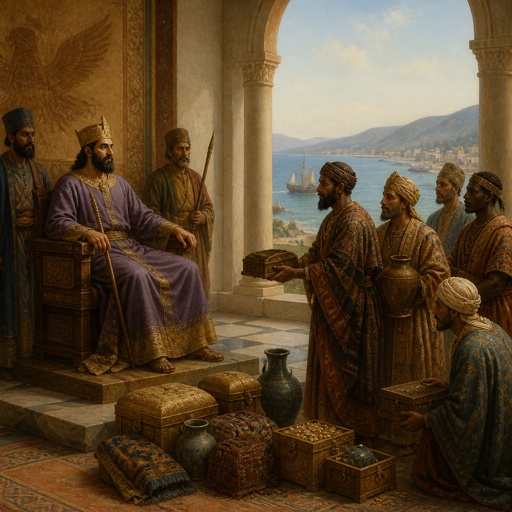
"And the king Ahasuerus laid a tribute upon the land, and upon the isles of the sea." - Esther 10:1
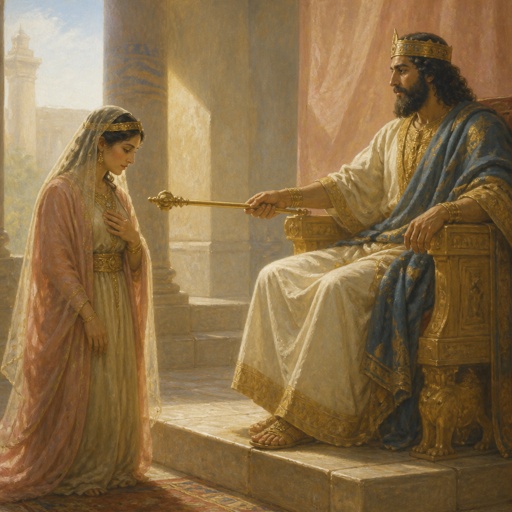
"Then said the king unto her, What wilt thou, queen Esther? and what is thy request? it shall be even given thee to the half of the kingdom." - Esther 5:3
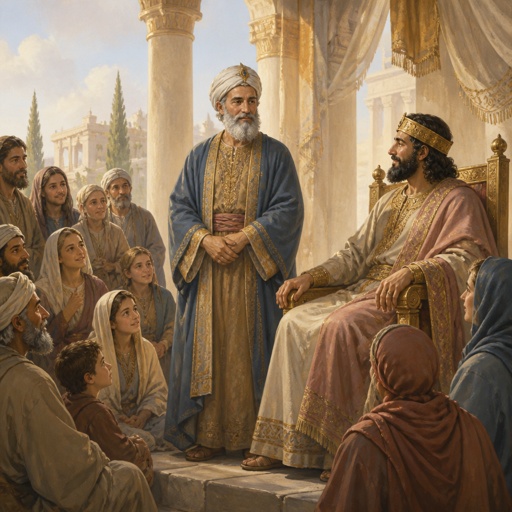
"For Mordecai the Jew was next unto king Ahasuerus, and great among the Jews, and accepted of the multitude of his brethren, seeking the wealth of his people, and speaking peace to all his seed." - Esther 10:3

Esther 3:15 - "The posts went out, being hastened by the king's commandment, and the decree was given in Shushan the palace. And the king and Haman sat down to drink; but the city Shushan was perplexed."

Esther 6:3 - "And the king said, What honour and dignity hath been done to Mordecai for this? Then said the king's servants that ministered unto him, There is nothing done for him."

Esther 3:1 - "After these things did king Ahasuerus promote Haman the son of Hammedatha the Agagite, and advanced him, and set his seat above all the princes that were with him."

Esther 4:3 - "And in every province, whithersoever the king's commandment and his decree came, there was great mourning among the Jews, and fasting, and weeping, and wailing; and many lay in sackcloth and ashes."