The Rise and Fall of Haman: Lessons in Pride and Providence
"After these things did king Ahasuerus promote Haman the son of Hammedatha the Agagite, and advanced him, and set his seat above all the princes that were with him." - Esther 3:1
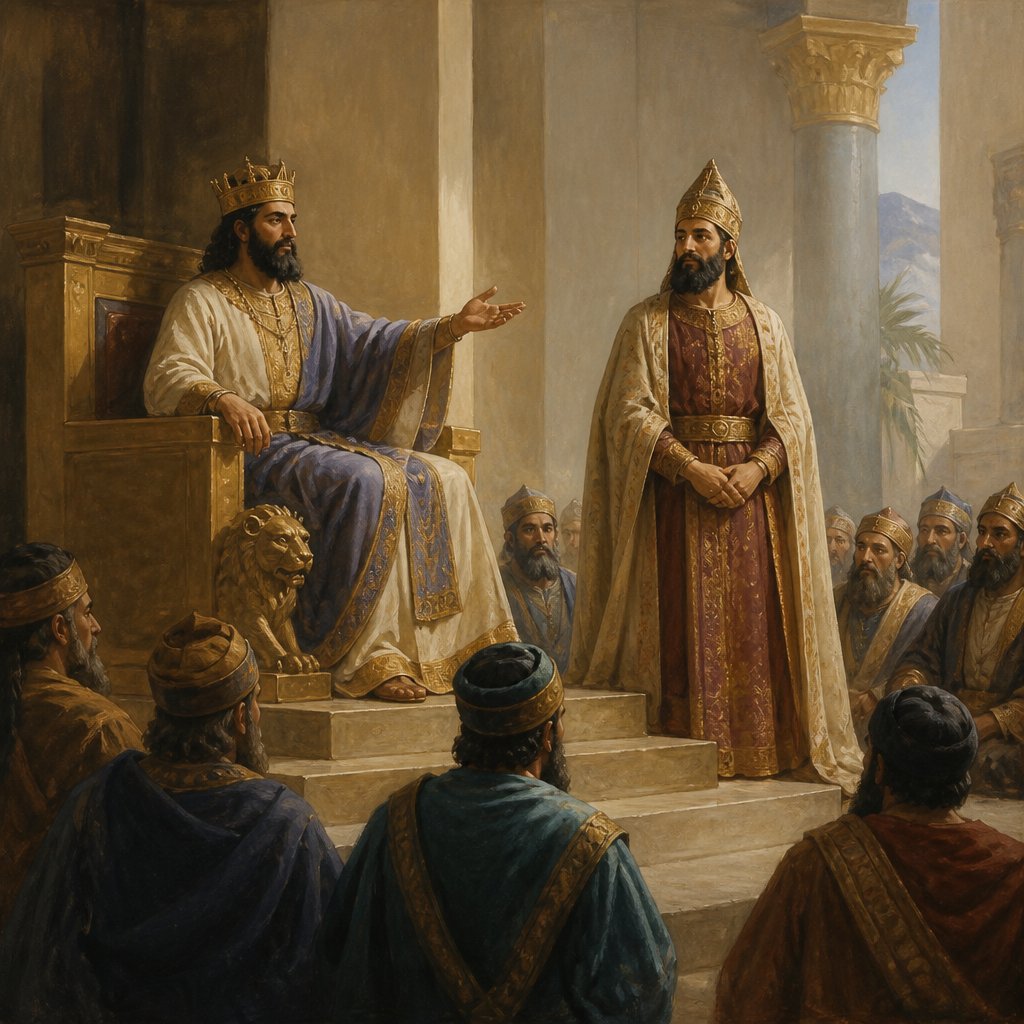
In the book of Esther, we are introduced to a series of events that unfold in the royal court of King Ahasuerus, ultimately leading to one of the most significant salvations in Jewish history. The verse Esther 3:1 states, “After these things did king Ahasuerus promote Haman the son of Hammedatha the Agagite, and advanced him, and set his seat above all the princes that were with him.” This pivotal moment sets the stage for a deeper reflection on pride, power, and divine providence.
When we read that King Ahasuerus promoted Haman, we must take a moment to consider the weight of his elevation. Haman was not merely another courtier; he was to be set above all the princes, a position of tremendous authority and influence. In this profound moment, we see how quickly the tides of fortune can turn. Haman’s rise echoes throughout history, showcasing how power can corrupt and pride can blind. Haman’s lineage as the Agagite—a descendant of the Amalekites, sworn enemies of Israel—was already a foreshadowing of conflict.
The backdrop of Haman’s promotion offers an essential contrast to the humble lives of Esther and Mordecai, who, albeit in a position of obscurity unknown to many, were intricately woven into God’s redemptive plan. Mordecai’s earlier refusal to bow to Haman—determined not to give honor to this man who despised the Jewish people—sets the stage for a demonstration of faith. His defiance reflects a profound truth: we must stand firm in our convictions, even in the face of overwhelming authority. The tension grows as Haman, filled with pride, seeks not just retribution against Mordecai but a plan to annihilate an entire race of people.
Herein lies a vital lesson in contrast: while Haman focuses on his personal power and recognition, God’s providence operates quietly behind the scenes. The King’s decision to elevate Haman, though seemingly random, was under God’s sovereign control. God’s ability to weave His purposes through human decisions is a clear reminder that, while evil may temporarily prosper, it is ultimately God’s will that prevails. In essence, we are challenged to view our circumstances, no matter how dire, through the lens of faith and divine providence.
As we continue to reflect on this verse, we recognize that the nature of Haman’s promotion and subsequent actions reveal deep spiritual truths. Haman embodies pride and self-importance, forgetting that all positions of authority, whether in secular realms or spiritual matters, are granted by God. Proverbs 16:18 warns, “Pride goeth before destruction, and an haughty spirit before a fall.” Haman’s arrogance blinded him to the reality of God’s covenant with Israel and ultimately led to his ruin.
As believers, what can we learn from Haman’s life and the events that followed his promotion? Firstly, we must examine our hearts for any seeds of pride; even in seemingly insignificant matters, pride can lead us astray. Secondly, we are reminded of the importance of remaining faithful to God’s commandments and purposes, regardless of societal pressures. Like Mordecai and Esther, we are called to trust in God, even when His plans are not readily apparent.
Finally, we are encouraged to recognize that God’s hand is always at work. What others intend for evil, God can turn for good, just as He would eventually do in the story of Esther. In this ongoing narrative, we find hope that, in the face of oppression and injustice, God is our deliverer.
Therefore, let us be vigilant in humility, courageous in faith, and expectant of God’s providential work, trusting that every promotion and demotion serve His greater plan. May we be instruments of His grace and truth, confident that, as it is promised in Romans 8:28, all things work together for good to them that love God.
Want to reflect more on Esther 3:1?
Continue your spiritual journey with Bible Chat — an AI-powered tool for exploring God's Word through conversation. Ask questions, discover connections, and deepen your understanding.
Get Our Apps


Esther 3:1 Artwork

Esther 3:1 - "After these things did king Ahasuerus promote Haman the son of Hammedatha the Agagite, and advanced him, and set his seat above all the princes that were with him."
"After these things did king Ahasuerus promote Haman the son of Hammedatha the Agagite, and advanced him, and set his seat above all the princes that were with him." - Esther 3:1

Esther 5:3 - "Then said the king unto her, What wilt thou, queen Esther? and what is thy request? it shall be even given thee to the half of the kingdom."

Esther 7:1 - "So the king and Haman came to banquet with Esther the queen."
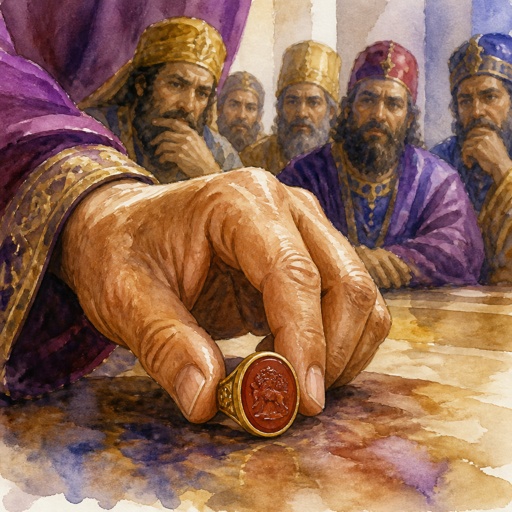
Esther 3:10 focus on ring

Esther 1:17

Esther 8:1 - "On that day did the king Ahasuerus give the house of Haman the Jews' enemy unto Esther the queen. And Mordecai came before the king; for Esther had told what he was unto her."

Esther 1:3 - "In the third year of his reign, he made a feast unto all his princes and his servants; the power of Persia and Media, the nobles and princes of the provinces, being before him:"

Esther 3:3 - "Then the king's servants, which were in the king's gate, said unto Mordecai, Why transgressest thou the king's commandment?"

Esther 8:3 - "¶ And Esther spake yet again before the king, and fell down at his feet, and besought him with tears to put away the mischief of Haman the Agagite, and his device that he had devised against the Jews."

Esther 1:6

Esther, the courageous queen

Esther 7:3 - "Then Esther the queen answered and said, If I have found favour in thy sight, O king, and if it please the king, let my life be given me at my petition, and my people at my request:"

"So the king and Haman came to banquet with Esther the queen." - Esther 7:1

Esther 3:5 - "And when Haman saw that Mordecai bowed not, nor did him reverence, then was Haman full of wrath."

Esther 9:3 - "And all the rulers of the provinces, and the lieutenants, and the deputies, and officers of the king, helped the Jews; because the fear of Mordecai fell upon them."

Esther 3:14 - "The copy of the writing for a commandment to be given in every province was published unto all people, that they should be ready against that day."

Esther 3:11 - "And the king said unto Haman, The silver is given to thee, the people also, to do with them as it seemeth good to thee."

Esther 3:10 - "And the king took his ring from his hand, and gave it unto Haman the son of Hammedatha the Agagite, the Jews' enemy."

Esther 10:1 - "And the king Ahasuerus laid a tribute upon the land, and upon the isles of the sea."
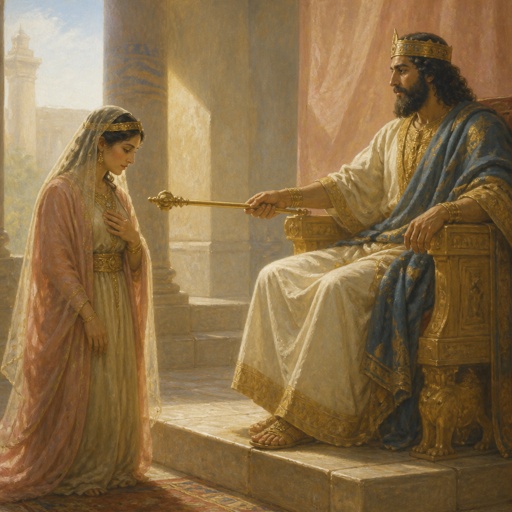
"Then said the king unto her, What wilt thou, queen Esther? and what is thy request? it shall be even given thee to the half of the kingdom." - Esther 5:3

Esther 1:21 - "And the saying pleased the king and the princes; and the king did according to the word of Memucan:"

"On that day did the king Ahasuerus give the house of Haman the Jews' enemy unto Esther the queen. And Mordecai came before the king; for Esther had told what he was unto her." - Esther 8:1

Esther 5:1 - "Now it came to pass on the third day, that Esther put on her royal apparel, and stood in the inner court of the king's house, over against the king's house: and the king sat upon his royal throne in the royal house, over against the gate of the house."

Esther 3:15 - "The posts went out, being hastened by the king's commandment, and the decree was given in Shushan the palace. And the king and Haman sat down to drink; but the city Shushan was perplexed."

Esther 6:3 - "And the king said, What honour and dignity hath been done to Mordecai for this? Then said the king's servants that ministered unto him, There is nothing done for him."

Esther 4:3 - "And in every province, whithersoever the king's commandment and his decree came, there was great mourning among the Jews, and fasting, and weeping, and wailing; and many lay in sackcloth and ashes."

Esther 1:2 - "That in those days, when the king Ahasuerus sat on the throne of his kingdom, which was in Shushan the palace,"

Esther 1:9 - "Also Vashti the queen made a feast for the women in the royal house which belonged to king Ahasuerus."
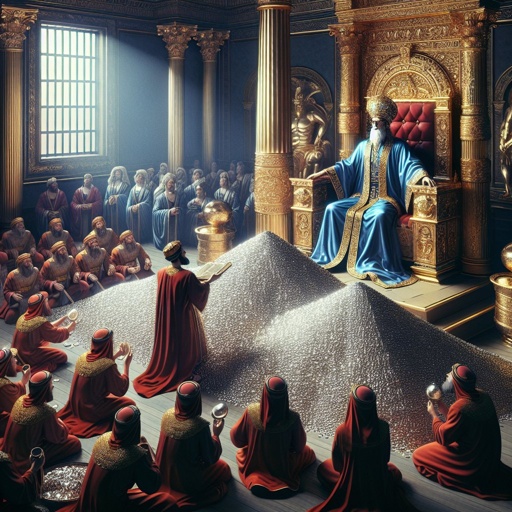
Esther 3:9 - "If it please the king, let it be written that they may be destroyed: and I will pay ten thousand talents of silver to the hands of those that have the charge of the business, to bring it into the king's treasuries."